
Instant Payout Casinos in Australia: What Speed Looks Like When Every Casino Is Offshore in 2026
The promise of an “instant payout” is one of the loudest marketing claims in offshore gambling, and nowhere does it land harder than with Australian players who have watched a domestic online casino industry never get built. Every online casino accessible from Australia runs on an offshore licence. None is regulated by ACMA. None is connected to BetStop. None gives a player the protection an Australian licence would. That single fact is the frame the rest of this page hangs inside.

Data current as of 22 November 2026, verified against ACMA records, the Interactive Gambling Act 2001 and the Interactive Gambling Amendment (Gambling Reform) Bill 2026.
Table of Contents
- Why “Instant Payout” Means Something Different for Australian Players
- The Payment Methods That Actually Deliver Fast Withdrawals
- Pokies and Casino Games: Where Payout Speed Meets the Reels
- Fast-Payout Bonuses: What No-Deposit Offers Really Cost You in Withdrawal Time
- The Legal Reality: Why Every Instant-Payout Casino Australians Use Is Offshore
- Staying in Control: Responsible Gambling Tools and the Offshore Protection Gap
- The 10 Offshore Casinos Australian Players Use Most in 2026
- How We Evaluated and Ranked These Fast-Payout Casinos
- What Fast Payouts Really Mean for Your Choice as an Australian Player
- Frequently Asked Questions
Why “Instant Payout” Means Something Different for Australian Players
“Instant payout” is a marketing phrase, not a regulated standard. In the offshore market serving Australians, it has come to mean anything from a four-minute Bitcoin withdrawal to a “same-day” promise that takes three working days once the casino’s pending period is added on. Reading the claim without the context is how players lose both time and money.

The first thing to clear up is the legal frame. Online casino games, online pokies and in-play sports betting are prohibited in Australia under the Interactive Gambling Act 2001. No Australian licence exists for any of these products — not federally, not in any state or territory. The 2017 amendment to the Act closed loopholes and gave ACMA enforcement and site-blocking powers. ACMA has had 1,564 illegal gambling and affiliate websites blocked since November 2019, and more than 225 illegal services have withdrawn from the Australian market since 2017. The Act targets the provider of the prohibited service, not the individual player. The practical effect for any Australian player is that every casino offering pokies, blackjack, roulette or live dealer games to people in Australia is operating outside Australian law.
What the prohibition costs the player is the second point. An offshore casino gives an Australian no Australian consumer protection, no Australian complaints body — ACMA cannot recover money — no BetStop coverage, no recourse if the operator refuses a withdrawal or closes the account, and the constant risk that the site will be blocked at the ISP level while a balance sits on it. Those are the trade-offs behind every “instant payout” banner.
How We Judge “Best” — Speed Alone Is Not Enough
A withdrawal that completes in twelve minutes is only impressive if the casino does it consistently. Real delays at fast-payout casinos happen inside the casino during pending review, KYC checks, security screening or bonus validation. Australia’s New Payments Platform and Osko make the banking leg fast. The bottleneck is almost always the operator. Unfinished KYC verification is the top reason payouts stall, and no method on earth speeds that up.
The Australian-specific factor is the missing regulatory floor. Tested speed at one casino on one withdrawal is not a guarantee for the next, and there is no domestic regulator an Australian can complain to if the second withdrawal is delayed. The bar for “best” therefore has to be wider than the stopwatch: method availability, KYC friction, pending-period consistency, and the protection gap the operator leaves behind.
CasinoWhizz put it cleanly when describing its own testing program: it tested more than thirty Australian-facing casinos with real funds, with the explicit goal of finding operators that support a verified PayID or crypto withdrawal in under one hour. That is the working definition of “instant” on this page. A verified sub-hour result on a real-money transaction, not a marketing line on a homepage.
The Australian Frame: Offshore by Default
The single fact that competitor pages tend to omit is the simplest. No online casino is licensed in Australia, so every Australian online casino in any list runs on an offshore licence. The product is prohibited. The licence is foreign. The protection an Australian would expect from a domestic regulator does not exist.
That frame matters because it changes how every other claim on the page should be read. The four-minute crypto withdrawal is real. So is the possibility that the same operator blocks a withdrawal, closes the account, and the player has nowhere to turn. Offshore is the default — not because Australian players chose it, but because the legal framework left no other option.
The Payment Methods That Actually Deliver Fast Withdrawals
Method is the lever the player controls. The casino is what it is; the rail the money travels on is the player’s call, and the rail is most of the difference between a four-minute payout and a four-day one.
| Method | Typical Withdrawal Time | Fees | Notes |
|---|---|---|---|
| Cryptocurrency (Bitcoin, USDT, Litecoin, Ethereum) | 5–60 minutes | A$0.02–A$5 network fee | The only sub-hour route; AUSTRAC Travel Rule applies at A$10,000+ |
| PayID (via NPP/Osko) | 10–60 minutes after approval | Generally fee-free on the banking side | Often deposit-only at offshore casinos; minimums commonly A$10–A$20 |
| eWallets (Skrill, Neteller) | Under 24 hours | Operator-dependent; small percentage or flat fee | Widely supported for both deposits and withdrawals |
| Debit/credit card | 3–5 business days | Usually none from the issuer; some operators absorb no fee | Credit cards banned for licensed AU wagering since 11 June 2024 — an offshore casino accepting them is outside Australian rules |
| Bank transfer | 5–10 business days | A$10–A$50+ per transaction | The slowest route; carries the heaviest fee |
The NPP and Osko backbone make the Australian banking leg fast. The casino’s pending review is what turns a same-day promise into a multi-day wait. Picking the right method gets you to the boundary; whether you cross it quickly depends on the operator.
Crypto Withdrawals: The Fastest Route from Casino to Wallet
Bitcoin, USDT (especially on TRC-20), Litecoin and Ethereum are the only methods that consistently clear in minutes. Stage and Cinema’s testing recorded Moonbet settling a crypto withdrawal in about four minutes with no identity check under A$2,000, and BitStarz processing crypto in roughly eight to ten minutes. Payoutverdict’s longer-running data on Wild Fortune gives a more sober picture — five hours twenty-four minutes average across five cycles between February and May 2026, ranging from three hours fifty minutes to seven hours fifty-eight minutes. The average is well above the marketing pitch, but the entire range still fits inside what crypto clearing looks like for offshore operators serving Australians.

The Australian banking layer matters. AUSTRAC’s Travel Rule applies to crypto transactions at A$10,000 and above, and the major Australian banks take different attitudes to large outbound transfers to known crypto exchanges. CommBank and Westpac restrict large outbound crypto transfers. ANZ and NAB flag them without fully blocking. ING and Macquarie are the most permissive for casino-pattern transactions. A player moving meaningful sums into or out of a casino should know which bank they are working with before they hit deposit.
PayID: Australia’s Instant Banking — When It Works for Withdrawals
PayID is what most Australian players reach for first, and rightly so for deposits. The New Payments Platform and Osko make the banking leg essentially instantaneous. Withdrawals are a different story. The casino has to support PayID as a payout method at all, and many of the larger offshore brands do not. Where it is supported, tested times sit in the ten-to-sixty-minute band once the casino approves the request: Goldenbet at 28 minutes, Lucky7 at 35 minutes, Caswino at one to two hours with a minimum of A$10. Where PayID is offered only for deposits, the player has no fast banking rail — only the slower eWallet, card or bank route.
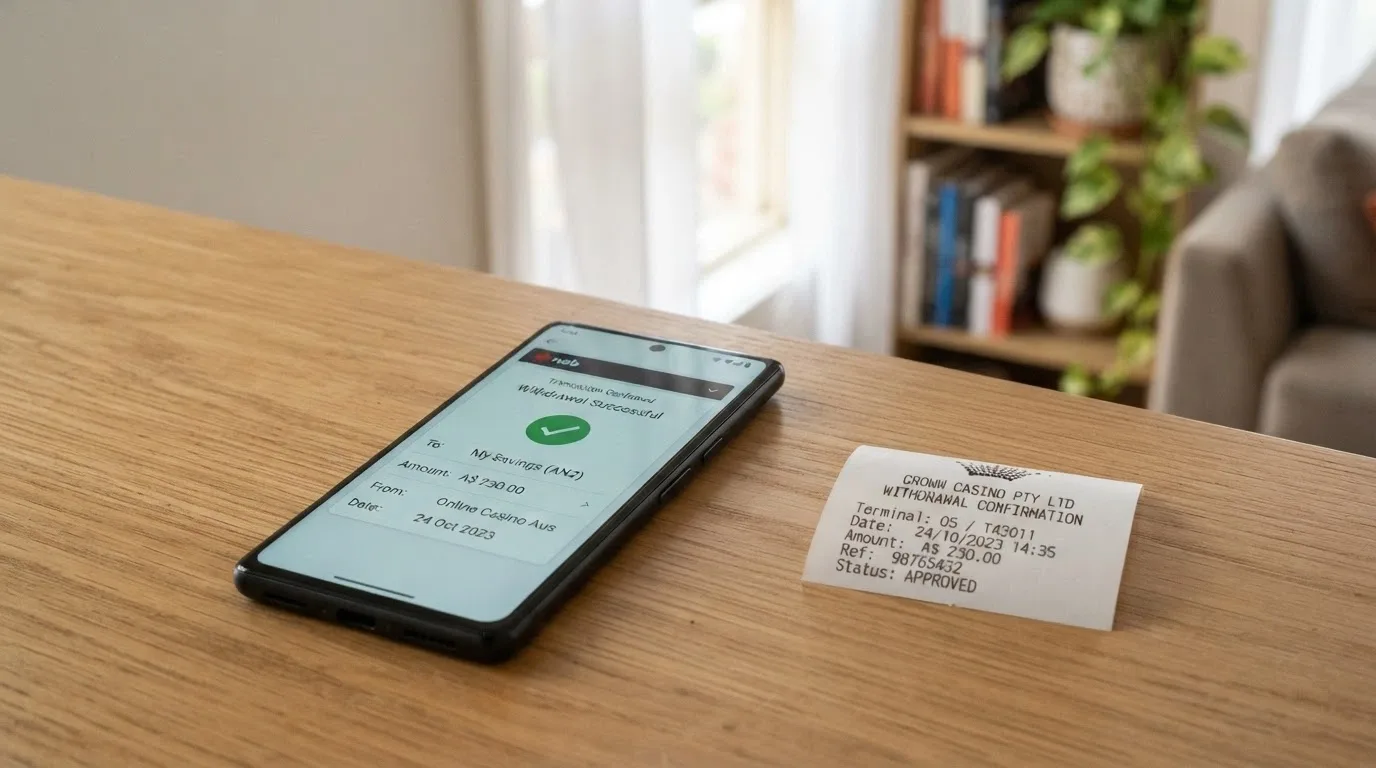
The pattern is worth naming. PayID is built on rails that move money in seconds; the slowness is almost entirely on the casino side. A “deposit-only” PayID page is a one-way valve.
eWallets, Cards and Bank Transfers: The Slower Alternatives
When crypto and PayID are not options, eWallets are the next-fastest tier. Skrill and Neteller clear inside twenty-four hours at most operators, sometimes faster, and they are widely supported for both deposits and withdrawals. The fee structure varies — some operators absorb the cost, others pass a small percentage through.
Debit and credit cards sit in the three-to-five-business-day range. The interesting detail is the credit-card ban that took effect on 11 June 2024 for licensed Australian wagering: an offshore casino asking for a credit card is itself a tell that the operator is outside Australian rules. The card will probably process. The protection it implies under Australian consumer law will not.
Bank transfers are the slowest path at five to ten business days, with fees commonly A$10 to A$50 or more per transaction. They are also the hardest to reverse and the easiest for a player to lose track of. A player who needs the money tomorrow should not be paying for a bank transfer.
Why Withdrawals Stall: KYC, Pending Reviews and Bonus Holds
The method is fast. The casino is not always fast. Real delays at offshore casinos happen during pending review (the period between requesting a withdrawal and the operator beginning to process it), KYC checks, security screening and bonus validation. Australia’s NPP and Osko infrastructure moves the money in seconds once the operator releases it; the operator is the queue.
Unfinished KYC verification is the top reason payouts stall. A player who has deposited, played and won but never completed identity verification is sitting on winnings they cannot withdraw until the documents are reviewed. The fix is mechanical and front-loaded — submit KYC before the first withdrawal request, not after the first frustration. Bonus wagering is the second hidden timer: until playthrough is complete, the withdrawal button may as well not exist, and the bonus’s max-cashout cap will dictate how much of what is in the account is even eligible to come out.
Pokies and Casino Games: Where Payout Speed Meets the Reels
The “instant payout pokies” label on a casino homepage is a search-term echo, not a product category. Pokies dominate Australian offshore play, but the pokie itself does not determine how fast a withdrawal clears. The settlement of a spin happens on the game server in milliseconds. The movement of winnings into a bank account happens on the operator’s withdrawal queue, with the same KYC, pending-review and method-availability rules as every other game on the platform.
Provider names — NetEnt, Pragmatic Play, Microgaming, Aristocrat — tell the player about the catalogue, not the payout infrastructure. A Pragmatic Play pokie at one offshore casino settles into the same withdrawal queue as a Pragmatic Play pokie at another. The infrastructure, not the reel, is the variable.
Pokies with Fast Cashout: What the Game Type Means for Withdrawal Speed
The honest answer is that it does not. Game-level payout claims — “instant payout pokies” as a search term, “fast cashout” as an ad line — describe the platform, not the title. There is no pokies-only fast lane. There is the casino’s withdrawal page, with its pending period, its KYC gate and its method list.

What this means for a player is that the right comparison is operator by operator, not pokie by pokie. The pokie at the casino that pays out in twelve minutes via crypto will be faster than the same pokie at the casino that holds withdrawals for seventy-two hours of pending review. The pokie title does not move the queue.
Casino-Wide vs Game-Specific Payout Claims: Spotting the Difference
A casino advertising “instant payout” on its homepage is making a platform claim. The right places to check are the withdrawal terms page, the cashier section and any time-stamped payout reports the operator publishes. The wrong places are the game’s loading screen and the bonus promo email. Game-specific payout claims in marketing copy are platform claims in disguise — the operator is telling you how it processes withdrawals, not how the reels behave.
Reading the withdrawal terms page is the unglamorous work that separates a five-minute payout from a five-day one. Look for the pending period, the KYC requirement, the minimum withdrawal, the fee structure and the max-cashout cap on bonus winnings. Those four numbers tell the real story.
Fast-Payout Bonuses: What No-Deposit Offers Really Cost You in Withdrawal Time
The offer that asks for no deposit nearly always carries the longest route to a real-money withdrawal. The marketing line is “free” — the actual cost is buried in the wagering requirement, the validity window and the max-cashout cap. None of the operators reviewed for this page have published no-deposit terms we could verify, so the framing below is industry-typical rather than operator-specific. A player reading any no-deposit offer should treat it as a starting point, not a settled fact.
What a player should check in any no-deposit offer is straightforward: the wagering multiple (how many times the bonus must be turned over before withdrawal), the validity window (how many days the bonus must be cleared in), the max-cashout cap (the ceiling on what bonus winnings can be withdrawn) and the game weighting (how much each game type contributes to clearing the requirement). All four are spelled out in the bonus terms. None of them is on the promo page.
No-Deposit Bonuses at Instant-Payout Casinos: The Trade-Off
No-deposit offers typically carry heavier wagering requirements than deposit-match offers. A typical no-deposit bonus will demand a wagering multiple several times higher than a welcome package, with a max-cashout ceiling that commonly sits between A$50 and A$100. The validity window runs in days, not weeks, which pressures the player into larger bets or longer sessions than they would otherwise choose.
The arithmetic is unforgiving. A$20 in bonus funds with a fifty-times wagering requirement means A$1,000 of turnover before a cent is withdrawable. Cap the winnings at A$75 and the player is grinding through a thousand dollars of play to walk away with five. A fast-payout casino makes the final step quick. It does not change the size of the grind.
Wagering Requirements and How They Delay Your Withdrawal
The wagering multiple is the hidden timer on every bonus. Until it clears, the withdrawal button may as well not exist. A 35-times-bonus wagering requirement on a A$100 bonus means A$3,500 of turnover before withdrawal is unlocked. Game weighting extends the period: pokies typically contribute 100% of each spin to the requirement, while table games often contribute 5% to 20%, meaning a blackjack hand clears one-twentieth of what a spin does.
The point is not that bonuses are worthless. The point is that “instant payout” describes the rail, not the unlock. A casino can pay out in four minutes once the player is eligible to withdraw, and the player can spend days clearing the wagering before they get to that four-minute moment. Fast rails do not retire a slow requirement.
The Legal Reality: Why Every Instant-Payout Casino Australians Use Is Offshore
This is the section competitor pages tend to skip. The Interactive Gambling Act 2001 is not a licensing regime with gaps — it is a prohibition. Online casino games, online pokies and in-play sports betting are prohibited at the federal level, and every operator offering those products to people in Australia is breaking Australian law. The 2017 amendment to the Act gave ACMA enforcement and site-blocking powers, and the agency has used them: 1,564 illegal gambling and affiliate websites blocked since November 2019, and more than 225 illegal services withdrawn from the Australian market since 2017.

What is actually legal in Australia is narrower than the marketing suggests. Pre-event wagering on races and sport, lotteries and keno are licensable through operators licensed by a state or territory. Online casino is not. The Northern Territory Racing and Wagering Commission, administered through Licensing NT, is the de facto national licensor for those permitted products, with licences running for terms of up to twenty years. The NT regime was reformed in 2026 after criticism of the regulator’s structure. None of that licence architecture covers online casino. There is no licence for online casino to hold.
The Interactive Gambling Act: Online Casino Is Prohibited — Here Is What That Means
The Act prohibits interactive gambling services that offer casino games, pokies or in-play betting to people in Australia. It permits and licences wagering on races and sport placed before the event, lotteries and keno. The individual player is not prosecuted under the Act — the prohibition targets the provider of the prohibited service, not the person using it.
The cleanest way to read this is to separate the legal status of the operator from the legal status of the player. The operator is breaking Australian law by offering the product. The player is not committing an offence by using it. The protection that follows from Australian law — consumer guarantees, complaints mechanisms, dispute resolution — does not follow the player either, because there is no Australian counterparty to complain to. The asymmetry is the cost of the offshore route.
Offshore vs Licensed: What Australian Players Actually Give Up
When a casino holds a Tobique or Curaçao licence instead of an Australian one, the Australian player loses every protection the Australian system would have provided. ACMA cannot recover money from an offshore operator. BetStop does not bind an offshore casino. Australian consumer law does not reach a transaction with an entity registered outside the country. If the operator refuses a withdrawal, closes the account or disappears, the player has no Australian complaints body to take the case to.
There is a useful tell in the payment method itself. Credit cards and crypto are banned for licensed Australian wagering since 11 June 2024, with penalties of up to $247,500 for non-compliance. An Australian player asked for a credit card or a crypto deposit by a gambling site is being served by someone outside Australian rules. The payment method is itself a tell that the operator is unregulated in Australia. The deposit will probably go through. The Australian protection it implies will not.
The site can also be blocked at the ISP level while a balance sits on it. ACMA’s blocking orders apply to the website, not to the operator’s obligation to pay out. A player with winnings on a blocked site has the worst of both worlds: no access to the cashier and no Australian body to complain to.
The 2026 Reforms: What Changes on 1 January 2027
The biggest shake-up to Australian gambling law in a decade is already passed. The Interactive Gambling Amendment (Gambling Reform) Bill 2026 passed Parliament on 19 August 2026, with its measures commencing on 1 January 2027. It does not legalise online casino. What it does is tighten the rest of the system.
From 1 January 2027, wagering advertising is limited to no more than three ads per hour between 6:00 am and 8:30 pm, with a live-sport blackout running from fifteen minutes before until five minutes after a live sporting event. Athletes, celebrities and influencers are barred from promoting wagering products. Wagering advertising is banned inside sports venues and on the uniforms of players and officials. Direct marketing of inducements is prohibited for fourteen days after a customer signs up, for three months after a person deregisters from BetStop, and indefinitely for customers identified as at-risk.
The reform also gives banks and payment providers express authority to block transactions to illegal gambling operators from 1 January 2027. That is the change most likely to reach an offshore-casino-using Australian in practice. A bank that has been reluctant to act on casino-pattern transactions now has explicit legislative cover to decline or reverse them. The bank-side block will not, on its own, make an offshore casino legal — but it may make one harder to fund from an Australian account. Online casino remains prohibited through all of this. The reform is the heaviest pressure applied to the offshore market in years, and it leaves the prohibition exactly where it was.
Staying in Control: Responsible Gambling Tools and the Offshore Protection Gap
Australian-licensed wagering services give players real control tools. Offshore casinos give none of them, and the harm statistics show why that matters.
About 2.1% of Australian adults — roughly 430,000 people — experience problem gambling. The Australian Institute of Health and Welfare put high-risk gambling at 1.8% in 2022. Those numbers describe the licensed market. The offshore market, where Australian players do not have to identify themselves to a domestic regulator and where self-exclusion does not bind, makes the picture worse, not better.
The tools Australian-licensed services must provide include deposit limits, activity statements, take-a-break periods and access to BetStop. None of these apply at an offshore casino.
BetStop and the Offshore Blind Spot
BetStop — the National Self-Exclusion Register — has recorded 67,480 registrations in three years of operation as at 31 July 2026, of which 41,290 exclusions were still active. Seventy-eight per cent of registrants were under forty. Thirty-eight per cent chose lifetime exclusion. One registration excludes a person from every Australian-licensed online and phone wagering service.
It does nothing at an offshore casino. An offshore operator is not licensed in Australia, is not connected to the register, and will keep accepting a self-excluded person’s money. That is the most concrete harm of the offshore route, and the reason BetStop coverage stops at the border. From 1 January 2027, direct marketing of inducements will be prohibited for three months after a person deregisters from BetStop. That window helps licensed operators. It does not reach the offshore casino that never saw the registration in the first place.
Where to Get Help: Helplines, Counselling and Practical Limits
The National Gambling Helpline is 1800 858 858 — free, confidential, staffed twenty-four hours a day. Gambling Help Online, at gamblinghelponline.org.au, offers chat and counselling. Both are available regardless of where someone plays, and both are staffed by people who understand the offshore context.

The practical limits an Australian player can set without a domestic licence are the ones any individual can impose on themselves: deposit caps at the casino, session timers on the device, cooling-off periods through the operator’s responsible-gambling page, and the harder limits of self-exclusion from a payment method or a banking block. None of these are as strong as BetStop. All of them are real.
The 10 Offshore Casinos Australian Players Use Most in 2026
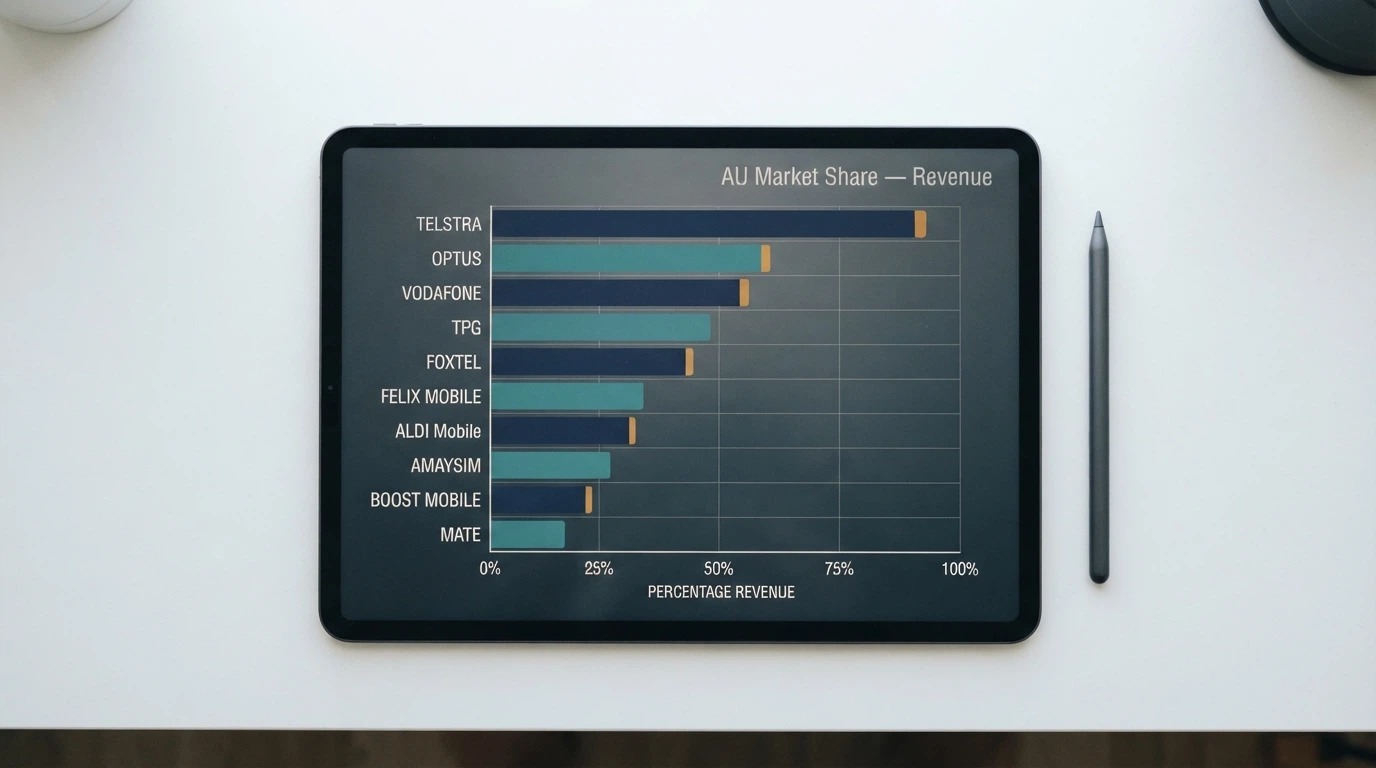
The ranking below is built on AU market presence — share and revenue of the operators that Australian players actually use — not on speed claims that have not been independently verified. The data covers offshore operators offering casino products to Australian players. None of them holds an Australian casino licence, because no such licence exists.
| Casino | AU Legal Status | AU Market Share — Revenue |
|---|---|---|
| Rocket Play | Offshore — no AU casino licence | 9.4% — A$632.69M |
| Skycrown | Offshore — no AU casino licence | 8.55% — A$436.07M |
| Royal Reels | Offshore — no AU casino licence | 2.51% — A$243.99M |
| WinSpirit | Offshore — no AU casino licence | 1.55% — A$110.3M |
| Stake | Offshore — no AU casino licence | 1.28% — A$115.67M |
| Rainbet | Offshore — no AU casino licence | 1.28% — A$83.13M |
| Scream Casino | Offshore — no AU casino licence | 0.99% — A$94.87M |
| FairGO | Offshore — no AU casino licence | 0.80% — A$69.11M |
| Bizzo Casino | Offshore — no AU casino licence | 0.57% — A$51.38M |
| Rocket Casino | Offshore — no AU casino licence | 0.57% — A$43.22M |
The market-share figures come from tracked Australian traffic and revenue data. The legal-status column is the same for every row, because the legal status of online casino in Australia is the same for every operator offering casino products to Australians: prohibited at the provider level, no Australian licence to hold, no Australian protection to fall back on.
Rocket Play
Rocket Play sits at the top of the AU market share table among offshore operators at 9.4% — A$632.69M in tracked revenue — which makes it the largest AU-facing offshore casino by that measure. Its presence in the market is not a comment on payout speed or bonus quality; it is a measure of how many Australian players are using it. Independent verification of a specific withdrawal time, a specific bonus term or a specific game-provider list for Rocket Play was not produced in the testing round this page draws on, and writing a number we cannot stand behind is worse than naming the gap. What Rocket Play is, in the data we have, is large. What it pays, we cannot say with confidence. Rocket Play is the larger option. It is not the verified one.
Skycrown
Skycrown’s 8.55% AU market share — A$436.07M in revenue — puts it second in the offshore set, comfortably ahead of every operator below it. Like Rocket Play, it is offshore; like Rocket Play, it does not hold an Australian casino licence; like Rocket Play, it has not been independently confirmed for a specific payout time or bonus structure in the testing this page draws on. Skycrown is a large, established offshore operator with substantial Australian usage. The reader looking for a verified payout time will not find it here. The reader looking for an operator with a meaningful AU footprint will.
Royal Reels
Royal Reels holds 2.51% AU market share and A$243.99M in revenue — a step below the top two but still well above the rest of the set. The brand name signals an Australian-facing identity, which is consistent with the AU-heavy revenue share. Verified withdrawal times and bonus terms for Royal Reels were not produced in the testing round; the operator is included for its market position rather than a confirmed payout profile. Royal Reels’ value to a player is its established Australian reach. Its risk profile is the same as every other operator in this section: offshore, no Australian licence, no Australian protection.
WinSpirit
WinSpirit holds 1.55% AU market share and A$110.3M in revenue. It sits in the middle of the set by both metrics — smaller than the top three, larger than the rest. Independent verification of payout times, bonus terms or game providers for WinSpirit was not produced in the testing round. WinSpirit is a mid-tier AU-facing offshore operator with a real player base and no independent speed data behind it. A player choosing WinSpirit over the alternatives is choosing on familiarity or interface, not on a verified speed advantage.
Stake
Stake’s 1.28% AU share — A$115.67M in revenue — is modest, but the operator’s defining feature is its payment infrastructure. Stake is crypto-native, which means its rails are built for digital-asset deposits and withdrawals rather than retrofitted onto them. Independent testing describes Stake’s crypto withdrawals as faster than average on individual cycles, without producing a specific time we can stand behind. For a player who values speed above almost everything else and is comfortable holding and moving crypto, Stake is the natural pick from this set. What it does is give a player the one thing the rest of the offshore set struggles to match: a payment rail that does not bottleneck on the casino’s pending queue. The same caveats apply. Stake is offshore. Stake has no Australian casino licence. A fast crypto withdrawal does not change the protection gap.
Rainbet
Rainbet holds 1.28% AU market share and A$83.13M in revenue. The smaller share and revenue suggest a growing rather than established presence, which is consistent with several of the operators in this tier. Verification of payout infrastructure, bonus terms or game providers for Rainbet was not produced in the testing round. Rainbet’s 1.28% AU share and A$83.13M revenue sit well below the top three, consistent with a growth profile rather than an established one. A reader who picks Rainbet over the larger operators is choosing a less-crowded option, and doing so without a verified speed or bonus number behind it.
Scream Casino
Scream Casino holds 0.99% AU market share and A$94.87M in revenue, putting it just below the 1% mark on share but well into eight-figure revenue. Independent verification of payout infrastructure, bonus terms or game providers was not produced in the testing round. Scream Casino’s near-1% share makes it a mid-tier AU-facing offshore operator with real, sustained AU traffic. Without an independent withdrawal test on file, it sits in the set on market presence alone — a player choosing it for any speed reason is choosing without a number to back it.
FairGO
FairGO’s 0.80% AU market share and A$69.11M in revenue make it one of the smaller operators in the set by revenue, but the brand has a distinctive profile: it runs on RealTime Gaming (RTG), a software house with a long Australian-facing catalogue. That makes FairGO the natural pick for a player who values the RTG library specifically — a known quantity in the AU-facing offshore market. Verified withdrawal times were not produced in the testing round. FairGO is the RTG-powered AU-facing offshore brand for a player who already knows the RealTime Gaming catalogue and wants to play it offshore. The protection gap is identical to every other operator in this section. Australian consumer law does not reach the operator regardless of which software house powers the games.
Bizzo Casino
Bizzo Casino’s 0.57% AU market share and A$51.38M in revenue put it near the bottom of the set. Independent verification of payout times, bonus terms or game providers was not produced in the testing round. Bizzo is one of the smallest AU-facing offshore operators by share and revenue, with no independent payout or bonus verification on file. A player choosing Bizzo over a larger operator is choosing on bonus familiarity, a specific provider or reputation rather than on a verified number.
Rocket Casino
Rocket Casino holds 0.57% AU market share and A$43.22M in revenue — the smallest figures in the set. Independent verification of payout infrastructure, bonus terms or game providers was not produced in the testing round. Rocket Casino is the smallest AU-facing operator in this set by both share and revenue, with no independent verification of payout infrastructure on file. A player choosing it is choosing a smaller footprint deliberately, with the same offshore protection gap as every other entry in this section.
How We Evaluated and Ranked These Fast-Payout Casinos
The ranking rests on AU market presence, not on independent speed testing. That is a deliberate choice and a known limitation.
The data behind the rankings are tracked AU traffic and revenue figures for offshore operators with Australian players; competitor testing data on payment-method speeds at offshore casinos serving Australians; and the regulation and operator records maintained by ACMA, the Northern Territory Racing and Wagering Commission and AUSTRAC. Where independent testing has produced a specific payout time — Goldenbet at 28 minutes for PayID, Lucky7 at 35 minutes for PayID, Moonbet at around four minutes for crypto under A$2,000, BitStarz at roughly eight to ten minutes for crypto, Wild Fortune at five hours twenty-four minutes average for crypto across five cycles — it is reproduced on this page. Where the testing did not produce a number for an operator in the featured set, the gap is named rather than filled.
The criteria applied are: AU market presence, withdrawal-speed data where independently available, payment-method breadth and offshore-licence transparency. The page does not name a payout time, a bonus structure or a wagering multiple for an operator the testing did not produce a number for. That is the limit of the evaluation. The limit is the one that matters most.
What Fast Payouts Really Mean for Your Choice as an Australian Player
Fast payouts matter. They also are not the most important thing.
A four-minute crypto withdrawal means nothing if the operator closes the account the next morning with the next withdrawal unpaid. A twelve-minute PayID payout means nothing if a bonus wagering requirement has locked the balance behind a multiplier that takes a week of play to clear. The speed of the rail is real. The safety of the operator is what frames the speed.
Method choice is the player’s strongest lever. Crypto and PayID, where the casino supports withdrawals on them, are the only methods that put the operator’s pending queue on the critical path rather than the banking rail. Crypto is faster but introduces bank-side friction at the larger sums — CommBank and Westpac restrict large outbound crypto transfers, ING and Macquarie do not. PayID is faster than cards and bank transfers but is offered for withdrawals at only some operators.
The three things to verify before depositing at any offshore casino are the withdrawal terms (pending period, KYC requirement, minimum withdrawal, max-cashout cap), the KYC requirements (whether identity verification is needed before the first withdrawal, and how long the operator takes to process it) and real player reports on payout consistency (forums, complaint histories, recent player accounts). All three are checkable. None of them is on the homepage.
The irreducible risk remains. Offshore is offshore. No speed claim, however genuine, removes the protection gap. A player who chooses an offshore casino is choosing speed, and choosing to accept that the recourse available to them if the operator misbehaves is whatever the operator’s home regulator provides. For most operators serving Australians, that regulator is a Tobique or Curaçao licence, and the practical standard of consumer recourse that comes with it is what it is.
The right comparison for an Australian player is not which casino pays out fastest. It is which method pays out fastest at which operators they trust, and what they would lose if that trust proved wrong.
Frequently Asked Questions
What is the minimum withdrawal amount at instant payout casinos in Australia?
Most fast-payout casinos serving Australian players set the minimum withdrawal at around A$20, though some — Caswino among them — allow PayID withdrawals from as little as A$10. Crypto minimums are typically higher to make network fees worthwhile. The minimum is set by the operator and is listed on the cashier page before the first deposit.
Why do some casino withdrawals take days even at “instant” payout sites?
The banking leg is fast; the casino is the bottleneck. Real delays happen during pending review, identity-verification checks, security screening or bonus validation. Australia’s NPP and Osko infrastructure moves money in seconds once the operator releases it. Unfinished KYC is the most common cause of a stalled payout, with bonus wagering close behind.
Do instant payout casinos accept Australian dollars?
Many offshore operators serving Australians run AUD balances for deposits and withdrawals. Others accept only major currencies and convert at the cashier, where the conversion is set by the operator. The accepted currencies are listed on the cashier page before the first deposit.
Are gambling winnings taxable in Australia?
No, not for the recreational player. Betting and gambling winnings are not assessable income under section 6-5 of the ITAA 1997, and losses are not deductible under section 8-1, unless the person is carrying on a business of betting or gambling. No Australian case has held an ordinary punter’s winnings assessable.
Is my money safe at an offshore instant payout casino?
Offshore casinos are not regulated by ACMA and are not connected to Australian complaints or self-exclusion systems. ACMA cannot recover money from an offshore operator, and BetStop does not bind an offshore casino. The protection an Australian player has is whatever the operator’s home regulator requires, and that is rarely an Australian complaint body.
What Actually Counts as an Instant Payout in 2026?
The honest answer is a range, not a single number. Across the offshore operators serving Australians in 2026, “instant” covers three very different tiers. Crypto withdrawals typically clear in five to sixty minutes, with network fees of A$0.02 to A$5. PayID withdrawals settle in ten to sixty minutes once the casino approves them, though many offshore operators do not offer PayID for withdrawals at all — only deposits. eWallets come in under twenty-four hours. Card withdrawals take three to five business days, and bank transfers take five to ten business days at a cost of A$10 to A$50 or more.
The sub-hour tier is genuinely the territory of cryptocurrency. Everything else is same-day at best, and “same day” assumes the casino does not hold the withdrawal in its pending-review queue first. A 4-minute Bitcoin transfer is meaningless if the operator sits on it for three days before the transfer begins.