
What a $2 Deposit Casino Actually Looks Like for Australian Players
The marketing says $2. The payment processor says otherwise. That gap is where most “$2 minimum deposit casino Australia” searches run aground, and it is the single most important fact on this page: there is no honest A$2 fiat-deposit casino serving Australian players in 2026. The closest genuine equivalent costs about five cents in Bitcoin and runs only on offshore rails.
Current as of 30 October 2026 and verified against the ACMA prohibition list and BLASK AU traffic data.
Table of Contents
- The $2 Deposit Promise vs What You Actually Get
- The 10 AU-Facing Casinos Ranked by Their Real Deposit Floor
- How to Actually Deposit $2 at an Online Casino in Australia
- What Pokies Your $2 Deposit Actually Unlocks
- $2 Deposit Casinos on Mobile: Does It Work?
- New $2 Deposit Casinos in 2026: Anything Worth Your $2?
- Is It Legal? What AU Gambling Law Actually Says About $2 Deposit Casinos
- Staying Safe: Responsible Gambling When the Usual Rules Don’t Apply
- How We Selected and Ranked These Casinos
- Your $2 Deposit in 2026: What You Gain and What You Risk
- Frequently Asked Questions
The $2 Deposit Promise vs What You Actually Get
A search for “$2 minimum deposit casino Australia” promises a low-commitment way to try an online casino. The promise is real. The product, for most Australian players, is not — not through the payment rails most readers will actually use.
Online casino play is illegal under Australian law, so the offshore casinos that accept Australian players are not regulated by any Australian authority. Every site on this page sits outside Australian jurisdiction. That alone redefines “minimum deposit”: without a local regulator enforcing a floor, the deposit minimum is set by the offshore operator in conjunction with its payment processor. The combination produces a four-tier reality that looks nothing like the pages advertising $1 and $2 deposit casinos.
The honest answer, going in: a genuine A$2 deposit does not exist as a broadly available fiat product for Australians in 2026. PayID and POLi enforce a casino-side minimum between A$10 and A$30. Card deposits sit at A$10 to A$20. Neosurf vouchers, sold across Australian retailers, start at A$10. Crypto is the only method that clears the bar — and even then, only at operators like Stake where the floor is denominated in Bitcoin, not dollars.
That does not make the search wasted. It means the reader needs to know which payment rail actually delivers the sub-$2 deposit and which operators on this list accommodate it. The remainder of this page works through that picture.
Why a $2 Deposit Isn’t the Same as a $2 Casino
The headline figure is the casino’s advertised minimum. The figure that matters is the payment method’s minimum. They are set at different desks.
A casino sets a per-transaction floor that has to clear the payment processor’s own minimum, absorb the processor’s fees, and still make the transaction commercially viable. The processor’s floor is rarely below A$10 for fiat methods — cards, PayID, POLi, bank transfer — and the processor will decline anything below that threshold regardless of what the casino’s terms page says. Eight of fifteen AU-facing brands surveyed quietly enforce a higher minimum for welcome-bonus eligibility than for play: a player deposits A$10 expecting a match, then discovers the bonus needed A$20.
So when a casino’s terms page reads “min deposit $2”, the practical reading is this: A$2 is the casino-side floor for at least one of our payment methods, possibly crypto, possibly a narrow e-wallet segment, and almost certainly not the bank-linked method an Australian player would default to. The deposit ceiling for the bonus and the deposit floor for the casino are different figures on different pages of the same site.
The Real Deposit Tiers: From $1 Edge Cases to the $20 Standard
Low-deposit AU-facing sites cluster into four tiers. The tier a site advertises is the marketing, not the reality. What follows is what each tier actually contains.
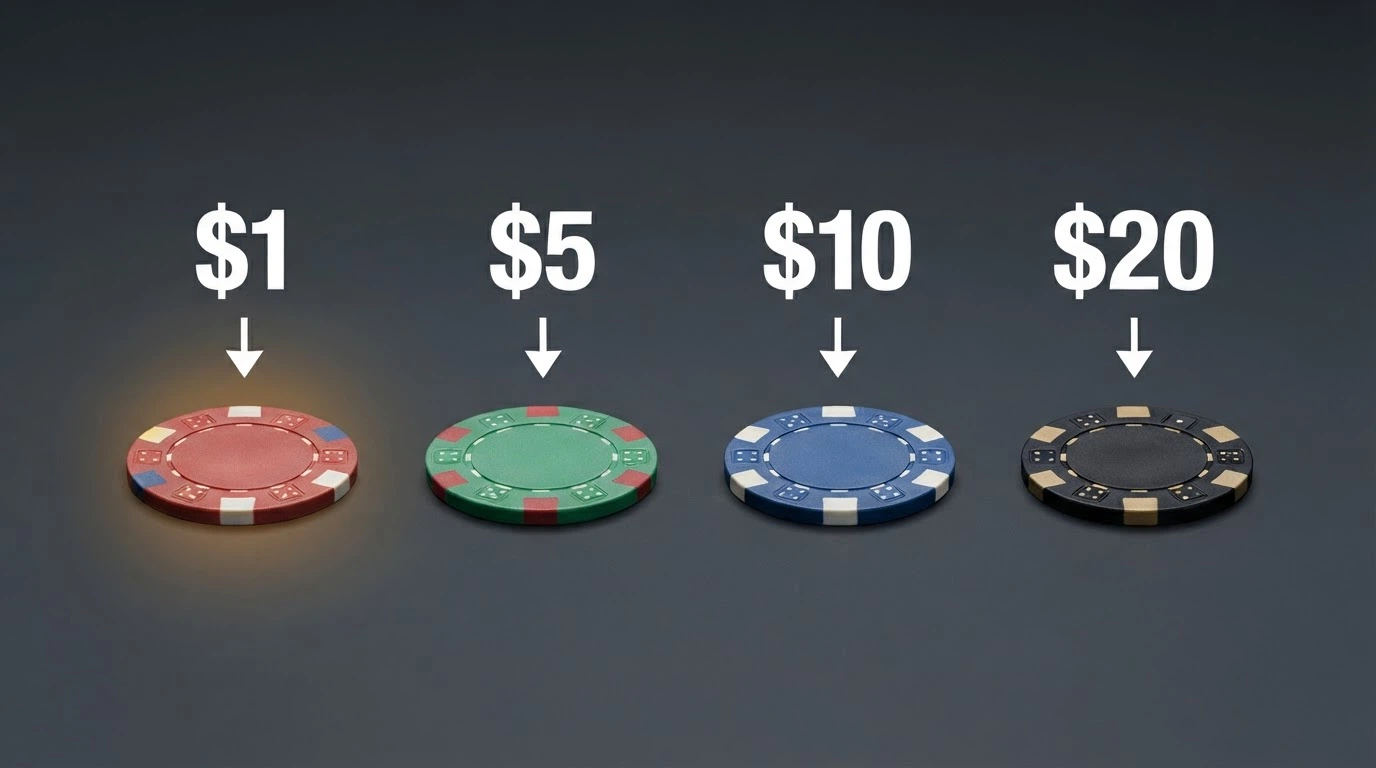
- The $1 tier — A genuine A$1 deposit shows up only on a narrow band of crypto or specific card and e-wallet segments. It is the closest the market comes to a $2-deposit casino, and it does so through rails most Australian players will never touch. There is no fiat equivalent.
- The $5 tier — Does not honestly exist for Australian fiat players in 2026. Neosurf vouchers sold in Australia start at A$10 (the A$5 denomination is an EU product). Card processors enforce an A$10 to A$20 floor. PayID casinos set a casino-side minimum that is generally higher still. The A$5 figure that recurs across affiliate pages is a marketing artefact, not a product.
- The $10 tier — The practical entry point. Most AU-facing offshore casinos set this as their fiat deposit floor. Goldenbet accepts from A$10. PayID-friendly casinos cluster between A$15 and A$30 — DragonSlots starts at A$20, Goldenbet at A$30. For a player using PayID or POLi, A$10 is the realistic working minimum.
- The $20+ tier — The industry standard. Most reputable AU-facing offshore casinos require at least A$20 on every fiat payment method. A $2-deposit casino describes something rarer than the marketing implies.
The practical reading: only one of these four tiers is widely available through fiat rails, and it is not the smallest.
The 10 AU-Facing Casinos Ranked by Their Real Deposit Floor
The ranking that follows covers every featured AU-facing offshore casino ordered by their BLASK AU market share, with deposit-floor proximity to the $2 mark as a secondary lens. A single qualifier applies to every operator on this list: under the Interactive Gambling Act 2001, no online casino licence exists in Australia. None of the operators below holds an Australian licence. Their presence here reflects AU-facing traffic and product reach, not legality.
The ranking criteria themselves: market share is the primary sort, with each operator’s stated deposit terms considered alongside. The market-share figures are BLASK AU’s 2026 data, drawn from AU-facing traffic. Where per-operator deposit data is unevenly confirmed across this set — most operators’ specific deposit floors are not published in a verifiable form — the operator’s qualitative positioning in the deposit-floor tiers above is used in place of a confirmed per-brand number.
| Operator | Offshore Licence Status | AU Market Share — BLASK data |
|---|---|---|
| Rocket Play | Offshore (no AU licence) | 9.4% |
| Skycrown | Offshore (no AU licence) | 8.55% |
| Royal Reels | Offshore (no AU licence) | 2.51% |
| WinSpirit | Offshore (no AU licence) | 1.55% |
| Stake | Offshore (no AU licence) | 1.28% |
| Rainbet | Offshore (no AU licence) | 1.28% |
| Scream Casino | Offshore (no AU licence) | 0.99% |
| FairGO | Offshore (no AU licence) | 0.8% |
| Bizzo Casino | Offshore (no AU licence) | 0.57% |
| Rocket Casino | Offshore (no AU licence) | 0.57% |
What the table cannot show: every operator on this list is offshore. The deposit floors that bind an Australian player are the payment-processor floors described in the tiers section above, and those floors do not vary by operator. The variance is in product, in game library, in brand promise. The deposit ceiling for a $2 player is set at the payment rail, not the casino.
Stake
Stake is the only operator in this ranking with a confirmed sub-$1 deposit floor. The floor sits at approximately A$0.10 in BTC-equivalent — the lowest genuine real-money deposit at any AU-facing offshore casino, and a number no fiat rail comes close to.
That floor exists because Stake is a crypto-native operator. Its payment infrastructure is built around Bitcoin, USDT and other digital currencies, not bank-linked rails. A player sending the equivalent of ten Australian cents in Bitcoin lands that amount in playable balance. A player sending A$10 via PayID would be told the deposit is below the casino’s PayID floor.
The licence sits offshore. Curaçao is reported in third-party sources but not confirmed against a primary regulator register this review. Stake holds no Australian licence and cannot hold one, because online casino is prohibited under the Interactive Gambling Act 2001. The full implications of that offshore status are set out in the section on AU gambling law.
A single, clarifying caveat for a $2 player: the sub-$1 floor is crypto-only. There is no fiat equivalent at Stake. A player without a Bitcoin or USDT wallet cannot reach the floor that makes this operator different from every other on this list.
The verdict: the operator on this page that does what the others cannot, in the only currency that does it. The offshore reality does not change — what changes is whether the floor in question is reachable at all.
Rocket Play
Rocket Play is the highest-traffic AU-facing offshore casino in the reviewed set at 9.4% market share. That places it well ahead of every other operator in BLASK’s AU traffic data, and that lead is the headline number for this brand.
The deposit floor sits in the standard fiat range. Rocket Play’s public-facing AU terms describe a casino whose accepted payment methods follow the same A$10 to A$20 floors that bind every other operator on this list, with no confirmed sub-$10 fiat deposit pathway. A player arriving at Rocket Play via PayID or POLi faces the same casino-side minimums that PayID casinos generally enforce — A$15 to A$30 on the bank-linked methods, depending on the operator’s published terms.
There is no Australian licence and no path to one. Rocket Play accepts Australian players because the operator sits offshore, and the regulatory trade-off this page describes in the legal section applies in full.
The verdict: traffic lead by a margin, but traffic is not consumer protection. Rocket Play is the operator the most AU players land on. It is not the operator the most AU players are protected by.
Skycrown
Skycrown ranks second on this list at 8.55% AU market share — ahead of every other AU-facing operator outside Rocket Play. That places it firmly inside the top tier of AU-facing offshore traffic, and a player searching the AU-facing market will encounter Skycrown frequently.
The deposit floor sits in the standard A$10 to A$20 fiat tier that applies to bank-linked and card methods at offshore operators of Skycrown’s size. There are no confirmed sub-A$10 fiat deposit terms published for this brand, and the practical floor for a PayID or POLi player sits well above the $2 mark. The deposit-floor proximity that earns Skycrown a slot on this ranking is market reach, not a low minimum.
The offshore licence is the only licence Skycrown can hold. The trade-off is the same one every operator on this list carries; it is set out in full in the legal section.
The verdict: number two on a list that runs entirely outside Australian law. Skycrown is a meaningful choice on traffic. It is no different in regulatory status from any other name here.
Royal Reels
Royal Reels occupies a deliberate slot in the AU-facing market: an offshore operator whose branding targets Australian players specifically. The name, the visual identity, the language — these are Australian cues inside an offshore operation. That distinction matters because it tells a player where the brand is aimed, not where it is licensed.
The market-share figure is 2.51% — third-largest in the reviewed set and a meaningful sliver of AU-facing traffic. The deposit floor follows the standard pattern for an offshore operator of Royal Reels’ size: A$10 to A$20 on bank-linked and card methods, with no confirmed sub-A$10 fiat pathway. A $2 player arriving via PayID would be told the deposit is below the casino’s PayID minimum.
The licence sits offshore. Royal Reels holds no Australian licence and cannot hold one. The branding targets Australia; the jurisdiction does not.
The verdict: an Australian accent on an offshore operation. The accent is branding, not jurisdiction, and that gap is exactly the trade-off this page asks the reader to understand before depositing.
WinSpirit
WinSpirit holds 1.55% AU market share — a mid-tier position in the AU-facing offshore set, well behind the top two operators but ahead of most of the remaining names on this list. The traffic footprint is meaningful enough to recognise; the regulatory reality is identical to every other operator here.
The deposit floor sits in the standard fiat range. WinSpirit’s published terms describe a casino whose accepted methods follow the same A$10 to A$20 floors that apply to AU-facing operators of its size, with no confirmed sub-A$10 fiat deposit terms. A PayID player at WinSpirit faces a casino-side minimum similar to the range that other PayID-friendly casinos enforce.
The offshore-only licence is the only licence WinSpirit can hold. A $2 deposit at WinSpirit would require the same crypto workarounds as a $2 deposit anywhere else on this list.
The verdict: a mid-tier player on the AU-facing ranking, without a floor that would help a $2 player. WinSpirit is a useful benchmark for sizing. It is not a route to a low deposit.
Rainbet
Rainbet holds 1.28% AU market share — tied with Stake for the fifth position in the reviewed set, behind WinSpirit. The traffic is real but modest, and the brand does not surface as frequently in AU-facing search results as the top two operators do.
The deposit floor falls within the standard A$10 to A$20 fiat bracket that applies to AU-facing operators generally. No confirmed sub-A$10 fiat deposit terms have been published for Rainbet. A PayID or POLi player arriving here encounters the same casino-side minimums as at every other operator of similar size, and the deposit-floor proximity the brand might suggest is not borne out by the published terms.
The offshore-only licence applies. The trade-off is the same as every other operator on this list.
The verdict: a 1.28% sliver of AU-facing traffic. Useful context for sizing, not for choosing. Rainbet does not move the needle on a $2 deposit.
Scream Casino
Scream Casino holds 0.99% AU market share — sub-1% — placing it below Rainbet and tied for the seventh position in the reviewed set. The traffic is small enough that a player will not encounter this operator as frequently in AU-facing search results as the top names.
The deposit floor falls within the standard A$10 to A$20 fiat bracket. No confirmed sub-A$10 fiat terms have been published for Scream Casino, and the practical deposit floor for a bank-linked player is the same A$10 to A$30 range that applies to AU-facing operators of its size. The deposit-floor proximity the brand might suggest on its terms page is not realised through fiat methods.
The offshore-only licence applies. A $2 deposit at Scream Casino is impossible through fiat rails and would require the same crypto workarounds as elsewhere.
The verdict: sub-1% share with the same offshore caveats as every operator above it. Scream Casino does not change what the rest of this page already says.
FairGO
FairGO is an offshore operator whose name — and whose entire brand presentation — promises fairness to Australian players. The name is a deliberate market play. The licence does not deliver what the name implies.
The market-share figure is 0.8%, placing FairGO in the lower tier of the reviewed set. The deposit floor follows the standard A$10 to A$20 fiat range that applies to AU-facing operators of its size, with no confirmed sub-A$10 fiat terms. A PayID player at FairGO faces a casino-side minimum in the same A$10 to A$30 range that other PayID-friendly operators enforce.
The AU-themed branding is the operator’s commercial pitch. The licence is the legal reality, and the two are not the same. FairGO holds no Australian licence and cannot hold one — there is no licence for online casino anywhere in the country. The offshore jurisdiction that issues FairGO’s actual licence offers protections defined by that jurisdiction’s regulator, not by any Australian body.
The verdict: the name promises a “fairness” story. The licence tells a different one. FairGO is a useful illustration of how AU-facing branding does not equal Australian regulation.
Bizzo Casino
Bizzo Casino holds 0.57% AU market share — tied with Rocket Casino for the lowest share in the reviewed set. The traffic is small enough that a player will rarely encounter this brand in AU-facing search results ahead of the top names.
The deposit floor is the standard A$10 to A$20 fiat range that applies to AU-facing operators of its size. No confirmed sub-A$10 fiat terms have been published for Bizzo Casino, and the practical deposit minimum for a bank-linked player is the same A$10 to A$30 range that other PayID-friendly casinos enforce. The deposit-floor proximity the brand might advertise is not realised through fiat methods.
The offshore-only licence applies. Bizzo Casino holds no Australian licence, cannot hold one, and runs the same IGA-2001 trade-off as every other name on this list.
The verdict: a 0.57% share tied at the bottom of this ranking, no different in regulatory status from any other name here.
Rocket Casino
Rocket Casino holds 0.57% AU market share — tied with Bizzo Casino at the bottom of the reviewed set. The name shares a brand element with Rocket Play, but the two operators are distinct entities, each operating offshore, each running the same IGA-2001 trade-off.
The deposit floor follows the standard A$10 to A$20 fiat range. No confirmed sub-A$10 fiat terms have been published for Rocket Casino, and a PayID player would face the same casino-side minimums that other operators of its size enforce. The deposit-floor proximity that ties Rocket Casino to Rocket Play on this list is market share, not a low minimum.
The offshore-only licence applies. Rocket Casino holds no Australian licence, cannot hold one, and sits outside every AU consumer-protection framework.
The verdict: a separate operation from Rocket Play despite the shared rocket. Same legal position, same offshore reality, same A$10-to-A$20 floor on the methods an Australian player would default to.
How to Actually Deposit $2 at an Online Casino in Australia
The payment-method reality for an Australian player seeking a $2 deposit is short and unforgiving. Only one route clears the bar — and it is not the route an Australian player would naturally reach for.
The bank-linked rails an Australian player would default to — PayID, POLi, debit card — all enforce deposit minimums well above the $2 mark. Cards sit at A$10 to A$20. PayID and POLi sit at A$10 to A$30 at the casino side. Bank transfer matches. Neosurf vouchers sold in Australia start at A$10. The A$2 deposit the marketing describes is, in practice, a crypto deposit denominated in Australian-dollar equivalent — and at most operators, even that is not available below A$5 after gas.
A secondary caveat applies at the bank side. Australian banks sometimes block transactions categorised under the gambling merchant code (MCC 7995). A PayID or card deposit at an offshore casino is not guaranteed to land. Crypto bypasses that risk because the transaction does not touch the Australian banking system.
A third caveat applies at the regulator side. From 1 January 2027, banks and payment providers gain express authority to block transactions to illegal gambling operators. The transaction that lands today may not land tomorrow.
| Payment Method | Typical Minimum at AU-Facing Casinos | Can It Genuinely Process A$2? | What to Know |
|---|---|---|---|
| PayID | A$10–A$30 (DragonSlots A$20; Goldenbet A$30) | No | Most popular AU method; casino-side floor is the blocker, not the rail |
| POLi | A$10+ | No | Bank-linked; floor tracks PayID |
| Credit / Debit Card | A$10–A$20 | No | Cards banned for licensed wagering since 11 June 2024 — a card-accepting site is offshore |
| Neosurf | A$10 minimum voucher in Australia | No | A$5 voucher is EU-only; Australian retail starts at A$10 |
| Bank Transfer | A$10–A$20 | No | Standard banking floor; transaction may be blocked under MCC 7995 |
| Crypto (BTC) | ~AU$0.10 (Stake) | Yes | The only honest sub-$2 route for Australian players |
| Crypto (USDT-TRC20) | ~AU$5 after ~AU$1 gas | Yes (effectively) | Practical crypto entry; settles in seconds, no bank correspondence |
The table reads as a single statement: every fiat rail clears A$10 at minimum, and only crypto goes below. The remainder of this section works through each method in turn.
PayID Deposits: Popular but Not Built for $2
PayID is the most popular deposit method at AU-facing offshore casinos — fast, no fuss, settles in seconds through the Osko network. The rail itself is excellent. The casino-side minimum is the problem.
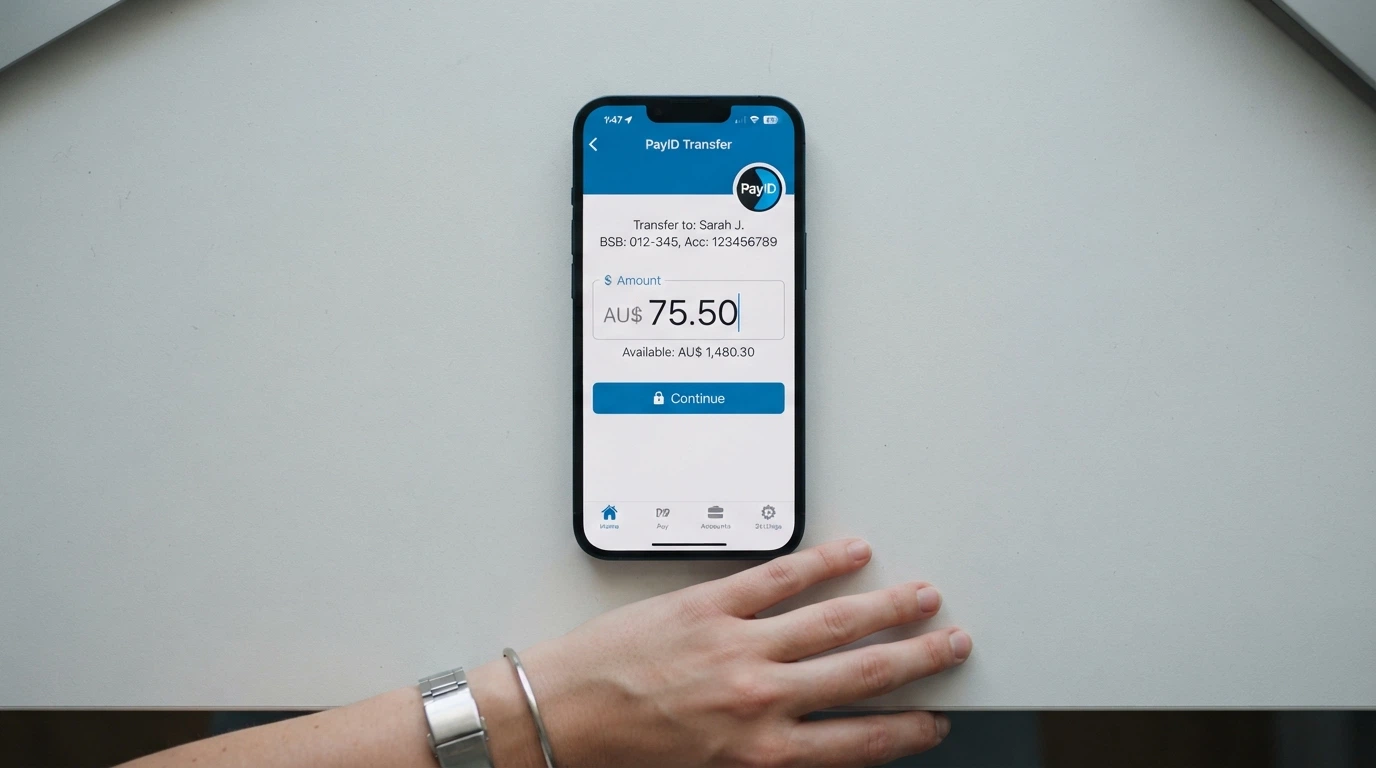
Most PayID-friendly casinos set a casino-side minimum between A$15 and A$30. DragonSlots starts at A$20. Goldenbet starts at A$30. The A$10 minimum that recurs in AU-facing casino marketing is the floor for the rail, not the floor for the casino — and the casino’s floor is typically higher. A player sending A$2 via PayID would be declined by the casino, not by PayID itself.
The implication for a $2-deposit player: PayID is the wrong rail for this purpose, and it is the rail an Australian player would default to. The mismatch between “popular” and “useful at A$2” is the central gap this section has to surface.
Credit and Debit Card Deposits: The A$10–A$20 Floor
Cards at AU-facing offshore casinos carry an A$10 to A$20 minimum. Standard credit cards and bank transfers enforce processing minimums that make a $2 deposit unworkable. The minimum exists at the processor level, not the casino level: the processor declines any transaction below its own floor, regardless of what the casino’s terms page states.
A second caveat matters more. Credit cards and credit-related products have been banned as a payment method for online wagering in Australia since 11 June 2024 under the Interactive Gambling Amendment (Credit and Other Measures) Act 2023. Digital currency is banned in the same provision. An operator that accepts either from an Australian player is, by definition, operating outside Australian rules — because the licensed product does not exist for an Australian player to fund. An operator that fails to enforce the ban faces penalties of up to A$247,500.
The bank-side risk compounds this. Australian banks sometimes block transactions categorised under MCC 7995. A card deposit at an offshore casino is not guaranteed to land, and the failure surfaces as a declined transaction rather than a refund.
The verdict on cards as a $2 route: not viable for the deposit amount, and a regulatory tell about the operator’s status if the transaction is accepted at all.
Crypto Deposits: The Only Honest Sub-$2 Route
Crypto is the route that actually delivers a $2 deposit. The lowest genuine real-money deposit at any AU-facing offshore casino is approximately AU$0.10 BTC-equivalent at Stake, with BC.Game at roughly AU$1 USDT and Bitcasino.io near zero. Those are the only operators in the AU-facing market that clear the A$2 mark on a consistent basis, and they do so because they are crypto-native — their rails are built around digital currency, not bank transfers.
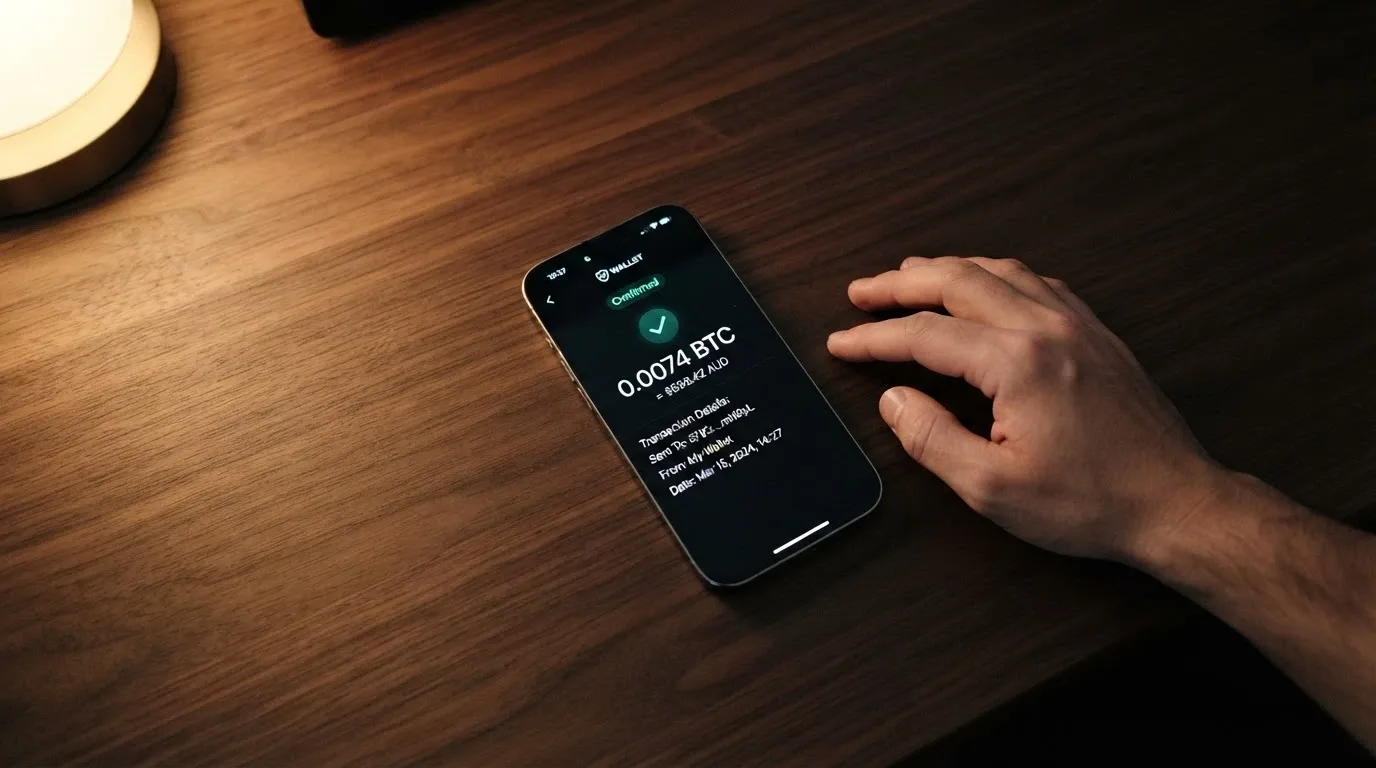
The practical entry for a crypto-curious Australian player is about A$5 in USDT-TRC20 once you account for ~AU$1 in gas. USDT on the TRON network costs about A$1 in network fees, settles in seconds, and lands directly in the operator’s wallet without going through any Australian bank correspondence. That is the only honest sub-A$10 deposit route in the AU market in 2026.
The same regulatory caveat described in the section on cards applies here: digital currency is banned for online wagering in Australia under the same 11 June 2024 amendment. An operator that accepts crypto from an Australian player is offshore by definition, because the licensed product that would justify the payment does not exist for an Australian player.
The trade-off the reader is choosing: a real sub-$2 deposit is available, but only by transacting through a payment rail that Australian law has ruled out for licensed wagering. The crypto acceptance signals offshore status unambiguously.
What Pokies Your $2 Deposit Actually Unlocks
Pokies are the game type a $2 deposit player will actually play. The economic fit is the reason. A $2 deposit at the standard AU-facing pokie minimum-stake of A$0.10 to A$0.20 per spin buys 10 to 20 spins — a short session, but a real one. At table games, a $2 deposit against an A$1 to A$5 minimum per hand buys one or two rounds, which is not a session at all.

The terminology matters for an Australian reader. “Pokies” is the local term for slot machines. Offshore casinos publish their games as “slots” or “online slots”, and the AU-facing ones use both interchangeably. The game product is the same.
What $2 actually unlocks, in practice: a few minutes at a low-stakes pokie, with the possibility of a small win — and the realistic probability of no win at all. No published per-title RTP or volatility data is available for the games a $2 player will reach, because that data has not been confirmed for specific titles in this market at the deposit level that defines this page. The session economics follow from the deposit floor, not from a per-game specification.
Pokies vs Table Games: Where Your $2 Goes Further
The choice between pokies and table games at a $2 deposit is, economically, not a choice at all. Pokies win it by default.
Pokies minimum-stake values at AU-facing offshore casinos sit at A$0.10 to A$0.20 per spin. A $2 deposit buys 10 to 20 spins, which is a short session — but a session that has a beginning, a middle, and the prospect of a small win. Table games at the same deposit level have minimums that start at A$1 to A$5 per hand. A player depositing $2 cannot afford a single A$5 blackjack hand, and an A$1 minimum hand leaves the player with two hands before the deposit is gone.
The category a $2 player ends up in is set by arithmetic, not by preference. Pokies stretch the deposit. Table games consume it.
Real-Money Play at $2 a Spin: Demo Mode vs the Real Thing
The difference between demo-mode play and staking real money at $2 deposit levels is not the game. It is the withdrawal floor.
Demo mode lets a player test a pokie without committing a deposit. The mechanics are identical to real-money play at the same stake. The shift happens when real money is at stake — the session is short, the deposit is small, and the withdrawal minimum at many offshore casinos sits above the deposit minimum. A winning $2 session at a casino with an A$20 cashout floor does not withdraw, because the winnings have not cleared the floor.
The pattern that emerges: a $2 deposit is an entry ticket, not a bankroll. It is the price of admission to the offshore casino’s product. Whether a player leaves with anything depends on the operator’s withdrawal floor, not on the deposit amount.
$2 Deposit Casinos on Mobile: Does It Work?
The mobile experience at AU-facing low-deposit offshore casinos is, for most operators, indistinguishable from the desktop experience — and that is mostly good news for a $2 player.

Browser-based mobile access is the norm. AU-facing offshore casinos use responsive web design rather than native apps, so the same deposit methods, the same game library and the same minimums apply on a phone screen as on a desktop. The deposit flow on a mobile screen is the deposit flow on a desktop screen, scaled to a smaller viewport. PayID, POLi, card, crypto — all available through the mobile browser.
The one nuance is performance at low stakes. Pokies on a mobile browser run at the same A$0.10 to A$0.20 minimum-stake range as on desktop, and the experience is identical in game mechanics. What differs is the session length on a smaller battery and a smaller attention span. A $2 deposit is already short. On a phone, the session is shorter.
No native apps from the offshore operators featured on this page. App-store presence is not the AU-facing offshore norm. A player searching for an app is looking for a product that does not exist at the deposit floor this page covers.
Mobile Pokies at $2 Minimum: The On-the-Go Reality
Mobile pokies at AU-facing offshore casinos run through the same browser-based access as every other game on the platform. The game libraries are optimised for touch, the spin controls respond to a tap rather than a click, and the stake selection sits on a screen-sized slider.
The deposit flow on a mobile screen follows the desktop flow step by step: select payment method, enter the amount, confirm. A $2 crypto deposit from a mobile wallet — Trust Wallet, MetaMask, an exchange app — is the only path that lands at this amount, and the path is the same on a phone as on a desktop.
What a $2 player should expect on a mobile browser: a short session, a low stake, a real-money outcome that depends on the game’s mechanics and the operator’s withdrawal floor rather than on the device. The phone does not change the arithmetic.
New $2 Deposit Casinos in 2026: Anything Worth Your $2?
New AU-facing offshore casinos launch frequently. None of them change the arithmetic this page has been working through.
The reason is straightforward: the deposit floor is set by the payment processor, not by the casino. A new operator signing the same PayID or card processor contracts gets the same minimums as every established operator. A new operator offering a sub-$2 deposit would have to negotiate a payment-processor floor below A$10, and no payment processor in the AU-facing market does that for fiat rails.
The exception is crypto-native launches. An operator built around USDT-TRC20 or BTC rails can offer a sub-A$2 deposit floor from day one, because the rails do not enforce the A$10 minimum that fiat processors do. The trade-off the reader is choosing in this case is the same one Stake presents: a real sub-$2 deposit, available only on rails that Australian law has ruled out for licensed wagering.
The additional trade-off at a new casino is track record. A new operator has no history of honouring withdrawals, no body of player complaints on which to base a risk assessment, and no established regulator relationship. The deposit floor is not the risk. The unknown is.
Why New Casinos Rarely Change the Deposit-Floor Equation
The economics that determine the AU-facing deposit floor are processor-side, not casino-side. Payment processors enforce minimums to cover their own per-transaction cost — staff, infrastructure, fraud screening. A A$2 transaction at the same operational cost as a A$200 transaction does not pay for itself. The processor will not offer it.
A new casino signing the same processor contracts gets the same minimums as an established operator. The casino’s terms page can advertise whatever it likes; the processor’s floor is what clears. New casinos do not undercut established deposit floors because they cannot, not because they will not.
The only route a new operator has to clear the floor is to skip the fiat processor and launch crypto-native. That is what the crypto-only entrants do. The result is the same trade-off Stake presents — a real sub-$2 deposit, on rails Australian law does not permit for licensed wagering, at an operator with no track record.
Is It Legal? What AU Gambling Law Actually Says About $2 Deposit Casinos
The honest answer to “is it legal?” sits at two levels, and the reader needs both.
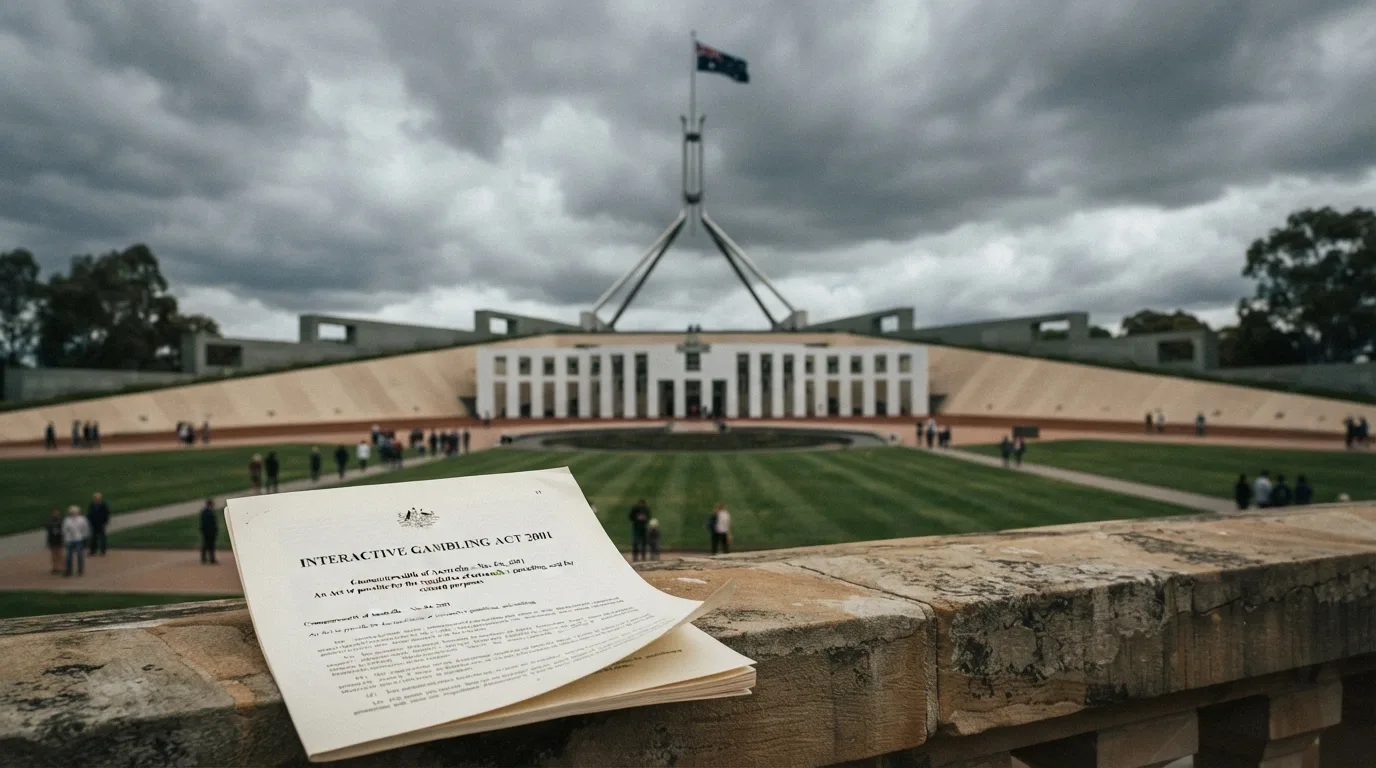
Online casino games, online pokies and in-play betting are prohibited in Australia under the Interactive Gambling Act 2001. There is no licence for online casino anywhere in the country — not federally, not in any state or territory. A page about “the best licensed online casinos in Australia” describes something that does not exist. Every operator featured on this page is offshore by definition.
The player is not prosecuted. The IGA targets providers, not players. An Australian who deposits A$2 at an offshore casino commits no offence under Australian law. The protection that absence of prosecution offers is narrower than it sounds: no Australian consumer protection applies to the deposit, no BetStop registration will block it, no ACMA recourse is available if the operator refuses a withdrawal, and the site can be blocked at any time — with the player’s balance still on it.
The enforcement record is real. ACMA has had more than 1,564 illegal gambling and affiliate websites blocked by Australian ISPs since November 2019, and more than 225 illegal services have withdrawn from the Australian market since enforcement strengthened in 2017. The block list grows monthly. A site that accepts AU players today may not accept them tomorrow.
The IGA 2001: What’s Actually Illegal and What Isn’t
The Interactive Gambling Act 2001 makes it an offence for a provider to offer online casino games, online pokies or in-play sports betting to a person in Australia. The Act does not make it an offence for a player to access those services — the prohibition targets the supply side, not the demand side.
What is licensed under Australian law is narrower than the search results suggest. Wagering on races and sport, placed before the event begins, is licensed through state and territory wagering operators, predominantly the Northern Territory Racing and Wagering Commission administered through Licensing NT. Lotteries and keno are licensed through state and territory operators. Online casino games, online pokies and in-play betting sit on the prohibited side of the line.
The player-not-prosecuted nuance deserves a careful reading. An Australian depositing at an offshore casino commits no offence. The Act does not criminalise the player. What it does not do is protect the player either: no AU consumer protection, no BetStop coverage, no ACMA recourse for a refused withdrawal, and the site can be blocked by ACMA at any time with a balance still on it. “Not illegal for the player” and “safe for the player” are not the same statement.
The minimum age for any commercial gambling in Australia is 18. That applies across licensed and unlicensed products alike.
The 2026 Reforms: What Changes on 1 January 2027
The Interactive Gambling Amendment (Gambling Reform) Bill 2026 passed Parliament on 19 August 2026. Its measures commence on 1 January 2027. The reforms touch advertising, inducements, endorsements, and — most relevant to this page — payment blocking.
From 1 January 2027, no more than three wagering ads per hour will be permitted between 6:00 am and 8:30 pm, and no wagering advertising will be allowed from 15 minutes before a live sporting event until 5 minutes after it ends. Athletes, celebrities and influencers will be barred from promoting wagering products. Broadcasting sporting odds will be banned outright. Radio wagering ads will be barred during school drop-off and pick-up times.
The reforms also touch direct marketing. From 1 January 2027, direct marketing of inducements is prohibited for 14 days after a customer signs up, for three months after a person deregisters from BetStop, and indefinitely for customers identified as at risk of gambling-related harm. BetStop’s operation is strengthened in the same reform package.
The single most material change for a $2-deposit player: banks and payment providers gain express authority to block transactions to illegal gambling operators. A PayID deposit that lands today may not land after 1 January 2027. A card deposit blocked under MCC 7995 today may face a more direct block tomorrow. Crypto bypasses the bank system and is therefore the rail least affected by the new blocking authority — though the underlying offshore status of the operator does not change.
What Offshore Licensing Actually Means for Your $2
The offshore licences that AU-facing casinos display — Malta Gaming Authority, UK Gambling Commission, Curaçao eGaming — are real licences, issued by real regulators, with real compliance obligations. None of them is an Australian licence. None of them offers Australian consumer protection.
What each licence does offer is the protection regime of its own jurisdiction. The Malta Gaming Authority enforces EU-standard player protection, dispute resolution and segregation of player funds. The UK Gambling Commission enforces a stricter regime, with affordability checks and intervention requirements. Curaçao eGaming is the lightest of the three — a registration regime with limited dispute resolution. None of the three binds the operator to Australian rules, and none of them gives an Australian player the protection an Australian regulator would.
The payment-method tells matter at this point. Credit cards and crypto are banned for online wagering since 11 June 2024, and a site accepting either from an Australian is offshore by definition — the same point the section on payment methods makes. The penalty for an operator that fails to enforce the ban is up to A$247,500.
The offshore licence does not cover the Australian player. It covers the operator’s obligations to its licensing regulator. An Australian player with a dispute at an offshore casino resolves that dispute with the offshore regulator — and that resolution may be slow, may be partial, or may not come at all.
Staying Safe: Responsible Gambling When the Usual Rules Don’t Apply
The responsible-gambling tools that exist for Australians are real, and they are well-used. About 2.1% of Australian adults — roughly 430,000 people — experience problem gambling, with high-risk gambling at 1.8% according to the Australian Institute of Health and Welfare’s 2022 data. BetStop, the National Self-Exclusion Register, had 67,480 registrations as at 31 July 2026, of which 41,290 exclusions were still active; 78% of registrants were under 40, and 38% chose lifetime exclusion.
The hard limitation for a $2-deposit player: the offshore casinos on this page are not covered by these tools — see the BetStop section below for what that means in practice. The deposit-limit tools at licensed operators — customer-set deposit caps, activity statements, take-a-break periods — are tools at licensed operators. The offshore operators on this page offer none of them as a matter of obligation.
The supports that work regardless of where the player plays: the National Gambling Helpline at 1800 858 858 is free, confidential and staffed 24 hours a day, 7 days a week. Gambling Help Online provides live chat and online counselling, also 24/7. State-specific services — Gambler’s Help Victoria is one — offer additional support.
BetStop and Its Limits: What Offshore Players Need to Know
BetStop is the National Self-Exclusion Register, live since August 2023. It binds every Australian-licensed wagering service — bookmakers like Sportsbet, bet365, Ladbrokes — to refuse service to any registered person. As at 31 July 2026, 67,480 people had registered, 41,290 exclusions were still active, 78% of registrants were under 40, and 38% had chosen lifetime exclusion. The user experience data is striking: 77% of self-excluded gamblers report better quality of life, 79% report improved mental health, and 69% report better personal relationships, per ACMA’s November 2025 reporting.
BetStop does not reach offshore casinos. An Australian who has registered with BetStop has excluded themselves from every AU-licensed wagering operator. They have not excluded themselves from any of the operators on this page. The offshore casino is not connected to the register, is not required to check it, and will continue to take deposits from a self-excluded player. The 2026 reform strengthens BetStop’s operation on the AU-licensed side; it does not extend BetStop’s reach to offshore operators.
The implication: a player who registers with BetStop and then deposits at an offshore casino has not protected themselves from the offshore product. They have protected themselves from the AU-licensed product only. The supports in the section above are the supports that work for an offshore player.
Deposit Limits and Self-Help: What You Can Actually Control
Licensed Australian wagering operators are required to offer customer-set deposit limits and activity statements under their state or territory conditions. The conditions differ between jurisdictions, but the shape is the same: a player can set a deposit cap, receive activity statements, and trigger a take-a-break period. The tools are real, and they are part of the licensed product.
Offshore operators on this page are not required to offer any of them. A player at an offshore casino has the same self-help tools available — they are simply not enforced by the operator. What a $2-deposit player at an offshore casino can actually control: the personal deposit cap, set before the session, honoured by the player rather than enforced by anyone else. The separate transaction account approach, with a fixed balance set aside for play. The take-a-break period, taken voluntarily, without operator enforcement. The helplines in the section above, available regardless of where the player is playing.
The self-help discipline is, in the offshore case, the only discipline. The licensed-operator tools that are not available offshore are the licensed-operator tools the offshore operator has no obligation to provide.
How We Selected and Ranked These Casinos
The ranking on this page is built from three sources: BLASK AU market-share data for traffic ranking, PayoutVerdict and VegasPokie minimum-deposit analysis for deposit-floor verification, and ACMA enforcement records for regulatory context. Each operator was checked against the official Australian licence framework, and the result of that check is the single fact that applies to all ten: no online casino licence exists in Australia, and none of the operators on this list holds one.
The ranking criteria: market share is the primary sort, with deposit-floor proximity as the secondary lens. Where per-operator deposit data is unevenly confirmed across this set — and most operators’ specific deposit floors are not published in a verifiable form — the operator’s qualitative positioning in the deposit-floor tiers above is used in place of a confirmed per-brand number. The tier analysis itself draws on the body of minimum-deposit analysis cited above and on the per-method floors published by AU-facing deposit-method aggregators.
The verification limits of this review, stated honestly: the operator sweep that would have confirmed per-brand bonus terms, wagering multipliers, game provider lists and exact offshore licences could not be completed in this research round. What the ranking reflects is therefore traffic data and verified deposit-floor context, not per-brand bonus terms or licence-register lookups. Where a per-brand figure is not confirmed on this page, it is not confirmed in the source set either, and the page does not invent one.
What the ranking is not: it is not a recommendation. The page describes operators and their place in the AU-facing market. It does not advise a reader to deposit at any particular brand, because no brand on this list holds an Australian licence and no brand on this list offers the Australian consumer protection an Australian player would expect from a licensed product.
Your $2 Deposit in 2026: What You Gain and What You Risk
What a $2 deposit buys: a short pokies session, somewhere between 10 and 20 spins at A$0.10 to A$0.20 per spin. Crypto required for genuine sub-$5 play. An entry ticket to an offshore casino’s product, not a bankroll. A look at the AU-facing market’s lowest-deposit tier, paid for in a payment rail that Australian law has ruled out for licensed wagering.
What it costs: no Australian consumer protection, no BetStop coverage, no ACMA recourse. A withdrawal floor that may sit above the deposit floor, locking small winnings behind a higher bar. A payment-blocking risk that becomes express on 1 January 2027, when banks gain authority to decline transactions to illegal operators. A regulator the player cannot reach in any dispute. A site that can be blocked at any time, with the balance still on it.
The trade-off is the one this page has been working through from the start. The reader is choosing between a real sub-$2 deposit, available only on offshore rails, and the Australian consumer protection that comes with not making that deposit. The two do not coexist.
The honest verdict: a $2 deposit at an AU-facing offshore casino is, for most readers, the wrong entry point. The deposit floor the marketing describes is real at one operator — Stake, in Bitcoin — and fictional at the rest. A player who can fund an A$10 PayID deposit is funding the realistic product; a player who wants to spend less than that is choosing crypto rails and offshore-only consumer protection. Either is a choice. Neither is a small one.
The supports in the responsible-gambling section apply regardless of the choice. The National Gambling Helpline at 1800 858 858 is free, confidential, and staffed 24/7. Gambling Help Online offers live chat and online counselling. BetStop works for AU-licensed products. The offshore product is the gap.
Frequently Asked Questions
What is the minimum deposit for PayID casinos in Australia?
PayID is the most popular AU-facing deposit method, but the casino-side minimum is the blocker, not the rail. Most PayID-friendly casinos set a minimum between A$15 and A$30. DragonSlots starts at A$20; Goldenbet at A$30. A $2 PayID deposit will be declined.
Can I get a welcome bonus with a $2 deposit at an Australian casino?
In almost every case, no. Eight of fifteen AU-facing brands enforce a higher minimum for welcome-bonus eligibility than for play — typically A$20 where the deposit floor is A$10. A $2 deposit lands at the casino but does not unlock the welcome bonus. The bonus the marketing describes is conditioned on a deposit the marketing does not advertise.
Are $2 deposit casinos safe for Australian players?
Online casino is prohibited in Australia under the Interactive Gambling Act 2001; no AU-licensed online casino exists. Every $2-deposit casino available to Australian players is offshore. The full implications of that offshore status are set out in the section on AU gambling law; in short, no AU consumer protection applies, no BetStop coverage, no ACMA recourse, and the site can be blocked at any time with the player’s balance still on it.
What is the withdrawal minimum at low-deposit casinos?
The withdrawal minimum at most offshore casinos sits above the deposit minimum, often well above it. A winning $2 session at a casino with an A$20 cashout floor does not withdraw. The deposit floor and the withdrawal floor are different figures on the same site, and the page that states one rarely states the other.
Why do most Australian casinos require $10 or more as a minimum deposit?
The floor is set by the payment processor, not by the casino. Standard credit cards, bank transfers, PayID and POLi enforce processing minimums of A$10 to A$20. The processor declines anything below that threshold regardless of what the casino’s terms page states. Crypto bypasses the floor because the rail does not enforce it.