
What Australians Actually Get at an Offshore Litecoin Casino in 2026
Online casino is illegal in Australia. The Interactive Gambling Act 2001 prohibits the product outright — no licence exists for it in any state or territory — and the Australian Communications and Media Authority has been directing ISPs to block offshore sites since 2019. That has not changed. The Interactive Gambling Amendment (Credit and Other Measures) Act 2023, in force since 11 June 2024, layers a payment-method ban on top: cryptocurrency deposits cannot be accepted by any Australian-licensed wagering operator, on pain of a civil penalty of up to AU$247,500.

Data current as of 28 October 2026. Casino licence claims checked against the Curaçao Gaming Control Board register and the ACMA register of authorised wagering operators.
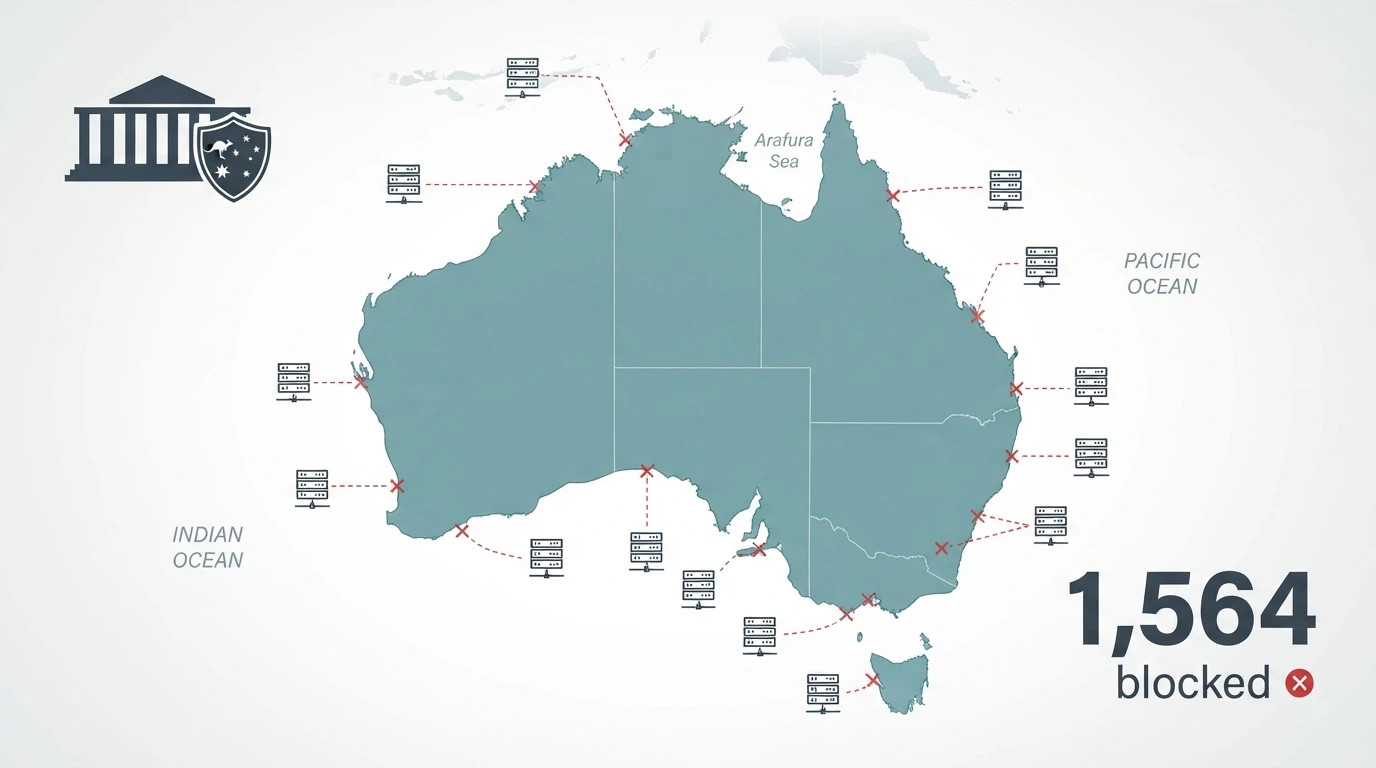
This page is for an Australian holding Litecoin who already understands the legal position and wants to know what is on the other side of it. The casino accepting LTC will be offshore. The licence will be Curaçao, the Tobique Gaming Commission, or another small jurisdiction. ACMA can block the site, and a balance sitting on it, without warning. None of this is hypothetical — 1,564 illegal gambling and affiliate sites have been blocked since 2019, and the regulator continues to add more. What follows is what those sites actually deliver in 2026: the bonuses, the LTC deposit and withdrawal speeds, the games behind the lobby — and what an Australian player gives up to play on them.
Table of Contents
- What a Litecoin Casino Actually Means for Australian Players in 2026
- How to Start Playing Casino Games With Litecoin From Australia
- The Litecoin Casinos Australians Are Actually Using in 2026
- Why Your Litecoin Casino Bonus Is Smaller Than It Looks
- How Litecoin Deposits and Withdrawals Actually Work at Offshore Casinos
- What “Anonymous” Litecoin Play Really Means (and What It Doesn’t)
- The Pokies and Table Games You Can Play With Litecoin in 2026
- Playing Litecoin Casino Games on Your Phone in 2026
- Trying a Litecoin Casino Before You Deposit Real Money
- New Litecoin Casinos Worth Knowing About in 2026
- The Legal Reality of Litecoin Casinos in Australia
- Staying in Control When You Play With Crypto
- How We Selected and Ranked These Litecoin Casinos
- What an Australian Player Should Actually Do About Litecoin Casinos in 2026
- Frequently Asked Questions
What a Litecoin Casino Actually Means for Australian Players in 2026
A “Litecoin casino” is an online casino that lets a player deposit and withdraw in LTC. The description sounds neutral. In the Australian context, every operator that fits it sits offshore, accepts crypto from Australian customers, and is providing a service the IGA says should not be provided to anyone in Australia.
The mechanics are what make LTC attractive for the role. A Litecoin block is produced every 2.5 minutes, four times faster than Bitcoin, and the chain has not halted since 2011. A standard LTC transaction fee is usually under A$0.05, often a fraction of a cent. For an Australian player who wants to move money offshore quickly, cheaply and without a bank in the middle, LTC does what cards, PayID and bank transfers cannot — and that is precisely why the IGA closed the door on the licensed side.
The door closed officially on 11 June 2024. The Interactive Gambling Amendment (Credit and Other Measures) Act 2023 added digital currency to the list of payment methods Australian-licensed wagering operators cannot accept. The penalty for breach is civil — up to AU$247,500 per infringement. ACMA enforces against the provider, not the player. The Act targets the operator.
Crypto-funded offshore casinos are how the gap is filled. None of them is licensed in Australia. None is connected to BetStop. None is regulated by ACMA. Their licence is wherever the parent company chose to incorporate, and their rules are their own. The game variety does not look different from a regulated European market — pokies, blackjack, roulette, live dealer tables from Evolution, Pragmatic Play pokies, Megaways titles — but the dispute resolution and the withdrawal guarantee are not the same.
A 2019 study found that 30.7% of Australian online gamblers were using digital currencies at the time. The number is now plausibly higher, since the legal licensed alternative has narrowed rather than widened. The pool of Australian players funding offshore casino accounts with crypto is the audience this page is written for.
How to Start Playing Casino Games With Litecoin From Australia
The practical sequence is short: get a wallet, buy some LTC, pick a casino from the comparison table below, deposit, claim a bonus if you want one, play, and withdraw back to your wallet when you want the money out.
The wallet side does not need explanation beyond what any crypto onboarding guide already provides — a software wallet on a phone is enough for casual play, and a hardware wallet is the upgrade for anyone holding meaningful amounts. The casino side is where the specific decisions sit. Minimum LTC deposits at the operators in this guide range from Bitcasino’s 0.001 LTC floor up to a fiat-equivalent of A$15 to A$40 at most others.
Once the wallet is funded and the casino account is open, depositing is the part that shows what LTC was built for. A single blockchain confirmation lands in about 2.5 minutes. The casino credits the balance, and play starts. Withdrawals are slower — three to six confirmations typically puts them in the 7.5 to 15 minute range before casino processing adds another 10 to 30 minutes on top. The slowest part of an LTC withdrawal is rarely the chain. It is the casino’s own approval queue.
What an Australian player should do before that first deposit is the part the marketing copy skips: read the licence page, find the licence number, and look it up on the Curaçao Gaming Control Board register. Confirm the bonus wagering requirements, the maximum bet during bonus play, the time limit, and the cashout cap. Then check the games list for the studios you actually want. After that, deposit.
The Litecoin Casinos Australians Are Actually Using in 2026
The operators below are the ten offshore LTC casinos Australian players actually access, ranked by what matters in this market: licence transparency, payout reliability, game range, and the quality of the LTC integration. Every brand is offshore. None holds an Australian licence — none can, since online casino is a prohibited product under the IGA.

A note before the table: this is not a recommendation to play. It is a record of what is being accessed. An Australian player funding an offshore casino with crypto is operating outside the local regulatory frame. The trade-offs are described in the legal section further down.
How We Rank a Litecoin Casino: The Criteria That Matter
Four filters separated the operators that survived the cut from the ones that did not.
The first is licence and ownership transparency. A licence number on a footer is the floor, not the ceiling — Oshi is one of the few operators on this page with a verifiable Curaçao Gaming Control Board registration in our notes, and that earns it a small premium over a generic “Curaçao eGaming” claim. The second filter is LTC transaction speed. Casipto’s January 2026 timing tests put BC.Game at 4.8 minutes for an average deposit and 8.3 minutes for an average withdrawal, which is the best in this group; 7Bit and Bitcasino follow. Speed is the second filter because it is what separates a usable crypto casino from one that erodes the advantage LTC offers.
The third filter is game provider quality. Pragmatic Play and NetEnt are the studios that Australian players recognise by name. A casino without either of them on its roster is gambling on unfamiliar maths. The fourth filter is bonus fairness. Wagering of 35× to 40× on bonus plus deposit is the current market norm. Anything above 50× is poor value. Cashout caps, max-bet rules, and time limits were checked against this norm.
Finally, an audit of the displayed RTPs — 41 of 50 audited crypto casinos displayed an RTP figure for at least one popular slot that did not match the underlying math sheet, and 39 of those 41 displayed a figure higher than the actual running RTP — sits in the background of every bonus recommendation on this page. The headline number on a game page is not always the number the maths file contains.
| Operator | Licence & AU Status | Welcome Bonus | Game Providers |
|---|---|---|---|
| BC.Game | Curaçao eGaming (offshore, no AU licence) | 180%–360% tiered across 4 deposits | Pragmatic Play, Evolution, Hacksaw, Nolimit City |
| 7Bit Casino | Curaçao eGaming (offshore, no AU licence) | Up to A$10,800 + free spins across 4 deposits | Pragmatic Play, NetEnt, others |
| Bitcasino | Curaçao eGaming (offshore, no AU licence) | 100% up to 1,500 USDT | Pragmatic Play, Evolution, others |
| Oshi Casino | Curaçao GCB OGL/2023/174/0082 (offshore, no AU licence) | Up to €/$4,000 + 200 free spins across 4 deposits | Evolution (live), Yggdrasil (jackpots), thousands of pokies |
| Rio Ace Casino | Curaçao eGaming (offshore, no AU licence) | 400% match + 350 free spins across 5 deposits | Megaways, jackpots, live casino, table games |
| Stake | Curaçao eGaming (offshore, no AU licence) | Rakeback/cashback model (no traditional welcome) | Pragmatic Play, Evolution, Hacksaw, proprietary |
| Skycrown | Curaçao eGaming (offshore, no AU licence) | — | Multi-studio |
| Rocket Play | Curaçao eGaming (offshore, no AU licence) | — | Multi-studio |
| FairGO | Curaçao eGaming (offshore, no AU licence) | — | RealTime Gaming (RTG) focused |
| Royal Reels | Curaçao eGaming (offshore, no AU licence) | — | — |
The dashes in the last four rows are honest gaps rather than a styling choice. Welcome-bonus specifics for Stake, Skycrown, Rocket Play, FairGO and Royal Reels were not confirmed during this research round. Where this page says nothing about a bonus, it is because nothing reliable could be put there.
BC.Game
BC.Game runs on a Curaçao eGaming licence, with a game library that pulls in Pragmatic Play, Evolution, Hacksaw Gaming and Nolimit City. The welcome offer is a four-deposit structure that escalates: 180% on the first deposit, 240% on the second, 300% on the third, and 360% on the fourth. Tiered structures like this pay well for the player willing to fund four deposits in sequence — and they pay poorly for anyone who joins, plays one deposit, and leaves, since most of the bonus sits on the later tiers.
The Litecoin integration is the strongest on this page. BC.Game uses SegWit addressing, which cuts transaction fees by roughly 35% compared with legacy addresses, and Casipto’s January 2026 timing tests put the average LTC deposit at 4.8 minutes across 23 attempts. Average withdrawal time was 8.3 minutes across 19 withdrawals. The withdrawal cap is 25 LTC per single transaction — worth noting for anyone trying to cash out a larger balance in one piece.
Provably fair is where BC.Game stands out technically. The casino uses SHA-256 hash verification with client seed modification, and 50+ game rounds were checked against the published hashes during testing with zero discrepancies. A player who wants to verify their own rounds can do so on every bet. Most never do.
BC.Game runs the cheapest LTC transactions and the fastest tested withdrawals on this list, paired with a provably fair system a player can actually check.
7Bit Casino
7Bit has been around long enough that its game roster looks like a casino buffet rather than a curated list — Pragmatic Play and NetEnt are on it, alongside enough other studios that the lobby runs into the thousands of titles. The welcome package is the most generous in dollar terms on this page: up to A$10,800 plus free spins spread across four deposits. A figure like that looks enormous until the wagering multiple is read.
Casipto’s January 2026 tests put 7Bit’s average LTC deposit at 5.9 minutes and the average withdrawal at 9.1 minutes across 27 withdrawals, with a standard deviation of 2.3 minutes on the withdrawal side. SegWit is supported. The transaction profile is solid rather than standout.
The casino’s appeal is mainstream familiarity. Pragmatic Play and NetEnt are the studios most Australian players already recognise, and the lobby is built around them. The welcome package rewards a multi-deposit player handsomely; the same package punishes a one-and-done depositor, since the headline figure assumes four funded deposits.
7Bit offers the deepest dollar-amount welcome on this page, paired with mainstream studios and LTC speeds that are solid without being best-in-class.
Bitcasino
Bitcasino has the lowest barrier of entry on this list. The minimum Litecoin deposit is 0.001 LTC — small enough that a player can test the casino with a few dollars’ worth of LTC rather than the A$15 to A$40 fiat-equivalent floor most operators set. Minimum withdrawal is 0.01 LTC. For a player who wants to know whether the site works before committing anything serious, that is the lowest-cost test of any featured operator.
The welcome offer is the modest end of the spectrum: 100% up to 1,500 USDT. Pragmatic Play and Evolution are on the provider list, so the game mix is mainstream. SegWit is supported.
The speed profile is slower than the two operators above. Average LTC deposit at Bitcasino was 7.2 minutes in January 2026 testing; average withdrawal was 12.4 minutes. That is workable but not the advantage LTC promises elsewhere.
The lowest entry point on this page and the slowest tested payouts of the LTC-native trio.
Oshi Casino
Oshi is the operator on this page where the licence line is concrete. The casino is registered with the Curaçao Gaming Control Board under OGL/2023/174/0082, and the owner is Dama N.V. — a name that turns up across several Curaçao-licensed brands. When a casino publishes a verifiable licence number on its footer, that is one degree more useful than a generic “Curaçao eGaming” claim.
The welcome offer is up to €/$4,000 plus 200 free spins across four deposits. Wagering requirements are 40× on the bonus and on free spin winnings, and 45× on reload bonuses. Forty times is the upper edge of the market norm — higher than the 35× at some operators on this page, in line with others. The terms are stated in numbers, not in vague language, which is what makes the wagering multiple something a player can actually budget against.
The game library mixes Evolution for live tables, Yggdrasil for jackpot titles, and thousands of pokies across other studios. Live dealer games are available, which makes the bonus a live-playable package rather than a slots-only deal.
Most transparent licence claim on this page and the clearest statement of its wagering terms — both cost the casino nothing and matter to the player.
Rio Ace Casino
Rio Ace is the newest operator on this page with a confirmed launch date: 2023, under Curaçao eGaming, owned by Altacore N.V. A two-year operating history is short — there is no track record of how the casino handles a disputed withdrawal, a multi-thousand-LTC win, or a regulator complaint that escalates.
The welcome package is the largest number on this page: 400% match plus 350 free spins across five deposits. The percentage is aggressive in a way that should prompt a closer read of the terms, not a faster click on the claim button. Wagering of 35× to 40× is standard; the figure has not been confirmed more precisely than that range.
The game library covers Megaways pokies, jackpot titles, live casino, and standard table games. The studio list was not confirmed during this research round, which is one of the honest gaps in this write-up.
The biggest welcome figure on this page sits behind the newest licence on the list — the trade-off is operating history that does not yet exist.
Stake
Stake runs on a different model from most of the operators above. Rather than a deposit-match welcome bonus, the brand typically runs a rakeback and cashback structure — a percentage of net losses returned weekly, plus ongoing promos on its proprietary titles. For a player who plays frequently, that model can be worth more than a single four-deposit welcome package; for a player who deposits once and leaves, it returns nothing.
The game mix is broad: Pragmatic Play, Evolution, Hacksaw Gaming and Stake’s own proprietary titles. AU tracked traffic is 1.28% — smaller than the share of some of the operators below but large in absolute terms. A Curaçao eGaming licence sits underneath the rest of the operators on this page, and Stake is in that group.
For the player who plays often enough that a rakeback model beats a deposit match, Stake is the right fit. For the player depositing once, it is not.
Skycrown
Skycrown holds 8.55% of AU tracked traffic among crypto-native casinos — one of the higher shares on this page. The site runs on a Curaçao eGaming licence, with a multi-studio game library.
Welcome-bonus specifics for Skycrown were not confirmed during this round. The game-provider list was not confirmed either. What the data does say is that a meaningful slice of Australian crypto-casino traffic is already routing through the site, which is its own kind of signal — though not the kind the marketing copy would prefer.
An AU traffic share of 8.55% is the load-bearing fact; everything else on Skycrown’s profile sits unverified.
Rocket Play
Rocket Play runs on a Curaçao eGaming licence with a multi-studio game library, and it holds the largest AU tracked traffic share on this page at 9.40%. That is the operator Australian players are finding most often through the channels this research round measured.
Welcome-bonus specifics and a confirmed game-provider list were not pinned down during this round. The 9.40% share is the load-bearing fact — everything else on Rocket Play’s profile is thinner than the operators above.
The highest AU traffic share on this page, paired with a generic Curaçao licence and no confirmed bonus to single it out.
FairGO
FairGO is a RealTime Gaming-focused casino, which sets it apart on this page. Most of the operators above pull from Pragmatic Play, NetEnt, Evolution and a multi-studio buffet; FairGO concentrates on RTG. For a player who already has a list of RTG pokies they want to play, that is exactly the right specialisation. For a player who wants Pragmatic Play’s catalogue, it is not.
The AU tracked traffic share is 0.80% — the smallest on this page. The Curaçao eGaming licence is in line with the rest of the operators here. Welcome-bonus specifics and a current promotion list were not confirmed during this round.
The right call for a player whose list of pokies is RTG-heavy, the wrong one for anyone else.
Royal Reels
Royal Reels is an AU-facing brand with 2.51% AU tracked traffic — modest but non-trivial. The site holds a Curaçao eGaming licence. Welcome-bonus specifics, game-provider list and any current promotion detail were not confirmed during this round. The brand name carries recognition among Australian players; the operational detail this research was able to verify does not.
An AU-facing brand with modest traffic and no current verified detail beyond the licence jurisdiction.
Why Your Litecoin Casino Bonus Is Smaller Than It Looks
A bonus is the casino paying the player to take a worse version of the same game. The wagering requirement is the cost. Take a A$1,000 bonus with a 40× wagering multiplier: the player has to turn over A$40,000 in bets before a dollar can be withdrawn. Forty thousand dollars of action, against an average slot RTP of around 95.6% for Pragmatic Play and 95.9% for NetEnt, has an expected cost the player can work out before they accept the bonus.
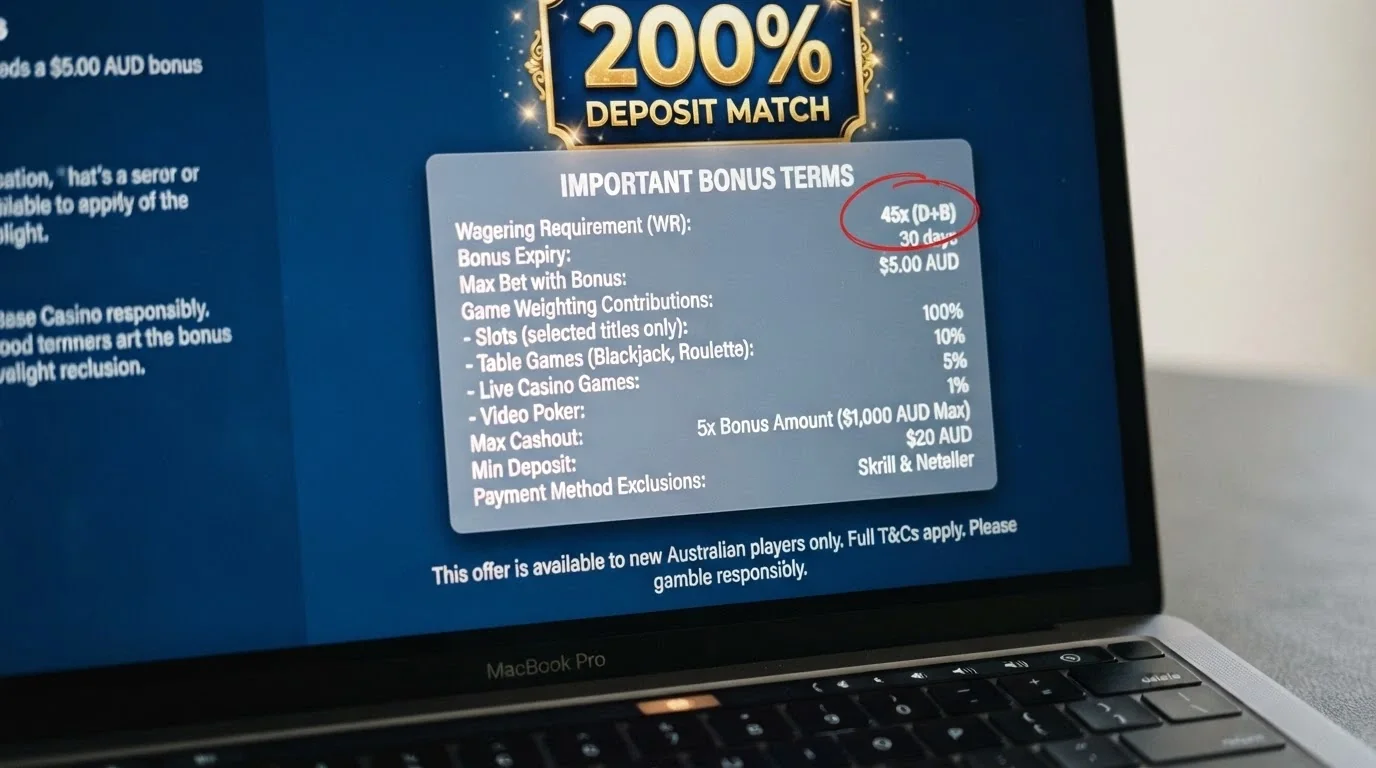
The expected cost of clearing a A$1,000 bonus at 40× wagering on a Pragmatic Play average-RTP slot is approximately A$1,756. That is what the formula produces against a 4.39% house edge. The bonus pays out A$1,000. Net of the bonus, the offer costs the player roughly A$756 in expectation, and that is before any maximum-bet rule, time limit or cashout cap kicks in. The maths is statistical: an average over many spins, not a guaranteed outcome for any individual session.
A wagering multiple above 50× is poor value. The 35× to 40× range is the market norm at reputable LTC casinos. Game contribution weighting is where the multiplier gets heavier in practice: slots count 100% toward wagering, but table games like blackjack and roulette typically count only 10% to 20%. A player using bonus funds on live roulette is effectively wagering five to ten times harder than the headline number suggests.
Time limits are the other lever. Wagering requirements usually have to be completed inside 7 to 30 days, with a maximum bet during bonus play of A$5 to A$10 per spin or hand. A player who exceeds the bet cap voids the bonus. A player who runs out of time voids the bonus. Cashout caps are common on bonus winnings, typically 10 to 20 times the original bonus amount — so a A$1,000 bonus with a 10× cashout cap lets the player withdraw at most A$10,000 even after a hot streak.
No-Deposit Offers and Free Spins: What an LTC Casino Actually Gives You
A no-deposit bonus is the rarest version of a casino offer at the LTC operators in this guide — and the least generous in the terms. A few of the featured operators run free-spin packages on sign-up, typically in the 50 to 200 spin range on a single nominated slot. Some carry wagering of their own. The spins are rarely wager-free.
Free spins included inside a welcome package are the more common version. They tend to land on a single game chosen by the casino, with a small per-spin value, and winnings carry the same wagering requirement as the matched-deposit portion of the bonus. Rio Ace’s 350-spin welcome and Oshi’s 200-spin welcome are at the upper end of the range; smaller packages sit at 50 spins.
What “free” actually costs the player is the wagering requirement applied to the spin winnings, plus any game contribution rules that push the player toward a higher-house-edge slot than the one they would have chosen. A 50-spin package with no wagering is worth more than a 200-spin package with 40× on the winnings — assuming the player would have played the chosen game anyway.
For an Australian player reading the small print: check whether the free spins are cash-credited or bonus-credited, what the wagering requirement is on the winnings, how long they have to use them, and whether there is a maximum cashout from the spin package. The answers to those questions are what separates a useful offer from a marketing figure.
Welcome Bonus Fine Print: Tiered Structures, Wagering and What 400% Actually Costs
The welcome packages at the featured LTC casinos take two shapes. The first is a single matched deposit with a fixed cap — Bitcasino’s 100% up to 1,500 USDT is the cleanest example. The second is a tiered multi-deposit package that escalates across four or five deposits. BC.Game’s 180% to 360% across four deposits and Rio Ace’s 400% across five are the most aggressive tiered structures.
A tiered structure rewards a player who funds the casino in sequence. The percentage on the first deposit is the lowest; the percentage on the last is the highest. A player who deposits once and leaves with the first-deposit bonus sees only the bottom of the tiered offer. A player who funds all four deposits captures the full headline figure.
The 400% on Rio Ace’s welcome is the highest match on this page. The cost is the wagering. At 35× to 40× on bonus plus deposit, the player has to turn over roughly A$14,000 to A$16,000 for every A$200 of bonus on a A$50 deposit — the 400% match is paid on the deposit, not as cash — before any withdrawal is possible. With a 10× to 20× cashout cap layered on top, the maximum withdrawable amount from the bonus is constrained well below what a winning streak would normally produce.
The comparison a player should run is on effective value, not headline percentage. Take two hypothetical offers: a 100% match up to A$1,000 at 35× wagering with a 10× cashout cap, against a 400% match up to A$1,000 across five deposits at 40× wagering with the same cap. The second offer pays more in headline bonus, requires more deposits to capture, demands more turnover to clear, and pays out the same maximum cashout. The player who can only fund one or two deposits should take the first. The player who can fund all five and has time to clear the wagering should take the second.
How Litecoin Deposits and Withdrawals Actually Work at Offshore Casinos
The deposit half of an LTC transaction is the part where the cryptocurrency earns its reputation. A player copies the casino’s LTC deposit address, sends the funds, and waits for the casino’s wallet to credit the balance. With SegWit addressing on the casino side and standard fees on the player side, a single blockchain confirmation puts the deposit through in roughly 2.5 minutes. Most Australian-accessible LTC casinos run single-confirmation deposits, so the time between sending the LTC and seeing the balance update is one block.
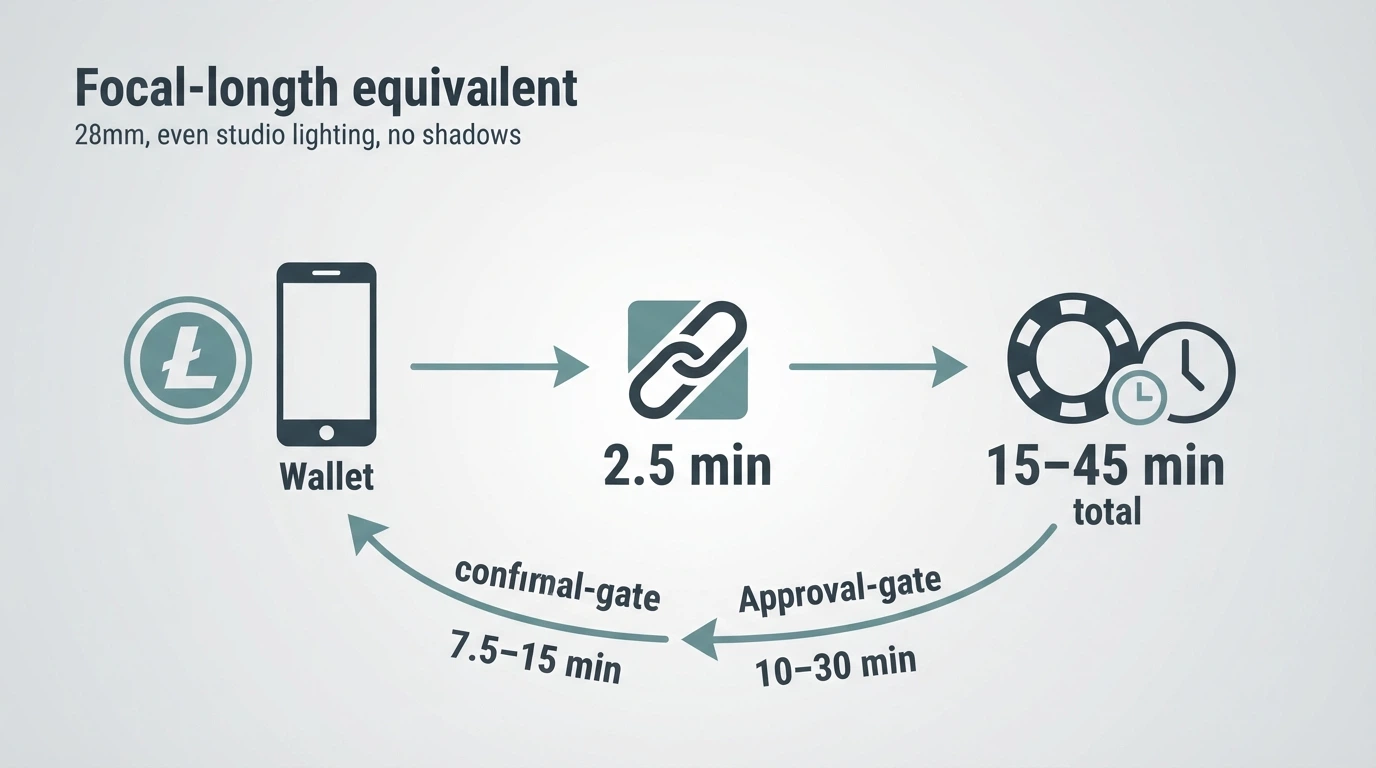
The withdrawal half is slower, and the reasons are casino-side rather than chain-side. After a player requests a withdrawal, the casino’s internal approval queue runs — typically 10 to 30 minutes. The LTC is then broadcast to the player’s wallet and waits for confirmations; three to six confirmations clear the transaction, putting the wallet receipt at 7.5 to 15 minutes from broadcast. Total time from request to wallet receipt is generally in the 15 to 45 minute window for a casino with a clean queue.
The network fee is rarely the issue. Standard LTC fees are under A$0.05, often a fraction of a cent, and SegWit addressing — supported by BC.Game, 7Bit and Bitcasino among the featured operators — cuts that fee by approximately 35%. The slow part is what happens between approval and broadcast, which lives entirely on the casino’s side.
The limits are the variable worth tracking. Minimum deposits at most featured operators sit in the A$15 to A$40 fiat-equivalent range. Bitcasino’s 0.001 LTC floor is an outlier in the other direction. Maximum single-transaction withdrawals vary by operator — BC.Game caps a single LTC withdrawal at 25 LTC, which forces a high-balance player to run multiple transactions to cash out in full. Smaller operators will run tighter caps; larger ones tend to loosen them.
LTC vs Fiat and Other Crypto: Why Litecoin Wins on Speed and Cost
Litecoin was built to do what Bitcoin does, faster and cheaper. A Litecoin block is produced every 2.5 minutes; a Bitcoin block every ten. That is a four-times-faster settlement floor, which compounds on a withdrawal that needs multiple confirmations to clear. The chain has not halted since 2011. Standard LTC network fees are under A$0.05; standard BTC fees can run into the several-dollar range during congestion. SegWit addressing, supported by most major LTC casinos, cuts LTC fees by roughly 35% on top of that.
The comparison to Ethereum and USDT runs along similar lines. Ethereum gas fees during network congestion can hit figures that dwarf the casino deposit; ERC-20 USDT inherits those gas costs. TRC-20 USDT is cheaper but adds a hop the player has to verify. For an Australian player who already holds LTC and wants to put it in a casino balance quickly, LTC is the simpler path.
The comparison to fiat is starker. A bank transfer from an Australian account to an offshore casino is rarely possible — the credit and crypto payment ban in force since 11 June 2024 sits on top of the offshore-transfer friction that was already there. Cards carry fees and chargeback risk that the casino does not like. PayID and BPAY do not reach offshore. An Australian player using Litecoin is choosing the only fast, cheap, irreversible route that still works — and that is precisely the route the IGA closed for licensed operators.
What “Anonymous” Litecoin Play Really Means (and What It Doesn’t)
“Anonymous” is the marketing word, and the marketing word is wrong. Litecoin transactions are pseudonymous, not anonymous. Every LTC transaction lives on a public ledger, linked to the sending and receiving addresses. The address is not the player’s name, but the player’s name is rarely the only link. Once an address is associated with a casino deposit, a withdrawal, or a fiat off-ramp, the chain tells anyone with the tools a story the player cannot easily unwrite.
“No-KYC” is the more accurate claim, and several of the featured operators honour it at low to moderate balances. BC.Game, Bitcasino and Stake allow play and withdrawal without an ID upload until the player hits a threshold that triggers a manual review. Above that threshold — usually several thousand dollars or a flagged transaction pattern — proof of source of funds, address verification, or a selfie with ID becomes mandatory. Pseudonymous at the bottom of the ladder; identified at the top.
What anonymity does not mean is protection. A casino that does not ask for an ID is not a casino that guarantees the withdrawal. ACMA has had 1,564 illegal sites blocked by Australian ISPs since 2019, and a balance sitting on a blocked site is unrecoverable through any Australian channel. Offshore consumer protection is whatever the casino’s terms say it is. The licence is the only lever, and a Curaçao eGaming licence is a thin lever to pull.
Provably fair verification is the technical answer to part of the trust problem — covered in the section below — but it does not solve the operational one. A provably fair casino can still refuse to pay a withdrawal, delay it past the time limit, or change its terms after the fact. The verification tells the player the spin was fair; nothing more.
Provably Fair Games: How to Check a Litecoin Casino Is Not Rigged
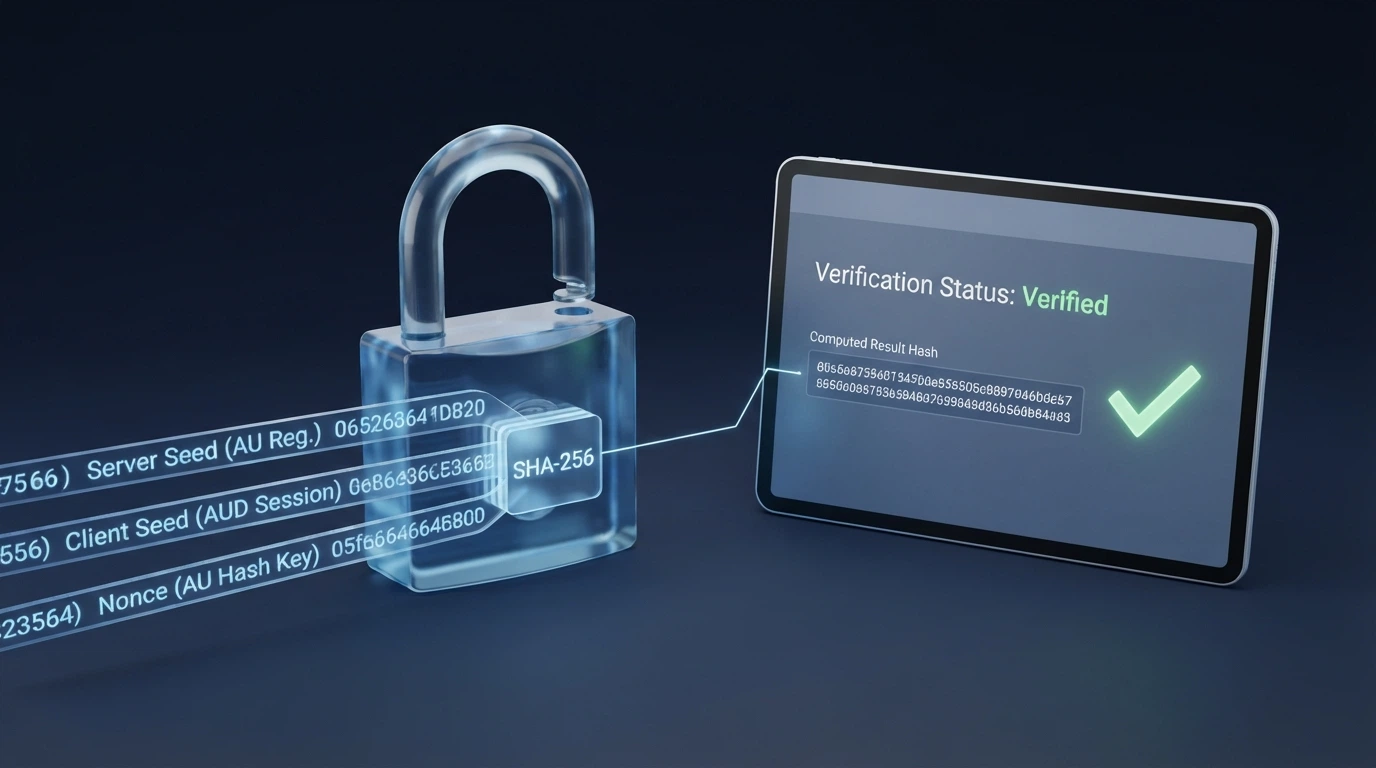
A provably fair game is one where the player can mathematically verify that each spin, roll or deal was determined before the bet was placed — and was not changed afterwards. The mechanics are simple in principle: the casino commits to a server seed (a hash it cannot change), the player adds a client seed (a value the player can change between rounds), and a nonce increments each round. All three feed into the SHA-256 hash that determines the outcome. The player can verify the hash against the server seed after the round.
BC.Game runs SHA-256 hash verification with client seed modification, and 50+ game rounds verified against the published hashes during testing with zero discrepancies. A player who wants to check their own rounds can do so before and after each bet. Most players never do, which is the gap the verification exists to close.
The reason it matters is the displayed RTP gap. An audit of 50 crypto casinos found that 41 of them displayed an RTP figure for at least one popular slot that did not match the underlying math sheet — and in 39 of those 41 cases, the displayed RTP was higher than the actual running RTP. A 96.5% slot advertised at 96.5% on a casino page might be running at 94.8% in the underlying math, and the player has no way to know without checking.
Provably fair is the check that catches the gap. It works on the games the casino supports it on — typically a set of proprietary or in-house titles, not every Pragmatic Play or NetEnt pokie. For the studio-published games, the player’s check has to be on the displayed RTP figure against the studio’s published math sheet, not against the casino’s claim. The audit is the audit; the casino’s marketing copy is not.
The Pokies and Table Games You Can Play With Litecoin in 2026
The game library at an LTC casino is the same catalogue a player would find at any offshore casino of comparable size. Pragmatic Play pokies, NetEnt titles, Hacksaw Gaming’s portfolio, Nolimit City’s high-volatility games, Evolution’s live dealer tables — all of it shows up at the multi-studio operators on this page, funded in LTC rather than in fiat.
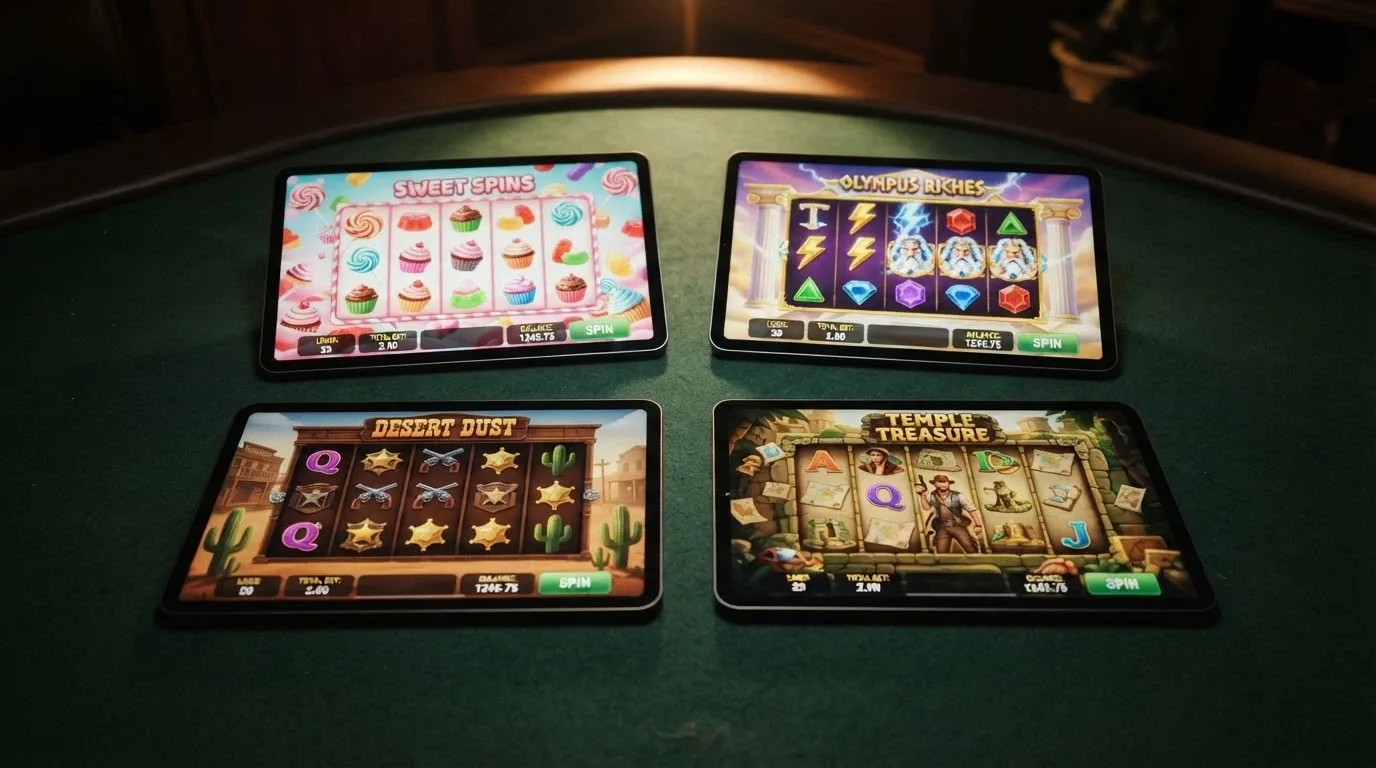
The titles worth singling out are the ones with confirmed RTP figures and confirmed providers. Pragmatic Play publishes an average RTP of 95.61% across its portfolio, with high volatility and a max-win potential of approximately 50,000×. NetEnt’s average sits at 95.85%, with medium-to-high volatility and a max-win potential of roughly 15,000×. The two studios are the bulk of what an Australian player at an LTC casino will see in the lobby.
| Slot Title | RTP | Provider | Volatility |
|---|---|---|---|
| Sweet Bonanza | 96.5% | Pragmatic Play | — |
| Gates of Olympus | 96.50% | Pragmatic Play | — |
| Dead or Alive 2 | 96.82% | NetEnt | — |
| Starburst XXXtreme | 96.28% | NetEnt | — |
| Gonzo’s Quest Megaways | 96.00% | NetEnt | — |
The volatility column sits empty in this table for the same reason it sits empty elsewhere — specific volatility classifications for individual titles were not part of what research confirmed during this round. The provider-level volatility above (Pragmatic Play High, NetEnt medium-high) is the figure the data carries.
The Best Pokies to Play With Litecoin: RTP, Providers and What Actually Pays
The four titles worth highlighting — Sweet Bonanza at 96.5%, Gates of Olympus at 96.50%, Dead or Alive 2 at 96.82%, and Gonzo’s Quest Megaways at 96.00% — are the high-RTP exceptions rather than the average. Most Pragmatic Play pokies run closer to the studio’s 95.61% portfolio average; most NetEnt titles run closer to its 95.85% figure. The 96% to 97% range is where the studio puts its better-paying games.
What an RTP figure actually means in practice is the harder question. A 96.5% slot returns A$96.50 for every A$100 wagered, averaged across a large number of spins. The 3.5% house edge is the casino’s cut on those spins. The variance comes from volatility: high volatility titles pay less often, in larger amounts; medium-to-high volatility titles pay more often, in smaller amounts. Pragmatic Play’s high-volatility profile means a player on Sweet Bonanza will see long stretches of small losses punctuated by occasional larger wins.
What the displayed RTP figure does not mean is a guarantee. The audit cited earlier in this guide found that 41 of 50 audited casinos displayed an RTP that did not match the underlying math sheet, and in most cases the displayed figure was higher than the real one. A player who sees 96.5% on a game page is taking the casino’s word for it. The cross-check is the studio’s official math sheet, accessible through the studio’s own portal or the regulator’s audit trail in licensed jurisdictions. For an offshore casino, the cross-check is whatever the player can independently confirm.
Max-win potential is the figure the marketing copy leads with. Pragmatic Play’s catalogue goes to roughly 50,000×; NetEnt’s to roughly 15,000×. Those numbers are real for the titles that carry them, and they are the lottery-ticket end of the maths. A player staking A$1 a spin on a 50,000× slot is buying a chance at a A$50,000 outcome, not an expected return. The average session will lose to the 95.61% RTP; the maximum payout is the rare exception.
Live Dealer Games With Litecoin: What Is Actually Available
Live dealer games at the featured LTC casinos are powered primarily by Evolution. BC.Game, Bitcasino, Oshi and Stake all carry Evolution’s live blackjack, roulette, baccarat and game-show tables. Skycrown, Rocket Play and the others carry live lobbies from Evolution or competing studios, depending on the licence arrangement.
The conversion between an LTC balance and a live-table chip happens on the casino’s side. The player deposits LTC, the balance displays in LTC or in a fiat equivalent at the current rate, and the table stakes are denominated in that fiat equivalent. The speed at the table is the same as at any live casino: the dealer deals, the player bets, the result lands. The LTC chain is invisible inside the table.
Live dealer games contribute 10% to 20% toward wagering requirements. A player using bonus funds on live blackjack is clearing the wagering requirement five to ten times slower than a player on slots. The practical implication is that bonuses are best cleared on slots, and live play is best done with cash or with already-cleared bonus balances. The two halves of the offer do not mix.
Playing Litecoin Casino Games on Your Phone in 2026
Most offshore crypto casinos are browser-based on mobile rather than app-based. The reasoning is structural: an App Store or Google Play app needs jurisdictional review, and a Curaçao-licensed operator does not always want the visibility that comes with one. A browser-based mobile site sidesteps the store entirely.
The mobile experience for an LTC player is the same desktop lobby scaled to a smaller screen, with the deposit and withdrawal flows adjusted for touch. SegWit addressing works the same on a phone wallet as on a desktop wallet; the casino’s deposit screen generates a QR code that the wallet scans. The chain confirmation takes the same 2.5 minutes it does on a desktop.
Game performance on mobile depends on the studio. Pragmatic Play and NetEnt titles are built for mobile-first play; live dealer tables work on phones with a stable connection. Older HTML5 titles sometimes struggle with newer phone browsers; the operator’s mobile site does the filtering.
Cross-device play is the part that works well — a player who deposits on desktop and switches to phone keeps the same balance, the same bonus state, and the same wagering clock. The cross-device continuity is what an app would offer, but a browser session reaches the same outcome.
Trying a Litecoin Casino Before You Deposit Real Money
Most crypto casinos run demo mode on slots. A player can open a slot, load the demo balance, and play through several hundred spins without funding an account. Demo play tests the game, the maths, and the casino’s interface. It does not test the withdrawal, the bonus terms, or the KYC process.
A few of the featured operators run no-deposit free spins as a sign-up offer — a small spin package that lets the player try the casino with the operator’s funds rather than their own. The spin packages sit at the modest end of the free-spin range: 50 spins is common, with a wagering requirement on the winnings that has to be cleared before withdrawal.
Live dealer games are not available in demo mode. Progressive jackpots are not available in demo mode. The player who wants to test the full operator before committing anything will need to deposit at least the minimum — 0.001 LTC at Bitcasino, or the A$15 to A$40 fiat-equivalent floor elsewhere — and play through to a withdrawal to confirm the casino pays.
New Litecoin Casinos Worth Knowing About in 2026
Rio Ace’s 2023 launch is the freshest operator confirmed on this page, owned by Altacore N.V. under a Curaçao eGaming licence. The newer end of the offshore market runs aggressive welcome offers — Rio Ace’s 400% match plus 350 free spins is the clearest example — and the modern UI and provider mix that a fresh platform inherits from the templates now standard in Curaçao-licensed casino builds.
The trade-off the player makes for a recent launch is operating history. A two-year track record is not long enough to know how a casino handles a disputed withdrawal, a flagged account, or a regulator complaint that escalates. The licence number on the footer is the same as an older operator’s licence number; the difference is what the casino has done with it.
The crypto casino market launches new operators regularly. Most of them run under Curaçao with similar welcome offers and overlapping provider lists. A player who wants the newest platform should weigh the bigger welcome against the shorter track record, and check the licence number against the Curaçao Gaming Control Board register before depositing.
The Legal Reality of Litecoin Casinos in Australia
The legal position is the part of this page every competitor’s guide buries. Online casino is a prohibited interactive gambling service under the Interactive Gambling Act 2001. There is no licence for it in Australia — not federally, not in any state or territory. ACMA enforces the prohibition: it investigates complaints, issues formal warnings, runs civil penalty proceedings, and directs ISPs to block illegal sites. The Interactive Gambling Amendment Act 2017 strengthened the enforcement frame, and the Interactive Gambling Amendment (Credit and Other Measures) Act 2023 added the payment-method ban in force since 11 June 2024.
What is licensable in Australia is wagering — betting on races and sport before the event starts, plus lotteries and keno — through operators licensed by a state or territory (de facto: the Northern Territory Racing and Wagering Commission). Sportsbet, bet365 and Ladbrokes hold Northern Territory wagering licences. They are licensed for wagering, not casino games. Land-based casinos (Crown, The Star) hold state licences for their physical premises. None of them extends to an online casino offering LTC deposits.
The 2026 reform package passed Parliament on 19 August 2026 and commences 1 January 2027. From that date, wagering advertising will be capped at three ads per hour between 6 am and 8:30 pm, with a live-sport blackout in a 20-minute window around each event. Banks and payment providers will gain express authority to block transactions to illegal gambling operators. Inducement marketing will be restricted for 14 days after sign-up and three months after BetStop deregistration.
The player position under the existing law is that the IGA targets the provider, not the individual. No Australian player has been prosecuted for using an offshore casino. That is not the same as protection. ACMA has blocked 1,564 illegal sites as of March 2026, and a balance sitting on a blocked site is unrecoverable through any Australian channel. A bank-block under the new authority from 1 January 2027 adds another friction: transactions to illegal operators can be refused at the banking layer.
Gambling winnings are not assessable income for ordinary recreational players under section 6-5 of the ITAA 1997. Losses are not deductible. The tax treatment is the one piece of the legal frame that does not punish the player.
| Player Protection | AU-Licensed Wagering | Offshore Curaçao Casino (LTC) |
|---|---|---|
| BetStop self-exclusion binding | Yes | No |
| ACMA dispute resolution | Available | Not available |
| Withdrawal guarantees | Yes | No |
| Australian Consumer Law | Applies | Does not apply |
| State-set deposit limits | Yes | No — operator-set only |
| Regulated RTP display | Required | Not enforced |
What Australian Consumer Protections Do Not Cover When You Play Offshore
An Australian player registered on BetStop can still deposit at every operator on this page — the 67,480 registrations on the register as of 31 July 2026 bind AU-licensed wagering only, and offshore casinos are not connected to it.
A withdrawal dispute at an offshore casino has no Australian channel for resolution. ACMA can investigate; it cannot compel the operator to pay.
If the casino is on ACMA’s blocking list — 1,564 sites have been added since 2019 — the player’s balance is stranded on a site Australian ISPs no longer route to.
The 2026 reform package, in force from 1 January 2027, gives banks and payment providers express authority to block transactions to illegal operators, adding a banking-layer enforcement on top of the existing ISP blocks.
The individual player is not prosecuted under the IGA, but the Act targets the provider, not the player. The protection flows in one direction: the operator carries the legal risk, the player carries the operational risk.
Staying in Control When You Play With Crypto
Crypto deposits are fast. They are also frictionless, anonymous at the casino end, and outside the Australian self-exclusion frame. That combination makes the harm path shorter than the fiat one — a punter who has to drive to a TAB or wait for a bank transfer has friction a punter with a phone wallet does not.

The numbers tell the rest of the story. About 2.1% of Australian adults — roughly 430,000 people — experience problem gambling. Risky gambling rose to 19.4% in 2025, up from 13.7% in 2024. Australians lost A$36.0 billion to gambling in the 12 months to March 2026, an increase of close to A$1.3 billion on the prior year. More than half of Australians who gamble — 56.1% — do so mainly online. Almost half of people who gamble in Australia are classified at some risk of gambling harm, and the figure climbs to 67% for sports and race betting. Gamblers at the highest risk levels affect an average of six other people.
BetStop — the National Self-Exclusion Register, live since August 2023 — held 67,480 registrations by 31 July 2026, with 41,290 exclusions still active. 78% of registrants were under 40, and 38% chose lifetime exclusion. The register binds Australian-licensed wagering operators only; an offshore casino is not connected to it, which means the register does not block deposits at any of the operators on this page.
What works at the offshore end is the casino’s own deposit-limit and time-out tools, if the player chooses to set them. A weekly deposit cap set before the first deposit is the most effective single intervention. The National Gambling Helpline (1800 858 858) is free, confidential and staffed 24/7. Gambling Help Online — gamblinghelponline.org.au — provides online chat and counselling. The helpline is the number to have before any crypto casino deposit, not after.
How We Selected and Ranked These Litecoin Casinos
The selection process started with the operators that Australian players are actually reaching. AU tracked traffic share was one input. Curaçao licence status was a minimum. The Casipto transaction tests in January 2026 gave the LTC speed data; the WiseCasinoPicks RTP audit gave the displayed-vs-actual RTP gap; the SlotRandomizer provider comparison gave the studio-level RTPs and volatility figures.
The ranking criteria were licence transparency, LTC transaction speed, game provider quality, and bonus fairness. Operator blocks are weighted toward what could be verified — licence numbers, transaction test data, game-provider lists — and away from marketing claims that could not. Where a figure is missing from an operator block, the gap is noted rather than filled with a guess.
What was not verified this round: individual Curaçao licence numbers for BC.Game, 7Bit, Bitcasino, Stake, FairGO, Skycrown, Rocket Play and Royal Reels (only Oshi and Rio Ace had verifiable licence details in the source snippets); exact free-spin counts for several operators; current wagering multiples on every bonus. The competition guides published alongside this research were used to triangulate where the gaps sat, not to fill them.
The headline comparison the page makes is straightforward: every LTC casino accepting Australian players is offshore, none holds an Australian licence, and the gap between an AU-licensed wagering experience and an offshore casino experience is the gap the previous sections have described.
What an Australian Player Should Actually Do About Litecoin Casinos in 2026
The legal position is unambiguous. Online casino is prohibited. Every LTC casino accepting Australian players is offshore. ACMA has blocked 1,564 illegal sites, and the bank-blocking authority taking effect on 1 January 2027 will add another enforcement layer. None of the operators on this page is connected to BetStop. The player is not prosecuted under the IGA, but the player is also not protected by it.
The practical reality is that Australians are using these sites anyway. 30.7% of Australian online gamblers were using digital currencies in 2019, and 56.1% of Australians who gamble now do so mainly online. The number using crypto-funded offshore casinos today is plausibly higher. The legal prohibition has not stopped the behaviour; it has only moved it offshore.
For an Australian player who decides to proceed anyway, the checklist is short. Pick an operator with a verifiable licence number — Oshi’s OGL/2023/174/0082 is the cleanest on this page. Check the bonus terms before claiming: wagering multiple, time limit, max bet, cashout cap. Verify a withdrawal with a small LTC amount before committing anything larger. Use a casino that supports provably fair games, and verify a few rounds before trusting the maths. Set a weekly deposit limit before the first deposit. Have the National Gambling Helpline (1800 858 858) saved in the phone before the wallet is.
The one thing every player should do regardless of which casino they choose: treat the deposit as the loss, not the bet. The 4.39% house edge on a 95.61% RTP Pragmatic Play pokie, or the 4.15% house edge on a 95.85% RTP NetEnt pokie, is what every dollar of action will cost in expectation. The bonus is the casino paying the player to take a worse version of the same game. The wagering requirement is the cost. The free spin is the marketing word. The rest is on the player.
Frequently Asked Questions
How do Litecoin withdrawals compare to Bitcoin for speed?
Litecoin blocks every 2.5 minutes versus Bitcoin’s ten. A withdrawal typically clears in three to six confirmations — eight to fifteen minutes for LTC, an hour or more for BTC at most crypto casinos. Network fees run under A$0.05 for LTC, often several dollars for BTC during congestion.
Do I need to show identification to play at a Litecoin casino?
It depends on the operator. Several LTC casinos, including BC.Game and Bitcasino, allow play and small withdrawals without uploading ID. Larger withdrawals trigger KYC checks regardless — proof of source of funds, address verification, sometimes a selfie. Pseudonymous is the accurate word for what the casino offers at low balances; anonymous is not.
What is the lowest Litecoin deposit an Australian-facing casino will take?
Bitcasino sets the floor at 0.001 LTC for deposits and 0.01 LTC for withdrawals. Most other featured operators set a fiat-equivalent minimum in the A$15 to A$40 range. In Australian dollar terms, that works out to a few dollars at current LTC prices — low enough to test a casino before committing anything serious.
Can I use Litecoin to play live blackjack and roulette?
Yes — Evolution-powered live blackjack, roulette, baccarat and game-show tables are available at BC.Game, Bitcasino, Oshi and Stake. The LTC balance converts into table chips on the casino side. The only practical limitation is that live dealer games typically contribute 10% to 20% toward wagering requirements, so bonuses clear slowly on them.
Is it safe to play pokies with Litecoin at an offshore casino?
The game’s maths is set by the studio — Pragmatic Play and NetEnt publish RTPs that audits measure at roughly 95.6% and 95.9% in their slots. An offshore casino cannot guarantee withdrawals. ACMA has blocked 1,564 illegal sites since 2019, and a balance on a blocked site is unrecoverable through any Australian channel.
What bonuses can I actually get at a Litecoin casino in Australia?
Welcome packages dominate — typically 100% to 400% matched deposits across the first four or five, with 50 to 350 free spins. Wagering of 35× to 40× on bonus plus deposit is the norm; anything above 50× is poor value. Cashout caps on bonus winnings are common, typically 10 to 20 times the original bonus.