A$100 No-Deposit Bonus Casinos in Australia for 2026: An Honest Review
 Available in AU
Verified against the ACMA register and individual operator terms on 18 October 2026.
A genuine A$100 no-deposit bonus — a casino handing you a hundred dollars to play with before you spend a cent of your own — barely exists in Australia in 2026. The headline number survives on affiliate pages because affiliate pages have a financial reason to keep it alive, but a clean audit of the market tells a different story. SlotsPeak reviewed 23 pages ranking for “free $100 pokies no deposit sign up bonus” in April 2026 and found that 14 listed expired, US-only or region-blocked offers, six inflated bundles of 200 free spins at A$0.10 each into a “$100 bonus” headline, and only three carried genuinely claimable Australian offers. A separate audit tracked 31 offers over one quarter: 11 US-only, nine free-spin bundles worth roughly A$20, five requiring deposits, four expired, and just two genuine A$100-tier free chips — both at second-tier operators carrying the kind of terms that make clearing the bonus a separate exercise in self-discipline.
That is the state of the market in 2026. The rest of this page describes what is actually available to an Australian player, what those offers cost in time and money, and where the legal ground sits underneath every spin. Every operator named here is offshore. No online casino holds an Australian licence, because none can. Reading what follows with that fact fixed in mind is the difference between getting an offer’s marketing and understanding what the offer actually is.

Table of Contents
- The Honest Truth About $100 No-Deposit Bonuses in 2026
- How $100 No-Deposit Bonus Offers Work
- Pokies Worth Playing with a $100 Bonus
- 10 Offshore Casinos Australians Play At — and What They Actually Offer
- PayID Deposits & Getting Your Winnings Out
- The Legal Reality: Australian Law & Offshore Casinos
- Staying Safe: Responsible Gambling When You Play Offshore
- How We Evaluated These Offers
- What to Actually Do with a $100 No-Deposit Offer in 2026
- Frequently Asked Questions
The Honest Truth About $100 No-Deposit Bonuses in 2026
A$100 free chips at Australian-facing casinos have nearly disappeared since 2023, replaced by smaller A$15–A$25 no-deposit bonuses and “$100-equivalent” bundled packages. That observation, from SlotsPeak’s 2026 review, captures the state of the market accurately. The numbers are not in dispute. The dispute, if there is one, is over what readers should infer from them.
The most defensible inference is that the era when a casino threw A$100 at a new sign-up for the pleasure of their company is over. What replaced it is structurally less generous. The replacement offers tend to fall into three buckets: smaller no-deposit chips (A$15 to A$25) with heavy wagering, free-spin bundles whose headline value is computed by multiplying spin count by a token stake, and first-deposit matches where “A$100” is the maximum the casino will add, not what it gives you up front. The third category is the most common, and the most commonly mislabelled — a 100% match up to A$100 is a deposit bonus, not a no-deposit one, no matter how the affiliate page frames it.
There is a second, quieter inference worth naming. The bonus landscape in Australia has not retreated because the market has shrunk. Australians still spend roughly A$25 billion a year on gambling. What has changed is that the cost of acquiring a player from offshore has gone up, and the cost of having a page blocked by an Australian ISP has gone up too. Operators have responded by offering less, not by leaving. Smaller chips, shorter expiry windows, harder terms — the bonus is thinner because every other cost has thickened.
What a “$100 No-Deposit Bonus” Actually Means
In the technical language of an online casino’s terms page, a no-deposit bonus is bonus credit added to a player’s account without a corresponding deposit. It is not cash. It cannot be withdrawn as cash. It can only be converted into withdrawable cash by completing a wagering requirement, which is a multiplier applied to the bonus amount that must be staked on eligible games before any withdrawal is permitted.
That is the entire architecture. A$100 in bonus credit does not mean A$100 in the player’s bank account. It means A$100 of house money the player can spend on eligible games, with the house’s rules attached. The marketing puts the figure first. The mechanics put the wagering requirement first, and the maximum cashout cap immediately behind it.
A no-deposit bonus is also distinct from a free-spin bonus, although the two are often grouped.
| Bonus Type | Headline Value | Typical Cost | Wagering Constraint |
|---|---|---|---|
| No-Deposit Chip | A$15–A$40 | Zero | High (40x–60x) |
| Free-Spin Bundle | ~A$20 | Zero | Medium (40x) |
| Deposit Match | A$100+ | Initial Deposit | Variable (40x) |
A free chip is a fixed amount of bonus credit. Free spins are a fixed number of plays at a fixed stake — 20 spins at A$0.10 each, for instance, which is A$2 of stake value wrapped in a spins structure. Free spins carry their own wagering and their own max-cashout, but the unit of value is different: the spin, not the dollar. A free spin at A$0.10 has roughly the same expected value as A$0.10 of chip stake, but the bonus term “A$100 in free spins” is almost always A$100 of headline value computed by multiplying 1,000 spins at A$0.10, not A$100 of bonus credit the player can deploy where they like.
A deposit match is a third thing entirely. The casino matches a percentage of the player’s first deposit, up to a ceiling. A 100% match up to A$100 means a deposit of A$100 returns A$200 in playable balance. A 200% match up to A$500 means a deposit of A$250 returns A$750. The deposit match has the highest headline value of the three, but it costs the player real money up front, and the wagering applies to both the deposit and the bonus at most operators — a point that quietly doubles the turnover required.
Why Most “$100 No-Deposit” Offers Aren’t What They Claim
The SlotsPeak audit identified three patterns in the offers that did not survive scrutiny.

- Expired, US-only or region-blocked offers recycled on Australian pages. Of 23 audited pages, 14 carried offers that were either time-expired, restricted to US players, or geo-blocked from Australian IPs. The operator had stopped honouring them; the affiliate page had not updated them.
- Free-spin bundles repriced as “$100” headlines. The same audit found six pages where a bundle of 100 to 200 free spins at A$0.10 per spin was multiplied out to a “A$100 bonus value” headline. Technically defensible arithmetic, but materially a different offer from A$100 of bonus credit.
- Deposit-gated bonuses dressed up as no-deposit offers. A 100% match up to A$100 is a deposit bonus; calling it a “$100 no-deposit bonus” because the maximum is A$100 is a category error that recurs across affiliate copy.
The combined effect is that a searcher for “A$100 no deposit bonus Australia” lands on a page that promises one thing and routes them to an offer that is either smaller, conditional, or both. The shift to A$15–A$25 no-deposit bonuses since 2023 is not a coincidence; it is the offer shrinking to fit a market that has stopped tolerating the older headline.
The Genuine No-Deposit Offers Still Standing in 2026
A small number of offers have survived the contraction, and they are the only ones an Australian player can reasonably plan around.
WinSpirit credits 20 free spins for installing the operator’s progressive web app, at A$0.10 per spin, with a 40× wagering requirement and a A$75 maximum cashout. The chip is genuinely deposit-free — the only requirement is to install the app — but the headline value is A$2 of stake, not A$100, and the A$75 cashout ceiling puts a hard cap on what any player can extract from it.
Bizzo offers a similar structure: 10 no-deposit free spins on PWA install, A$0.10 per spin, 40× wagering, A$75 maximum win, with a seven-day expiry. Smaller still, and smaller is the point. These are not bonuses designed to be headline features; they are app-incentive funnels, and the bonus value reflects that.
Fair Go, the longest-established RTG casino on the Australian-facing list, runs periodic no-deposit free chip promotions, typically A$10 to A$40 per chip, with 60× wagering and a maximum cashout in the A$180 vicinity. Fair Go is the closest thing the Australian-facing offshore market has to a recurring no-deposit chip, and even there, the A$100 mark is rare. The chips are usually tied to deposit milestones or loyalty rewards rather than first sign-up.
What these offers share is the underlying truth: a genuine no-deposit bonus in 2026 Australia is small, capped, and tied to a specific mechanic — an app install, a periodic promo email, a loyalty tier. The A$100 chip on first sign-up, the form that dominated affiliate pages for years, has retreated into history.
How $100 No-Deposit Bonus Offers Work
A no-deposit offer travels through four stages — claim, play, clear, withdraw — and each stage has its own terms. Reading the offer means understanding where each gate sits and how high it stands.
The first gate is the claim. Most no-deposit offers at Australian-facing operators do not require a deposit, but they do require account registration, identity verification to some degree, and often an action — installing an app, opting into a promo, entering a code. A no-deposit bonus is “no-deposit” only in the financial sense; it is not “no-effort”. The action required matters, because it is the one part of the offer the player controls.
The second gate is the play itself. Bonus credit is spent on eligible games under a max-bet cap — typically A$5 to A$7.50 per spin at the Australian-facing operators — and at a game weighting the operator defines. Slots usually count 100% toward wagering. Table games, live dealer and jackpots usually count less, sometimes zero. A A$100 bonus with 40× wagering on a slot that counts 100% requires A$4,000 of stake to clear; on a roulette game that counts 10%, the same A$100 bonus would require A$40,000 of stake — and most operators exclude roulette from bonus play entirely.
The third gate is the clear. Wagering is met when the cumulative stake on eligible games crosses the threshold. A player who has spun 4,000 times at A$1 on a 100%-weighted slot with a A$100 bonus and a 40× wagering requirement has cleared the bonus. The bonus balance converts to cash balance, or to a portion of it: most operators impose a maximum-cashout cap on no-deposit winnings, typically between A$75 and A$180. Anything above the cap is voided at the point of withdrawal.
The fourth gate is the withdrawal. The cashed-out portion of the balance has to clear the operator’s KYC queue — Know Your Customer identity checks — before any payment rail can move it. KYC queues at offshore casinos run 12 to 48 hours; the payment rail that follows is its own speed layer.
To put a number against the play stage: a A$100 no-deposit chip with a 40× wagering requirement — the standard at Rocket Play, SkyCrown, WinSpirit and Bizzo — played at A$1 per spin and five seconds per spin translates into roughly A$4,000 of required turnover, 4,000 spins, and about 5.6 hours of continuous play to clear the bonus. That figure assumes only the bonus amount is wagered; losses along the way sit on top of it.
No-Deposit Free Chips: How They Work
A free chip is the closest thing to “free money” an offshore casino offers — bonus credit credited without a deposit, playable on eligible games, convertible to cash after wagering.
The conversion is where the cost lives. Fair Go’s free chip carries 60× wagering and approximately A$180 maximum cashout. A A$20 chip from Fair Go requires A$1,200 of stake to clear and yields at most A$180 in withdrawable cash. The math is unfavourable by design: even at a slot with a 96% return, A$1,200 of stake carries an expected loss of A$48, against a possible A$180 cashout. The expected loss of the bonus is the price the player pays for the chance of the cashout; the house edge is what makes the offer a marketing expense for the operator and a statistically negative proposition for the player.
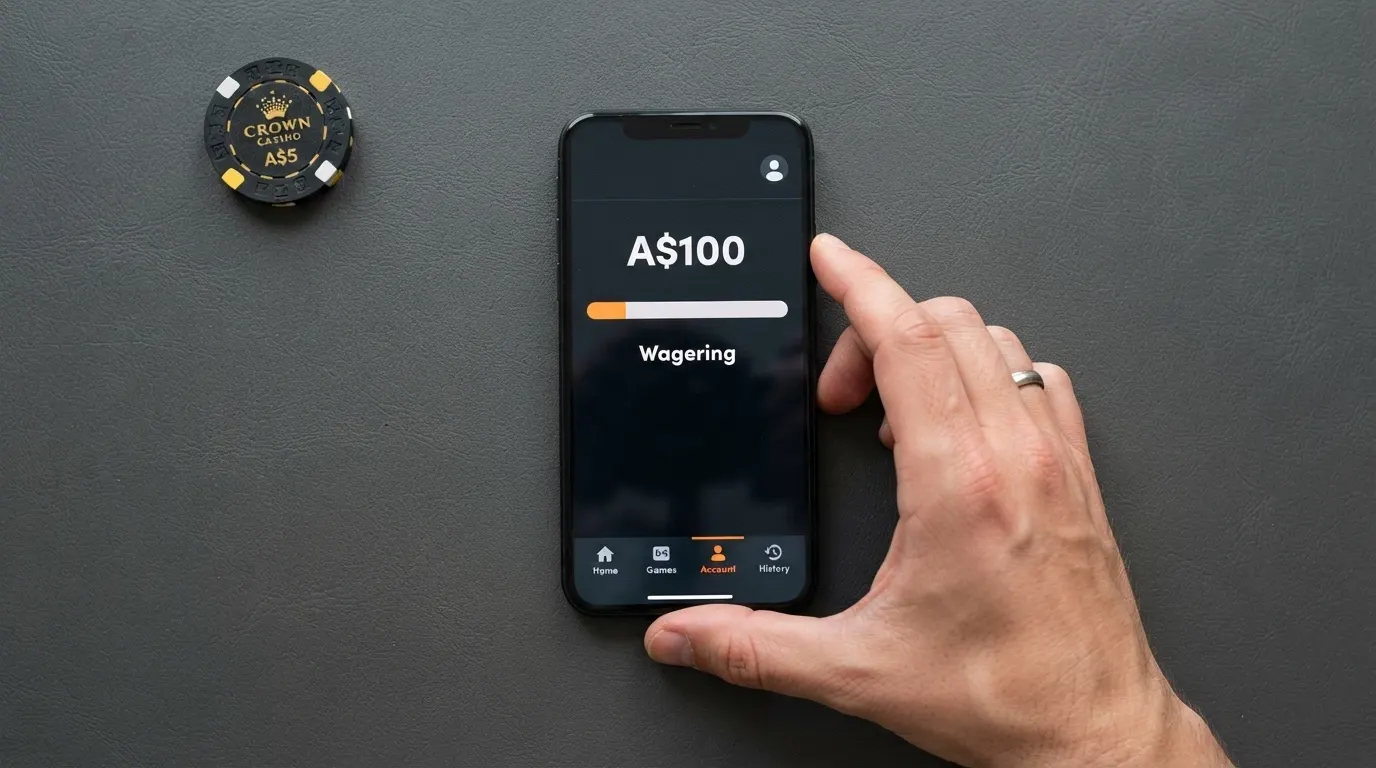
The max-bet cap during wagering — typically A$5 to A$7.50 per spin — exists to prevent a player from clearing the bonus in a few oversized bets at a near-even-money game. The cap pushes the player into slots, where the variance is higher and the expected loss per spin is steeper.
The expiry window — typically 5 to 7 days from activation — exists because a longer window lets the player grind through the wagering with small, controlled bets. The compressed window forces faster play, which raises the variance and the expected loss per hour.
A free chip is, in honest terms, a paid lottery ticket. The price is the expected loss during wagering. The prize is the cashout cap, if the player is lucky enough to clear the bonus and hit the cap. The offer is generous in headline, unfavourable in expectation, and designed to drive app installs or account creations the operator can remarket to.
Sign-Up & Welcome Bonuses at the A$100 Mark
A sign-up bonus and a welcome bonus are not the same thing, and the distinction is the one most affiliate pages blur. A sign-up bonus is credited on registration, with no deposit required — a no-deposit offer by definition. A welcome bonus is credited on first deposit, usually as a percentage match with a ceiling, and almost always requires real money up front.
The A$100 figure appears in both, but it means different things in each. A A$100 sign-up bonus is a no-deposit chip worth A$100, capped at A$100-something in cashout after wagering. A A$100 welcome bonus is a 100% match on a A$100 deposit, giving the player A$200 in total playable balance — but the A$100 deposit is the player’s money, the A$100 match is the casino’s, and the wagering applies to both.
Rocket Play’s welcome structure offers a 100% first-deposit match up to A$1,000 plus 100 free spins. WinSpirit follows a similar pattern with its first-deposit welcome package. Both are deposit-gated and generous by industry standards, yet clearly distinguishable from no-deposit offers. Most affiliate pages that group these under “sign-up” headings create confusion by conflating deposit-linked bonuses with genuine no-deposit chips.
Deposit Match Bonuses Worth A$100 or More
A deposit match is the most common welcome structure at Australian-facing offshore casinos, and the most generous in headline value. The mechanics are uniform: the player deposits, the operator matches a percentage up to a ceiling, and the wagering requirement applies to both the deposit and the bonus at most sites.
Fair Go runs a 100% match up to A$200, redeemable five times across the first five deposits, for a total welcome package of up to A$1,000. The minimum deposit is A$20, and there is no maximum cashout on the deposit bonus, which makes the wagering — 60× — the operative constraint. SkyCrown’s welcome is structurally larger: a 450% match up to A$8,000 plus 400 free spins distributed across four deposits, with 40× wagering, a A$7.50 max bet, and a A$5,000 cap on bonus-to-cash conversion per welcome package.
Rocket Play’s two-deposit welcome is 100% up to A$1,000 on the first deposit and 200% up to A$1,000 on the second. Wagering is 40×, max bet is A$7.50, validity is 5 days, and the no-deposit offer (where it exists) carries a A$75 max withdrawal.
The headline figure on each of these offers is what the casino will add to the player’s balance if the player deposits the maximum. None of them is a no-deposit bonus. The player pays A$200, A$1,000 or A$8,000 in deposits; the casino adds the same or more in bonus money; the wagering requirement governs what survives to withdrawal.
Bonus Codes: What They Do and Where They Appear
A bonus code is a string — usually a short alphanumeric token — that unlocks a specific offer. Codes serve two functions. Operationally, they let an operator route a player to a specific bonus pool, track which affiliate delivered the player, and apply terms that differ from the default welcome offer. From a marketing perspective, codes give an affiliate page something to print that looks exclusive — “use code CHIP100 for a A$100 free chip” — even when the code is a default welcome offer any player could claim without it.
Most “$100 no deposit codes” listed on aggregator pages are dead. The SlotsPeak audit found that the majority of codes cited on ranking pages either routed to expired offers, US-only offers, or offers that required a deposit the page described as no-deposit. A working code, when one exists, is usually printed on the operator’s own promos page or emailed to a player after registration. Codes harvested by affiliate scrapers have a short half-life.
The honest test of a code is whether the operator’s terms page recognises it. If the operator does not list the code in its own bonus terms, the affiliate page is either out of date or inventing the offer. Verification is one click away and worth the click.
Can You Actually Cash Out? Real-Money Rules
The cashout is the part of the offer most affiliate copy avoids. A no-deposit bonus has four hurdles between claim and withdrawal: the wagering requirement, the max-cashout cap, the game weighting, and KYC.
The wagering requirement is the multiplier — 40× at most no-deposit offers, 60× at Fair Go. The max-cashout cap is the ceiling on what the player can extract: A$75 at Rocket Play, WinSpirit and Bizzo’s no-deposit offers, A$180-ish at Fair Go, A$5,000 on SkyCrown’s deposit-bonus conversion. Game weighting is the operator’s chosen percentage of each bet that counts toward clearing the wagering. KYC is the identity check the operator runs before any withdrawal is approved.
Most no-deposit claimants do not withdraw. The arithmetic is unforgiving. A A$20 free chip with 60× wagering and a A$180 cashout cap, played at A$1 per spin on a slot with a 96% return, costs an expected A$48 in losses during the A$1,200 of required stake. The chance of clearing the bonus and ending up near the A$180 cap is small; the chance of clearing it and ending up below the cap is much larger; the chance of clearing it and going over the cap is negligible. The bonus is a marketing expense for the operator, designed to acquire the player, not to enrich them.
The KYC queue is the second attrition filter. A player who clears the bonus but cannot pass identity verification — wrong address, expired ID, name mismatch — loses the winnings to a void. The 12-to-48-hour KYC window is generous for compliant players and a wall for those who are not.
Pokies Worth Playing with a $100 Bonus
The bonus credit is the ceiling; the game choice is the floor. A A$100 bonus played on a slot with a 96% return has an expected loss of A$160 during the A$4,000 of required stake. Played on a slot with a 92% return, the expected loss is A$320. Game choice roughly doubles the cost of clearing the bonus — and that is before any cashout cap applies.
Game weighting is the first constraint. Most operators exclude or down-weight table games, live dealer games and progressive jackpots from bonus play. The eligible game pool is, in practice, the slot catalogue. The choice is which slots to play within that pool.
A general rule: high-RTP, low-volatility slots with full game weighting are the cheapest way to clear a wagering requirement. The expected loss is lower per spin, the variance is lower per session, and the bankroll is more likely to survive long enough to hit the wagering threshold. None of which is a recommendation of a specific title — research did not carry per-title RTP or volatility this run, and a slot’s published RTP can change without notice — but the shape of the choice is consistent across providers.
The Best Pokies for Bonus Playthrough
Fair Go’s catalogue is RTG (RealTime Gaming), an older studio whose pokies tend toward higher RTPs and more conservative volatility profiles than the industry average. The library is narrower than the multi-provider sites — fewer titles, less visual variety — but the per-spin cost of clearing a bonus is correspondingly lower.
Rocket Play and WinSpirit run on Pragmatic Play and BGaming, with Rocket Play adding Betsoft. Both studios publish a wide range of volatilities; the bonus-friendly titles within each catalogue tend to be the medium-volatility, high-RTP games, but which titles those are at any given moment is not something research confirmed this run.
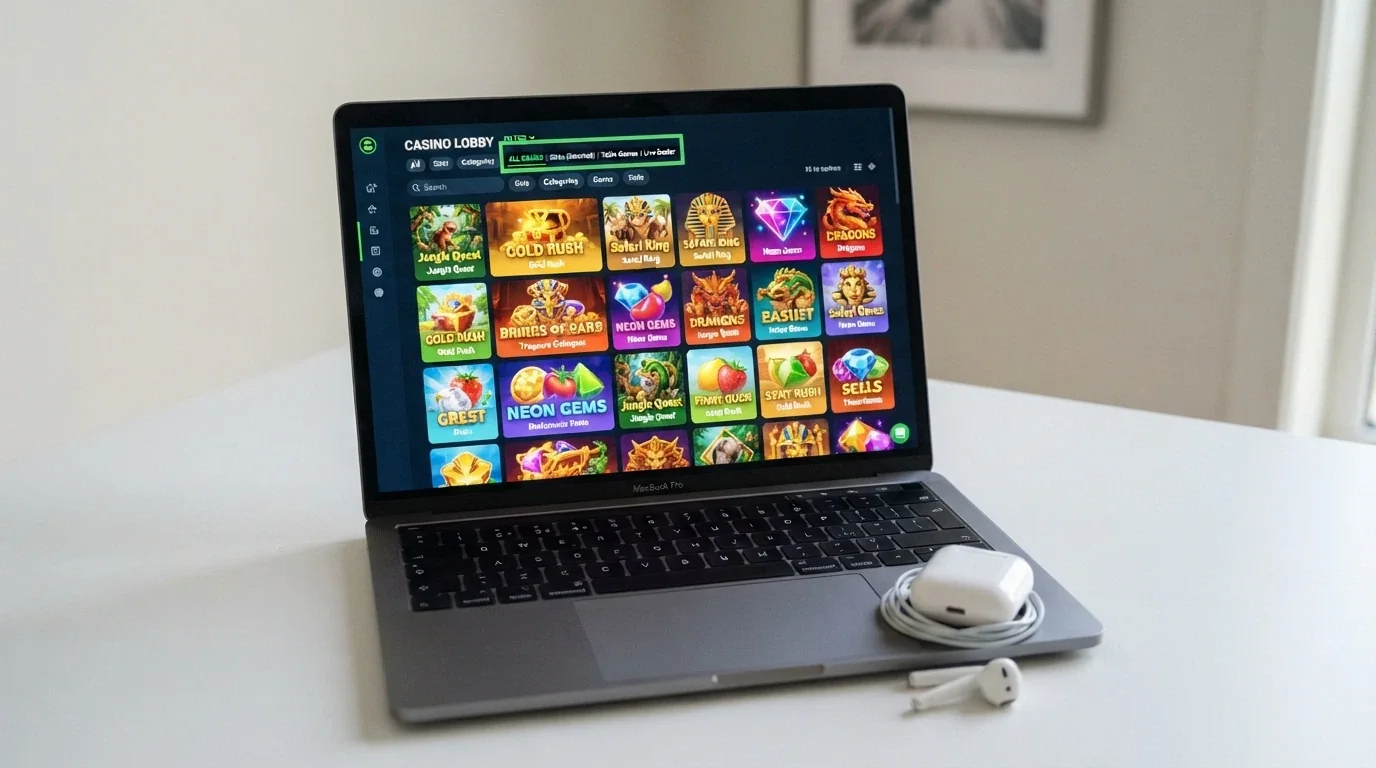
SkyCrown runs on IGTech, Booongo and Voltent — studios less familiar to Australian players but well-established in the offshore market. The same RTP-and-volatility calculus applies, with the same caveat that the per-title figures were not tabulated.
What the player should look for in any bonus-eligible pokie is the published RTP (if the operator makes it visible — most do, in the game’s information panel) and the volatility rating. A 96%+ RTP, low-to-medium volatility pokie with 100% game weighting is the cheapest way through a wagering requirement. Anything else is a cost the player is choosing to pay.
New-Casino Pokies Offers Worth a Look
Newer offshore casinos use pokie bonuses to build a player base from scratch. The trade-off is predictable: headline generosity goes up, term strictness goes up alongside it. SkyCrown’s 450% match across four deposits is the extreme example — a headline number that would be unprintable in a more mature market, paired with a 14-day validity window and a A$5,000 bonus-to-cash conversion cap. Bizzo’s 10 NDB free spins on app install is the inverse — a modest offer paired with a modest term structure, designed to drive app installs rather than headline clicks.
The new-casino dynamic is straightforward. A brand that needs players pays more to acquire them. A brand that has players can afford to offer less. The player pays for the bonus in either case; the question is how steeply the offer prices the conversion.
10 Offshore Casinos Australians Play At — and What They Actually Offer
Every operator on this list is offshore. No online casino holds an Australian licence because no such licence exists. The table below covers what each operator actually offers — what is confirmed from the operator’s own terms page, what is qualitatively known about the brand, and where research did not surface specifics.

| Operator | AU Legal Status | Welcome Bonus | Free Spins | Wagering | Bonus Validity |
|---|---|---|---|---|---|
| WinSpirit | OFFSHORE — no AU licence | 100% up to A$1,000 + 100 FS (1st); 200% up to A$1,000 (2nd) | 100 FS on first deposit (20 daily over 5 days) | 40× | 7 days per active bonus |
| Bizzo Casino | OFFSHORE — no AU licence | Up to A$7,250 + 175 FS + 1 Bonus Game (multi-tier) | 10 NDB FS on PWA install | 40× | 7 days |
| Fair Go | OFFSHORE — no AU licence | 100% up to A$200, redeemable 5× (total up to A$1,000) | — | 60× on NDB | — |
| Rocket Play | OFFSHORE — no AU licence | 100% up to A$1,000 + 100 FS (1st); 200% up to A$1,000 (2nd) | 100 FS on first deposit | 40× | 5 days |
| SkyCrown | OFFSHORE — no AU licence | 450% up to A$8,000 + 400 FS across 4 deposits | 400 FS (125 Wolf Treasure, 75 Coin Volcano, 50 15 Dragon Pearls, 150 Mighty Wild: Panther) | 40× | 14 days |
| Rocket Casino | OFFSHORE — no AU licence | 150% up to A$1,500 + 150 FS | Up to 120 NDB FS via Missions (requires A$30 deposit) | 45× | — |
| Stake | OFFSHORE — no AU licence | — (rakeback/VIP model) | — | N/A | — |
| Royal Reels | OFFSHORE — no AU licence | — | — | — | — |
| Scream Casino | OFFSHORE — no AU licence | — | — | — | — |
| Rainbet | OFFSHORE — no AU licence | — | — | — | — |
Three operators at the top of the table — WinSpirit, Bizzo Casino and Fair Go — carry genuine no-deposit offers alongside their deposit welcomes. Two more — Rocket Play and SkyCrown — carry the deepest confirmed welcome structures, both deposit-first. Rocket Casino’s free spins are conditional on an initial A$30 deposit, so they sit between the no-deposit group and the unconfirmed group. The final four — Stake, Royal Reels, Scream Casino and Rainbet — carry brand presence in the Australian market but unconfirmed bonus specifics this run.
The pattern is consistent. Operators that have a confirmed welcome structure are operators whose terms pages were accessible and readable at the time of writing; the unconfirmed operators are not necessarily smaller or worse, but their public terms pages did not yield verifiable specifics under the sources used. Reading the operator’s current terms page before depositing is the only verification that does not go stale in a quarter.
WinSpirit
WinSpirit’s headline offer is the deposit welcome — 100% up to A$1,000 plus 100 free spins on the first deposit (20 per day for 5 days), with a A$30 minimum deposit, 40× wagering, and a A$3,000 win limit. The second-deposit offer is 200% up to A$1,000 with a A$60 minimum and the same 40× wagering.
The genuine no-deposit offer sits apart from the welcome. WinSpirit credits 20 free spins for installing the progressive web app, at A$0.10 per spin, with 40× wagering and a A$75 maximum cashout. The chip is real, but the headline value is A$2 of stake, not A$100. The offer exists to drive app installs; the player who treats it as a meaningful bankroll is misreading it.
The game catalogue runs on BGaming and Pragmatic Play, with a deeper mix of providers behind the lobby. WinSpirit is Curaçao-licensed, which is the standard offshore credential for Australian-facing brands. If you are looking for an entry point with a real no-deposit component paired with a robust deposit welcome, WinSpirit remains a standout choice.
Bizzo Casino
Bizzo offers the smaller of the two genuine no-deposit structures. Ten free spins on PWA install, A$0.10 per spin, 40× wagering, A$75 maximum win, seven-day expiry. The chip is smaller than WinSpirit’s; the conversion path is similar.
The deposit welcome is the larger story: up to A$7,250 plus 175 free spins plus a bonus game across a multi-tier package. The headline figure is high; the term structure is the usual 40× wagering with seven-day validity. The player who reads the bonus only at the headline and not at the wagering gets the same education the rest of the market offers.
For a player with no budget for a deposit, Bizzo is the cheapest no-deposit entry point — A$1 of stake at A$0.10 a spin, against WinSpirit’s A$2. For a player who can deposit, the welcome structure is one of the larger ones available. The choice between the two is mostly about whether the no-deposit chip or the deposit welcome is the operative offer.
Fair Go
Fair Go is the longest-established brand on the list, and the operator that most resembles a “traditional” Australian-facing casino — RTG pokies, a loyalty programme, periodic no-deposit free chips. The deposit welcome is 100% up to A$200, redeemable five times, for a total of up to A$1,000. The minimum deposit is A$20.
The no-deposit chip is what distinguishes Fair Go from the rest of the set. Free chips run A$10 to A$40 on a periodic basis, with 60× wagering and a cashout cap in the A$180 vicinity. The chips are tied to deposit milestones or loyalty rewards rather than first sign-up, so the headline “A$100 chip” rarely appears; the A$10 to A$40 range is more typical.
The wagering is heavier than the market standard — 60× against 40× — and the game library is narrower than the multi-provider sites. The trade-off is continuity. Fair Go has been running the same RTG catalogue for years; players who know the titles and the loyalty terms have a familiar surface to play on. For those who prioritize periodic chips over headline-grabbing welcomes, this operator is a consistent performer.
Rocket Play
Rocket Play is the polished multi-deposit welcome option. First deposit: 100% up to A$1,000 plus 100 free spins, 40× wagering, A$7.50 max bet, 5-day validity. Second deposit: 200% up to A$1,000. The no-deposit offer, where it exists, carries a A$75 max withdrawal — tight against the A$180 of Fair Go and the A$75 of WinSpirit and Bizzo.
The game library runs Pragmatic Play, BGaming and Betsoft, which is the deepest provider mix on the list behind SkyCrown’s IGTech/Booongo/Voltent stack. The catalogue is broad enough that a player can find bonus-eligible pokies at most RTP bands.
The A$75 no-deposit cashout cap is the operative constraint. A player who can clear Rocket Play’s 40× wagering on a no-deposit chip has converted A$100-ish in bonus value into A$75 in withdrawable cash; the rest is voided at the point of withdrawal. The cap is the operator’s quiet defence against the small handful of players who would otherwise clear the bonus consistently. These terms make it a solid deposit brand, though the no-deposit ceiling is strict.
SkyCrown
SkyCrown is the headline-grabber. The welcome is 450% up to A$8,000 plus 400 free spins across four deposits, with 40× wagering, 14-day validity, A$7.50 max bet, and a A$5,000 cap on bonus-to-cash conversion per welcome package. The free spins are allocated across specific titles — 125 on Wolf Treasure, 75 on Coin Volcano, 50 on 15 Dragon Pearls, 150 on Mighty Wild: Panther.
The welcome is a deposit package, not a no-deposit offer, and the player pays A$8,000 across the four deposits to extract the maximum. The 14-day validity on each tranche is the operative constraint; the A$5,000 conversion cap is the ceiling on what survives to withdrawal.
SkyCrown’s game catalogue runs IGTech, Booongo and Voltent — studios less familiar to Australian players than Pragmatic Play or BGaming, but well-established in the offshore market. The catalogue is the right size for the welcome structure: enough titles to spread play across, not so many that a player drowns in choice.
For a player who can fund four deposits and clear the wagering inside a fortnight on each tranche, SkyCrown is the largest confirmed welcome on the list. For those who cannot, the headline figure is simply a target that remains out of reach.
Rocket Casino
Rocket Casino is a separate brand from Rocket Play — a distinction the affiliate pages occasionally blur. The welcome is 150% up to A$1,500 plus 150 free spins, with 45× wagering. The free-spin structure is split: 150 free spins on the first deposit, plus up to 120 additional free spins through the Missions gamification feature.
The Missions free spins are the no-deposit hook, but the hook has a barb. Up to 120 Missions free spins are gated behind an initial A$30 deposit; without the deposit, the Missions spins are not available. The bonus is conditional, not no-deposit in the strict sense.
For a player who can afford the A$30 entry, Rocket Casino offers a competitive welcome and a gamified path to additional free spins. If your focus is exclusively on no-deposit play, however, this structure is likely to be a poor fit.
Stake
Stake is the outlier of the set. The brand is a crypto-native casino, run on Pragmatic Play, Hacksaw Gaming, Evolution and proprietary Stake Originals, with a presence in the Australian market that runs through crypto deposits. The traditional welcome bonus structure — a percentage match, a free-spin bundle, a no-deposit chip — is not Stake’s model. Stake runs a rakeback and VIP structure, where a percentage of house edge is returned to active players rather than credited as a sign-up bonus.
The absence of a traditional welcome is a feature, not a gap. A player who prefers the rakeback model is paying less in bonus-wagering expected loss and accepting less in headline credit. A player who prefers the traditional welcome will not find one at Stake.
For a player comfortable with crypto, Stake offers a different shape of value than the rest of the set. For a player who wants a A$100 no-deposit chip, Stake is the wrong operator to be looking at.
Royal Reels
Royal Reels is a high-traffic Australian-facing offshore brand whose specific bonus terms — welcome offer, free-spin bundle, wagering, max cashout, validity — were not confirmed by the sources used this run. The brand’s presence in the market is established; the underlying terms were not retrievable in a verifiable form.
For a player considering Royal Reels, the verification gap is the operative point. Welcome offers, wagering, max cashout and bonus validity can all change between terms-page updates. Reading the current terms page on the operator’s own site before depositing is the only check that does not go stale. A bonus figure printed on an affiliate page has a half-life of weeks; a terms page read at the point of deposit is current.
Scream Casino
Scream Casino is an Australian-facing offshore brand whose bonus terms were not confirmed this run. The brand sits in the same verification gap as Royal Reels — present in the market, absent from the verifiable terms this article can cite.
For a player considering Scream Casino, the standing instruction is the same. Read the operator’s current terms before depositing. Treat any bonus figure from a third-party page as historical until the operator’s own page confirms it. The structural facts — covered in the legal-reality section — apply regardless of what the welcome offer turns out to be.
Rainbet
Rainbet is an emerging Australian-facing offshore casino with unconfirmed bonus specifics. The brand’s market presence is newer than the rest of the set; the verifiable terms this article can cite are limited to the structural facts.
For a player considering Rainbet, the same verification rule applies. Bonus terms, game weighting, max cashout and validity can change without notice at any offshore operator. The operator’s own terms page, read at the point of deposit, is the only source that matters.
PayID Deposits & Getting Your Winnings Out
PayID is the fastest AUD-native payment route into and out of an Australian-facing offshore casino. Deposits settle instantly through the New Payments Platform. Withdrawals clear in seconds to about four hours once the operator has approved them — but the approval is the slow step, not the rail.
The approval is the KYC queue. Offshore casinos run identity verification on first withdrawal, and the queue is typically 12 to 48 hours. A player who has registered, deposited, played, cleared the wagering and submitted KYC documents can expect to wait the better part of two days for the operator to release the funds. After that, PayID itself is fast.
The fastest recorded PayID withdrawal on the Australian-facing market in 2026 was 28 minutes, at Goldenbet — a result that included both the KYC approval and the rail clearance. That is the exception; 1 to 12 hours for verified accounts is the verified range. Cryptocurrency is faster on the rail — 5 to 30 minutes — but it adds its own conversion step and is banned as a payment method for licensed Australian wagering, which is its own signal about the regulatory posture toward it.
Bank transfer remains the slowest. Three to five business days is the typical clearance, with no upside beyond familiarity. For a player with a working PayID, the choice between PayID, crypto and bank transfer is a choice between hours and minutes on one end, and days on the other.
PayID Deposits: How to Fund Your Account with A$100
PayID is a routing layer over Australia’s New Payments Platform. A PayID is an alias — a phone number, an email, an ABN — linked to a bank account; payments to the alias clear through NPP in seconds rather than the hours or days of older rails.
Funding an offshore casino account with PayID means the player opens the cashier, selects PayID as the deposit method, and either scans a QR code or copies the operator’s PayID into their banking app. The deposit settles on the casino balance in seconds; the player is ready to play.
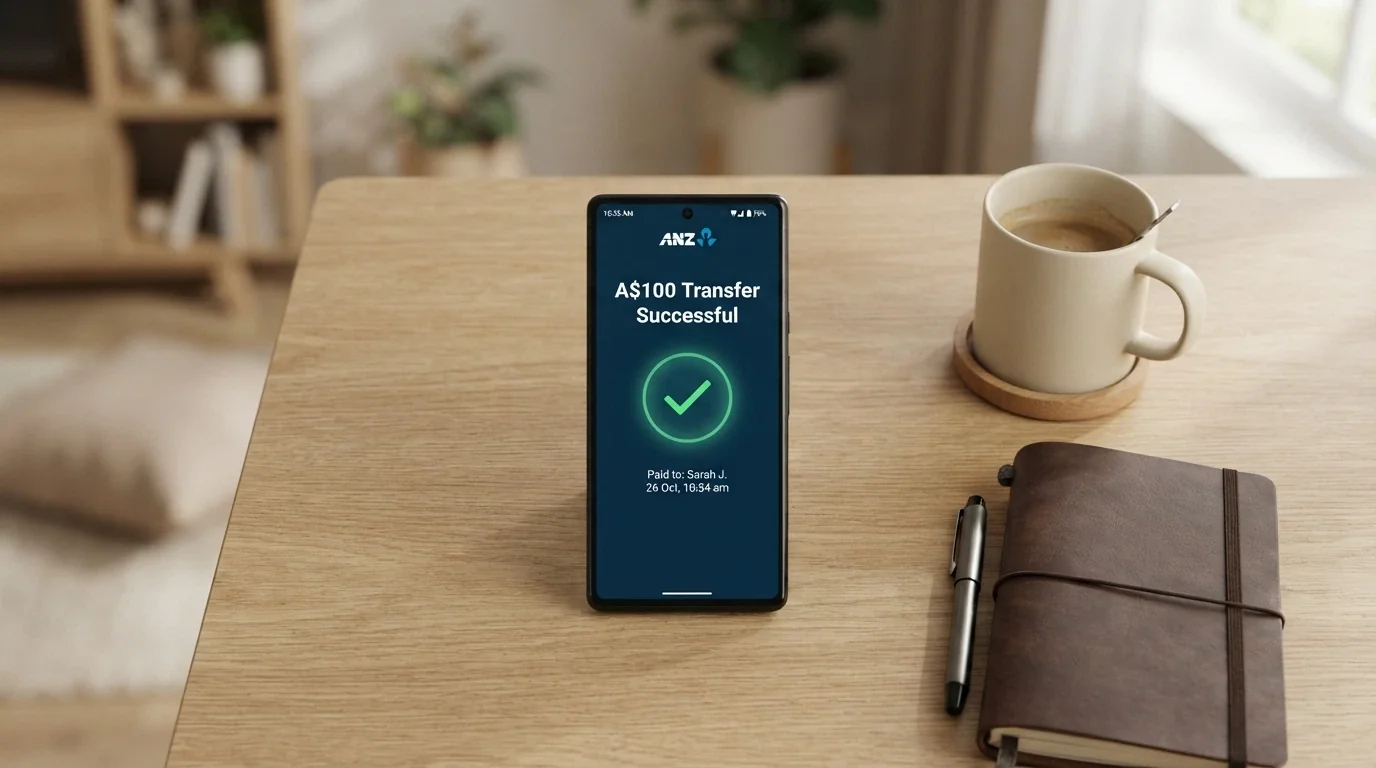
The A$100 figure is a convenient deposit size. It is below the threshold most operators flag for enhanced due diligence; it is large enough to qualify for most first-deposit match bonuses; it clears instantly through NPP without a bank-side delay. A$100 is also the deposit that, with most 100% match offers, returns A$200 in playable balance — enough to test the wagering requirement without committing a large bankroll.
Which operators accept PayID is the verification step that did not yield a clean list this run. The payment method is widespread across the Australian-facing offshore market; the specific operator acceptance changes as operators add and drop payment providers. The cashier page on the operator’s own site is the current source.
How Fast PayID Payouts Really Clear
PayID payouts clear in two stages — operator approval and rail settlement — and the stages are not equal in time. The rail stage is fast: seconds to about four hours once the operator has approved the withdrawal. The approval stage is slow: 12 to 48 hours of KYC queue at offshore operators, longer if the documentation is incomplete or needs a second pass.
The 28-minute Goldenbet result on the Australian-facing market’s personal testing is the published best. The verified range across the market is 1 to 12 hours for verified accounts — that is, accounts that have already passed KYC and are not in the first-withdrawal queue. First withdrawals sit at the upper end of the range, sometimes beyond it.
Crypto is faster on the rail (5 to 30 minutes), but adds the cost of currency conversion and the regulatory exposure of using a payment method that licensed Australian operators are not permitted to accept. Bank transfer is the slowest at 3 to 5 business days, with no speed advantage to offset the familiarity.
The practical advice for an Australian player withdrawing from an offshore casino is to submit KYC documents before the first withdrawal request — at deposit, or at first play, not at the moment the player wants the money. The 12-to-48-hour queue does not compress under pressure; it compresses under preparation.
The Legal Reality: Australian Law & Offshore Casinos
Online casino is prohibited in Australia. The Interactive Gambling Act 2001 makes it an offence to provide online casino games, online pokies or in-play sports betting to a person physically in Australia. There is no licence for online casino anywhere in the country — not federally, not in any state or territory. The roughly 150 wagering providers licensed in Australia are licensed for wagering on races and pre-event sport, not casino games.
Every operator named on this page is offshore. None holds an Australian licence. None can hold one, because none exists to be held. The IGA targets the provider of a prohibited service, not the player; an Australian who plays at an offshore casino is not committing a criminal offence. The player is, however, accepting that no Australian consumer protection, no Australian complaints body, no Australian deposit-dispute mechanism and no Australian self-exclusion register covers the balance they have on the operator’s server.

That is the trade. The player accepts the absence of Australian protection in exchange for access to a product Australia does not licence. Reading the offer honestly means reading it with the trade fixed in place.
The Interactive Gambling Act 2001: No Online Casino Licence Exists in Australia
The IGA was enacted in 2001 and tightened in 2017 by an amendment that closed offshore loopholes and gave the Australian Communications and Media Authority the power to direct ISPs to block illegal services. The prohibition covers online casino games, online pokies and in-play sports betting. Pre-event wagering on races and sport is licensable; lotteries and keno are licensable; online casino is not.
The structural fact that follows is the one most affiliate pages bury. There is no Australian licence for online casino, anywhere, at any tier of government. An operator that claims to be “Australian-licensed” for casino games is claiming something that does not exist. The licensors Australian players encounter — Licensing NT for online wagering, state regulators for land-based casinos — do not cover the product this page describes.
The roughly 150 licensed wagering providers in Australia are licensed for wagering. Sportsbet, bet365, Ladbrokes and the rest hold NT licences. Crown and The Star hold state casino licences for land-based operations, not online. The licensed market a player encounters through Australian advertising is a wagering market, not a casino market.
What the 2026 Reforms Change for Players
The Interactive Gambling Amendment (Gambling Reform) Bill 2026 passed Parliament on 19 August 2026. Its measures commence on 1 January 2027. The reforms tighten the existing prohibition rather than open it; the headline changes for an Australian player are on the payment, advertising and inducement side, not the licence side.
From 1 January 2027, banks and payment providers gain express authority to block transactions to illegal gambling operators. A PayID transfer to an offshore casino could be refused at the bank level, not just at the operator level. Credit cards and crypto are already banned as payment for online wagering since 11 June 2024; the 2027 reform extends the blocking power to other rails.
The advertising reforms apply to licensed wagering operators, not to offshore casinos — but the effect for an Australian player is a quieter media environment. Wagering ads on television are capped at no more than three per hour between 6:00 am and 8:30 pm. A live-sport blackout prohibits wagering advertising from 15 minutes before a live event until 5 minutes after it ends. Athletes, celebrities and influencers are barred from promoting wagering products. Direct marketing of inducements is prohibited for 14 days after a customer signs up and for three months after a person deregisters from BetStop.
The reforms do not legalise online casino. They strengthen the prohibition’s edges. An Australian player at an offshore casino in 2026 will be playing the same illegal product in 2026+1; the difference is that getting money in and seeing ads out will be marginally harder.
ACMA Enforcement: 1,564 Sites Blocked and Counting
The ACMA has directed Australian ISPs to block 1,564 illegal gambling and affiliate websites since November 2019, as of March 2026. More than 225 illegal services have voluntarily withdrawn from the Australian market since enforcement was strengthened in 2017. The enforcement is real, and the market persists anyway — the players are real, the demand is real, and the operators have an economic incentive to keep serving it from offshore.
Blocking is DNS-level. A blocked site fails to resolve on Australian ISPs; the player’s browser cannot reach the operator’s servers. The block does not empty the player’s balance. A player with funds on a blocked site has lost access to those funds until the operator restores the route, which most do through mirror domains, alternative URLs, or VPN-targeted access. The block punishes the operator’s customer acquisition; it does not unwind the player’s existing position.
The enforcement pattern matters because it is the closest thing to a count of how many Australians are playing offshore. The 1,564 blocked sites are the sites the ACMA judged worth the cost of blocking; the unblocked sites serving Australian players are additional, and their number is not publicly tallied. The reasonable inference is that the offshore market serving Australian players is larger than the blocked list, not smaller.
What Offshore Status Means for Your Money
The offshore status of every operator on this page is not a marketing fact. It is a structural one with concrete consequences for the player’s money.
There is no Australian consumer protection covering offshore casino balances. A wagering dispute that an Australian-licensed operator would be required to answer through an external dispute resolution body has no equivalent at an offshore casino. The operator’s own complaints process is the only process, and its ruling is final.
There is no BetStop coverage. The offshore gap — covered in detail in the responsible-gambling section — leaves a self-excluded person open to offshore casinos. The strongest player-protection tool in Australia does not extend offshore.
There is no recourse for a refused withdrawal. An offshore operator that declines a withdrawal on bonus-abuse grounds, on KYC grounds, or on jurisdiction grounds has exhausted the player’s options at the operator. No Australian court has jurisdiction; no Australian regulator has authority; the only practical remedy is the operator’s own goodwill.
There is no protection against a site block with a balance on it. The ACMA’s blocking power applies to the operator’s domain. A player with funds on a blocked site depends on the operator to restore access; the player has no Australian lever to force it.
The trade, in plain terms, is access to a prohibited product in exchange for the absence of every protection Australia extends to its own licensed market. A player who accepts the trade is making a decision with eyes open; a player who reads “A$100 no deposit bonus” without reading what offshore means is making the same decision with eyes closed.
Staying Safe: Responsible Gambling When You Play Offshore
Every safeguard described in this section either does not apply offshore or applies only by the player’s own discipline. The 1800 858 858 helpline works regardless of where the player plays. BetStop does not. The credit-card and crypto ban does. The offshore casino’s own deposit-limit tool is a player-set feature with no regulatory backstop.
That is the shape of responsible gambling in an offshore market. The help lines still answer. The register does not cover. The player’s own discipline is the operative safeguard.
Help Resources Every Australian Player Should Know
- National Gambling Helpline: 1800 858 858 — free, confidential, staffed 24/7 by professional counsellors, with online chat through Gambling Help Online.
- Gambling Help Online — the free 24/7 web chat and email counselling service.
- National Debt Helpline: 1800 007 007 — financial counselling for gambling-related debt.
- SHARC (Self Help Addiction Resource Centre): 1300 660 068 — supports family members affected by someone else’s gambling.
- Turning Point — clinical counselling services for gambling addiction.
- ReachOut — online support for young people experiencing gambling harm.
These services are Australian, free, and operate regardless of whether the player is gambling with a licensed Australian operator or an offshore casino. The first call is the same call either way.

BetStop and Self-Exclusion: The Offshore Gap
BetStop is Australia’s national self-exclusion register. A single registration excludes a person from every Australian-licensed online and phone wagering service — roughly 150 operators in one step. The minimum exclusion period is three months; the maximum is lifetime. As of 31 March 2026, 59,830 people had registered, with 37,247 active exclusions.
The register is strong where it applies and absent where it does not. The roughly 150 licensed wagering operators are connected; offshore casinos are not. A player who registers on BetStop and then plays at an offshore casino has self-excluded from the licensed market and remains open to the offshore one. The exclusion is a one-sided shield.
The coverage gap is also a knowledge gap. Only 33.5% of Australian wagerers know BetStop exists. Around one in four Australian adults (26.5%) are aware of it. The figure from the Australian Gambling Research Centre is blunt: “Despite an estimated five million wagerers nationwide, including 400,000 high-risk gamblers, just 30,000 individuals currently have active exclusions through BetStop. Even if all 30,000 of these were high-risk gamblers, this still only represents a small fraction (7.5%) of those experiencing severe gambling harms with a safeguard in place.” The math is the message: the system exists, it works for those who use it, and it does not reach most of those who need it.
For a player at an offshore casino, the practical substitute for BetStop is the operator’s own self-exclusion feature, where one exists. The exclusion is unilateral — the operator can lift it on request, and offshore operators have lifted self-exclusions in documented cases. The tool is weaker than BetStop because the operator has no regulatory obligation to honour it.
Practical Safeguards: Deposit Limits and Reality Checks
Player-set deposit limits are the most reliable safeguard at an offshore casino, and the simplest to implement. Most operators offer a daily, weekly or monthly deposit cap the player can set in the account settings; the cap is enforced by the cashier. A A$100-a-week cap, set on day one, is harder to override than a will-power resolution made in the moment.
Session timers and reality checks are a second layer. Most operators offer a session-length alert — a pop-up at 30, 60 or 120 minutes — that requires the player to acknowledge continued play. The acknowledgement is a friction point, and friction is the point.
The credit-card and crypto ban that has applied to licensed Australian wagering since 11 June 2024 does not extend to offshore casinos. An offshore casino accepting a credit card or crypto deposit is doing so in violation of Australian rules; the player using one is not committing an offence, but is using a payment method that the Australian regulator has identified as a harm vector. The ban is a signal, not a restriction, for the offshore player.
Self-imposed cooling-off periods — a player-set pause on deposits, withdrawals and play, lasting from 24 hours to several weeks — are a third layer. The pause breaks the cycle of immediate play and gives the player the perspective a session timer cannot.
About 2.1% of Australian adults — roughly 430,000 people — experience problem gambling. Around 400,000 Australians are high-risk gamblers. 27.1% of Aboriginal and Torres Strait Islander Australians are at risk, against 14.6% of non-Indigenous Australians. The figures describe a population for whom the safeguards above are not theoretical.
How We Evaluated These Offers
The evaluation rests on three sources, used in this order: the ACMA register and published enforcement statistics for the legal framework; individual operator terms pages for the per-offer specifics; and SlotsPeak’s April 2026 audit of the affiliate market for the verification benchmark on what is and is not a genuine Australian offer.
The per-operator sections cite only what the operator’s own terms page confirms. Where the operator’s terms page did not yield a specific figure — welcome bonus, wagering, max cashout, validity — the table cell is empty and the write-up directs the reader to the operator’s own current terms page. No invented figures, no inferred values, no second-guessing of what the operator’s terms page is likely to say.
The SlotsPeak audit provides a clear view of market transparency. Of the 23 pages audited, 14 listed expired or blocked offers, six presented free-spin bundles as “A$100 bonuses,” and only three offered genuinely claimable Australian incentives. These figures underscore the discrepancy between promotional headlines and available offers, forming the basis for this article’s critical approach to bonus evaluation.
The evaluation criteria, in priority order: genuine no-deposit status (is the offer really no-deposit, or is the deposit hidden in the terms?), wagering fairness (40× is standard; 60× is heavy; anything above is hostile), max-cashout ceiling (A$75 is tight; A$180 is workable; anything above is generous), and operator track record (does the operator pay, does the operator honour its terms, does the operator maintain a working cashier).
The honesty commitment is the operative one. Where research did not confirm a figure, the figure does not appear in the analysis. Where research flagged a licence or a jurisdiction as unverified, the unverified status is what the write-up carries. A reader who treats the empty cells in the comparison table as data points in their own right is reading the analysis correctly.
What to Actually Do with a $100 No-Deposit Offer in 2026
Three rules, in order.
Read the terms before claiming. The wagering requirement, the max cashout, the expiry, the game weighting, the max bet during wagering. Each is a number that turns the offer from “A$100 free” into “A$100 of bonus credit, playable under these constraints.” A reader who knows the numbers before clicking Claim is the reader who knows what the offer is.
Calculate the real cost. A A$100 bonus at 40× wagering, played at A$1 per spin on a slot with a 96% return, costs an expected A$160 in losses during the A$4,000 of required stake. That is the price the player pays for the chance at the cashout cap. The expected loss is the cost. The chance of clearing the bonus and hitting the cap is the prize. Reading the offer honestly is comparing the two.
Check the operator’s current status. The ACMA blocks sites; an operator that was serving Australian players last week may not be this week. Reading the operator’s own terms page on the day of deposit is the only verification that does not go stale. The structural facts — covered in detail in the legal-reality section — apply to every operator on this page. The specific facts — bonus terms, payment methods, game weighting — change.
The honest verdict on the headline question is the same in 2026 as it was in 2023. A genuine A$100 no-deposit bonus at an Australian-facing casino is a near-extinct offer. The small no-deposit chips that do exist — WinSpirit’s 20 free spins on app install, Bizzo’s 10, Fair Go’s periodic A$10 to A$40 — are real but capped, and the cap is the operative constraint. The deposit matches that fill the comparison table are larger in headline and cost real money up front. A player who can afford the deposit is playing a different offer than a player who cannot, and the right choice depends on which side of that line the player sits.
The legal ground underneath every offer is the same. Offshore status, no Australian licence, no Australian consumer protection, no BetStop coverage. The choice to play is the choice to accept the trade. Reading this page is one step toward making the trade with eyes open.
Frequently Asked Questions
Can I withdraw winnings from a $100 no deposit bonus in Australia?
Yes, but only after clearing the wagering requirement, staying under the maximum cashout cap, and passing the operator’s KYC check. Most no-deposit bonuses at Australian-facing offshore casinos cap withdrawals between A$75 and A$180, so a A$100 bonus does not translate to a A$100 withdrawal. Anything above the cap is voided at the point of withdrawal.
What is the maximum amount I can cash out from a $100 no deposit bonus?
The cap varies by operator. WinSpirit, Bizzo and Rocket Play cap no-deposit withdrawals at A$75. Fair Go’s periodic chips cap near A$180. SkyCrown’s A$5,000 cap applies to a deposit bonus, not a no-deposit chip. The cap is the ceiling on what survives wagering; the bonus figure is the ceiling on what gets wagered.
How do I deposit using PayID at an Australian online casino?
Open the cashier, select PayID, and either scan the operator’s QR code with your banking app or paste the operator’s PayID into a new payment. The deposit settles through the New Payments Platform in seconds and the balance is playable immediately. PayID is the fastest AUD-native option; crypto is faster on the rail but adds a conversion step.
What happens if I use an offshore casino — is it safe?
The individual player is not prosecuted under the Interactive Gambling Act 2001, which targets the provider, not the player. The trade-off is the absence of every Australian protection: no consumer law cover, no external disputes body, no BetStop coverage, no Australian recourse for a refused withdrawal. Offshore does not mean fraudulent, but it does mean no Australian regulatory oversight.
Where can I get help if gambling becomes a problem in Australia?
The National Gambling Helpline on 1800 858 858 is free, confidential and staffed 24/7, with online chat through Gambling Help Online. The National Debt Helpline (1800 007 007) covers gambling-related financial counselling. SHARC (1300 660 068) supports family members. BetStop covers roughly 150 Australian-licensed wagering services, but does not extend to offshore casinos.
Written by the editors at Min Deposit 5 Casinos AU.