
Crypto casinos for Australian players in 2026: every operator is offshore
 Available in AU
Current as of 18 October 2026: operator offers and licence claims verified against Curaçao, Anjouan and Tobique Gaming Commission public registers.
Every crypto casino that accepts an Australian player in 2026 operates from outside Australia. There is no licence for online casino anywhere in this country — not federally, not in any state or territory. The Interactive Gambling Act 2001 makes it an offence to provide online casino games, online pokies or in-play sports betting to a person physically in Australia. The crypto deposit button on a casino’s cashier page is, in itself, the signal that the operator sits outside the Australian regulatory perimeter.
That is the first fact this page sits on, and the rest follows from it. The ranking below compares offshore operators by what research actually carries — licence clarity, independently tested payout speed, bonus terms, crypto support — not by affiliate commission. What the ranking cannot do is provide a path through the Interactive Gambling Act. It is an editorial comparison of unregulated products for a reader who already understands that frame.
Table of Contents
- What a crypto casino actually is (and how it works in Australia)
- Playing without KYC: the anonymity crypto casinos promise
- How to pick a crypto casino you can actually trust
- The 10 crypto casinos Australian players are using in 2026
- Why your 2026 crypto casino bonus is smaller than the headline number
- Crypto withdrawals: how fast your money actually arrives
- Crypto pokies: the games you will actually play
- New crypto casinos worth a look in 2026
- The legal reality: every crypto casino in Australia is offshore
- Staying safe: what responsible gaming looks like without BetStop
- How we evaluated these crypto casinos
- What to actually do about a crypto casino in 2026
- Frequently asked questions
What a crypto casino actually is (and how it works in Australia)
A crypto casino is an online casino where deposits and withdrawals move as cryptocurrency on a blockchain rather than as fiat through a bank. The player holds a crypto wallet, sends coins to the casino’s deposit address, plays in whatever the casino’s internal currency is (typically USD, EUR or a USD-pegged token), and withdraws back to a wallet they control. The bank never sits in the middle.
That model does not exist legally inside Australia. The Interactive Gambling Act 2001 prohibits providing online casino games to persons in Australia. From 11 June 2024, credit cards and digital currency (crypto) are banned as payment for licensed online wagering under the Interactive Gambling Amendment (Credit and Other Measures) Act 2023. The combination matters: an Australian-facing operator that accepts crypto at the cashier is, by definition, not a licensed Australian wagering provider, because no Australian-licensed wagering provider can lawfully accept crypto in the first place. The payment method is the tell. As one regulator’s framing of the credit/crypto ban puts it, an Australian who is asked for a crypto deposit by a gambling site is being served by someone outside the Australian rules.
The practical deposit chain in 2026 runs through four links: an Australian bank account, a local exchange such as CoinSpot or Independent Reserve, a USDT TRC20 transfer on the Tron blockchain, and the offshore casino’s wallet. Every step leaves a record — the bank sees the transfer to the exchange, the exchange holds identity-verified accounts, the blockchain ledger is permanent, and the casino sees the deposit address. The “anonymous” claim that crypto casinos market rests on what happens after the first three links, not on what those links themselves record.
Bitcoin, Ethereum, USDT: the currencies that power these sites
The cryptocurrencies Australian players actually use at these casinos fall into three groups. Bitcoin is the original casino crypto and remains the brand most operators lead with. Ethereum follows, with shorter confirmation times and broader studio support. Altcoins — Litecoin, Dogecoin, Bitcoin Cash — show up wherever a casino wants breadth without complication.
USDT (Tether) on the TRC20 network has become the default rail. The reason is practical: TRC20 transactions settle in minutes and cost fractions of a cent, while the token itself is pegged to the US dollar, which insulates a session from the volatility that would otherwise eat into a bankroll mid-play. Bitcoin can move 5% in an hour; USDT TRC20 does not. The practical route — bank to CoinSpot or Independent Reserve, then USDT TRC20 to the casino wallet — is the one Australian players default to in 2026 for exactly this reason.
The operator-by-operator spread of accepted coins is wide. BitStarz claims support for more than 500 cryptocurrencies. BetPanda lists over 30. mBit leads with Bitcoin. Wild Fortune accepts BTC, ETH, LTC, USDT on both TRC20 and ERC20, DOGE, and BCH. Bets.io accepts BTC, ETH, USDT and DOGE. CoinCasino supports a dozen-plus altcoins. Every operator in the featured set takes Bitcoin and Ethereum; the differentiator is what sits beyond those two.
Why Australian players are turning to crypto casinos in 2026
The pull factors are friction-related, not ideological. A player who tries to deposit at an Australian-licensed online bookmaker using a debit card often finds the transaction flagged or declined by the card issuer’s merchant category rules. PayID and BPAY work, but the identity verification step is mandatory, and for a player who wants to keep the activity private from their bank statements, neither rail is appealing. Cryptocurrency sidesteps both problems. The exchange handles the bank interaction, the blockchain handles the transfer, and the casino sees only a wallet address.
The speed argument is real. Crypto deposits settle in minutes; crypto withdrawals, where the operator cooperates, do too. The bank-friction argument is real. The privacy argument is partial — the casino may not demand ID, but the Australian bank and exchange at the start of the chain already know who is paying.
The structural reason matters most. There is no AU-licensed online casino. The product is prohibited. The alternative to an offshore crypto casino is not a domestic fiat alternative — it is nothing. Australian players who want online pokies in 2026 are channelled, by the regulatory architecture itself, toward the offshore market. That is the landscape this page maps.
Playing without KYC: the anonymity crypto casinos promise
The headline pitch of a crypto casino is no-KYC registration. Deposit crypto, claim a bonus, play, withdraw — never uploading a passport, a driver’s licence or a utility bill. The pitch is real on the way in. Most of these operators do not gate the deposit behind identity verification, and several explicitly market themselves as anonymous.
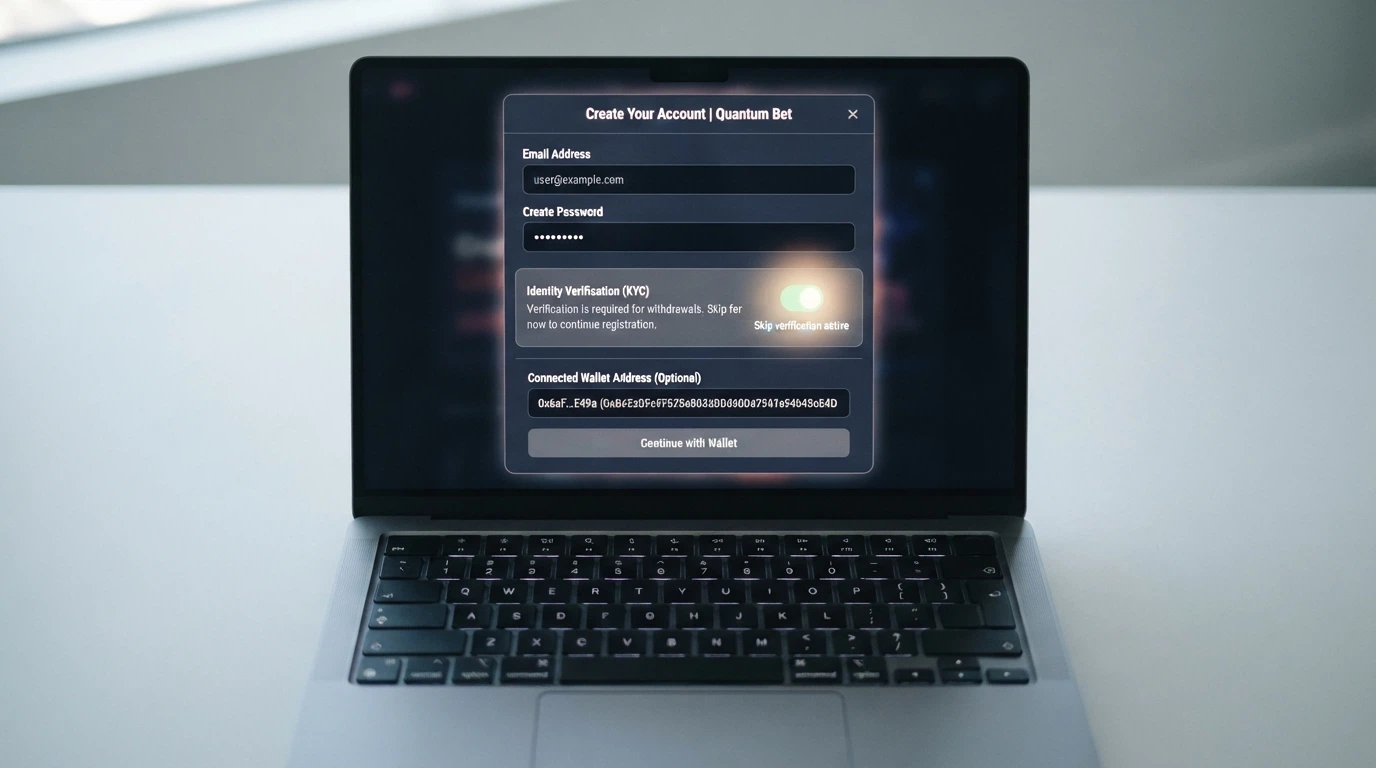
The reality on the way out is more conditional. Every operator in the featured set reserves the right to demand KYC at withdrawal. The threshold varies. Moonbet draws the line under $2,000 — withdrawals below that figure do not trigger verification. Above it, the operator can request documents and freeze the payout until they arrive. Jack Casino runs risk-based KYC that kicks in for “suspicious patterns” — and a large withdrawal, an unusual game pattern, or a flagged source of funds can all qualify. BitStarz processes most crypto withdrawals in 8–10 minutes but retains the right to escalate. The no-KYC pitch is, in practice, a no-KYC-until-threshold pitch.
The Australian context sharpens the trade-off. Offshore casinos offer no Australian consumer protection — no BetStop coverage, no ACMA complaints resolution, no state tribunal that can recover a withheld balance. Anonymity at the casino goes hand-in-hand with zero recourse at the regulator. The player who values privacy enough to want a no-KYC casino is, structurally, the player most exposed when that casino refuses to pay.
No-verification casinos: what you skip and what you still leave behind
Skipping KYC at the casino does not make the deposit chain anonymous. Four links hold a record: the Australian bank (transfer to the exchange is logged and visible on the bank statement), the exchange (CoinSpot and Independent Reserve are AUSTRAC-registered, identity-verified, and required to keep records), the blockchain (the ledger is permanent and publicly readable), and the casino (the deposit address is on file even if the account name is an email and a password).
AUSTRAC’s Travel Rule for crypto-to-fiat conversions triggers at AU$10,000 — above that threshold, exchanges must collect and share counterparty information. Below it, the exchange’s own KYC still applies. The casino skipping its own verification matters less than the marketing implies: the trail is already there. What the casino skipping KYC does give the player is one fewer institution in the chain holding a passport scan.
The other thing the player still leaves behind is metadata. Even at a no-KYC casino, the wagering pattern, the IP address, the device fingerprint, the timing of deposits and withdrawals — all of it is logged. Anonymity in the marketing sense is rarely anonymity in the forensic sense. It is a lighter verification posture, not invisibility.
Anonymous casinos and the Australian regulatory reality
An offshore casino calling itself anonymous sits outside every Australian consumer safeguard. The ACMA can investigate and issue formal warnings, and it can direct Australian ISPs to block the domain. It cannot recover a player’s funds. It cannot compel a payout. It cannot adjudicate a complaint. There is no Australian complaints body with jurisdiction over an Anjouan- or Curaçao-licensed operator. The player who feels wronged has, in practice, the casino’s own support team and whatever goodwill the operator chooses to extend.
Since its first blocking request in November 2019, the ACMA has had 1,564 illegal gambling and affiliate websites blocked by Australian ISPs. More than 225 illegal gambling services have withdrawn from the Australian market since enforcement was strengthened in 2017. These are not hypothetical numbers — they are the operational record of a regulator that does block sites, and that does not return balances. A player holding funds at a domain that goes onto the blocking list has, in many cases, lost the simplest path to the casino’s cashier.
“Anonymous” in marketing copy and “anonymous” in practice are not the same word. The first describes a sign-up form. The second describes a chain of custody the player cannot actually sever.
How to pick a crypto casino you can actually trust
Trust at a licensed casino is the regulator’s job. At an offshore casino, the trust work shifts to the player — and the signals that matter are different. Licence jurisdiction matters first: is the operator registered with a verifiable body, and does that body publish a public register? Tested payout behaviour matters next: has anyone outside the operator’s own marketing timed a withdrawal end-to-end? Community track record matters third: what do long-running player forums say, and what does the operator’s own history show?
The license-tier hierarchy in the featured set runs roughly as follows. Tobique Gaming Commission (the licence Wild Fortune holds) publishes a public register and assigns numbered licences. Curaçao is the workhorse of the offshore market — verifiable, established, but with a wide quality spread underneath the same jurisdiction. Anjouan is newer and lighter-touch. “Unknown” — the category Rocket Play, Skycrown, Bets.io, BetPanda and CoinCasino fall into this run — is a hard stop for any reader unwilling to take the operator’s own word for its compliance.
The red flags are easier to name than the green flags. No public licence register entry is the clearest. Affiliate pages that rank the operator but cannot name the licence number are the second. A bonus headline that is dramatically larger than the rest of the market without an obvious source of the generosity is the third. A domain registered recently, with no operational history behind it, is the fourth.
Licence checks, user reviews, and the signals no affiliate page shows you
The first page of Google for any crypto casino query in Australia is affiliate listicles. They rank operators, link to them, and earn commission on sign-ups. Their research depth varies; their incentive is the same. A reader who wants signal beyond the affiliate page has to look elsewhere.
The first check is the licence register itself. Curaçao’s gaming authority publishes licensee data; Tobique publishes a numbered register; Anjouan’s regulator is harder to verify from outside. A licence number on the operator’s footer that does not resolve on the regulator’s site is a problem. A missing licence number is a bigger problem. Among the featured operators, Wild Fortune’s Tobique licence (#0000064, held by Metlait SRL, registered in Costa Rica) is the clearest paper trail. BitStarz, Stake and mBit operate under Curaçao. Rocket Play, Skycrown, BetPanda, Bets.io and CoinCasino did not surface a verifiable licence number in this run.
The second check is independent payout data. Affiliate pages report payout speed as the operator claims it. Independent testers time the actual cycle. Wild Fortune has been tested across five withdrawal cycles — average 5 hours 24 minutes, range 3 hours 50 minutes to 7 hours 58 minutes — and that is the kind of figure the “instant withdrawal” headline at most of the rest of the set does not survive contact with. Moonbet’s claimed ~4-minute crypto payouts and BitStarz’s 8–10-minute claim sit in the same direction but without independent corroboration.
The third check is community. Long-running forums and player-protection sites carry complaints that affiliate pages do not. They are not dispositive — every operator attracts complaints — but the pattern across complaints matters.
The 10 crypto casinos Australian players are using in 2026
Every operator below is offshore. None is licensed in Australia. The ranking compares them on what is verifiable — licence clarity, independently tested payout speed where available, the bonus terms that research surfaced, and the spread of cryptocurrencies accepted. Where a field could not be confirmed, the cell carries an em dash rather than a guess.
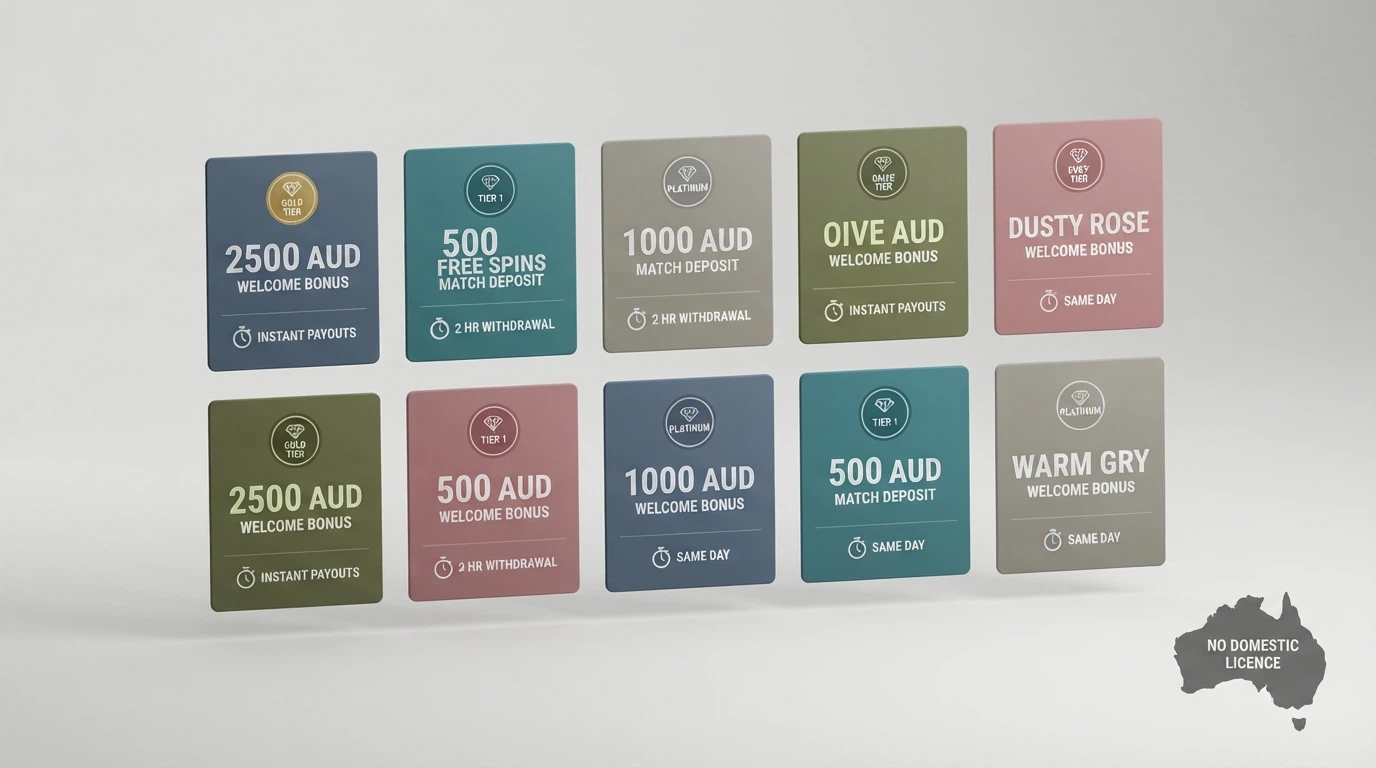
| Operator | Licence | Welcome Bonus | Payout Speed | Crypto Accepted |
|---|---|---|---|---|
| BitStarz | Curaçao | Up to 5 BTC + 180 FS (20/day × 9 days) | 8–10 min crypto | BTC, ETH, LTC, DOGE, USDT, 500+ cryptos |
| Stake | Curaçao | — | Fastest individual crypto cycles | BTC, ETH, LTC, DOGE, USDT, + others |
| Rocket Play | — | — | — | — |
| Skycrown | — | — | — | — |
| Bets.io | — (likely Curaçao) | AU$11,500 + 225 FS | — | BTC, ETH, USDT, DOGE |
| mBit | Curaçao | Up to 4 BTC + 325 FS | Under 15 min crypto | BTC + others |
| BetPanda | — | 100% up to 1 BTC + weekly cashback | Practically instant crypto | 30+ cryptocurrencies |
| Wild Fortune | Tobique #0000064 | — | 5h 24m average (3h 50m–7h 58m) | BTC, ETH, LTC, USDT, DOGE, BCH |
| Moonbet | Anjouan | 20–40% Moonrake + 4–8% Moonback (week 1) | ~4 min crypto | — |
| CoinCasino | — | Up to $100k in weekly bonuses | Minutes (crypto) | BTC, USDT, ETH, 12+ altcoins |
How the ranking was built. Licence clarity outranks unverified claims. Independently tested payout speed outranked operator self-reporting. Bonus terms that research surfaced outranked bonus headlines that could not be verified. No operator paid for placement; no affiliate commission influenced position.
BitStarz: the established name with a no-deposit door
BitStarz is the longest-running brand in the featured set. Curaçao-licensed since 2014, it is the operator Australian crypto players are most likely to have encountered first. The welcome package goes up to 5 BTC plus 180 free spins across the first deposits, with a 40× wagering requirement on the bonus. The headline hides two smaller points that matter more: 30 free spins on sign-up with no deposit required (also at 40×), and a drip-feed structure that delivers the welcome spins as 20 per day for nine consecutive days. The player is logging in for nine days whether they intended to or not.
Crypto payouts are claimed at 8–10 minutes. The game library runs to more than 4,000 titles from over 40 studios. The 40× wagering is industry-standard for offshore crypto welcome offers but not generous — clearing the full 5 BTC bonus at AU$1 per spin means turning over AU$200,000 of crypto-denominated play before a dollar can leave the account. The no-deposit 30 free spins are the cleaner test: claim them, see the wagering mechanic in action, decide whether the brand is worth a real deposit. For a reader who wants a single operator to settle on, BitStarz is the least-uncertain pick in the set.
Stake: the market-share giant with a thin public offer
Stake dominates Australian crypto casino traffic in 2026. Its Curaçao licence is current, its crypto payout cycles are the fastest in the independent Payoutverdict.com data, and its brand recognition is the highest in the offshore market. The public bonus terms, however, were not surfaced in this run — Stake’s promotional structure is more partnership-driven than welcome-package-driven, with sports and esports tie-ins accounting for a chunk of the visible activity. The ranking reflects what research carries: licence verified, payout reputation verified, bonus terms not confirmed this run. A reader who wants Stake’s speed and brand presence is buying those on the operator’s own claims rather than on a quantified welcome offer.
Rocket Play: high AU traffic, thin public data
Rocket Play sits at 9.4% of Australian crypto casino traffic by one affiliate measurement — a significant share that places it ahead of dozens of better-known brands. The licence jurisdiction was not confirmed this run, the welcome bonus terms did not surface, the payout speed is not independently tested, and the supported cryptocurrencies are not catalogued in the public materials available. The brand is one Australian players encounter frequently on affiliate lists, and that traffic exists on trust the public documentation does not yet back. A reader who lands on Rocket Play through an affiliate link is taking the operator at its own word on every specification that matters.
Skycrown: another high-traffic name with an unconfirmed paper trail
Skycrown sits at 8.55% of Australian crypto casino traffic — the same pattern as Rocket Play: high visibility, thin public verification. Licence, bonus terms, payout speed and crypto support did not surface from non-affiliate sources this run. The reader sees Skycrown on every top-10 affiliate list for the Australian market, and what sits behind that ranking is not independently auditable from outside the operator’s own pages. It is a brand whose traffic precedes its public compliance footprint.
Bets.io: the 17,000-game library with the biggest bonus number
Bets.io’s headline — AU$11,500 plus 225 free spins across a multi-deposit welcome package, at 40× wagering — is the largest single bonus number in the featured set. The library is the largest too: more than 17,000 games. The accepted cryptocurrencies cover BTC, ETH, USDT and DOGE. The licence is listed as “likely Curaçao” because it could not be confirmed against a registry entry this run, which places Bets.io in the same trust tier as Rocket Play and Skycrown until the registration is verified.
The AU$11,500 figure is a marketing line as much as it is an offer. At 40× wagering on the bonus amount, the player must turn over AU$460,000 of play before any portion of the bonus becomes withdrawable — a figure the bonus headline does not foreground and that the expected-loss calculation in the next major section puts a price on. The 17,000 games are real; the AU$11,500 is a starting position for a maths problem, not a freebie.
mBit: the BTC-native brand with the deepest free-spin stack
mBit leads with Bitcoin — it is the brand’s identity rather than a checkbox — and the welcome package goes up to 4 BTC plus 325 free spins, the largest free-spin count in the featured set. Curaçao-licensed, with crypto payouts claimed at under 15 minutes. Wagering terms were not surfaced this run, so the multiplier on the bonus amount is one of the missing fields. For a player who wants the Bitcoin-native positioning and the largest spin allocation in the set, mBit is the closest fit among the confirmed-licence operators.
BetPanda: the 30-crypto vault with instant payouts
BetPanda accepts over 30 cryptocurrencies — the deepest coin selection in the featured set — and the welcome package is 100% up to 1 BTC plus weekly cashback. The library holds 6,000+ titles. Withdrawals are claimed as practically instant. The licence is unconfirmed, which is the same caveat that applies to Bets.io, Rocket Play and Skycrown. A reader drawn to BetPanda is choosing breadth of crypto support and an instant-payout claim over a verified licence paper trail; the trade-off is theirs to make knowingly.
Wild Fortune: the only operator with publicly tested payout data
Wild Fortune is the single operator in the featured set whose withdrawal speed has been independently timed across multiple cycles. Five test payouts between February and May 2026 averaged 5 hours 24 minutes, with a range from 3 hours 50 minutes to 7 hours 58 minutes. The licence is Tobique Gaming Commission #0000064, held by Metlait SRL, registered in Costa Rica. The supported cryptocurrencies are BTC, ETH, LTC, USDT (on both TRC20 and ERC20), DOGE and BCH. The minimum crypto deposit is USD$20. Withdrawal caps are USD$4,000 per day, USD$10,000 per week and USD$40,000 per month.
The welcome bonus terms did not surface from non-affiliate sources, which is the gap. The payout data, the licence and the crypto support are independently verifiable; the offer is not. For a reader who prizes verified behaviour over headline numbers, Wild Fortune is the standard the rest of the set should be measured against.
Moonbet: the rakeback model with a 4-minute payout
Moonbet is structurally different. Anjouan-licensed, it replaces the traditional welcome bonus with a wager-free rakeback structure: 20–40% Moonrake on wagers, plus 4–8% Moonback on losses during the first week. Crypto payouts are claimed at around 4 minutes. The no-KYC withdrawal threshold is set at under $2,000 — above that, verification kicks in.
The rakeback model is the operator’s central pitch. Wager-free means the rakeback credits are withdrawable without a playthrough requirement, which is materially different from a 40× welcome bonus where the player must turn over tens of thousands before any withdrawal. For a player who values ongoing return over headline bonus size, the Moonbet model is the cleaner read.
CoinCasino: the high-ceiling weekly bonus model
CoinCasino’s headline is the ceiling: up to $100,000 in bonuses available weekly across ongoing promotions. Free spins are included in the package. Over a dozen altcoins are supported, including BTC, USDT and ETH. Crypto withdrawals are claimed at minute-level speed. The licence is unconfirmed this run; no independent payout test was located. CoinCasino is the highest-ceiling, least-verified operator in the set — a brand worth flagging for a reader who wants the maximum promotional headroom and accepts the trust posture that comes with it.
Why your 2026 crypto casino bonus is smaller than the headline number
A bonus advertised as AU$11,500 or 5 BTC is not free money. It is a starting position for a wagering requirement, a game-weighting table, a maximum-bet cap, a validity window and a maximum-win cap. Each of these carves the headline down. The expected-loss calculation at the end of this section puts a number on how much the bonus actually costs the player who clears it.
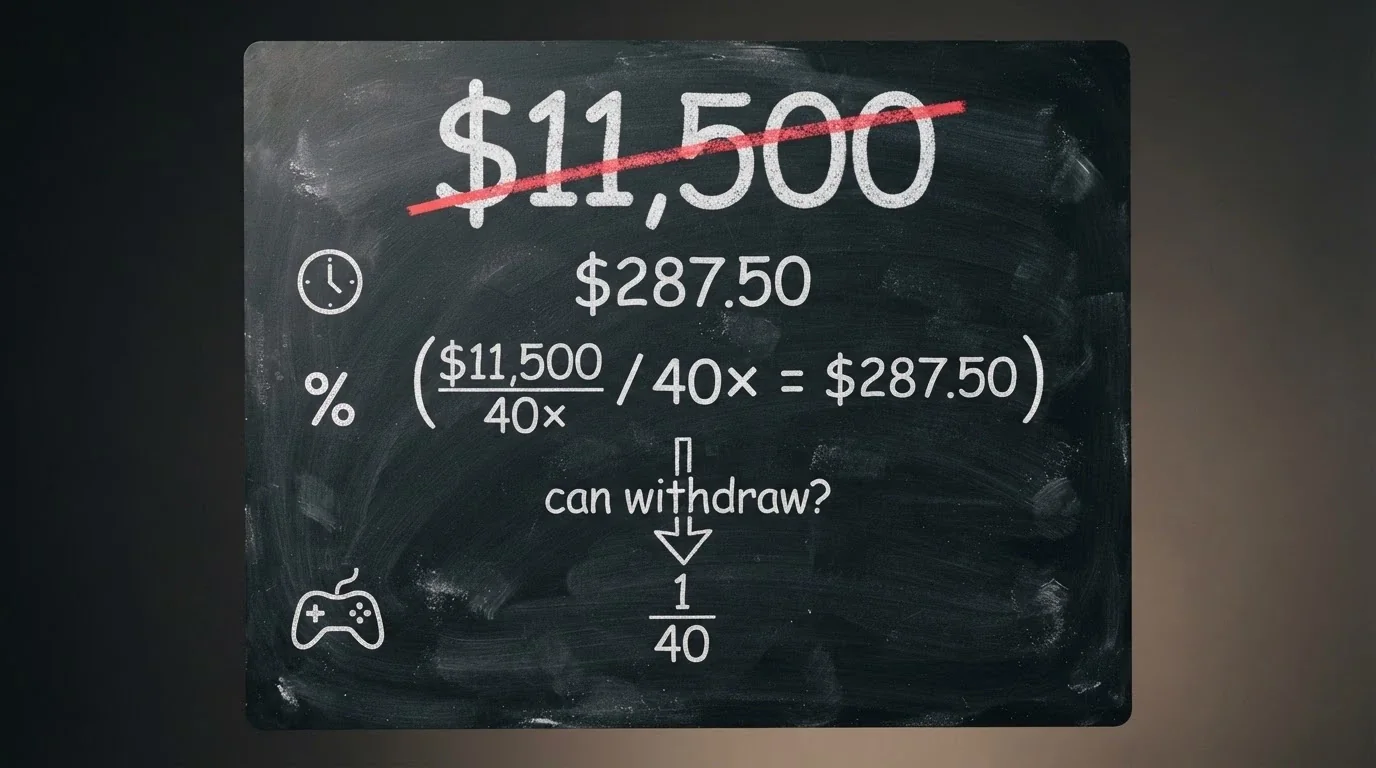
The standard offshore wagering multiple is 35× to 40× on the bonus amount. Wild Tokyo’s AU$5,300 plus 620 free spins carries 35×. Bets.io’s AU$11,500 plus 225 free spins carries 40×. BitStarz’s 5 BTC plus 180 free spins carries 40×. The wagering requirement applies to the bonus, not to the deposit — a 100% match with 40× wagering means the player must turn over 40 times the bonus amount, not 80 times the combined deposit and bonus. Even so, the absolute turnover is large: at Bets.io, AU$11,500 at 40× means AU$460,000 of qualifying wagers before the bonus converts to withdrawable funds.
Game weighting is the second cut. Slots typically contribute 100% to wagering. Table games often contribute 10–20%. Live dealer games may contribute 0%. A player who tries to clear a slots bonus at the blackjack table will see the wagering bar barely move. The maximum-bet cap while the bonus is active — commonly AU$5 to AU$10 per spin — prevents the player from clearing the requirement in a handful of large bets. The validity window — commonly 7 to 30 days — prevents indefinite carry. Each constraint is designed to make the bonus harder to convert than the headline implies.
Worked example: the Bets.io AU$11,500 welcome bonus at 40× wagering requires AU$460,000 of qualifying turnover. At AU$1 per spin on a slot contributing 100%, that is 460,000 spins. A 5-second interval between spins puts the play time at 2,300,000 seconds — roughly 639 hours of continuous slot play. At a typical 96% slot RTP, the expected loss on AU$460,000 of turnover is AU$460,000 × 4% = AU$18,400. That is the statistical cost of clearing the bonus: the AU$11,500 bonus is paid for, on average, by AU$18,400 of expected loss. The “free” money is, in expectation, more expensive than the player’s own deposit.
This is a statistical estimate — an average over many spins under the stated assumptions, not a guaranteed outcome for any single player.
No-deposit bonuses: free money with a steep price tag
No-deposit bonuses cost nothing to claim. They cost a great deal to clear. The typical offshore profile is 20 to 40 free spins with 40× to 50× wagering on the winnings, or AU$10 to AU$20 in site credit at 45× wagering, often with a maximum-win cap and a 24-hour expiry. The structure is a trial mechanism, not a payday.
BitStarz offers 30 free spins on sign-up at 40× wagering. Vave offers 40 free spins no-deposit at 40×, with winnings capped at 50 USDT and at least one successful deposit required before withdrawal. Caswino offers 20 free spins no-deposit at 50×, expiring within 24 hours. Cryptorino offers a $20 no-deposit bonus at 40×. The shape is consistent across operators: small headline, high multiplier, tight validity, win cap.
The win cap is the line that turns the offer from promotional to symbolic. A 50 USDT maximum withdrawal on a no-deposit bonus, after 40× wagering, means the player can win no more than the equivalent of a few hundred dollars of turnover — a ceiling designed to limit the operator’s worst case while still letting the player experience the wagering mechanic. No-deposit bonuses are best understood as a free look at how a casino’s bonus engine works, paid for in the time spent clearing them.
Welcome packages: the big numbers and the maths that cuts them down
Welcome packages are where the headline-versus-reality gap is widest. Wild Tokyo’s AU$5,300 plus 620 free spins at 35×. Bets.io’s AU$11,500 plus 225 free spins at 40×. BitStarz’s 5 BTC plus 180 free spins at 40×, drip-fed at 20 per day. mBit’s 4 BTC plus 325 free spins. BetPanda’s 100% up to 1 BTC plus weekly cashback. Wazamba’s 50% up to 1,500 AUD at 35× on deposit plus bonus, with 40× on free-spin winnings. JustCasino’s 100% up to AU$500 at 35× with a AU$5 maximum bet and a 7-day validity. Spinmacho’s $4,000 AUD across four deposits at 40×. Cryptorino’s 100% up to $1,000 at 35×.
The 35× to 40× multiplier is standard across the set. A player who deposits the maximum at Bets.io and claims the full AU$11,500 bonus faces AU$460,000 of qualifying turnover. At JustCasino with the maximum AU$500 bonus, the figure is AU$17,500 — a smaller absolute number, but the same proportional effort. The maximum-bet cap (AU$5 at JustCasino, AU$10 at Wazamba) means the player cannot accelerate through the wagering with a single large wager; they must spin, and the spin count is what the expected-loss calculation prices.
For a reader comparing welcome offers, the calculus is: bonus amount, wagering multiplier, game-weighting policy, max bet while active, and validity window. Two of those are usually visible on the operator’s terms page. Three are often buried or qualified by country-specific terms.
Free spins: what the 50× playthrough on winnings really costs
Free spins carry their own wagering requirement on the winnings, separate from the deposit bonus. BitStarz’s 180 free spins drop at 20 per day over nine days; the winnings carry 40× wagering. Bets.io’s 225 free spins carry 40×. mBit’s 325 free spins — the largest count in the set — carry an unconfirmed multiplier, but the industry standard puts it in the same 40× to 50× range. Wazamba’s 100 free spins carry 40× on winnings. Spinmacho’s 150 free spins carry 40×. JustCasino’s 200 free spins carry 35×.
The drip-feed structure matters. Twenty free spins per day for nine days keeps the player returning, and each batch’s winnings starts a new wagering clock. A player who clears one batch’s wagering and returns the next day to find a fresh 20 spins has, in effect, restarted the process. The total wagering exposure across a 180-spin drip-feed at 40× is substantial, and the 9-day window is short enough that the player cannot clear each batch at leisure.
The dollar value of a free spin is the stake times the number of spins. A AU$0.20 spin across 180 spins is AU$36 of slot action. At a typical 96% RTP, the expected loss on those spins is roughly AU$1.44 before any wagering multiplier. The wagering multiplier then applies to whatever the spins actually win, which is a different and usually larger number than the stake cost. The free-spin bonus is best understood as a marketing entry point that pays for itself in player time and attention long before it pays out in cash.
Crypto withdrawals: how fast your money actually arrives
“Instant withdrawal” is the most repeated claim on crypto casino landing pages. The tested data tells a different story. Wild Fortune’s independently timed payouts averaged 5 hours 24 minutes across five cycles, with a range from 3 hours 50 minutes to 7 hours 58 minutes. Moonbet claims ~4 minutes. BitStarz claims 8–10 minutes. mBit claims under 15 minutes. Jack Casino claims 10–15 minutes with risk-based KYC. Ignition sits at approximately 24 hours. CoinCasino claims minute-level crypto withdrawals.
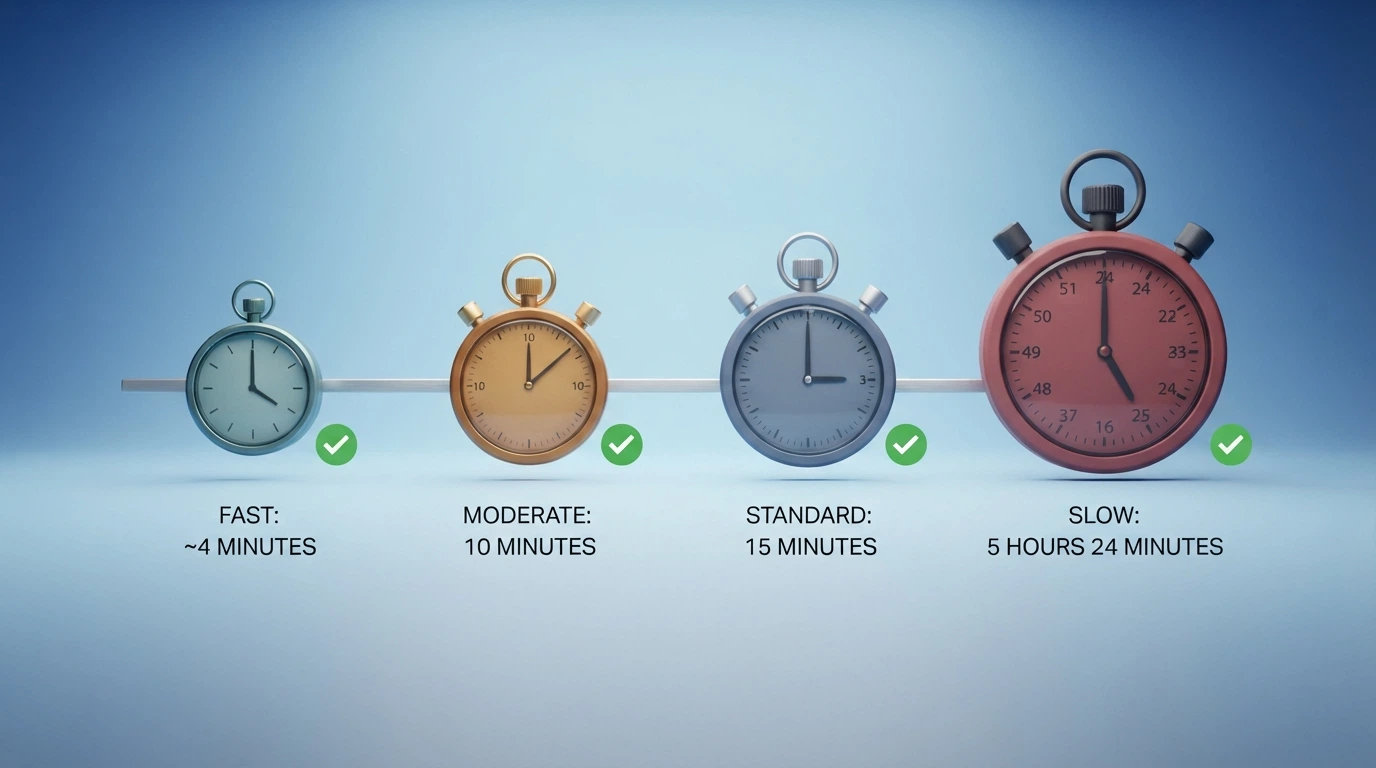
The spread is wide — 4 minutes to nearly 8 hours in the tested data alone — and “instant” means different things to different operators. For some, it means the withdrawal is processed and broadcast to the blockchain within minutes; for others, it means the funds are available in the player’s wallet once the blockchain confirms, which itself can take ten minutes for Bitcoin and seconds for USDT TRC20. The casino’s internal processing time is one variable; the blockchain’s confirmation time is another; the exchange’s processing on the receiving end is a third.
KYC at withdrawal can reset the clock entirely. A withdrawal that would have cleared in 10 minutes can stall for 24 to 72 hours once the operator requests documents. Jack Casino’s risk-based KYC is the cleanest version of this: 10–15 minutes for the average payout, longer for the flagged ones.
The AU cashout chain: from casino wallet back to your bank account
Getting crypto out of the casino is the fast part. Converting it back to AUD and into an Australian bank account adds three steps the “instant withdrawal” label never accounts for: a transfer from the casino wallet to a personal crypto wallet, a swap from crypto to AUD on an Australian exchange such as CoinSpot or Independent Reserve, and a withdrawal from the exchange to an Australian bank account. Each step has a fee, a spread, and a processing window.
The bank-side friction is where the chain slows down and may break. CommBank and Westpac restrict large outbound transfers to known crypto exchanges. ANZ and NAB flag without fully blocking. ING and Macquarie are the most permissive. A player withdrawing AU$5,000 from an exchange to a CommBank account may find the transfer held, questioned, or returned. The exchange-side KYC is mandatory above the AUSTRAC Travel Rule threshold of AU$10,000, and below it the exchange’s own verification still applies.
From 1 January 2027, banks and payment providers gain express authority to block transactions to illegal gambling operators. The bank-to-exchange leg of the cashout chain is the most likely intervention point, and the change takes effect within months of this article’s publication.
Crypto pokies: the games you will actually play
The game library at a crypto casino is overwhelmingly pokies — the Australian term for slot machines. Bets.io carries more than 17,000 games. Spinmacho lists 6,000+ games from 40+ studios. BetPanda holds 6,000+ titles. BitStarz runs 4,000+. The library depth is one of the genuine strengths of the offshore market; no Australian-licensed operator can match it because no Australian-licensed online casino exists.

Behind the pokies sits a thinner layer of table games — blackjack, roulette, baccarat — and a still thinner layer of live-dealer tables streamed from studio providers. Game providers at the top of the offshore market include studios familiar from European-licensed casinos (Pragmatic Play, Evolution, NetEnt, Play’n GO) alongside a long tail of smaller suppliers. The pokie catalogue is where the player spends most of their session time, and the breadth of the catalogue is what separates the major offshore brands from the second tier.
Provably fair: the crypto casino feature no pokie in a pub has
Provably fair is a cryptographic verification system unique to crypto casinos. The casino commits to a server seed before the player bets; the player provides a client seed; the bet’s outcome is derived from both seeds in a way that neither side can manipulate after the fact. The result is a hash the player can verify after the round. The mechanic lets the player check that the spin they just played was not altered mid-round by the operator.
This changes the trust equation in a narrow but real way. A fiat online casino asks the player to trust a regulator and an auditor. A crypto casino with provably fair asks the player to verify the maths themselves. The verification is a check on the fairness of the algorithm — it does not check the RTP the algorithm returns, and it does not check whether the operator has substituted a different game server after the fact. Provably fair is a useful tool; it is not a substitute for a licence.
Availability varies by operator and game provider. Not every pokie in a crypto casino lobby is provably fair — the feature depends on the studio building the verification into the game’s protocol, and not every studio has. A player who values the feature should check it per title rather than assume it across the library.
Real-money pokies vs demo mode: what each one is for
Demo mode is the lowest-friction way to assess a crypto casino before committing real funds. Most operators offer demo play on the majority of their pokies without requiring a deposit or KYC. The player can test the game’s mechanics, its bonus features, its volatility profile and, where provably fair is supported, verify the verification system against a known seed. Real-money play requires a deposit, and the deposit threshold is usually the first figure the operator publishes — often USD$20 or its crypto equivalent.
Demo mode is a practice tool. It cannot demonstrate the bonus wagering engine, the KYC posture at withdrawal, or the real payout speed. For those, the player needs to deposit and play through. The two together — demo first, small deposit second — are the cheapest way to assess an operator before any meaningful bankroll is at stake.
New crypto casinos worth a look in 2026
New crypto casinos launch frequently. The offshore market is easier to enter than the licensed market — no Australian regulator to satisfy, no local compliance burden, and a payment rail (crypto) that does not require a banking relationship. The result is a steady churn: new brands appear with aggressive welcome offers and fresh platform designs, and old brands rebrand or close.
Newness is not a proxy for quality. A brand with no track record, no independently tested payout data and no confirmed licence is, by definition, a higher-trust posture than an established brand with a Tobique registration and five tested withdrawal cycles. The 1,564 sites the ACMA has blocked since November 2019 represent the failure mode of that churn: operators that launch, attract Australian players, draw the regulator’s attention, and disappear with balances still on the books.
The framework from the trust section applies equally to new launches. Licence verified against a registry. Payout speed tested independently. Bonus terms read from the operator’s own T&Cs, not from an affiliate page. Community sentiment checked. The framework does not change because the brand is new; if anything, it matters more.
Fresh launches and the rebrand risk: why age matters offshore
An offshore operator can close, rebrand and reopen under a new domain in days. The ACMA blocking list is the evidence: 1,564 sites blocked, 225+ services withdrawn since 2017. The operators that survive multiple years under the same name have done so by paying out consistently enough to retain a player base and to avoid the regulator’s blocking threshold. The operators that rebrand frequently have, often, been blocked or paid out unreliably under the prior name.
Domain age is one check. Operator history is another. A casino that has operated under the same brand for five years has, in practice, been tested by the market across thousands of withdrawal cycles and hundreds of complaints. A casino that launched six months ago has not.
The legal reality: every crypto casino in Australia is offshore
Online casino games, online pokies and in-play sports betting are prohibited to persons in Australia under the Interactive Gambling Act 2001. There is no licence for online casino anywhere in the country — not federally, not in any state or territory. Providing the service is banned in terms.
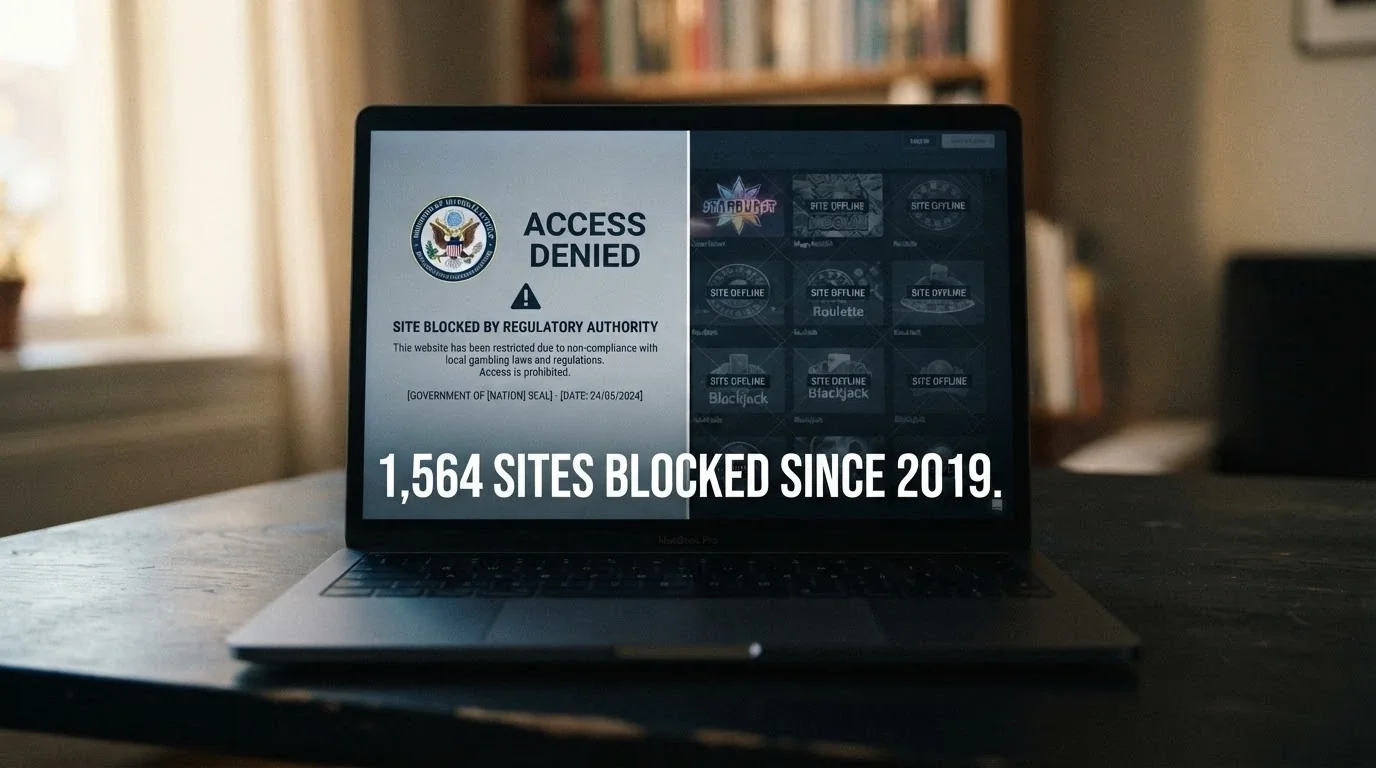
The Interactive Gambling Amendment Act 2017 strengthened enforcement and gave the ACMA its powers to direct ISPs to block illegal sites. Since November 2019, the ACMA has blocked 1,564 illegal gambling and affiliate websites. More than 225 illegal gambling services have withdrawn from the Australian market since 2017. The individual player is not prosecuted under the IGA — the Act targets the provider, not the person — but the player’s recourse when the provider refuses to pay is limited to the provider’s own goodwill.
From 11 June 2024, credit cards, credit-related products and digital currency (crypto) are banned as payment for licensed online wagering in Australia. The combination is structural: an Australian-facing operator accepting crypto at the cashier is, by definition, not licensed under the regime that would allow it. The 2026 reform — the Interactive Gambling Amendment (Gambling Reform) Bill 2026 — passed Parliament on 19 August 2026 and commences on 1 January 2027. It introduces express bank authority to block transactions to illegal gambling operators, hourly caps on wagering advertising, a live-sport ad blackout, inducement marketing restrictions, and a ban on athletes and influencers promoting wagering.
What playing without Australian consumer protection really means
An offshore casino sits outside every Australian safeguard. BetStop — the National Self-Exclusion Register — binds Australian-licensed wagering services only. An offshore casino is not connected to the register and will keep accepting a self-excluded person’s money. The ACMA can investigate, issue formal warnings, and direct ISPs to block the domain. It cannot recover a player’s funds. It cannot compel a payout. No state tribunal has jurisdiction over a Curaçao- or Anjouan-licensed operator.
A DNS-blocked casino holding a player’s balance is not a hypothetical scenario. The 1,564 sites blocked since 2019 are the operational record. Some of those sites held player balances at the moment of blocking. The blocking does not unwind the deposits. The player’s path to a refund runs through the operator’s own support channels, which sit outside any Australian complaints process.
The 2027 bank-block reform and what it changes for crypto casino deposits
From 1 January 2027, banks and payment providers gain express authority to block transactions to illegal gambling operators. The change reaches the AU-bank-to-crypto-exchange leg of the deposit chain, not the offshore casino itself. A CommBank-to-CoinSpot transfer to fund a USDT TRC20 deposit may, in the new regime, be intercepted by the bank on the basis that the funds are destined for an illegal gambling service. The mechanism by which the bank determines that destination is the operational question the first months of 2027 will answer.
The reform package also introduces inducement marketing restrictions: direct marketing is prohibited for 14 days after a customer signs up with a licensed wagering provider, for three months after BetStop deregistration, and indefinitely for customers identified as at-risk. Wagering advertising is capped at three ads per hour between 6:00 am and 8:30 pm, with a live-sport blackout from 15 minutes before until 5 minutes after a live event. None of this reaches the offshore casino itself, which remains outside the Australian regulatory perimeter — but the licensed-wagering marketing environment around the offshore product changes substantially.
Staying safe: what responsible gaming looks like without BetStop
BetStop — the National Self-Exclusion Register — has recorded 67,480 registrations as at 31 July 2026, with 41,290 exclusions still active. Over 60% of everyone who has ever registered remains on the register. 78% of registrants were under 40, and 38% chose lifetime exclusion. The register binds every Australian-licensed wagering service. One registration, one exclusion, every licensed operator.
It does not bind the offshore crypto casino. An Australian player who registers on BetStop is excluded from every licensed Australian bookmaker at once — and can still deposit at an offshore casino, claim a welcome bonus, and play without the exclusion applying. That gap is the most important responsible-gaming fact on this page.
About 2.1% of Australian adults — roughly 430,000 people — experience problem gambling; the Australian Institute of Health and Welfare put high-risk gambling at 1.8% in 2022. Australians lose around $32 billion on legal gambling every year, the heaviest per-person losses of any country on earth. The legal product accounts for most of that figure. The offshore product is a smaller slice in absolute terms, but it is the slice with the least infrastructure around it.
The help that is there: 1800 858 858 and the tools you can use right now
The National Gambling Helpline is 1800 858 858 — free, confidential, staffed 24 hours a day, 7 days a week. Gambling Help Online (gamblinghelponline.org.au) provides online chat and counselling. Both services work for any Australian gambler regardless of where they play.
The tools available to the player outside BetStop are partial but real. Self-imposed deposit limits at the exchange level cap the funds available to fund a casino deposit. A player who sets a AU$200 weekly deposit cap at CoinSpot has, in practice, set a AU$200 weekly gambling budget — the exchange enforces it regardless of how many casino accounts the player opens. BetStop itself remains the right tool for the licensed-wagering side of the picture. What remains absent is any mechanism that reaches the offshore casino. That is the gap, and it is the one the Australian player navigates alone.
How we evaluated these crypto casinos
The operators on this page were drawn from the brands that dominate Australian search results and affiliate rankings in 2026. The search results are exclusively affiliate listicles — no regulator, no news outlet, no official resource appears. Those affiliate pages formed the starting set, and the evaluation criteria were applied on top.
Licence jurisdiction was the first filter: verified against Curaçao, Anjouan and Tobique Gaming Commission public registers where accessible. Payout speed was the second: tested where independent data existed (Wild Fortune’s five-cycle test is the example), operator-claimed where independent data did not. Bonus terms were the third: read from operator and affiliate pages, with the wagering multiplier, max bet, validity window and game weighting noted where surfaced. Crypto support was the fourth: confirmed from the same sources.
No operator paid for inclusion. No affiliate commission influenced ranking. The ranking reflects licence clarity, independently tested payout speed, bonus terms that research surfaced, and crypto support — in that order. Where a field could not be confirmed (Rocket Play, Skycrown, BetPanda, Bets.io, CoinCasino licence; multiple operators’ bonus terms; several operators’ payout speed), the cell carries an em dash. The gap is honest because the gap is the information.
What to actually do about a crypto casino in 2026
The operators, the bonus maths, the legal perimeter and the protection gaps are all on this page. The reader’s decision is the trade-off: the speed and game variety of an offshore crypto casino against the absence of every Australian consumer safeguard. There is no licensed alternative to weigh it against. The product is prohibited. The choice is between offshore crypto and not playing.
If the decision is to play, the filter order is: confirmed licence first, independently tested payout data second, bonus terms where the expected-loss calculation has been run third. Wild Fortune’s Tobique licence and tested payout data make it the standard the rest of the set should be measured against. BitStarz’s Curaçao licence and 8–10-minute crypto payouts make it the next-most-verified. The remainder of the set is ranked on what research carries, with the gaps labelled as gaps rather than filled with guesses.
The practical steps before depositing: read the bonus terms on the operator’s own T&Cs page, not the affiliate summary. Confirm the licence number against the regulator’s public register. Set a deposit limit at the exchange level before funding the casino wallet. Know that the ACMA can block the domain at any time, and that a blocked site holding a balance is a problem with no Australian complaints process to escalate.
This is an unregulated market. The player carries every risk. The figures on this page — turnover requirements, payout speeds, bonus terms — are real numbers from real operators. They are not guarantees, and they are not protections.
Frequently asked questions
Which cryptocurrencies can I use at an Australian-facing crypto casino?
Bitcoin and Ethereum are accepted at every operator in the featured set. USDT on the TRC20 network is the default deposit rail for Australian players in 2026 because the token is pegged to the US dollar and TRC20 transactions settle in minutes at minimal cost. Beyond those three, the spread varies: mBit leads with Bitcoin, Wild Fortune accepts BTC, ETH, LTC, USDT (TRC20 and ERC20), DOGE and BCH, BetPanda lists 30+ coins, BitStarz claims 500+.
Do I need to submit ID documents at a crypto casino?
Most operators do not require KYC at deposit. The threshold appears at withdrawal. Moonbet draws the line at withdrawals under $2,000 with no verification; above that, KYC kicks in. Jack Casino runs risk-based KYC that triggers on suspicious withdrawal patterns. BitStarz processes most withdrawals in 8–10 minutes but retains the right to request documents. The marketing claim of “no KYC” is, in practice, a “no KYC until threshold or trigger” claim.
Does BetStop protect me if I register at a blockchain casino?
No. BetStop binds Australian-licensed wagering services only. An offshore crypto casino is not connected to the register and will keep accepting a self-excluded person’s deposits and bets. The exclusion applies to every licensed Australian bookmaker at once, but it does not reach the offshore market. The tools that do work across the whole landscape are the National Gambling Helpline (1800 858 858) and Gambling Help Online.
Do I have to pay tax on crypto casino winnings in Australia?
No — for an ordinary punter. Betting and gambling winnings are not assessable income under section 6-5 of the ITAA 1997, and gambling losses are not deductible under section 8-1, unless the person is carrying on a business of betting or gambling. No Australian case has held the winnings of an ordinary punter assessable. The position changes if the ATO treats the gambling as a business — which requires factors like systematic profit-seeking, professional skill, or commercial-scale activity.
What happens if an ACMA-blocked casino is holding my balance?
The blocking does not unwind the deposit. The ACMA can direct ISPs to block the domain, but it cannot compel the offshore operator to refund balances. The player’s path to recovery runs through the operator’s own support channels, which sit outside any Australian complaints process. The 1,564 sites blocked since November 2019 include operators that held player balances at the moment of blocking. The risk is operational, not hypothetical.
Written by the editors at Min Deposit 5 Casinos AU.