
Real money pokies on a A$10 deposit in Australia: what the bonus page doesn’t tell you
A ten dollar deposit is the cheapest real-money entry point into online pokies for an Australian player in 2026, and the figure the offshore market has quietly settled on as its acquisition price. A$10 buys a balance, a few hundred spins at minimum stake, and at a small number of operators a welcome bonus. It does not, at most checkout pages, buy everything the homepage advertises. The deposit minimum and the bonus-eligible minimum are two different numbers, and the difference is the first trap on this page. The rest of the page is about how to read both sides of the cashier before the A$10 leaves the bank account.
Data current as of 30 October 2026, checked against the ACMA blocked-website register and the Curaçao gaming register.
Table of Contents
- What your A$10 actually unlocks at the checkout
- Why your A$10 pokies deposit is smaller than the casino makes it look
- No Australian licence exists for online pokies — here is what protects you instead
- How to fund a $10 pokies deposit (and which payment methods are now illegal)
- Why your $10 pokies session plays exactly the same on mobile — and what to check first
- 10 offshore casinos for $10 pokies deposits: ranked by what actually triggers at ten dollars
- Five checks every $10 deposit pokies site should pass before you deposit
- How we selected and ranked these $10 deposit pokies sites
- What your first $10 pokies deposit should actually look like
- Frequently asked questions
What your A$10 actually unlocks at the checkout
The A$10 deposit has become the de facto floor for fiat-funded pokies play targeting Australians, not because it is the cheapest theoretical entry — Neosurf vouchers run as low as A$5 at some brands, and crypto deposits can dip to roughly AU$0.10 in BTC equivalent at Stake — but because A$10 is the round number offshore operators can market without scaring anyone off. It signals accessibility. It also signals something the marketing does not: that the operator wants a player on the platform more than it wants a player with a meaningful bankroll. Low deposits are an acquisition tool, not a generosity measure. A bankroll that runs out in twenty minutes is a player who needs to deposit again to keep playing, and the second deposit rarely qualifies for a fresh welcome offer.
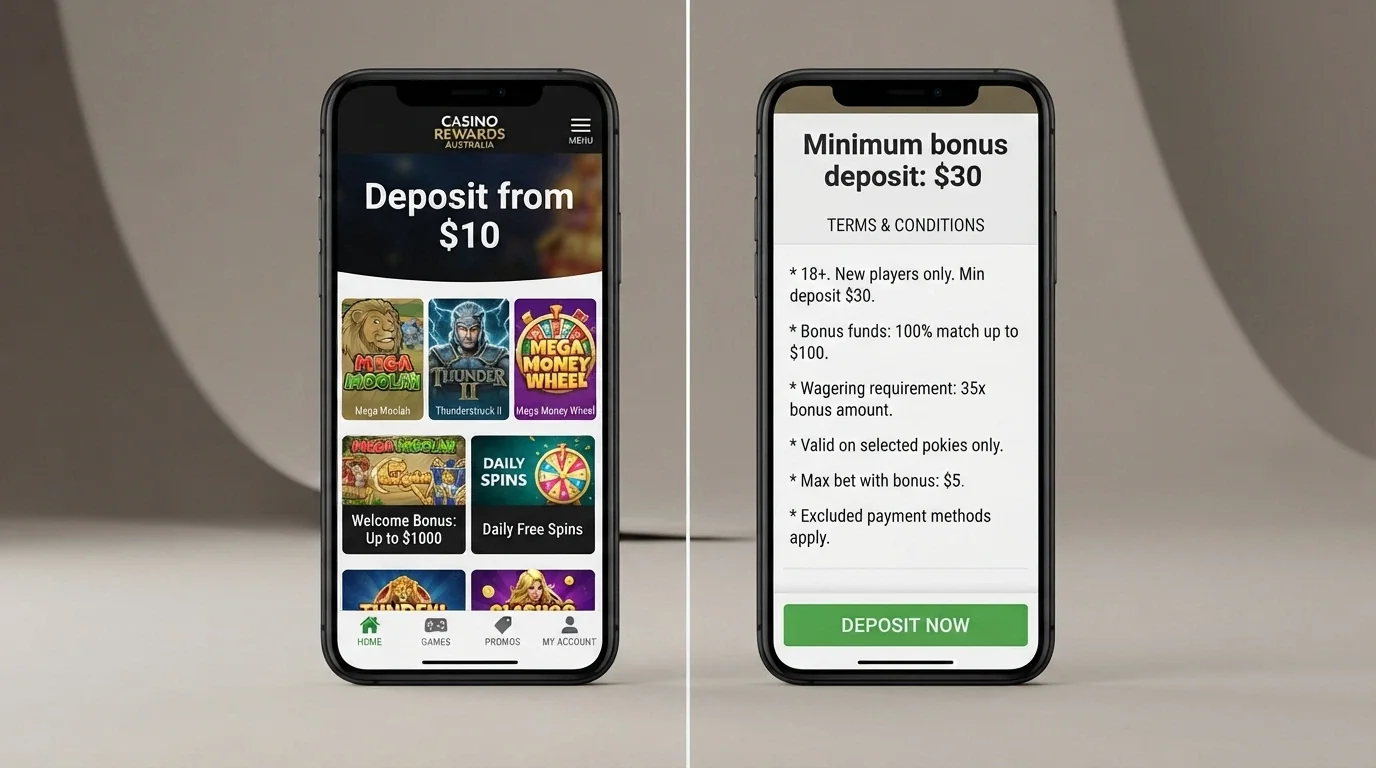
What “minimum deposit” actually means is also narrower than it reads. The figure is the smallest amount the cashier will accept. It is not the smallest amount the bonus terms recognise, the smallest amount a withdrawal will clear, or the smallest amount the responsible-gambling tools will treat as a session rather than a token gesture. Each of those is a different number, usually higher, and each is set by a different part of the operator’s terms. The A$10 badge on a homepage refers to one of them and one only — the deposit side of the cashier.
The market has settled on A$10 because the alternatives fail in different directions. Below A$10, fiat deposit methods (debit card, POLi, PayID) tend to charge a fee that swallows the deposit, or are not supported at all. Above A$20, the marketing pitch loses its “from” figure and the comparison pages stop listing the brand in the budget segment. The result is a cluster — call it the A$10 deposit pokies market — where every operator advertises the same entry price and almost every operator differs on what happens after the deposit lands.
The $10 deposit pokies market in 2026 — more access, same fine print
In 2026 A$10 is the figure the market quietly settles on as the practical sweet spot for fiat deposits serving Australian players. The number is more convention than regulation: no Australian statute sets the floor, because Australia does not license online casino at all (more on that below). What A$10 actually represents is the lowest amount that works across the popular payment methods — PayID, POLi, debit card, Neosurf, bank transfer — without the deposit fee eating the balance or the operator’s risk team flagging the transaction.
The practical fiat-deposit floor for Australians sits between A$5 and A$10. Neosurf vouchers are the path below A$10: a A$5 voucher at an operator that accepts Neosurf at that floor is the lowest fiat deposit a player can place at an offshore casino reachable from Australia in 2026. There is no A$5 fiat casino available through the standard payment routes — no PayID deposit under A$10, no debit-card deposit under A$20 in the tested set. Crypto changes the picture. At Stake the equivalent of roughly AU$0.10 in bitcoin can fund a spin; that is the floor an offshore site is willing to publish without looking like a typo. The gap between A$10 and AU$0.10 is the size of the difference between what the market advertises and what the technology permits.
The “minimum deposit” badge itself does very little work. It tells the player what the cashier will accept; it does not tell them which games they can play (providers like Pragmatic Play, NetEnt and Evolution do not restrict games by deposit size — A$10 spins the same reels as A$500), whether a welcome bonus will trigger (most operators do not), or whether a future withdrawal will clear (KYC and minimum-withdrawal floors come into play before any cash leaves the cashier). A$10 is the price of admission. The cost of the visit is set by the terms on the next four pages of the site.
Offshore from the first spin: what “Australian online pokies” really means
Every real-money pokies site an Australian can actually reach is offshore. Australia does not licence online casino games, online pokies, or in-play sports betting, federally or in any state or territory, under the Interactive Gambling Act 2001. The prohibition targets the provider — it is an offence under the IGA to provide online casino games to a person physically in Australia — not the player. No Australian punter has ever been prosecuted or fined for using an offshore casino site, and the regulator (the ACMA, the Australian Communications and Media Authority) directs its enforcement at the operators, not their customers.
That distinction is the reason offshore pokies are accessible at all from an Australian IP address. The site is breaking Australian law by offering the product; the player is not breaking Australian law by using it. “Australian online pokies” is, in this sense, a marketing phrase rather than a legal category — every site using it is licensed somewhere else (Curaçao, Anjouan, Malta, Kahnawake) and is operating in a deliberate grey area with respect to Australian law. The offshore licence is real regulatory oversight under that jurisdiction’s framework; it is not a substitute for Australian consumer protection, because there is no Australian framework to substitute.
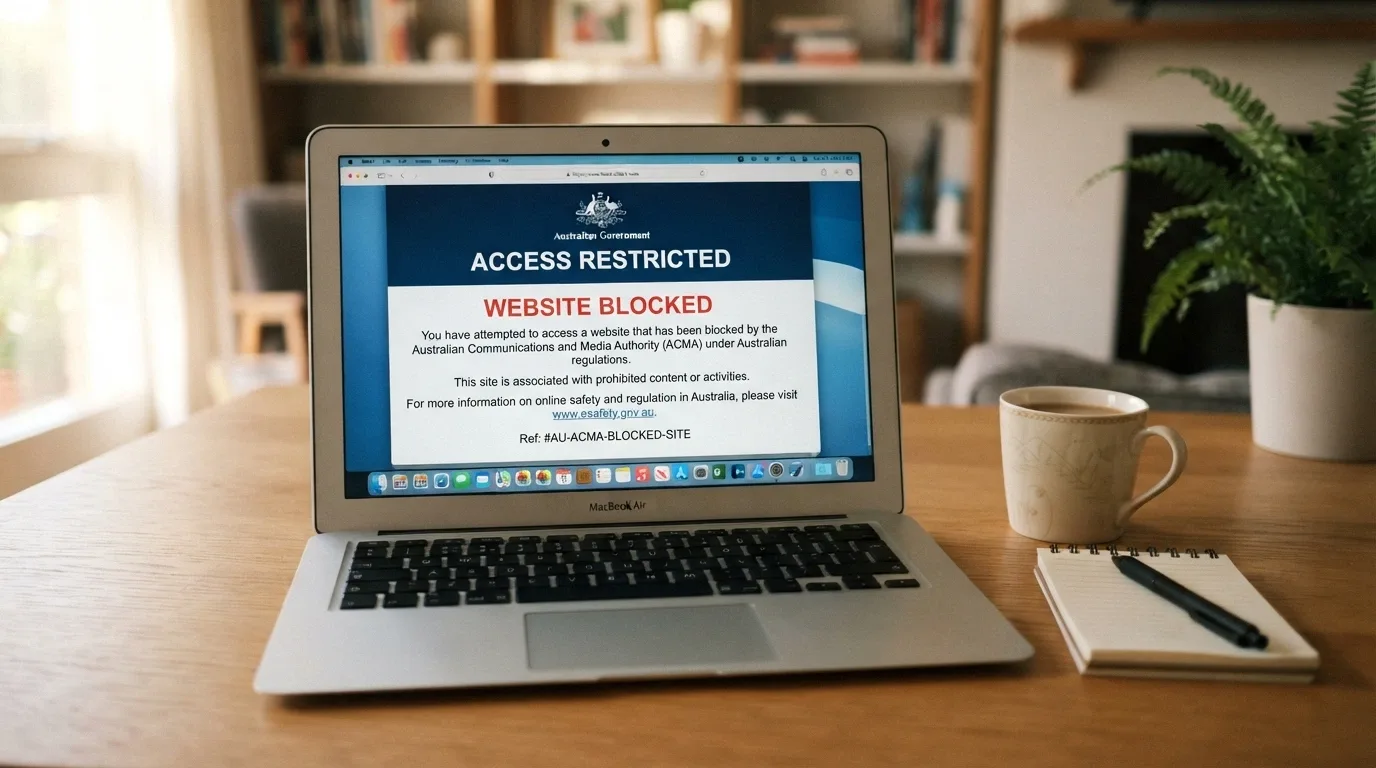
The ACMA enforces the prohibition with DNS-level blocking. Since its first blocking request in November 2019 the regulator has had 1,564 illegal gambling and affiliate websites blocked at the ISP level, and more than 225 illegal services have withdrawn from the Australian market since the regime was strengthened in 2017. The block is the regulator’s signal that the site is operating outside Australian law. It does not stop a determined player from reaching the site, but it does change what recourse that player has if a withdrawal stalls, a bonus is voided, or the site disappears — none of the Australian consumer-protection pathways apply, because there is no Australian relationship to protect.
Why your A$10 pokies deposit is smaller than the casino makes it look
The A$10 deposit looks like an offer. It is, more often, a label — the price on the front of a product whose real cost is on the next four tabs. Two numbers in particular define the gap between the headline and the result: the bonus trigger (the minimum deposit the welcome offer actually recognises, which is usually A$20 or A$30, not A$10), and the withdrawal floor (the minimum amount the cashier will pay out, typically A$25–A$50 and sometimes A$50–A$100). A player depositing A$10 at such an operator receives a cash balance of A$10 with no bonus attached — they are playing the casino’s games at minimum stake without any promotional value. That is the unadorned product, and it is the version most A$10 deposits actually buy.
The other trap sits between the deposit and the first withdrawal. KYC (know-your-customer) verification — photo ID, proof of address under 90 days, payment method verification — is required before any withdrawal regardless of deposit size. The deposit page does not mention KYC. The withdrawal page does, in small print, after the player has funded the account. A A$10 deposit that triggers a A$40 bonus and then sits unverified is a A$50 balance that cannot leave the cashier until the documents upload, the operator reviews them, and the payment method is verified against the same name on the ID. The deposit page and the withdrawal page are two different documents. Reading only the first one is how A$10 deposits get lost.
Real-money pokies at $10: what your two hundred spins actually look like
A A$10 deposit at minimum stake buys a meaningful session on the reels. The floor on most popular pokies runs from A$0.05 to A$0.20 per spin. At A$0.05 (Blood Suckers, NetEnt) A$10 funds 200 spins. At A$0.10 (Book of 99 from Relax Gaming, 1429 Uncharted Seas from Thunderkick) it funds 100 spins. At A$0.20 (Gonzo’s Quest, NetEnt) it funds 50. None of these sessions is long, and none of them is short — they are short enough that the operator’s house edge gets to do its work across a meaningful sample, and long enough for a player to feel the difference between a low-volatility and a high-volatility title within a single sitting.
The reel content does not change with deposit size. Pragmatic Play, NetEnt, Evolution and the other major providers do not restrict games based on how much a player has funded their account — A$10 spins the same reels as A$500, with the same RTP configuration, the same volatility profile and the same bonus-feature frequency. The provider does not know, and does not care, what the player’s balance is. What does change is bankroll survival across volatility bands. A low-volatility pokie like Blood Suckers (98.00% RTP, low volatility) returns small amounts frequently enough that a A$10 balance survives 200 spins in most sessions. A high-volatility headliner like Mental, San Quentin xWays or Wanted Dead or a Wild burns small bankrolls at 80%+ frequency before bonus features trigger. Those titles are designed for A$50+ sessions, and the same game on a A$10 deposit is the most efficient way to learn why.
The bet-sizing choice is therefore the single most consequential decision a A$10 player makes. Spinning at A$0.20 on Gonzo’s Quest and at A$0.05 on Blood Suckers is not a 4× difference in entertainment; it is the difference between 50 spins that mostly go somewhere and 200 spins that mostly come back. At A$10 the stake is the session length, and the title is what the session feels like while it lasts.
The bonus trap: why an A$10 deposit earns nothing at most checkout pages
The “minimum deposit” badge and the “minimum deposit for the welcome bonus” figure are different numbers at most operators. Slotspeak’s tested set confirms that the majority of A$10 PayID casinos accept A$10 as a deposit minimum but require A$20 or A$30 to qualify for the welcome match — a player reading “from A$10” on the homepage, depositing A$10, and discovering that no bonus has attached to the balance is reading the wrong number. SkyCrown, VegasNow, Rolling Slots and Wild Tokyo all sit in this group: PayID accepted at A$10, bonus triggered at A$20 or A$30. The deposit minimum is the entry price. The bonus minimum is the upsell.
NeoSpin is the only operator in the tested list where all three criteria pass at A$10: confirmed system minimum of A$10, welcome bonus triggered at A$10, and PayID accepted at A$10. Every other operator in the comparison requires A$20 or more for the bonus to attach. That is the practical difference between A$10 deposit pokies that include a promotional kicker and A$10 deposit pokies that do not — at most brands in the market, A$10 is deposit-only.
At NeoSpin the offer attached at A$10 is meaningful: a 400% welcome bonus up to A$10,000, with the first tranche converting the A$10 deposit into a A$40 bonus and a A$50 starting balance, against 50× wagering on the bonus. That A$2,000 turnover requirement (A$40 × 50) is the real price of the bonus, and it is worth pausing on. Assuming only the bonus amount is wagered, a A$2,000 turnover at Book of 99’s A$0.10 minimum stake is roughly 20,000 spins — about 28 hours of play at one spin every five seconds. The same A$2,000 cleared through Gonzo’s Quest at its A$0.20 floor takes around 10,000 spins, or about 14 hours at the same tempo. Both are statistical estimates under the stated assumption — they describe an average over many spins, not a guaranteed outcome for any single session. The bonus can be cleared, or wiped, before either clock starts to matter.
The smaller wagering multiples in the same set change the picture. LuckyDreams’ 100% match at A$10 deposits delivers a A$10 bonus plus 100 free spins at 35× wagering — that is A$350 in qualifying wagers, an order of magnitude lower than NeoSpin, and achievable in roughly 3,500 spins on Blood Suckers or 1,750 on Gonzo’s Quest. Goldenbet takes the wagering requirement out of the equation entirely: AU$100 ×3 cash gifts with 0× wagering, real cash on the balance, no playthrough to clear. It is the rare offer at this deposit level where the math works out without a clock.
The other side of the cashier is where the A$10 deposit most often disappears. Minimum withdrawal thresholds at most Australian-facing offshore casinos range from A$20 to A$50, and at some brands A$50 to A$100 — typically much higher than the A$5–A$10 minimum deposit. A A$10 deposit that hits a lucky spin, builds a A$30 balance, and tries to withdraw discovers that A$30 sits below the cashout floor. The deposit page said A$10; the withdrawal page says A$50. Both pages are correct. The player who read only the first one is the player whose money stays on the platform.
The pokies that stretch a $10 bankroll furthest
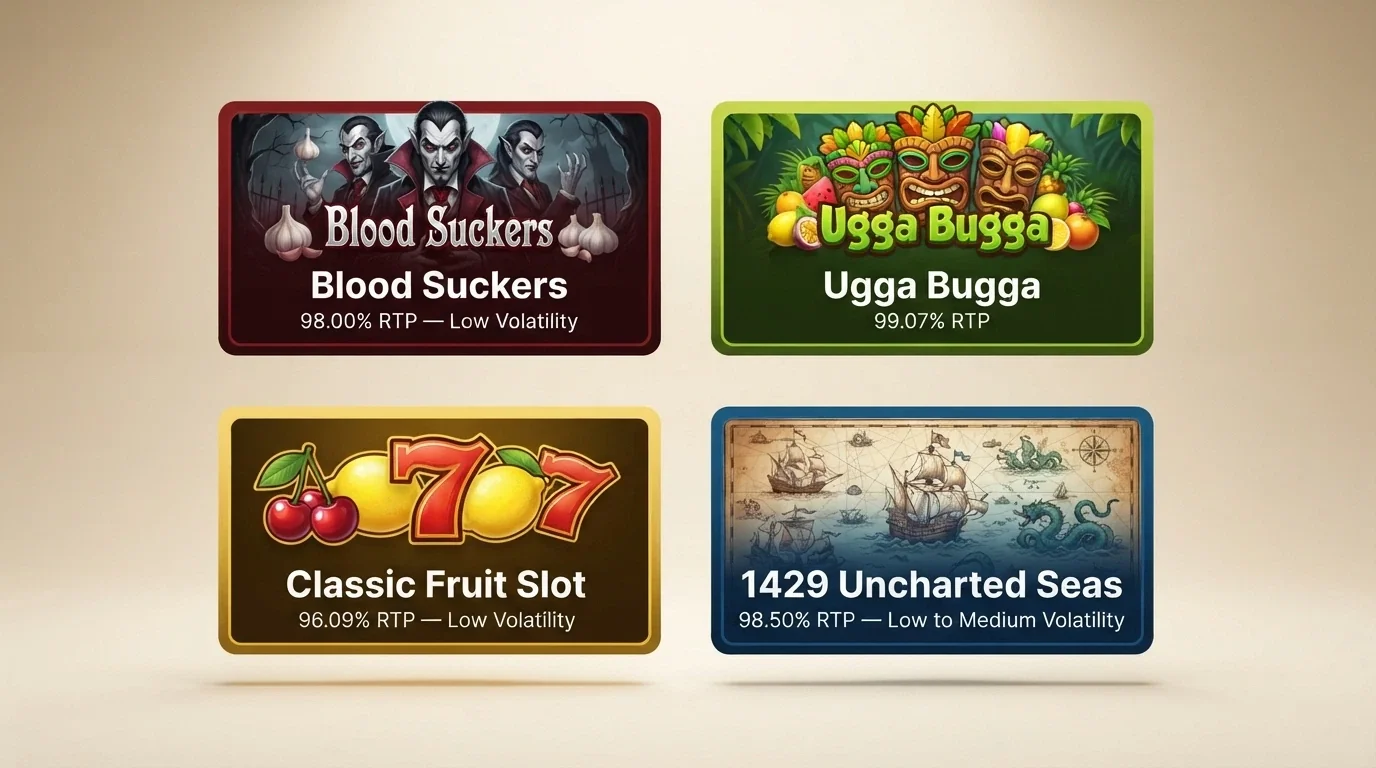
High-RTP, low-volatility pokies are the titles that give a A$10 balance a real chance of surviving a session without burning through. The maths is straightforward: the closer the theoretical return is to 100%, the less of the A$10 the house edge takes per spin, and the lower the volatility, the smaller the swings around that average. A 98.00% RTP title at low volatility returns A$0.96 per A$1 wagered in the long run, with most individual spins close to the A$0.05–A$0.10 stake size. A 96.00% RTP title at high volatility returns A$0.96 per A$1 over a much larger sample, with most individual swings much larger than the stake.
The pokies worth naming for a small bankroll look like this:
| Slot Title | RTP | Volatility | Provider |
|---|---|---|---|
| Blood Suckers | 98.00% | Low | NetEnt |
| Ugga Bugga | 99.07% | — | Playtech |
| Book of 99 | 99.00% | Medium-high | Relax Gaming |
| 1429 Uncharted Seas | 98.50% | Low to medium | Thunderkick |
| Mega Joker | 99.00% (supermeter) | — | NetEnt |
| Starburst | 96.09% | Low | NetEnt |
| Gonzo’s Quest | 95.97% | Medium to medium-high | NetEnt |
| Wolf Gold | 96.01% | Medium | Pragmatic Play |
| Big Bass Bonanza | 96.71% | High | Pragmatic Play |
| Book of Dead | 96.21% | High | Play’n GO |
The top of that list is where a A$10 deposit belongs. Blood Suckers (NetEnt, 98.00% RTP, low volatility, A$0.05 minimum bet) returns small amounts frequently — the kind of play that lets a player watch a A$10 balance tick down slowly rather than disappear in twenty high-volatility swings. Ugga Bugga (Playtech, 99.07% RTP) is the highest live-distributed return on a real-money pokie, and the configuration has been stable across operators. Book of 99 (Relax Gaming, 99.00% RTP, A$0.10 minimum bet) and 1429 Uncharted Seas (Thunderkick, 98.50% RTP, A$0.10 minimum bet) give the same low-stakes entry with a slightly different volatility profile.
The bottom of the list is where most A$10 deposits actually land, and where most of them are lost. Wolf Gold, Big Bass Bonanza, Gonzo’s Quest and Book of Dead are the titles most A$10-deposit players will see first on the casino’s homepage; they are also the titles whose volatility profile is mismatched to a A$10 bankroll. Big Bass Bonanza in particular ships in three RTP configurations — 96.71%, 95.67% and 94.79% — and Pragmatic Play’s Wolf Gold ships in three as well (96.01%, 95.01%, 94.01%). The figure on the review site is the theoretical maximum; the figure on the operator’s server may be two percentage points lower. Book of Dead, deployed at Mecca at 94.25%, sits roughly two percentage points below its published 96.21% theoretical RTP. The deployed configuration is the one that decides what the bankroll actually returns.
Low volatility matters more than headline RTP at A$10. A 99.00% RTP title at high volatility and a 96.00% RTP title at low volatility will both erode a A$10 balance faster than the 3 percentage point difference suggests, because the high-volatility title’s losing streaks are longer. The pokies that stretch a small bankroll are the ones whose variance is small enough that the bankroll stays alive long enough for the RTP to express itself.
No Australian licence exists for online pokies — here is what protects you instead
Australia’s position on online pokies is the country’s clearest gambling policy: the product is prohibited, not regulated. The Interactive Gambling Act 2001 makes it an offence to provide online casino games, online pokies or in-play sports betting to a person in Australia. There is no licence for online casino anywhere in the country — not federally, not in any state or territory. Land-based casinos (Crown in Melbourne, The Star in Sydney) are state-licensed and are a valid contrast; an online casino is not. The IGA targets the provider. The player, as noted earlier, is not prosecuted, but the absence of an Australian licence means the absence of every Australian consumer protection that would normally attach to a licensed gambling product: no ACMA complaint recovery, no Australian Dispute Resolution scheme, no BetStop coverage, no recourse for a refused withdrawal beyond whatever the offshore licence’s regulator will do under its own framework.
What replaces those protections is a set of tools that work for some of the offshore market and not for others. The credit-card and crypto payment ban (in force since 11 June 2024) is enforced at the banking-network level and applies to licensed Australian wagering services — it is not enforced against offshore operators, because offshore operators do not run on Australian rails. BetStop, the National Self-Exclusion Register, excludes a person from every Australian-licensed online and phone wagering service but does not extend to offshore casinos, which are not connected to the register. The National Gambling Helpline (1800 858 858, free, confidential, 24/7) and Gambling Help Online (gamblinghelponline.org.au) work regardless of where the player has been gambling, because they are funded to help people, not to enforce operator compliance.
The picture that emerges is that no Australian safeguard reaches the offshore casino account, and the few that touch the player’s broader relationship with gambling (the helpline, BetStop, the bank’s transaction-monitoring obligations) work at the edges rather than inside the platform. A player signing up at an offshore casino is signing up under the operator’s house rules, and those rules include a payment method the Australian regulator has banned, a bonus offer the Australian regulator has not approved, and a withdrawal process the Australian regulator cannot enforce.
The IGA, ACMA blocks and why the punter is never the target
The Interactive Gambling Act 2001 prohibits the provision of online casino games to a person in Australia. The Interactive Gambling Amendment Act 2017 closed the offshore loopholes the 2001 Act had left open and gave the ACMA the enforcement and blocking powers it uses today. The result is a regime that targets the operator through civil penalties and ISP-level blocking, not the player through criminal prosecution. No Australian punter has ever faced prosecution for using an offshore casino site; the law is constructed so that the legal risk sits on the supply side.
The ACMA’s blocking power is DNS-level. Since November 2019 the regulator has had 1,564 illegal gambling and affiliate websites blocked at the ISP layer, and more than 225 illegal services have withdrawn from the Australian market since the 2017 amendments strengthened enforcement. The block is the regulator’s clearest signal that the site is operating outside Australian law, even if the player can still reach it through a DNS workaround. The block also tells the player something useful about the operator’s standing in the Australian market — every site the ACMA names is one whose marketing has been adjudicated as targeting Australians, not one whose legal status in its home jurisdiction has changed.
The framework is changing in 2026. The Interactive Gambling Amendment (Gambling Reform) Bill 2026 passed Parliament on 19 August 2026; its measures commence on 1 January 2027. From that date the reform introduces AdStop, a national wagering-advertising opt-out register administered by the ACMA and funded by a cost-recovery levy on wagering companies. Wagering advertisements will be capped at three per 60-minute block between 6 am and 8:30 pm, with the live-sport blackout extended to begin 15 minutes before the event (from 5 minutes previously). Direct marketing of inducements — the welcome bonuses, the referral offers, the reload deals — will be prohibited for 14 days after a customer signs up and for 90 days after a person deregisters from BetStop. Broadcast radio will lose wagering ads during school drop-off and pick-up windows (8 am to 9 am and 3 pm to 4 pm on school days). And from 1 January 2027, banks and payment providers gain express authority to block transactions to illegal gambling operators, which is the first time the IGA’s offshore prohibition will have a banking-network enforcement lever behind it.
None of those changes alters the legal status of the player. The IGA continues to target the provider; the offshore casino continues to offer the product; the player continues to access it at their own risk. What changes is the surface — fewer inducements in the marketing, more friction on the payment rails, a stronger opt-out register, and an enforceable ban on the kind of advertising that drives the A$10 acquisition offer in the first place.
Where to get help: BetStop, the National Gambling Helpline and the offshore gap
BetStop — the National Self-Exclusion Register — has been live since August 2023. One registration excludes a person from every Australian-licensed online and phone wagering service. As at 31 July 2026 the register has 67,480 registrations, of which 41,290 exclusions are still active (more than 60% of everyone who ever signed up); 78% of registrants were under 40, and 38% chose lifetime exclusion. The register is the strongest Australian harm-minimisation tool for people who want their gambling stopped at the source.
It is also, by design, incomplete. BetStop binds Australian-licensed wagering services only — an offshore casino is not connected to the register and will keep taking a self-excluded person’s money. A player who has registered with BetStop and then deposits at an offshore casino has not self-excluded from that casino, because the casino is outside the Australian framework the register relies on. The 90-day post-deregistration inducement ban coming in 2026+1 (1 January 2027) is a related measure; it restricts what Australian-licensed operators can market to a former registrant, not what an offshore casino can offer. The gap is structural: BetStop protects a player inside the Australian system, and the offshore casino sits outside that system.
The help lines that do work across the offshore gap are the National Gambling Helpline (1800 858 858, free, confidential, 24 hours a day, 7 days a week) and Gambling Help Online (gamblinghelponline.org.au), which offer online chat and counselling. The National Debt Helpline (1800 007 007) covers the financial-counselling side of gambling harm. These services are funded to help people, not to enforce operator compliance, and they work regardless of where the gambling happened — which is why they remain the practical first call for someone whose gambling has moved offshore.
The numbers behind those services are not abstract. About 2.1% of Australian adults — roughly 430,000 people — experience problem gambling. The Australian Institute of Health and Welfare put high-risk gambling at 1.8% in 2022. The A$10 deposit pokies segment is the most accessible version of the product, and accessibility cuts both ways: it is the entry point for a player with a discretionary ten dollars to spend on entertainment, and it is the entry point for a player who should be calling the helpline before funding the account.
How to fund a $10 pokies deposit (and which payment methods are now illegal)
The payment method is part of the offer, and at an Australian-facing offshore casino it is also a tell. The legal deposit routes for licensed Australian wagering are debit card, bank transfer, PayID/Osko and BPAY. Credit cards, credit-related products (including digital wallets such as crypto-funded wallets) and digital currencies themselves have been banned as payment for online wagering since 11 June 2024, under the Interactive Gambling Amendment (Credit and Other Measures) Act 2023. The penalty for non-compliance is up to A$247,500 per breach. An Australian who is asked for a credit card or crypto deposit by a gambling site is being served by someone outside the Australian rules — the payment method is itself a tell.
Offshore casinos serving Australians typically offer a wider menu than that list. PayID, POLi, Visa and Mastercard debit, bank transfer, Neosurf vouchers, and a handful of cryptocurrencies are all in active use across the segment. Some of those routes sit cleanly inside Australian banking rules; others do not. The operator’s payment page is a quick way to tell which side of the line the brand sits on — an Australian-licensed wagering operator cannot legally accept credit card or crypto, and the offshore operator typically accepts both.
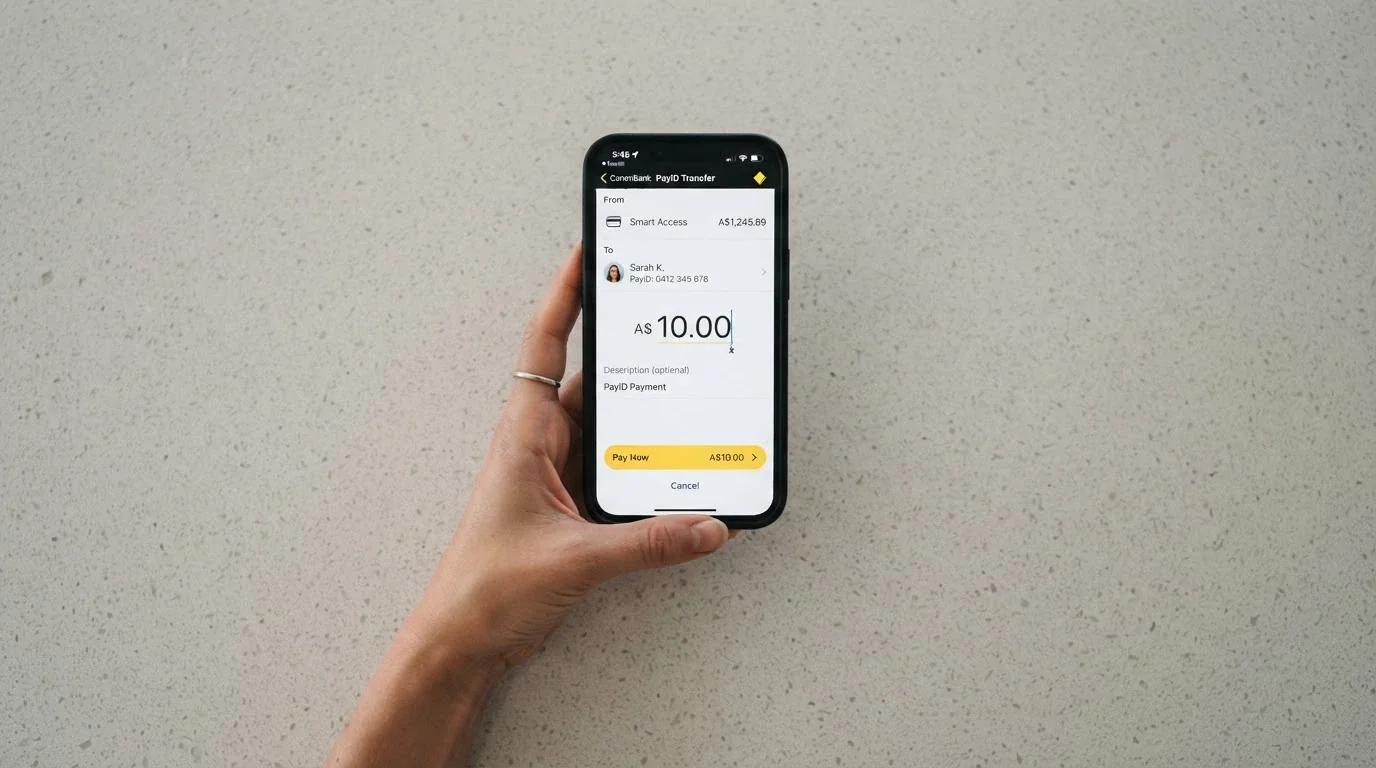
The split is not symmetric. A bank transfer or PayID deposit to an offshore casino is processed through the Australian banking network and creates a traceable record on the player’s statement; that record is also visible to the player’s bank, which from 1 January 2027 will have express authority to block the transaction. A crypto deposit is processed outside the banking network and leaves a record only on the player’s wallet and the casino’s cashier. The first is harder to hide; the second is harder to recover.
PayID: the fastest $10 deposit route for Australian players
PayID deposits are processed instantly at most Australian-facing offshore casinos, with a minimum of A$10 at many operators and A$20 at others. The mechanism is the New Payments Platform (NPP), a regulated banking network operated by NPP Australia Limited. Every PayID transfer is bank-verified at the time of the transaction and creates a traceable record on the player’s bank statement. The player sees “PayID” and the payee’s name; the bank sees the same; the casino sees the funds clear in seconds.
That combination — speed, traceability, and bank-grade infrastructure — is why PayID dominates the A$10 deposit segment. A player funding an account at SkyCrown, VegasNow, Lucky Vibe, Wild Pokies or any of the brands that list PayID at A$10 sees the deposit reflected in the casino balance in under a minute, and the same transaction appears on their statement with enough detail to dispute at the bank if anything goes wrong. The “dispute at the bank” path is the closest thing the offshore segment has to consumer protection, and it works only for transactions that the bank can see — which is every PayID transfer.
PayID withdrawal speeds vary across operators. SkyCrown’s PayID withdrawal averages 9 minutes in the tested set, the fastest published figure; VegasNow averages 12–14 minutes; NeoSpin averages around 22 minutes; Wild Tokyo averages 25–26 minutes; LuckyDreams averages 35–38 minutes. The faster figures assume a verified account (KYC cleared, payment method confirmed); the slower ones are typical of first withdrawals, where the operator reviews the documents before releasing the funds. The deposit side is fast for everyone; the withdrawal side depends on whether the player has already done the verification work.
Debit card, bank transfer, Neosurf and POLi — the other legal routes
Debit card (Visa and Mastercard debit) and bank transfer are the legal alternatives for an Australian player who cannot or does not want to use PayID. Both are slower than PayID for deposits — debit card is typically instant to a few minutes; bank transfer can take one to three business days — and both are subject to the operator’s minimum thresholds, which are usually A$20 for card and bank transfer rather than A$10.
Neosurf is the workaround for the A$5–A$10 floor. A Neosurf voucher bought at an Australian retail outlet (newsagents, petrol stations, convenience stores) is redeemed at the casino cashier as a deposit, with no bank account or card required at the point of purchase. The minimum Neosurf deposit at operators that support it is typically A$10 — Wild Pokies lists POLi, Neosurf and PayID all at A$10, against A$20 for Visa/Mastercard, Bank Transfer and Crypto. Neosurf is not a withdrawal method; once the voucher is redeemed, any cashout runs through a different route (typically bank transfer or, where supported, PayID).
POLi is an Australian-developed online banking payment method that sits between PayID and bank transfer in both speed and acceptance. Deposits are typically instant; withdrawals are not supported through POLi, so any cashout returns to a bank account through a separate transfer. POLi is listed at A$10 at Wild Pokies and a handful of other operators in the tested set.
The deposit-thresholds per method at a representative operator (Wild Pokies) read: PayID A$10, POLi A$10, Neosurf A$10, Visa/Mastercard A$20, Bank Transfer A$20, Crypto A$20. The pattern is consistent across the segment — the bank-rail methods (PayID, POLi, Neosurf) clear at A$10; the card and crypto methods clear at A$20 or above. The reason is operational: the higher-value methods carry higher processing cost and higher chargeback risk, and the operator prices the floor above those costs.
Credit cards and crypto are banned for online wagering — here is what that means
The Interactive Gambling Amendment (Credit and Other Measures) Act 2023 banned credit cards, credit-related products and digital currencies as payment for online wagering, with the ban commencing on 11 June 2024. The penalty for non-compliance is up to A$247,500 per breach, which is enough to make enforcement meaningful at the operator level — though the penalty applies to Australian-licensed operators, not to offshore brands that are not subject to Australian jurisdiction in the first place.
The ban is the practical “tell” the Australian regulator has built into the payment rails. A site asking for a credit card or crypto deposit is, by definition, operating outside Australian rules — because no Australian-licensed wagering operator can legally accept those methods. Offshore casinos serving Australians accept both, and the offshore market’s payment pages list them openly. The player’s task is to read the payment page as a compliance signal: a site that accepts credit card and crypto is a site that does not run on Australian rails, and the protections built into those rails (the bank’s transaction-monitoring, the payment network’s dispute resolution, the ACMA’s enforcement lever) do not apply.
The market context makes the gap visible. Crypto deposits and withdrawals have grown to about 22% of total AU-facing casino transactions, according to one industry snapshot — a substantial share of the segment is moving through a method the Australian regulator has explicitly banned. The share is large because the method is fast, the transaction is irreversible, and the operator saves the chargeback cost. None of those advantages are the player’s.
Why your $10 pokies session plays exactly the same on mobile — and what to check first
Mobile optimisation across the Australian-facing offshore segment is effectively universal. All 15 sites on one tested PayID pokies page are mobile-optimised and compatible with Safari on iOS and Chrome on Android without an app download. The games themselves are built in HTML5 by providers like Pragmatic Play, NetEnt and Evolution, and they run in the mobile browser at the same RTP configuration as the desktop version. A A$10 deposit from a phone in the Sydney suburbs plays the same Blood Suckers as a A$10 deposit from a laptop in Perth — same reels, same return, same bonus-feature frequency.
The differences between mobile and desktop pokies are not in the game. They are in the cashier and the connection. A mobile browser loading a deposit page over a hotel Wi-Fi network has different failure modes than a desktop loading the same page over a fixed-line connection; a phone camera uploading a driver’s licence for KYC verification has different practical constraints than a scanner at a desk. The product is uniform. The friction is not.

The mobile cashier: three checks before you deposit from your phone
The first check is whether the deposit flow loads and functions on the mobile browser. Most operators in the tested set route their cashier through the same responsive frontend that serves the games; some older platforms still serve a desktop-formatted cashier that requires pinch-zooming to fill in a PayID or card field. If the cashier does not render cleanly on the device, that is a signal the rest of the platform has not been mobile-tested either.
The second check is whether the games perform on the device at minimum stake. High-volatility titles with complex animations (Mental, San Quentin xWays, Wanted Dead or a Wild) load more slowly on older phones than low-volatility classics (Blood Suckers, Starburst). At minimum stake the difference is not about money; it is about whether a session can run without the phone thermal-throttling halfway through. A A$10 deposit on a phone that cannot load Mental without freezing is a A$10 deposit better spent on Blood Suckers.
The third check is whether KYC can be completed from the phone camera. KYC verification requires photo ID (driver’s licence or passport), proof of address under 90 days (a utility bill or bank statement), and payment method verification. All three need to upload before any withdrawal, and uploading them from a phone camera is the path most mobile players will use. If the casino’s KYC portal is not mobile-optimised, the upload will fail or the documents will arrive at the wrong resolution and the operator will reject them. The deposit works; the withdrawal does not, until the player finds a desktop.
The exception to the browser-only pattern is the Progressive Web App. Lucky Vibe runs as a PWA on mobile — installable to the home screen, full-screen gameplay, push notifications, no app store distribution. PWAs sit between a website and a native app in capability; the deposit, gameplay and withdrawal experience is more app-like, but the operator does not have to ship a version through Apple’s review process. For a player who plays frequently from one device, a PWA is more convenient than the browser. For a player who deposits A$10 once and tests the cashier, the browser works fine.
10 offshore casinos for $10 pokies deposits: ranked by what actually triggers at ten dollars
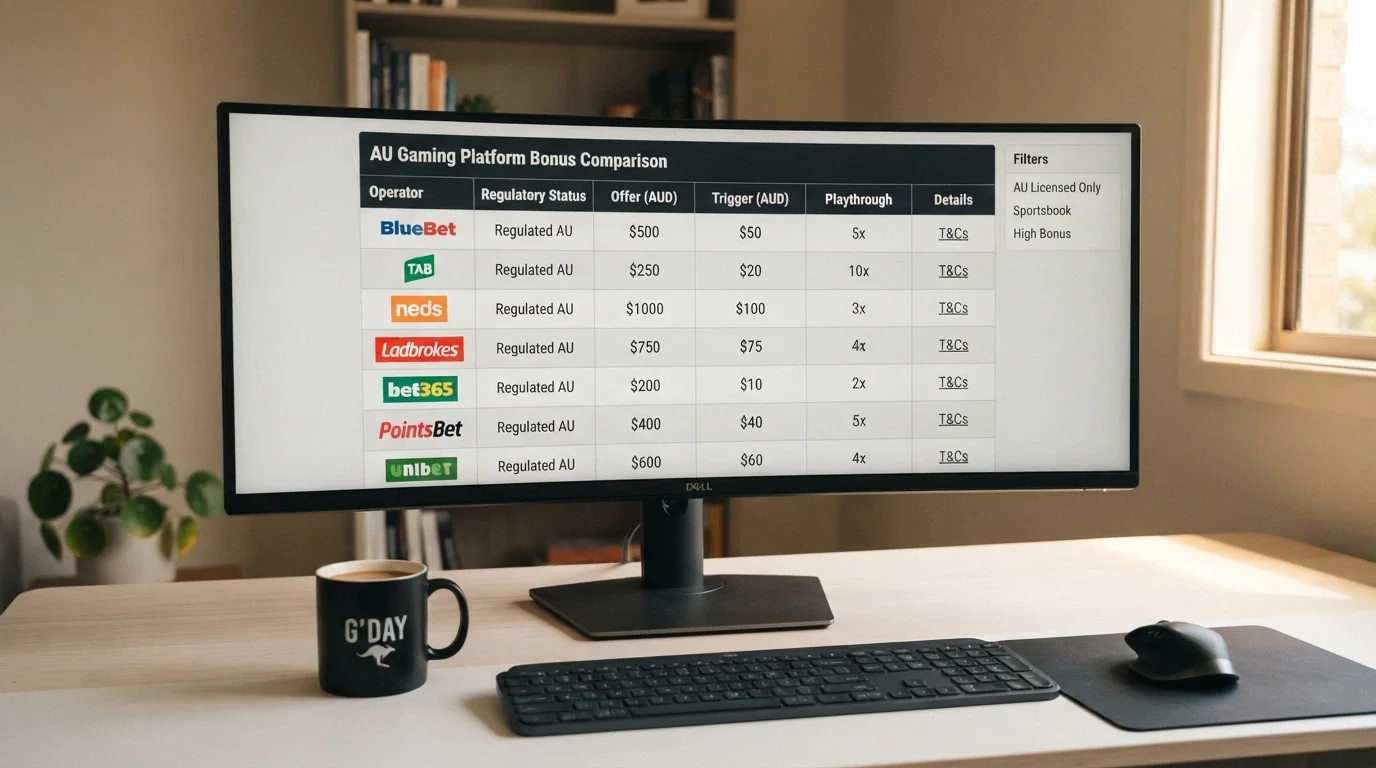
The comparison below is built from three figures: the operator’s published system minimum deposit (does the cashier actually accept A$10?), the welcome bonus trigger (does a A$10 deposit activate the offer?), and the wagering requirement on the bonus (how much turnover is needed to convert the bonus to cash?). A handful of other columns matter — the licence status, the number of free spins, the wagering model — and the table carries them where research has them.
Two facts frame the table. Every operator listed is offshore; none holds an Australian casino licence because no such licence exists. The IGA makes the provision of the service an offence; the player is not the target. Market-share figures in the table are traffic snapshots from operator-comparison pages and are used here for selection only, not as facts about the Australian gambling market. Where a licence is shown as verified, the verification is against the Curaçao gaming register; for Anjouan-licensed brands, the AOFA register is the verification source.
| Operator | Licence | Welcome Bonus | Free Spins | Min Deposit for Bonus Trigger | Wagering |
|---|---|---|---|---|---|
| NeoSpin | Curaçao (verified) | 400% up to A$10,000 | — | A$10 | 50× |
| LuckyDreams | Curaçao | 100% up to A$1,000 | 100 | A$10 | 35× |
| SkyCrown | Curaçao | 100% up to A$2,000 | 100 | A$30 | — |
| Lucky 7 | — | A$3,000 | 200 | A$10 | 35× |
| Lucky Vibe | — | A$5,000 | 300 | A$10 | 30× |
| Goldenbet | Curaçao | A$100 ×3 cash gifts | — | A$10 | 0× |
| VegasNow | Curaçao | 100% up to A$3,000 | 200 | A$20 | — |
| Rolling Slots | — | 310% up to A$6,400 | 570 | A$20 | 30× |
| Wild Tokyo | Curaçao | 100% up to A$4,900 | 620 | A$20 | 35× |
| Rocket Play | — | — | — | — | — |
The split between operators that trigger at A$10 (NeoSpin, LuckyDreams, Lucky 7, Lucky Vibe, Goldenbet) and those that require A$20 or A$30 (SkyCrown, VegasNow, Rolling Slots, Wild Tokyo) is the table’s most useful column. A player who has decided that A$10 is the deposit size and that they want the welcome offer has, in 2026, exactly five operators to choose from — three of them (Lucky 7, Lucky Vibe, Rocket Play) with licence status not confirmed this round, and two with verified Curaçao registration. The licence gap is not academic; it is the difference between an operator whose regulator can be asked to mediate a withdrawal dispute and one whose only regulator is the operator itself.
NeoSpin
The only operator in the tested set where the system minimum, the bonus trigger and the PayID acceptance all clear at A$10. A A$10 deposit earns a A$40 bonus on the first tranche of a 400% welcome package up to A$10,000, against 50× wagering on the bonus — that A$2,000 turnover requirement is the largest in the comparison by a wide margin, and the figure that decides whether this offer is worth taking. PayID withdrawal averages 22 minutes in the tested set, mid-pack. The Curaçao licence is verified on Gaming-curacao.com. The 7,000+ pokies from Pragmatic Play, NetEnt and others give the broadest game library in the comparison. Verdict: NeoSpin is the only A$10 deposit pokies brand where the welcome bonus actually attaches at A$10, and that fact alone justifies the rest of the page’s attention to it. The wagering is the cost of that fact.
LuckyDreams
The second confirmed A$10 bonus trigger in the tested set. A A$10 PayID deposit earns a 100% match (A$10 bonus) plus 100 free spins, with 35× wagering on the bonus — A$350 in qualifying wagers, an order of magnitude less than NeoSpin’s A$2,000. The Curaçao licence is on file. PayID withdrawals average 35–38 minutes, the slowest in the verified set, though still fast in absolute terms. Verdict: the wagering multiple is the lowest among the A$10-triggered offers with confirmed licences, and the bonus is small enough that the playthrough is achievable in a single session on a low-volatility title. This is the cleaner option for a player who wants the bonus without the heavy turnover load.
SkyCrown
The fastest PayID withdrawal in the tested set at an average of 9 minutes — but the bonus requires a A$30 minimum deposit, and SkyCrown is therefore an A$30 offer marketed as a A$10 offer. The 100% match up to A$2,000 plus 100 free spins is competitive on its own terms; free spins are reportedly triggered at A$10 per one comparison source, but the headline match does not attach at that level. Curaçao licence on file. SkyCrown carries an 8.55% share of AU-facing operator traffic per selection data, the largest in the comparison. Verdict: the fastest payouts in the comparison, and a substantial bonus — but the bonus floor is A$30, and a player depositing A$10 gets the spins, not the match. Read the offer before assuming “from A$10” means the full package.
Lucky 7
A$3,000 welcome package plus 200 free spins against 35× wagering, with a confirmed A$10 minimum deposit and the bonus triggered at that level. The wagering is in line with the segment average. The licence was not confirmed at the time of research, and the section on Five checks below explains what that means for a player deciding whether to deposit. The provider mix covers Pragmatic Play and NetEnt, the two studios whose pokies are most often tested for RTP and volatility. Verdict: a credible A$10-triggered offer with a fair wagering multiple, undermined by the licence gap. It is a viable option for those prioritising a lower wagering barrier, provided the licence is confirmed before depositing.
Lucky Vibe
The most generous headline offer in the comparison at A$5,000 plus 300 free spins, with 30× wagering — the lowest multiplier among the A$10-triggered offers in the set. A$10 minimum deposit confirmed, bonus triggers at that level. Progressive Web App for mobile, which is a usability plus for players who use a single device. Licence not confirmed this round. Verdict: the headline package is the largest and the wagering is the lowest, which would ordinarily make this the strongest offer in the comparison. The licence gap keeps it behind NeoSpin and LuckyDreams until verification closes. The mobile PWA is a real differentiator for phone-first players.
Goldenbet
The rarest offer in the comparison: AU$100 ×3 cash gifts with 0× wagering — real cash on the balance, no playthrough requirement, no conversion step. The offer is not a free-spin package (which the player would still need to clear) but actual cash credited to the account. Curaçao licence on file. A$10 minimum deposit confirmed. Verdict: the only A$10-triggered offer in the comparison where the math actually works out at face value — there is no turnover requirement to deflate the headline. It offers the most straightforward math in the segment by bypassing turnover requirements entirely.
VegasNow
PayID accepted from A$10 for the deposit, with PayID withdrawals averaging 12–14 minutes — the second-fastest in the tested set. The welcome bonus (100% up to A$3,000 plus 200 free spins) requires a A$20 minimum, so a A$10 deposit clears the cashier but does not trigger the headline offer. Curaçao licence on file. Verdict: a fast-payout operator with a competitive bonus, and the second-most generous headline package in the comparison — but the bonus is at A$20, not A$10. A player with A$10 to deposit gets into the casino, not into the welcome offer.
Rolling Slots
The highest headline package in the comparison at 310% up to A$6,400 plus 570 free spins, against 30× wagering, with a A$20 minimum deposit. The wagering model — bonus-only or deposit-plus-bonus — was not confirmed in the source snippets and needs to be verified on the operator’s terms page before depositing. Licence not confirmed this round. Verdict: the largest headline figure in the comparison, which is the marketing point, and the largest reason to read the small print before believing it. A 310% match at 30× on a deposit-plus-bonus model is a very different offer from the same figure on a bonus-only model.
Wild Tokyo
A$4,900 match plus 620 free spins, against 35× wagering, with PayID accepted from A$10 but the bonus and general minimum at A$20. Curaçao licence on file. PayID withdrawals average 25–26 minutes, mid-pack. Verdict: a substantial offer and a mid-pack payout speed, with the same A$20 bonus floor as VegasNow — the deposit page says A$10, the bonus page says A$20. A player depositing A$10 gets into the casino; the bonus requires the next tier up.
Rocket Play
The largest AU-facing operator-traffic share in the comparison at 9.4%, with Pragmatic Play and NetEnt pokies available. Offshore casino, not licensed in Australia. Bonus and wagering terms not confirmed in the source snippets. Verdict: the market position is real — the brand carries traffic — but the comparison cannot verify what bonus a A$10 deposit triggers, because the operator’s current terms were not captured this round. A player considering Rocket Play should check the operator’s own promotions page for the current welcome package, wagering model, and minimum deposit before funding the account.
Five checks every $10 deposit pokies site should pass before you deposit
Five minutes spent verifying the cashier before funding the account catches the operators that look licensed but are not, and the operators that look generous but are not. The checks are independent; a site can pass one and fail another. None of them takes more than a minute, and the order below is the order they should be done.

- Check the licence on the Curaçao or Anjouan register. The footer logo is not the licence. The verification is the register entry. Curaçao licences verify at Gaming-curacao.com; Anjouan licences verify at the AOFA register. A licence number that does not return a result on the register is not a licence.
- Cross-reference the domain against the ACMA blocked-website list. ACMA publishes the list of blocked illegal gambling and affiliate sites. A site on the list is one the Australian regulator has formally named as operating outside Australian law. The block does not stop a player from reaching the site, but it does tell the player what the regulator thinks of the operator.
- Read the withdrawal page, not just the deposit page. Minimum withdrawal thresholds of A$20–A$50 — and at some brands A$50–A$100 — create a withdrawal-floor trap for A$10-deposit players. A casino happy to take A$10 is not automatically happy to release A$1,000 without drama. Read both sides of the cashier, not only the “from A$10” badge.
- Confirm the bonus trigger at your deposit amount. Most operators in this segment accept A$10 as a deposit minimum and require A$20 or A$30 for the welcome bonus to trigger. The deposit page and the bonus terms page are written by different teams; assume they disagree until you have read both.
- Check that responsible-gambling tools are accessible before depositing. A site that buries the deposit-limit, time-out and self-exclusion controls three menus deep is not a site that intends the player to use them. The controls should be reachable from the account dashboard, not from a help page.
Licence check: the one registry lookup that separates real regulation from a footer logo
The fastest check is also the most decisive. Every offshore operator in this segment displays a licence badge in the footer — Curaçao, Anjouan, Malta, Kahnawake — and most display a licence number. The badge proves the operator has a number to display. It does not prove the number is current, valid, or held by the entity the player is dealing with. The verification is the register lookup.
Curaçao licences verify on the official Curaçao gaming register. The register accepts the licence number and returns the operating entity, the licence status (active, suspended, expired), and the URL the licence was issued for. A licence issued to one URL and operating from a different one is a flag — the licence has been transferred, sold, or is being used outside its terms. NeoSpin’s Curaçao licence verifies on the register; that is the only Curaçao verification explicitly confirmed in this round. Anjouan licences verify at the AOFA register, the Anjouan Offshore Financial Authority. Malta and Kahnawake have equivalent public registers.
A verified offshore licence is real regulatory oversight under that jurisdiction’s framework. It is not Australian regulatory oversight; no Australian licence exists for online casino, and no Australian register exists to check against. A player who has verified the Curaçao licence has confirmed the operator is regulated somewhere; the player has not confirmed the operator is regulated in Australia, because no such regulation exists. The licence check answers one question and one only: is the offshore regulator likely to respond to a complaint? The answer is “probably, slowly, in a foreign language.” It is not “yes, quickly, in yours.”
Red flags in the footer: missing validation link (the badge does not hyperlink to the register), expired certificate (the licence number is no longer active), licence number that returns no result (the number is fabricated), or operating URL that does not match the registered URL. Any of those is enough to walk away. The verification takes under two minutes; the time saved by skipping it is rarely worth the outcome.
Beyond the badge: withdrawal terms, KYC speed and the cashout floor
The three cashier traps that cost a A$10-deposit player more than the deposit itself sit on the withdrawal side of the cashier. The first is the withdrawal floor. Most operators in this segment set the minimum withdrawal at A$20 to A$50, and at some brands A$50 to A$100. A A$10 deposit that hits a lucky spin, builds a A$30 balance, and tries to cash out discovers that A$30 is below the floor. The money stays on the platform until the player either tops up to the withdrawal minimum or loses the balance back. Either outcome favours the operator.
The second trap is KYC speed. KYC verification — photo ID, proof of address under 90 days, payment method verification — is required before any withdrawal, regardless of deposit size. The verification takes minutes if the documents upload cleanly and the operator’s review queue is short; it takes days if the documents upload at the wrong resolution, the review queue is long, or the operator’s compliance team requests additional information. The deposit side never mentions this. The withdrawal side mentions it in the third paragraph of small print. The deposit page is marketing; the withdrawal page is the contract.
The third trap is the wagering-on-withdrawal rule. Some operators require the bonus wagering to clear before any withdrawal, including withdrawals of the original deposit. A A$10 deposit with a A$40 bonus attached at 50× wagering cannot be withdrawn until the A$2,000 turnover requirement is met, even if the player only wants the original A$10 back. The rule varies by operator; the section in the bonus terms that defines it is rarely the first one a player reads.
The deposit page and the withdrawal page must be read together. A casino that takes A$10 cheerfully and refuses a A$30 withdrawal because the floor is A$50 has not done anything wrong by its own terms — it has simply written the terms in two places and assumed the player would only read one. The player who reads both is the player who keeps the A$10 in their bank account.
How we selected and ranked these $10 deposit pokies sites
The ranking rests on four figures that research could verify: the operator’s published system minimum deposit (does the cashier accept A$10?), the bonus trigger (does a A$10 deposit activate the welcome offer?), the wagering requirement on the bonus (how much turnover is needed to clear it?), and the PayID withdrawal time (how quickly does cash leave the cashier?). Where research could not confirm a figure, the cell carries an em dash — that is the operator’s terms not being verifiable from the source set, and the reader is pointed to the Five checks section to do the verification themselves.
The sources are published operator tests from Slotspeak, PokiesAustralia, Betsquare and VegasPokie, cross-checked against the ACMA blocked-website list and the Curaçao gaming register. The Slotspeak test set is the most detailed in the comparison: a live deposit-to-withdrawal test at each operator, with timing data on the PayID leg and the bonus-trigger verification at A$10. The PokiesAustralia PayID pokies page is the source for the mobile-compatibility and ACMA-blocklist checks. The Betsquare and VegasPokie pages are the source for the bonus terms and the legal-disclaimer framing.
The criteria that ordered the ranking are, in order: operators that trigger a welcome bonus at A$10 ranked above operators that require A$20 or A$30; within those, operators with verified Curaçao licences ranked above operators with unverified licences; within those, operators with lower wagering requirements ranked above operators with higher ones; within those, operators with faster PayID withdrawals ranked above operators with slower ones. The criteria are not weighted — the order above is the order in which the ranking broke ties, and the resulting position is a judgement about which operator a A$10-deposit player should look at first.
The limits of the ranking are substantial. Every operator in the table is offshore; none holds an Australian casino licence because no such licence exists. The terms shown are the terms in the source set at the time of research, and operators change terms regularly — a bonus structure that triggers at A$10 this month may move to A$20 next month. The market-share figures for SkyCrown (8.55%) and Rocket Play (9.4%) are operator-comparison page snapshots, not regulated market statistics. The licence column reflects verification against the Curaçao register only; Anjouan verification would require the AOFA register, which was not queried this round for every brand. Where the licence column shows an em dash, the verification did not happen, and the reader is responsible for doing it.
The ranking does not weight marketing claims, star ratings, or “best casino” badges from affiliate sites. It weights four verifiable figures and the operator’s licence status, because those are the four figures that decide whether a A$10 deposit becomes a session or a complaint.
What your first $10 pokies deposit should actually look like
A A$10 deposit is a trial, not a bankroll. The arithmetic the page has already laid out — A$2,000 turnover to clear NeoSpin’s bonus at Book of 99’s A$0.10 minimum, A$350 turnover to clear LuckyDreams’ bonus at the same stake — is the maths of someone spending their weekend at the cashier, not someone running a strategic bankroll. The promotional value attached to a A$10 deposit is small in absolute terms, and the time required to convert it is large in relative terms. The deposit works as a way to test whether the operator pays out, whether the games run on the device, and whether the verification process functions; it does not work as a way to make money.
Three non-negotiables sit between the deposit button and the cashier. The first is licence verification — a register lookup takes two minutes and tells the player whether the offshore regulator is likely to respond to a complaint. The second is the withdrawal page — minimum withdrawal, KYC requirements, processing time — read before, not after, the deposit is made. The third is the bonus trigger — the actual figure at which the welcome offer activates, which is rarely the same as the deposit minimum on the homepage.
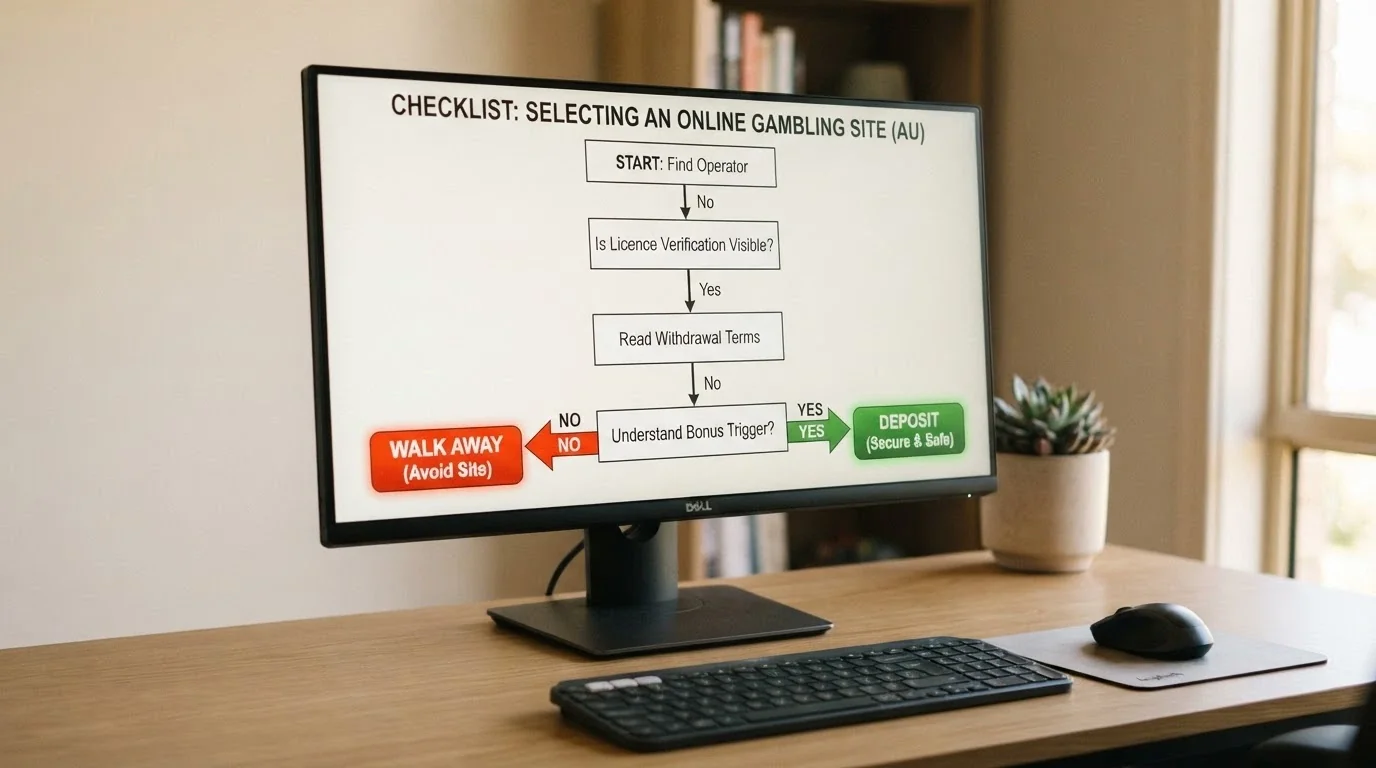
The structural truths the page has established are these. Every real-money pokies site an Australian can reach is offshore, and offshore means outside every Australian consumer protection framework. The Australian regulator’s enforcement lever (ACMA blocking, the 11 June 2024 payment ban, the 1 January 2027 inducement and transaction-monitoring reforms) operates on licensed Australian wagering services and on the banking network, not on the offshore casino account. BetStop protects a player inside the Australian system; the offshore casino sits outside that system. The National Gambling Helpline (1800 858 858) and Gambling Help Online (gamblinghelponline.org.au) are the help lines that work regardless of where the gambling happened.
The decision framework is plain. Deposit small. Verify the cashier. Never chase a bonus the deposit does not trigger. Read the withdrawal page before the deposit page. Treat the A$10 as a one-time test of whether the operator pays out, not as the opening move of a session that has to make a return. The bonus is the marketing, and the marketing is the part the operator wants the player to read. The withdrawal terms are the contract, and the contract is the part the player needs to read. Both pages are short. Both pages matter.
Frequently asked questions
Can I really play online pokies with a $10 deposit in Australia?
Yes — the cashier will accept A$10 at every operator in the comparison, and the games will spin at minimum stake for two hundred spins or so on a low-volatility title. The caveats are that the welcome bonus only attaches at A$10 at five of the ten operators (NeoSpin, LuckyDreams, Lucky 7, Lucky Vibe, Goldenbet), and that every site serving Australians is offshore, not Australian-licensed. The product is real; the consumer protection is not.
Which $10 deposit casinos actually trigger a welcome bonus at A$10?
Five operators in the tested set trigger their welcome bonus at A$10: NeoSpin (400% up to A$10,000, 50× wagering), LuckyDreams (100% up to A$1,000 plus 100 spins, 35× wagering), Lucky 7 (A$3,000 plus 200 spins, 35×), Lucky Vibe (A$5,000 plus 300 spins, 30×) and Goldenbet (A$100 ×3 cash gifts, 0× wagering). SkyCrown, VegasNow, Rolling Slots and Wild Tokyo accept A$10 deposits but require A$20 or A$30 for the bonus to trigger.
What happens if an offshore casino refuses my withdrawal — can Australian regulators help?
No. The ACMA enforces the Interactive Gambling Act 2001 against offshore providers; it does not mediate withdrawal disputes on behalf of Australian players. BetStop does not extend to offshore casinos. Australian consumer protection law does not cover the account. Recourse is limited to the offshore licence’s own regulator — Curaçao gaming register, Anjouan (AOFA), Malta or Kahnawake — and to the bank, which can dispute a PayID or debit-card transaction but cannot reverse a crypto transfer. This is why the Five checks section exists.
How do I verify if a $10 deposit casino is safe and properly licensed?
Verify the licence on the regulator’s own register before depositing. Curaçao licences verify on the Curaçao gaming register; Anjouan licences verify at the AOFA register. The footer badge is not the verification — the register entry is. A licence number that does not return a result on the register is not a licence. Also cross-reference the domain against the ACMA blocked-website list; a blocked site is one the Australian regulator has formally named as operating outside Australian law.
What is the BetStop self-exclusion register and does it cover offshore casinos?
BetStop is the National Self-Exclusion Register, live since August 2023. One registration excludes a person from every Australian-licensed online and phone wagering service — 67,480 people had registered by 31 July 2026, of whom 41,290 exclusions were still active. BetStop does not cover offshore casinos. An offshore operator is not connected to the register and will keep taking a self-excluded person’s deposits. The National Gambling Helpline (1800 858 858) and Gambling Help Online (gamblinghelponline.org.au) work regardless of where the gambling happened.