
What Your $5 Actually Gets You at Online Pokies Sites in 2026
A five-dollar minimum sounds like a friendly gesture. Most Australian players who land on a $5 deposit pokies page and read down to the welcome offer have already missed the most important fact on it. Online casino games, online pokies and in-play betting are prohibited in Australia under the Interactive Gambling Act 2001, and have been since 2001 with a tightening round of amendments in 2017. There is no Australian licence for the product. There is no federal deposit ceiling either — not because lawmakers thought a small deposit was harmless, but because the product those ceilings would govern is banned outright. Every site that markets a $5 pokies deposit to an Australian player is doing so from outside the country, under a licence issued somewhere else, governed by rules that do not include Australian consumer protection.
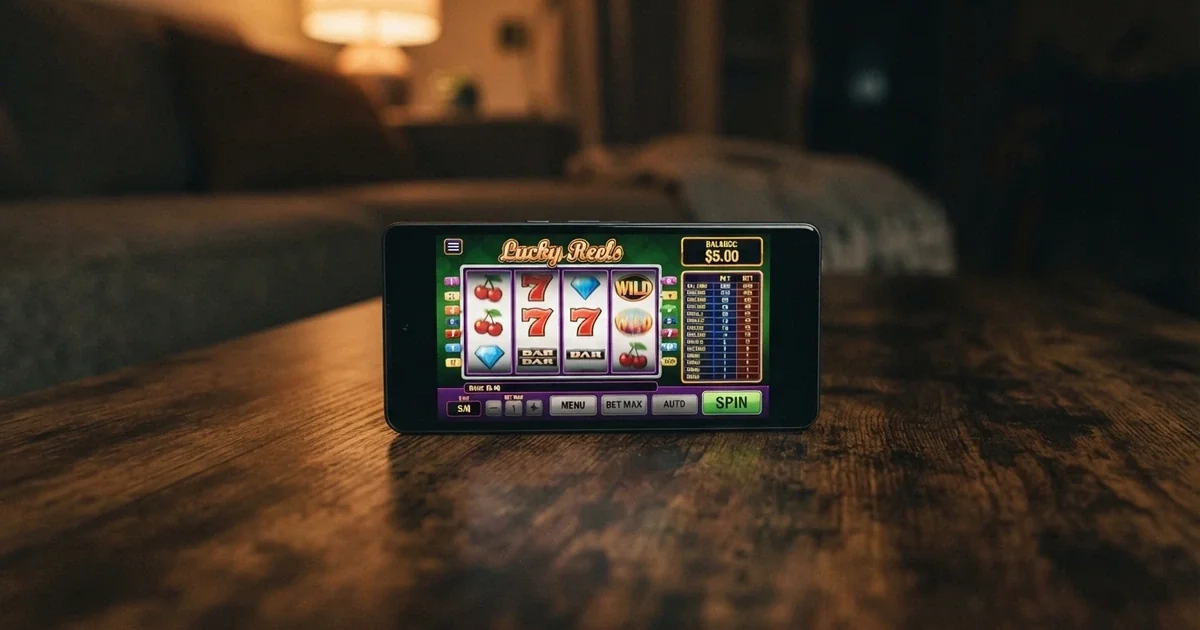
Data current as of 22 November 2026 and verified against Australian Communications and Media Authority regulation references and Australian Institute of Health and Welfare figures.
This is not the British model, where a domestic regulator issues casino licences and a deposit-limit regime sits on top. It is not the Ontario model either, where a provincial regulator sets stake ceilings and operators publish return-to-player figures. Australia prohibits the product and lets the offshore market pick up what is left. The five-dollar threshold is not a regulator’s compromise; it is the marketing line of an operator that already operates in a legal void.
The list further down is real, in the sense that these brands exist and Australian players reach them. The ranking is not of safety — none of them is licensed here, and the safety calculus is the same across all ten. What changes is access, brand recognition, and what a player actually sees on the way in. What does not change is the absence of Australian consumer protection behind any of them.
Table of Contents
- What “$5 Minimum Deposit” Actually Means at an Online Pokies Site
- Real-Money Play vs Free-Play at a $5 Threshold
- How $5 Deposit Pokies Work Across Australian States
- The Offshore Pokies Sites Australians Use for $5 Deposits in 2026
- Rocket Play
- Skycrown
- Royal Reels
- WinSpirit
- Stake
- Rainbet
- Scream Casino
- FairGO
- Bizzo Casino
- Rocket Casino
- Why a $5 Deposit Bonus Rarely Matches the Headline
- How You Pay Reveals Who You Are Dealing With
- $5 Deposit Pokies on Your Phone: What Works and What Does Not
- The Law Every Australian Pokies Player Needs to Understand in 2026
- Staying in Control at $5 Deposit Pokies Sites
- How We Picked and Ranked These $5 Deposit Pokies Sites
- What a $5 Pokies Deposit Actually Costs You — and Whether It Is Worth It
- Frequently Asked Questions About $5 Deposit Pokies in Australia
What “$5 Minimum Deposit” Actually Means at an Online Pokies Site
A $5 minimum deposit is the lowest amount an operator will let a player fund an account with to play pokies for real money. Below that threshold, the same site usually runs a demo or fun mode where the spins cost nothing but the winnings pay nothing either. The $5 line is what separates the two — cross it, and the next spin is real money, paid in and paid out in Australian dollars, with whatever the casino’s own bonus terms and game rules attach.
A $5 deposit is small. It buys a handful of spins at typical stakes of ten to twenty cents per spin — somewhere between twenty-five and fifty spins in a single session, depending on which game a player picks. That is not many. It is enough to feel the game, to see whether the reels behave the way the marketing screenshot suggested, and to lose the $5 with enough time to think about it. It is not enough to trigger most welcome-offer tiers, which are built for twenty- to fifty-dollar deposits, and it is far short of what a free-spin welcome bundle usually expects.
What the small deposit does buy is a way to test an offshore casino before committing real money at scale. A player who wants to see whether a particular site pays out, runs cleanly on their phone, or actually credits a withdrawal can find out for the price of a takeaway coffee. The trade — and it is a real one — is that the operator learns who they are too: name, email, payment method. The five-dollar test deposits a name into an offshore marketing database, and no Australian Privacy Principle follows it across the border. Once the data leaves the country, the regulator that wrote those principles stops having jurisdiction over what is done with it.
Real-Money Play vs Free-Play at a $5 Threshold
Free-play, or demo mode, is what every pokies site runs by default. The reels spin, the bonus features trigger, the balance ticks up and down, and none of it touches a bank account. The mechanics are identical to the real-money version. The maths is not — every spin in demo mode pays back exactly what it cost, so the balance never drifts and the player never goes broke.
Real-money play is the same game with the same reels and the same hit frequency, except the balance is funded. The five-dollar deposit is what converts one into the other. From that moment the house edge starts to apply — and the house always has one. Every spin on a real-money pokie returns, on average, less than it costs. The Australian Taxation Office treats any winnings from these games as not assessable income, and any losses as not deductible; the player is paying for entertainment with after-tax dollars, not running a business. No Australian case has held the winnings of an ordinary punter assessable.
The point is not that real-money play is bad and demo play is good. The point is that the $5 line is the line. Below it, no money moves. Above it, the math is the math, the casino’s bonus terms apply, and the player’s recourse if something goes wrong is whatever the offshore operator’s terms and conditions say it is — which, for an unlicensed offshore casino serving Australians, is not much. A site can refuse a withdrawal, void a bonus win, or close an account, and the player has no Australian complaints body to appeal to.
How $5 Deposit Pokies Work Across Australian States
State borders do not change the offer. The Interactive Gambling Act is federal, applies nationwide, and the prohibition it carries has been the same in Sydney, Melbourne, Perth and Hobart since 2001. NSW players searching for $5 pokies end up at the same offshore sites as Victorian players; the algorithm sees the IP, the operator checks the address, and the law treats both the same way. There is no state that issues an online pokies licence, and there is no state that does not enforce the federal prohibition.
The state-level bodies Australians hear about — state gaming regulators, Liquor & Gaming NSW, the Victorian Commission for Casino and Liquor Regulation — are land-based regulators. They license Crown and The Star, the two large casino floors, and they license poker machines in pubs and clubs. They do not license online pokies, and they cannot grant a website permission to take $5 deposits from Australian residents. The Northern Territory Racing and Wagering Commission, which licenses online wagering operators through Licensing NT, is the de facto national body for that side of the industry. Casino and pokies products are outside its scope entirely. Wagering licences in the Northern Territory run for terms of up to 20 years, but those licences cover sports and race betting, not online casino games.
Searches framed at the state level — “$5 pokies NSW”, “$5 deposit pokies Victoria” — turn up the same set of offshore sites. The state label is a marketing signal, not a regulatory one. The product behind it is the same prohibited offering, served by the same unlicensed operators, governed by the same offshore terms.
The Offshore Pokies Sites Australians Use for $5 Deposits in 2026
Ten offshore casinos account for the bulk of what Australian players actually reach when they look for $5 pokies. None of them holds an Australian licence. None of them could — the product cannot be licensed here. The table below sets out the only fact that research confirms about each of them: their legal status in Australia.

| Operator | Status in Australia |
|---|---|
| Rocket Play | Offshore casino; not licensed in Australia (product prohibited under the IGA) |
| Skycrown | Offshore casino; not licensed in Australia (product prohibited under the IGA) |
| Royal Reels | Offshore casino; not licensed in Australia (product prohibited under the IGA) |
| WinSpirit | Offshore casino; not licensed in Australia (product prohibited under the IGA) |
| Stake | Offshore casino; not licensed in Australia (product prohibited under the IGA) |
| Rainbet | Offshore casino; not licensed in Australia (product prohibited under the IGA) |
| Scream Casino | Offshore casino; not licensed in Australia (product prohibited under the IGA) |
| FairGO | Offshore casino; not licensed in Australia (product prohibited under the IGA) |
| Bizzo Casino | Offshore casino; not licensed in Australia (product prohibited under the IGA) |
| Rocket Casino | Offshore casino; not licensed in Australia (product prohibited under the IGA) |
The table is short on purpose. It carries the one fact every operator on this list shares. What research did not confirm this run — and what this page therefore does not publish — is per-operator welcome-bonus size, wagering requirements, free-spin counts, bonus validity periods, and game-provider lists. Those numbers are the kind of figures that change weekly and that a ranking can quietly get wrong. The legal-status column is the one that does not.
How This Ranking Was Built — and What It Cannot Tell You
The criterion for inclusion here is access: these are the offshore casinos Australian players in fact reach. That is a criterion research could confirm, and it is the one that matters most in a market where the product is banned. Bonus size, wagering weight, withdrawal speed — these are the criteria a ranking built for licensed markets would lead with. None of them were confirmed this run for any of the ten operators on the list, and a ranking built on figures the page has not verified is a ranking that misleads.
The page does not rank these operators against each other on safety, fairness, or value, because there is no verified basis for such a ranking and because the Australian regulator’s own position is that the safety question is already answered by the legal-status column. The ACMA enforces a prohibition; it does not curate a tier list of which offshore casino is best to play at. The ranking is alphabetical within a single status category, and the status is the same across all ten.
What a player can read off the list is reach — the operators that come up first in the channel Australians use to find them. What a player cannot read off it is any endorsement of safety. Every site on the list operates outside Australian consumer law, and the section on player protection further down sets out exactly what that means in practice. A site’s position in the list does not reflect its quality; it reflects how easily an Australian player reaches it.
Rocket Play
Rocket Play is a prominent offshore casino that Australian players access frequently. The brand presents as a conventional online casino: a homepage with a welcome offer, a pokies lobby, a live-casino section, and a payments page that shows Australian dollars. The whole package is built around what an Australian player would expect to see on a casino site — language, currency, the familiar reel layout — and the site is reachable from an Australian IP address without a virtual private network.
What is not visible from the homepage is the legal status. Rocket Play is not licensed in Australia. The product it sells to Australian players — online pokies, online casino games — is prohibited under the Interactive Gambling Act 2001, and no licence can be issued for it. The offshore licence the operator does hold sits in another jurisdiction, under another regulator’s rules, and an Australian dispute is not one that regulator is set up to handle. The payment methods on offer include options that a licensed Australian wagering operator cannot legally accept, which is itself the cleanest tell that the operator is operating outside the Australian perimeter.
A polished product, a low minimum deposit, and the same legal frame as every other operator on this list.
Skycrown
Skycrown is another widely accessed offshore casino. The site follows the same offshore template: an Australian-dollar display, a pokies-heavy lobby, welcome-offer copy written for an Australian reader, and a payments page that mixes the legal and the illegal without distinguishing between them. A player who reaches Skycrown finds a familiar product layout and a familiar low-deposit threshold.
The legal position is identical to Rocket Play’s. Skycrown is not licensed in Australia. The Interactive Gambling Act 2001 prohibits providing online casino games to a person in Australia, and no Australian licence is available for the product. The site operates under an offshore licence, which governs the operator’s relationship with its home regulator and with players in jurisdictions that regulator recognises — Australia is not one of them. An Australian player who has a dispute with Skycrown has no Australian body to escalate to.
A familiar product in a familiar layout; the perimeter does not move.
Royal Reels
Royal Reels carries a name that reads as Australian at first glance — the word “reels” sits next to “royal”, and an Australian punter who has spent time in a pub or club knows what reels spin on. The branding is deliberate, and the disconnect between the name and the legal reality is the point worth pausing on. Royal Reels is an offshore casino. It is not licensed in Australia. The product it offers to Australian players is prohibited under the Interactive Gambling Act 2001, and no Australian regulator stands behind the operator.
The site’s pokies lobby carries the same kind of games as the rest of the offshore market, and the $5 minimum deposit puts a low ceiling on what a player can lose in a first session. What the name does not tell a player is that the operator is not subject to the Australian Privacy Principles, is not covered by BetStop, and is not reachable through any Australian complaints process. A withdrawal that stalls, a bonus term that voids a win, an account that closes for a reason the player disputes — none of these have an Australian remedy.
A familiar name does not buy an Australian remedy.
WinSpirit
WinSpirit is an offshore casino that Australian players access. The brand presents less aggressively than some others — fewer splashy welcome-offer banners, a quieter lobby. A $5 deposit still buys entry to the same kind of real-money pokies lobby, and the site still operates under the same legal frame: offshore, unlicensed in Australia, governed by rules set elsewhere.
Smaller reach does not mean fewer restrictions on a player — the offshore terms are the offshore terms regardless of the operator’s size. Smaller reach also does not mean closer regulatory oversight. WinSpirit holds the same kind of offshore licence as the larger operators, in the same kind of jurisdiction, and an Australian dispute travels through the same channels none of these operators are required to maintain for Australian players. The BetStop register does not extend to it.
A quieter lobby; the same legal posture.
Stake
Stake is one of the more internationally recognised names on the list. The brand runs a global operation, sponsors sport, and operates in multiple jurisdictions under multiple licences — none of which is an Australian licence for online casino products. Australian players can reach the site, fund an account in Australian dollars, and play pokies from the same lobby available in other markets. The offshore status is unchanged.
What the international profile buys an Australian player is familiarity. What it does not buy is Australian consumer protection. Stake is not licensed by any Australian regulator for casino or pokies products; the Interactive Gambling Act 2001 prohibits the product, and Stake’s home-jurisdiction licence does not extend to cover Australian players in the way an Australian regulator’s licence would. A dispute sits outside any Australian escalation path, and the payment methods the operator accepts include options no licensed Australian wagering operator can legally take.
The brand is international; the Australian status is not.
Rainbet
Rainbet is one of the smaller offshore operators on the list, with a tighter reach into Australian traffic than the leaders but a comparable product offering. The site follows the standard offshore pattern: a pokies lobby, a welcome offer, an Australian-dollar display, and a payments page that includes options that signal the operator’s position outside the Australian regulatory perimeter. The $5 minimum deposit sits alongside higher tiers, and a player can fund an account from an Australian IP without a virtual private network.
The legal position is no different from the larger operators. Rainbet is not licensed in Australia. The product is prohibited under the Interactive Gambling Act 2001. The offshore licence Rainbet does hold sits in another jurisdiction, and Australian consumer law does not follow the player across the border. A withdrawal dispute, a bonus-terms argument, a sudden account closure — none of these have an Australian remedy.
The smaller reach is not a regulatory advantage.
Scream Casino
Scream Casino takes the loud-marketing side of the offshore template. The brand runs heavier welcome-offer copy than most of the list, with bigger numbers on the splash banners and tighter language around what a new player can claim. A player who lands on the site from an Australian search sees a $5 deposit threshold sitting under a much larger headline offer — a contrast that is itself a marketing choice and worth reading as one.
Behind the volume, the legal position is unchanged. Scream Casino is not licensed in Australia. The Interactive Gambling Act 2001 prohibits online casino products to Australian players, and no Australian regulator issues the kind of licence Scream Casino would need to be legal here. The site operates under an offshore licence, and an Australian player’s recourse runs through the same offshore terms as every other entry on this list. The brand’s loudness does not extend its protections.
The marketing volume and the legal posture move in opposite directions.
FairGO
FairGO carries the most pointed brand-name choice on the list. The name makes a fairness claim the operator’s legal position does not back up. FairGO is an offshore casino. It is not licensed in Australia. The Interactive Gambling Act 2001 prohibits the product it offers to Australian players, and no Australian regulator audits the games, the payouts, or the bonus terms for fairness in the way a domestic licence would require.
The word on the homepage is marketing. The regulatory perimeter is the test. FairGO holds an offshore licence, in another jurisdiction, under another regulator’s rules — and those rules do not include Australian consumer protection or Australian responsible-gambling obligations. A player who has registered with BetStop can still reach FairGO, because BetStop binds Australian-licensed wagering services and offshore casinos are not connected to it. A withdrawal dispute sits outside any Australian escalation.
A player who treats the brand name as a guarantee of either product or protection treats marketing as regulation, and it isn’t.
Bizzo Casino
Bizzo Casino sits at the smaller end of the access ranking, with the narrowest reach into Australian traffic on the list. The site’s pokies lobby and welcome offer follow the standard offshore template, and the $5 minimum deposit is the main draw — a lower ceiling on the first session than players find at larger operators where welcome-offer tiers may require twenty or fifty dollars. A player who reaches Bizzo from an Australian search sees a familiar layout and a familiar currency display.
The legal position is unchanged by the smaller reach. Bizzo Casino is not licensed in Australia. The product is prohibited under the Interactive Gambling Act 2001, and the offshore licence Bizzo holds governs the operator’s relationship with its home regulator — not with Australian players. An Australian dispute has no Australian body to escalate to, and the operator is not connected to BetStop.
A small operator, with no small-operator exemption to lean on.
Rocket Casino
Rocket Casino shares a name with Rocket Play and should not be confused with it. The two are separate offshore casinos, operating under different licences, with different pokies lobbies and different welcome offers — and the same legal status in Australia. Both are unlicensed. Both offer online pokies to Australian players in violation of the Interactive Gambling Act 2001. Neither is connected to Australian consumer protection, BetStop, or any Australian complaints body.
The naming overlap is a reminder that brand recognition in this market is not a reliable signal. Two casinos with similar names can sit at opposite ends of the access ranking; both sit inside the same legal frame. A player who searches for one and finds the other has not changed product category — they are still looking at an unlicensed offshore casino, with the same absence of Australian coverage, regardless of which they end up on. The brand name is not the deciding factor; the licence status — which does not exist for any of them — would be, if it existed.
Two casinos, similar names, one legal frame. Pick by perimeter, not by name.
Why a $5 Deposit Bonus Rarely Matches the Headline
Welcome offers are written in the largest font on the page and the smallest terms in the footer. The headline on a $5 pokies deposit site often runs to significant figures — “up to hundreds of dollars” or “a percentage match plus a large free-spin bundle” — and the small print quietly redraws the offer. Most welcome packages are built for larger deposits, with bonus tiers that step up at higher amounts. A $5 deposit lands in the lowest tier if it lands in one at all, and the bonus that gets credited is a fraction of the headline figure.

The maths of a low-deposit bonus is often unfavourable. A $5 deposit matched at 100% provides $5 in bonus funds; matched at 50% it provides $2.50. Either way, the wagering requirement applies to the bonus — a typical requirement of many times the bonus amount means a significant turnover before any winnings become withdrawable. At typical stake levels, a player would need to complete hundreds of spins; depending on the pace of play, this can take a long session of spinning, and the bonus balance often goes to zero before the wagering is cleared.
The free-spin offer that rides alongside the deposit match usually carries its own terms. Free-spin winnings are frequently capped, and the wagering requirement that sits on the winnings can be the same as the deposit bonus’s. A $5 deposit that unlocks a free-spin bundle is a bonus; the same wagering requirements on those winnings produce a turnover requirement, and the cap on withdrawable winnings can be limited. The honest reading of a $5 deposit welcome offer is that the offer is the marketing, the wagering is the product, and the player pays the gap.
Welcome Offers That Actually Trigger at $5
Most welcome-offer tiers are designed for deposits the marketing team expects to land — $20, $50, sometimes $100. A $5 deposit rarely fits the tiers a casino wants a player to take, because the casino’s economics depend on the player funding enough turnover to make the bonus worth the marketing cost. A $5 deposit that triggers only the entry tier of a welcome package is a real thing on some sites; a $5 deposit that triggers no tier at all is the more common outcome.
What a player should check before depositing $5 is which tier the $5 lands in, whether the bonus credited is a percentage match or a fixed amount, and what the wagering requirement on the bonus actually is. From 1 January 2027, direct marketing of inducements is prohibited for fourteen days after a customer signs up, three months after a person deregisters from BetStop, and indefinitely for customers identified as at risk of gambling-related harm. Those rules sit inside the Australian regime, and they bind Australian-licensed wagering operators. Offshore casinos are not subject to them — they are not licensed in Australia and the inducement rules do not reach them. A player who sees an inducement offer from an offshore casino is seeing the operator’s own marketing terms, not anything an Australian regulator has vetted.
The mechanics worth checking are the same for every tier: the percentage match, the maximum bonus, the wagering multiple, the games the wagering applies to, the maximum bet while the bonus is active, and the cap on withdrawable winnings from bonus play. The $5 deposit makes most of those numbers small, but small is still a number, and the same arithmetic still applies.
Free Spins and No-Deposit Offers at the $5 Level
Free spins are the offer most often dangled at the $5 level — fifty spins, a hundred spins, sometimes more. They are a marketing hook that costs the operator little per spin and lets them attach a wagering requirement to anything the spins win. A $5 deposit that unlocks a free-spin bundle is a $5 deposit that buys two products at once: the spins themselves, and the wagering requirement that sits on the winnings.
Genuine no-deposit bonuses — free spins or bonus cash credited without a deposit — exist at the $5-adjacent level on some sites, but they are rarer than the marketing suggests. The economic logic of an offshore casino does not favour giving money away without a deposit, and the sites that offer no-deposit bonuses typically offset them with heavier wagering, tighter game restrictions, or aggressive maximum-withdrawal caps. A player who chases a no-deposit offer ends up running the same arithmetic as a deposit-bonus player, with the same odds.
What research did not confirm for any of the ten featured operators is a specific free-spin bundle, a specific wagering multiple, or a specific maximum-withdrawal cap. Those numbers exist on each operator’s promotions page; this page does not publish them because the page has not verified them. A player who lands on a $5 pokies site and sees a free-spin offer should read the terms, count the wagering, and treat the marketing as marketing.
How You Pay Reveals Who You Are Dealing With
The payment method a gambling site offers an Australian player is the single clearest signal of whether the operator is inside or outside the Australian regulatory perimeter. Australian law bans credit cards and digital currency — crypto — as payment for online wagering, with the ban commencing on 11 June 2024. The legal deposit routes for licensed wagering are debit card, bank transfer, PayID/Osko and BPAY. An offshore casino that prompts for a credit card or a crypto wallet has already told the player which side of the perimeter it sits on.
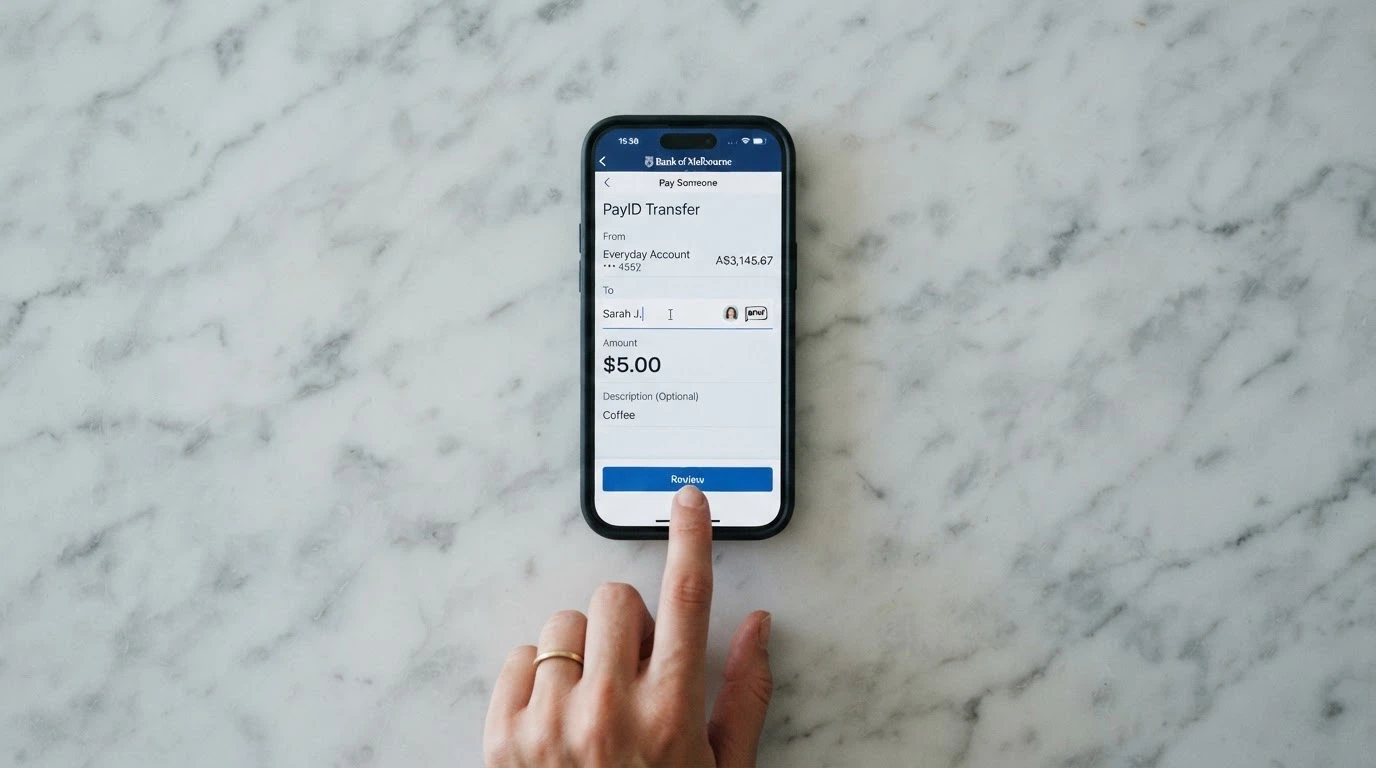
A licensed Australian wagering operator — Sportsbet, Tab, Bet365, Ladbrokes and the rest — runs on the legal set: debit card, bank transfer, PayID/Osko, BPAY. None of them prompts for a credit card. None of them prompts for a crypto deposit. That is not because they chose not to; it is because the Interactive Gambling Amendment (Credit and Other Measures) Act 2023 made it an offence to accept those payment methods for online wagering, with penalties of up to $247,500 for an operator that fails to enforce the ban.
An offshore casino that offers Australian players a credit card or crypto deposit is, by definition, outside the Australian rules. The payment method is the tell. The same is true of POLi at some offshore sites — POLi was developed for the Australian market, but its acceptance by an offshore operator does not bring the operator inside the Australian perimeter. The deposit rail is one thing; the licence status is another.
PayID and $5 Pokies Deposits: What Works and What Does Not
PayID and Osko are real-time payment rails operated by Australian banks through the New Payments Platform. A PayID deposit at an Australian-licensed wagering operator settles in seconds, uses the player’s bank app, and leaves a clear Australian banking trail. For licensed wagering, PayID is the cleanest deposit method available — fast, traceable, and consistent with the legal deposit routes.
For offshore casinos, PayID is more complicated. Some offshore operators do accept PayID, sometimes through an intermediary that converts the payment into a different rail before it reaches the operator. A player who sees PayID as a deposit option at an offshore casino sees a payment method that is legal at licensed Australian wagering operators but is being offered by an operator that is not itself licensed. PayID acceptance does not bring the operator inside the Australian perimeter; the operator’s licence status is independent of the payment rails it wires up.
The distinction matters at the moment something goes wrong. A PayID deposit at a licensed Australian wagering operator is a deposit with an Australian-licensed counterparty, covered by the operator’s licence conditions, the operator’s bank relationship, and the Australian complaints processes that come with both. A PayID deposit at an offshore casino is a transfer to an entity outside Australian jurisdiction, governed by whatever terms the offshore operator publishes, with recourse through whatever dispute path the operator’s home regulator provides — if the operator’s home regulator provides one for Australian players at all.
Credit Cards and Crypto: The Payment Methods That Signal an Offshore Operator
The credit card and crypto ban took effect on 11 June 2024 under the Interactive Gambling Amendment (Credit and Other Measures) Act 2023. An operator licensed for online wagering in Australia cannot accept either; an operator that does is operating outside the Australian rules, by definition. The penalty for a licensed operator that fails to enforce the ban is up to $247,500.
For a player, the practical test is straightforward. If the deposit screen at a $5 pokies site prompts for a Visa or Mastercard credit card number, or for a Bitcoin or Ethereum wallet address, the operator is offshore. The site may look polished, the welcome offer may be generous, and the homepage may carry an Australian-dollar display — none of which changes the legal status. The credit card or crypto prompt is the signal. A player who sees it and deposits anyway has made a knowing choice to fund an offshore operator, and the protections that follow an Australian-licensed deposit do not apply.
From 1 January 2027, the perimeter tightens further. Banks and payment providers gain express authority to block transactions to illegal gambling operators, under the Interactive Gambling Amendment (Gambling Reform) Bill 2026 passed on 19 August 2026. A player who deposits by credit card or crypto at an offshore casino today is funding the operator through a payment rail an Australian bank will, in principle, be able to refuse tomorrow. The block, when it comes, will not return the money already sent.
Depositing in AUD: Why the Currency Display Matters
Most offshore casinos that target Australian players display balances, bonuses, and game stakes in Australian dollars. The display is a marketing choice — the operator wants Australian players to feel the price is in their own currency and to avoid the friction of conversion at the cashier. A site that shows $5 minimum deposit, $100 welcome bonus, $0.20 per spin stakes is presenting in AUD; that presentation is not a licence.
An Australian-dollar display costs the offshore operator very little. The site can hold balances in any currency it likes and present them in AUD to the player, converting at the operator’s own rate at deposit and again at withdrawal if the underlying account runs in a different currency. A player who deposits $5 in AUD and wins $100 may see $100 on the cashier screen, but the value the operator actually credits may run through a conversion the player did not see.
The regulatory perimeter does not move with the currency display. A site that shows Australian dollars is not an Australian site. A site that lets an Australian player deposit and withdraw in AUD is not regulated by any Australian body. The display is for the player’s convenience; it does not bind the operator to Australian consumer law or any of the protections that follow an Australian licence.
$5 Deposit Pokies on Your Phone: What Works and What Does Not
Every offshore casino on this list works on a phone. The pokies lobby is HTML5, the deposit flow runs in the browser, and the games themselves are designed for portrait and landscape on both iPhone and Android. A player who reaches Rocket Play, Skycrown, FairGO or any other operator on a mobile browser sees a layout that is built for the screen, not a desktop page shrunk down.

What the mobile experience does not guarantee is smoothness. Game load times vary by operator, by game provider, and by the player’s connection. A pokies game that loads instantly on the operator’s homepage can stall on the first spin on a phone with a slower processor. A deposit flow that works on the homepage can throw an error at the cashier if the operator’s payment page is not mobile-tuned. The $5 deposit is small enough that a failed payment is not a large loss, but it is still a failed payment.
What a player should look for in a mobile pokies interface is whether the games load without a long delay, whether the cashier accepts the player’s payment method on the phone, whether the balance updates after each spin, and whether the game returns cleanly to the lobby after a session. These are the same tests a desktop player would run, but the screen is smaller and the patience is shorter. A polished desktop site is not a guarantee of a polished mobile site.
Real-Money Mobile Play at the $5 Minimum
A $5 deposit funds a short session at typical mobile stakes. At twenty cents per spin — a common stake on a mobile pokies lobby — $5 buys twenty-five spins. At ten cents, fifty spins. A five-second interval between spins puts the shortest of those sessions at roughly two minutes and the longest at four minutes of actual spinning, which is not enough time for most players to feel the game’s variance.
The session length matters because the experience on a phone is not the same as on a desktop. A player who runs through fifty spins in two minutes on a mobile browser does not have the same feel for the game’s pacing as a player who runs through the same spins across half an hour on a desktop. The math is the same; the perception of the math is different. A short session can feel like the game is paying out well or paying out badly based on a small sample, and the player’s read of the game’s volatility can be off because the sample is too small to mean anything.
What a $5 mobile session buys is a real-money spin in a real-money game with real-money math. What it does not buy is a statistically meaningful read on the game’s behaviour. A player who wants to know what a pokie pays over time needs hundreds or thousands of spins, not twenty-five.
The Law Every Australian Pokies Player Needs to Understand in 2026
Online casino and online pokies are prohibited in Australia under the Interactive Gambling Act 2001. The Act was amended in 2017 to strengthen the prohibition, and the Interactive Gambling Amendment (Gambling Reform) Bill 2026 — passed on 19 August 2026 — adds a further layer of measures that commence on 1 January 2027. None of this legalises online pokies. None of it opens a licensing path for offshore casinos serving Australian players. The table below sets out what the law covers, what it says, and what it means for a player who deposits $5 at an offshore casino.
| What the law covers | What Australian law says | What it means for $5 pokies players |
|---|---|---|
| Provision of online casino and pokies | Prohibited to provide to a person in Australia under the Interactive Gambling Act 2001; strengthened by the 2017 amendments and the 2026 reform | Every offshore pokies site offering $5 deposits to Australian players is operating in violation of Australian law |
| The provider, not the player | The IGA targets the provider; the individual player is not prosecuted | A player who deposits $5 at an offshore casino does not face prosecution; the operator does |
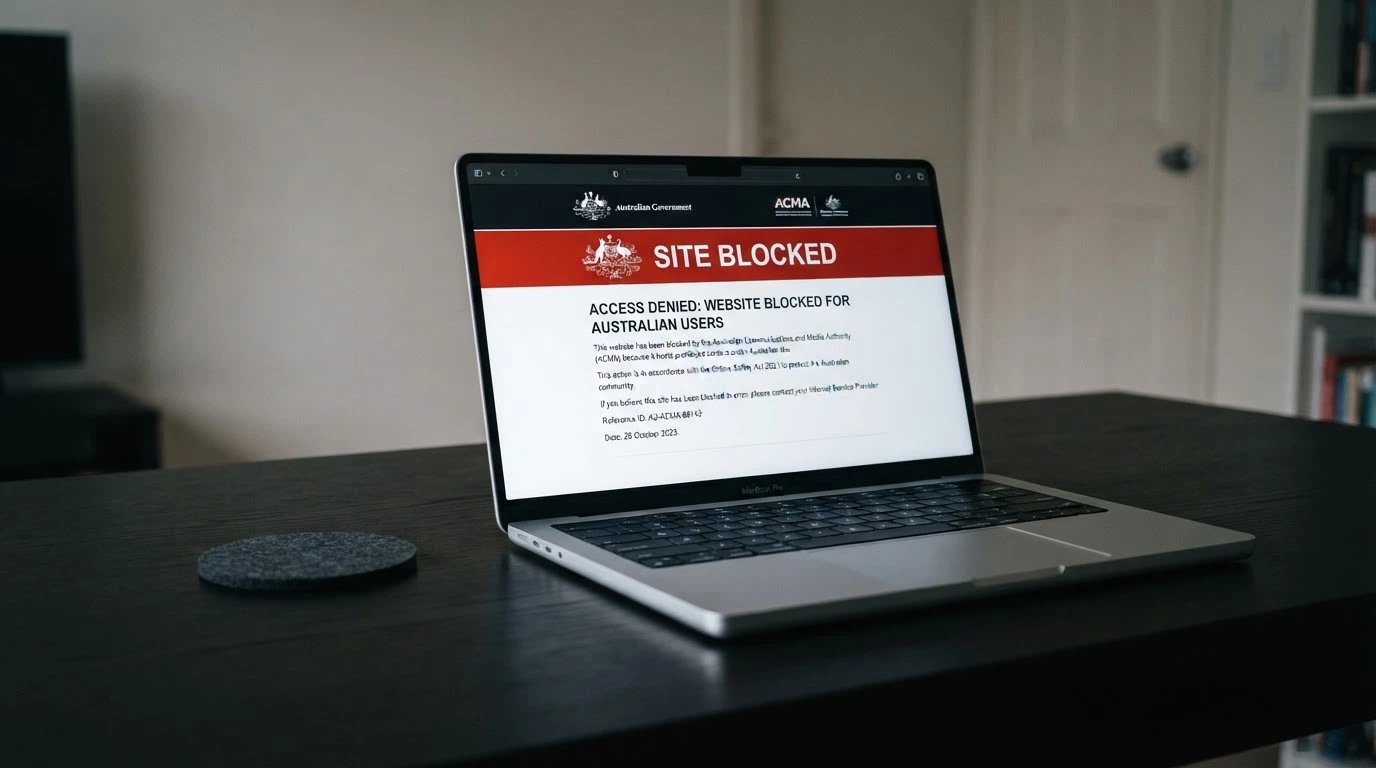
| ACMA enforcement | 1,564 illegal gambling and affiliate websites blocked by Australian ISPs since November 2019; more than 225 services withdrawn from the Australian market since 2017 | Sites can be blocked with a balance still on them; ACMA enforcement happens without notice to the player |
| Consumer protection | No Australian complaints body can recover money from an offshore casino; no Australian consumer law applies offshore | A withdrawal dispute, a closed account, a voided win — none has an Australian remedy |
| Self-exclusion | BetStop binds Australian-licensed wagering services; offshore casinos are not connected | A player registered with BetStop can still reach offshore casinos; self-exclusion does not cover the offshore market |
| Payment methods | Credit cards and crypto banned for online wagering since 11 June 2024; legal routes are debit card, bank transfer, PayID/Osko and BPAY | An offshore casino that prompts for credit card or crypto is, by definition, outside the Australian rules |
| Penalties | Up to $247,500 for a licensed operator that breaches the payment-method ban | Offshore operators are not subject to Australian penalties; enforcement against them runs through ISP blocking and the payment-blocking powers commencing 1 January 2027 |
| 2026 reform | Passed 19 August 2026; ad caps, live-sport blackout, athlete/celebrity bans, inducement restrictions, payment-blocking powers — all commencing 1 January 2027 | Tightens the perimeter around licensed wagering; does not legalise online pokies; does not change the offshore status of any operator on this list |
The table is the law in compressed form. The rest of this section walks through what each of those rules actually does, and what the ACMA’s enforcement powers reach and do not reach.
What the ACMA Actually Does — and What It Cannot Do for You
The Australian Communications and Media Authority enforces the Interactive Gambling Act 2001. It directs Australian internet service providers to block illegal gambling and affiliate websites — 1,564 of them since November 2019, with the count running to March 2026. It issues formal warnings, refers matters for civil penalty proceedings, and negotiates voluntary withdrawals from operators — more than 225 services have withdrawn from the Australian market since the 2017 enforcement strengthening. The ACMA’s enforcement record is real, and the regulatory perimeter around licensed wagering is genuinely tight.
The ACMA cannot recover a player’s money from an offshore casino. It cannot compel a withdrawal. It cannot mediate a dispute over a bonus term. It cannot force an offshore operator to honour a promotion. The ACMA’s jurisdiction stops at the Australian border, and the offshore operators that serve Australian players operate outside that jurisdiction. A player who has a dispute with an offshore casino has whatever the casino’s own complaints process provides — usually a ticketed email to a support address — and whatever the casino’s home regulator provides, if the home regulator provides anything for Australian players at all.
That asymmetry is the cost of playing offshore. The ACMA can shut the site down; it cannot get the player’s money back. The two are not the same, and the difference is the one a player feels when a withdrawal stalls. The block arrives at the ISP level; the deposit is already gone.
The 2026 Reform: What Changes on 1 January 2027
The Interactive Gambling Amendment (Gambling Reform) Bill 2026 passed Parliament on 19 August 2026. The bill does not legalise online pokies. It does not open a licensing path for offshore casinos. It tightens the rules around licensed wagering and adds new tools for the ACMA and the banks to use against illegal operators. From 1 January 2027:
- No more than three wagering ads per hour between 6:00 am and 8:30 pm.
- No wagering advertising from 15 minutes before a live sporting event until 5 minutes after it ends.
- Athletes, celebrities and influencers are barred from promoting wagering products.
- Direct marketing of inducements is prohibited for 14 days after a customer signs up, three months after a person deregisters from BetStop, and indefinitely for customers identified as at risk of gambling-related harm.
- Banks and payment providers gain express authority to block transactions to illegal gambling operators.
For a $5 deposit at an offshore casino, the relevant change is the last one. The payment-blocking powers give Australian banks a legal basis to refuse a transaction to an offshore operator that the ACMA has identified as illegal. Today, the bank’s hands are partly tied; from 1 January 2027, they are not. A player who tries to fund an offshore casino account by PayID, BPAY or direct debit may find the transaction refused at the bank level, in addition to the offshore operator’s own payment restrictions.
The reform does not affect what an offshore casino has already taken. It does not compel a refund. It does not open an Australian complaints path for past disputes. What it changes is the perimeter around future transactions, and the marketing that leads Australian players to offshore casinos in the first place. The marketing flood recedes; the offshore product does not.
Staying in Control at $5 Deposit Pokies Sites
A $5 deposit feels like a small commitment. The five dollars is small; the commitment is not. The offshore sites that take the $5 are not connected to BetStop, and the player-protection framework that covers Australian-licensed wagering does not reach them. A player who wants to set a deposit limit, take a break, or self-exclude entirely has to do so on each offshore site separately, and the offshore site is not required to honour the request in the way an Australian-licensed operator is.

BetStop — the National Self-Exclusion Register — had 67,480 registrations as at 31 July 2026, with 41,290 exclusions still active. Seventy-eight per cent of registrants were under 40, and 38% chose lifetime exclusion. These are real numbers from a register that covers every Australian-licensed online and phone wagering service. The register does not cover offshore casinos. A person who has registered with BetStop and then reaches an offshore casino has self-excluded from licensed wagering and can still play at an unlicensed offshore site, in violation of the spirit of their own exclusion.
The responsible-gambling reality is that the offshore operators on this list offer their own deposit-limit tools, their own time-out settings, and their own self-exclusion options. Whether those tools work as well as the BetStop framework is not something research has verified for this run. The tools are there; whether they bind the operator in the way an Australian licence binds a licensed operator is a separate question, and a player who relies on them is relying on the operator’s word rather than on a regulator’s oversight.
For prevalence, around 2.1% of Australian adults — roughly 430,000 people — experience problem gambling, and high-risk gambling sat at 1.8% in 2022. These figures come from the Australian Institute of Health and Welfare, and they describe the population the responsible-gambling framework is built for. The minimum age for all commercial gambling in Australia is 18. The offshore casino on the phone does not check that age against an Australian database — it checks against the data the player entered at signup, and the only thing that stops a minor is the operator’s own process.
Where to Get Help: Helplines, Self-Exclusion and the Tools That Actually Work
- National Gambling Helpline — 1800 858 858. Free, confidential, staffed 24 hours a day, 7 days a week. The single most direct route to help.
- Gambling Help Online — the online chat and counselling service run alongside the helpline, with web chat and email counselling through the same 24/7 service.
- BetStop — the National Self-Exclusion Register, live since August 2023. One registration excludes a person from every Australian-licensed online and phone wagering service.
- State and territory support services — every state and territory runs its own face-to-face counselling, financial counselling and peer-support programmes. The helpline can refer a caller to the right state service.
- A player’s own bank — most Australian banks will let a customer block gambling transactions at the card or account level, independently of the operator. A player who wants to make funding an offshore casino harder can do so at the bank.
The offshore gap is the one to take seriously. A player who has registered with BetStop has excluded themselves from licensed Australian wagering; they have not excluded themselves from the offshore market, and the offshore sites will accept their deposit without checking the register. Self-exclusion at the operator level — asking each offshore casino individually — is a parallel track that runs in addition to BetStop, not as a substitute for it. The licensed framework has a register; the offshore market has a request form.
How We Picked and Ranked These $5 Deposit Pokies Sites
The criterion for inclusion is access: which offshore casinos Australian players actually reach. Research surfaced ten operators that meet the criterion, drawn from regulator references, operator-tracking data, and the standard competitive patterns in this niche. The single confirmed fact across all ten is the legal status — every operator is an offshore casino, unlicensed in Australia, offering a product that is prohibited under the Interactive Gambling Act 2001.
What research did not confirm is per-operator bonus size, wagering requirements, free-spin counts, bonus validity periods, and game-provider lists. Those figures are the kind of numbers that change week to week, that the operator controls directly, and that a ranking built on unverified figures would mis-publish. A ranking that lists “100% up to $500 plus 200 free spins” for an operator the page has not verified is a ranking that invents a figure to fill a cell. The page does not do that.
What the page does is the minimum responsible ranking in an unlicensed market: a list of the operators players reach, an honest statement of what each one’s legal status is, and a clear flag that the page cannot verify the bonus numbers that the operators themselves publish. The rest — bonus comparison, wagering comparison, payout-speed comparison — is work that a future research pass with operator-level confirmation could do, and that this run cannot.
The ranking is not a recommendation. It is a description of what Australian players find when they go looking. The verdict on whether to deposit is the player’s, and the section that follows sets out what that verdict should weigh.
What a $5 Pokies Deposit Actually Costs You — and Whether It Is Worth It
The five dollars is the easy part. The cost is everything the five dollars leaves behind when it lands at an offshore casino.
A $5 deposit at an offshore pokies site buys a real-money session, in Australian dollars, on games that work on a phone. It does not buy Australian consumer protection. It does not buy BetStop coverage. It does not buy an Australian complaints body that can compel a withdrawal. It does not buy recourse if the operator voids a win, closes the account, or simply stops answering emails. The operator is governed by an offshore licence, in an offshore jurisdiction, with offshore dispute processes that may or may not extend to Australian players — and Australian law does not follow the deposit across the border.
A player who decides to deposit $5 anyway has decided that the entertainment value of the session is worth the absence of those protections. That is a real trade, and a fair one to make consciously. It is not a trade to make because a welcome offer promises a big number, because a brand name sounds reassuring, or because a site shows a familiar currency. The marketing words on the page are the operator’s; the legal position behind them is Australia’s, and Australia’s position is that the product is prohibited to provide. The IGA targets the provider, not the player — which is why no player is prosecuted, and which is also why no player has an Australian court to appeal to when the operator refuses a withdrawal.
The arithmetic that follows the deposit is the arithmetic of every pokies session. The house has an edge on every spin. The bonus, if any, comes with a wagering requirement that converts it into a longer session at lower variance. The session ends when the balance hits zero, or when the player stops. The five dollars does not come back; the Australian player-protection framework does not come with it; the offshore operator’s terms apply in full.
For a player who wants the protection, the only Australian option is to not deposit. For a player who wants the session, the responsible approach is to deposit the smallest amount they can bear to lose, treat the deposit as the cost of entertainment, and reach for the helpline — 1800 858 858, free, 24/7 — the moment the entertainment stops feeling entertaining. The five dollars is a price a player can set for themselves. What they cannot set is the protection on the other side of the deposit. That is the one fixed cost.
Frequently Asked Questions About $5 Deposit Pokies in Australia
Can I legally play online pokies with a $5 deposit in Australia?
Online casino and online pokies are prohibited under the Interactive Gambling Act 2001, and no Australian licence exists for the product. The IGA targets the provider, not the player, so depositing $5 at an offshore casino does not put the player at legal risk. The offshore operator is the party the law is aimed at.
Are there any real money pokies with a $5 minimum deposit in AUD?
Yes — every operator on the list above displays a $5 minimum deposit in AUD and offers real-money pokies behind it. None of them is licensed in Australia, because no Australian licence is available for the product. The $5 buys a real session; the session sits outside the Australian regulatory perimeter.
Is it safe to deposit $5 at offshore online pokies sites from Australia?
The deposit is small and the financial exposure at $5 is limited. What surrounds it is not: no Australian consumer protection applies, no Australian body can recover funds if a withdrawal is refused, the site can be blocked with a balance on it, and BetStop does not cover offshore casinos. “Safe” here means small enough to lose.
Can I play mobile pokies with a $5 deposit in Australia?
Yes — every operator on this list works in a mobile browser, with HTML5 pokies titles for iPhone and Android. A $5 deposit funds roughly 25 to 50 spins at typical stakes. The legal status of the operator does not change between desktop and mobile.
Do $5 deposit pokies sites offer free spins for new Australian players?
Most offshore casinos publish welcome offers that include a free-spin bundle. Free-spin winnings usually carry a wagering requirement and a maximum-withdrawal cap. Research did not confirm specific free-spin counts or wagering multiples for any of the ten featured operators this run; each operator’s own promotions page carries the figures.
How do I know if a $5 deposit pokies site is safe for Australian players?
Three tests. First: legal status — no offshore casino serving Australian players is licensed here, because the product cannot be licensed. Second: payment method — a credit-card or crypto prompt means the operator is outside the Australian rules. Third: responsible-gambling framework — only sites connected to BetStop are licensed in Australia.
Mobile-Only vs Mobile-Compatible: Does It Matter for $5 Deposits?
Most offshore casinos on this list are mobile-compatible rather than mobile-only. The site runs in a phone browser; there is no native app to download from the App Store or Google Play. A small number of operators do publish apps, and those apps occasionally come with a smoother deposit flow or a faster game load, but the apps are not in the major app stores and require a sideload or a direct download from the operator’s site.
For a $5 deposit, the difference is small. The browser flow is usually enough — the cashier accepts the payment, the balance credits, the game launches. A native app would not change the deposit minimum, the bonus terms, or the legal status of the operator. What an app might change is the smoothness of the session, and that is a minor improvement rather than a structural one.
The more relevant question for a $5 deposit is whether the game provider’s titles are mobile-optimised. A pokies lobby that lists 3,000 games does not mean all 3,000 load cleanly on a phone. A player who reaches the lobby from a mobile browser should expect most modern titles to work, with a handful of older titles that may not. The session length at a $5 deposit is short enough that a single broken game is not a serious loss, but a player who plans to play longer should expect some games to misbehave on the phone.