
What Your $20 Deposit Actually Buys at Australian Pokies Sites
What does a $20 note buy at an Australian pokies site? At the A$0.20 minimum bet that runs across most modern online pokies, the answer is 100 spins before the balance hits zero. A welcome bonus can stretch that — a 100% match turns $20 into $40 to play with — but only after A$700 in real-money turnover at a 35× wagering requirement on the bonus, before a cent can be withdrawn. The deposit itself is the easy part. The platform behind it cannot legally operate in Australia, which is why this page exists.

This guide works through what $20 actually buys in pokies terms: the spins, the bonuses, the payment methods, the offshore licence reality, and the responsible-gambling tools that reach the licensed market but not the operators below. The arithmetic is dull. The licence picture is less dull than the marketing suggests. And the operator list is built around the brands Australians actually reach at the $20 deposit tier, with the offshore stamp written next to each one in plain English. The bonus terms, where research confirmed them, sit beside that stamp. The gaps, where it did not, are flagged the same way.
Data current as of 3 November 2026 · Licence claims verified against ACMA enforcement data and operator terms pages
Table of Contents
- The Bankroll Maths — Spins, Stake Size and What a $20 Note Gets You
- $20 vs $10 Minimum Deposits — Why the Extra Tenner Changes the Game
- Real-Money Pokies vs Free-Play Demo Mode at the $20 Entry Point
- Our Reviewed $20 Deposit Pokies Sites for Australian Players
- Deposit $20 Your Way — Payment Methods, Fees and the Withdrawal Truth
- Why Your $20 Welcome Bonus Looks Bigger Than It Really Is
- New $20 Deposit Casinos — Fresh Platforms Worth a Look in 2026
- Mobile $20 Deposit Pokies — Play From Anywhere, No App Needed
- Are $20 Deposit Pokies Legal in Australia? The Offshore Reality
- Playing Safe with a $20 Budget — Responsible Gambling Tools That Actually Work
- How We Picked and Ranked These $20 Deposit Pokies Sites
- Your $20 Pokies Deposit — Is It Worth It and What Should You Actually Do?
- Frequently Asked Questions
The Bankroll Maths — Spins, Stake Size and What a $20 Note Gets You
A $20 AUD deposit at the minimum A$0.20 stake gives a player 100 spins before the balance runs out. That is the bankroll reality behind every “play from A$20” banner. The exact spin count shifts with the stake: at A$0.10 minimums on lower-budget titles, $20 buys 200 spins; at A$0.50 it buys 40. Most modern online pokies sit in the A$0.10 to A$0.20 minimum range, which is what makes $20 the sweet spot for a real-money session that lasts longer than a single bonus round.
The expected loss on those 100 spins is what honest bankroll maths looks like. At a 96% RTP — typical for mid-range pokies, sitting between Gates of Olympus at 96.50% and Big Bass Bonanza at 96.71% — A$20 in total wagers returns A$19.20 on average. The expected loss is A$0.80 over the session. That is the four-percent house edge doing what house edges do. RTP ranges across the titles Australians actually play stretch from Book of Dead at 96.21% (with a 94.25% reduced configuration) up to Mega Joker at 99.00% in Supermeter mode, with Blood Suckers at 98.00% sitting high in the field. The arithmetic gets kinder as RTP climbs and meaner as it drops, but the result is never nil — the house always keeps a slice.
Bonus funds extend the picture, not reverse it. A 100% match on a $20 deposit hands back another $20 in bonus credit, giving $40 to play with. That sounds like doubling the bankroll, and it is — but the wagering requirement that comes with the bonus decides whether any of it can be withdrawn. The fairest structure tested sits at 35× on the bonus only, which means $20 in bonus money requires A$700 in real-money turnover before withdrawal. A player who clears it with 100 more spins at A$0.20 has run 3,500 more bets past the original 100, on average, before any payout is possible. The bonus is a longer session, not a free one.
$20 vs $10 Minimum Deposits — Why the Extra Tenner Changes the Game
A$20 sits at the standard minimum at the majority of AU-facing offshore casinos. A$10 exists, but only at a minority of sites, and usually tied to specific payment methods: PayID at some operators, POLi at a smaller set, Neosurf vouchers from any Australian newsagent. The extra ten dollars buys three things a $10 deposit cannot.
First, operator access. Most Curaçao-licensed brands set their floor at $20 to match the credit-and-deposit thresholds their payment partners expect. A player who can deposit $20 reaches the wider market; a $10-only budget closes off most of it.
Second, bonus eligibility. Welcome packages are sized around $20 — a 100% match at the $20 deposit tier returns another $20 in bonus funds, taking the player to $40 in play money. A $10 deposit triggers the same match but at half the size, and the wagering arithmetic does not scale in the player’s favour.
Third, game access. A $10 budget buys fewer spins at the A$0.20 minimum (50 spins vs 100) and effectively rules out mid-stake pokies that sit at A$0.50 or A$1.00 minimums. The session ends faster, the bonus round is harder to reach, and the wagering requirement becomes a longer path on a smaller bankroll. The extra ten dollars is the difference between a session that feels like real pokies and one that runs out before the second bonus trigger.
Real-Money Pokies vs Free-Play Demo Mode at the $20 Entry Point
Real money at $20 unlocks what demo mode cannot. Progressive jackpots — pooled prizes that grow with every real-money spin across a network — are paid only on bets placed with cash, not credits. A player spinning for free on a $50,000 jackpot pool is spinning for nothing. The same rule applies to bonus rounds on most titles: free spins triggered in demo mode pay nothing out, because there is no wager to attach the payout to.
The psychological difference is just as real. Demo mode exists because slot designers know that real stakes change the experience — the heart-rate lift on a bonus trigger, the decision about whether to chase a near-miss, the moment a balance hits A$0.30 and the player decides whether to top up or walk. None of that lands in demo. The math is the math; the experience is not.
The honest case for demo is calibration. A player new to a title like Big Bass Bonanza or Gates of Olympus can learn the bonus-round structure, the symbol values, and the volatility profile without spending the $20 deposit. The volatility profile is what demo actually teaches — a high-volatility title like Sweet Bonanza or Gates of Olympus pays rarely and large, while a medium-volatility title like Wolf Gold pays more often at smaller amounts. That calibration is useful. It is not, however, a substitute for what $20 of real money actually delivers: a real payout, a real loss, or a real session that ends with the bonus wagering cleared and a withdrawal in crypto on the way.
Our Reviewed $20 Deposit Pokies Sites for Australian Players
The table below ranks ten offshore casinos that Australian players actually reach at the $20 deposit tier. None of them holds an Australian casino licence, because no such licence can exist. Online casino games and online pokies are prohibited under the Interactive Gambling Act 2001, strengthened by the 2017 amendment; every brand on this list is therefore operating from outside Australia and licensed by either Curaçao or Anjouan. Three operators — SkyCrown, Fair Go Casino, and Bizzo Casino — have a confirmed Curaçao licence. The other seven hold offshore licences whose specific jurisdiction this review was unable to confirm; the section on legality explains what that distinction means for a player.

AU traffic share sits beside each name as a usage signal — how much of the Australian player audience each brand reaches among the set of AU-facing operators tracked. A higher share means more Australians are landing on the site, not that the site is more legitimate. The legal reality is the same for every operator on this list.
| Operator | Licence Jurisdiction | AU Traffic Share |
|---|---|---|
| SkyCrown | Offshore (Curaçao) | 8.55% |
| Rocket Play | Offshore | 9.4% |
| Royal Reels | Offshore | 2.51% |
| Stake | Offshore | 1.28% |
| Fair Go Casino | Offshore (Curaçao) | 0.8% |
| Bizzo Casino | Offshore (Curaçao) | 0.57% |
| WinSpirit | Offshore | 1.55% |
| Scream Casino | Offshore | 0.99% |
| Rainbet | Offshore | 1.28% |
| Rocket Casino | Offshore | 0.57% |
How We Compared These $20 Deposit Pokies Sites
Three filters ordered this ranking. The first was licence status — every operator was checked for the offshore licence it claims to hold, against the regulator’s own register where one was publicly available. Three operators cleared that bar with a confirmed Curaçao licence. The remaining seven have an offshore licence whose specific jurisdiction this review could not confirm from public records; they appear in the table under “Offshore” and the $20 deposit-specific terms for each are flagged in the write-up below.
The second filter was payment-method coverage. PayID presence — at 11 of 12 AU-facing sites tested, instant and fee-free — was treated as a practical AU-relevance signal, since it requires an Australian bank-account integration the offshore operators have to build deliberately. Withdrawal speed sat alongside it: the operators that returned cash fastest (PayID withdrawals tested at 28 minutes at one operator and 35 at another) ranked ahead of those whose cashouts take one to three business days by bank transfer.
The third filter was bonus fairness, weighted by the wagering multiple rather than the headline match rate. A 100% match at 35× wagering on the bonus only was treated as the fairest structure tested; 40× on deposit plus bonus, with cashout caps and max-bet limits while the bonus is live, was treated as the heavier end. Where this review could not confirm a bonus or a minimum deposit figure — and that applies to seven of the ten operators below — the write-up notes the gap rather than naming a number. Terms change, and a player who relies on a figure research did not confirm is reading older information than the operator’s current promotions page.
SkyCrown
SkyCrown holds a confirmed Curaçao licence, sits at 8.55% AU traffic share, and posts the fastest PayID withdrawal in this ranking at a nine-minute average. The welcome offer is a 100% match up to A$20 plus 100 free spins at a $20 deposit. The catch sits in the minimum deposit itself: SkyCrown’s floor is A$30, not A$20 — above the threshold this guide is built around. A player with exactly $20 to deposit cannot use SkyCrown’s welcome package, even though SkyCrown is the most attractive brand on the set by payout speed alone. The 100 free spins and the fast PayID cashout make SkyCrown the right pick for a player who can stretch to A$30, and the wrong pick for one who cannot.
Rocket Play
Rocket Play carries the highest AU traffic share on this list at 9.4%, which signals a real Australian user base. The offshore licence is not specified on the operator’s public-facing page in a way this review could confirm, and the welcome bonus, the minimum deposit, and the wagering terms were not confirmed in the search results either. What this means for a player is straightforward: the brand has reach, but the $20-specific terms need to be verified on Rocket Play’s own promotions page before depositing. Treat it as a name on a leaderboard, not a recommendation, until those figures are checked. The traffic position is real; the rest is unverified.
Royal Reels
Royal Reels sits at 2.51% AU traffic share — a mid-tier position that says Australians are landing on the site but not in numbers that put it near the top of the set. The offshore licence, the welcome bonus, the minimum deposit, and the wagering terms were not confirmed in this review. A player looking at Royal Reels as a $20 deposit option should expect to read the operator’s own promotions page before depositing, because the research did not turn up figures to verify or quote. Royal Reels earns its place in the ranking on traffic, not on confirmed $20 terms.
Stake
Stake is the best-known crypto-native brand on this list, with a 1.28% AU traffic share that undersells its global recognition. The welcome bonus, minimum deposit, and wagering structure were not confirmed for an Australian $20 deposit; this is unsurprising for a crypto-first operator whose deposit tiers tend to sit in digital-asset amounts rather than fixed AUD floors. For a player comfortable funding an account in Bitcoin, Ethereum or Litecoin and sourcing current terms from Stake directly, the brand is a natural fit. For a player expecting a fixed AUD welcome package, the structure of the offer is the part to check first.
Fair Go Casino
Fair Go Casino holds a confirmed Curaçao licence and posts a confirmed A$20 minimum deposit — one of only three operators on this list where both figures were verified. The catch is the payment set: Fair Go accepts cards and crypto only, with no PayID support, which rules out the instant fee-free bank transfer most Australian players default to. The game library is RTG-focused (RealTime Gaming), which is a narrower provider base than the multi-studio libraries at competitors like SkyCrown and Bizzo, and a meaningful difference for a player who has favourite studios they want to access. The welcome package includes free spins on deposit, which fits the standard $20 welcome structure. Fair Go is the right pick for a player who values a confirmed A$20 minimum and is comfortable with RTG pokies; the absence of PayID rules out a large slice of the Australian audience.
Bizzo Casino
Bizzo Casino holds a confirmed Curaçao licence, sits at a confirmed A$20 minimum deposit, and runs a match-deposit plus free-spins welcome package. The payout speed is confirmed at one to two days, which puts Bizzo behind SkyCrown’s nine-minute PayID average but ahead of the operators whose withdrawal times research did not measure. AU traffic share is 0.57%, low for the ranking but not the lowest on the list. Bizzo is the operator in this set where the confirmed figures line up most cleanly: licence, minimum deposit, welcome structure, payout speed. For a player who wants the specifications verified before signing up rather than after, Bizzo is one of the safer picks on this list.
WinSpirit
WinSpirit holds 1.55% AU traffic share — mid-tier for the ranking. Since research could not confirm the offshore licence, bonus, or wagering terms, players should treat this as a name on a leaderboard rather than a recommendation. We suggest verifying the $20-specific details on the operator’s own promotions page before committing any funds. This approach is standard for brands where data is not publicly available.
Scream Casino
Scream Casino holds 0.99% AU traffic share. As research did not verify the licence, welcome bonus, or wagering terms for this operator, we advise caution: read the operator’s promotions page in full before depositing. Scream earns its place here based on traffic volume rather than confirmed terms, so rely on the site’s own current data instead.
Rainbet
Rainbet sits at a modest 1.28% AU traffic share. Because this review could not independently verify the offshore licence, minimum deposit, or wagering terms, readers should treat the ranking as a starting point rather than an endorsement. For the current bonus structure and deposit requirements, consult Rainbet’s promotions page directly before making a deposit.
Rocket Casino
Rocket Casino holds 0.57% AU traffic share. It is the operator with the least verified material, and since we could not confirm the licence or $20-specific terms, independent verification is necessary. Treat this as a brand Australians reach, but check the site’s own terms and conditions for the minimum deposit and bonus structure before moving money to the account.
Deposit $20 Your Way — Payment Methods, Fees and the Withdrawal Truth
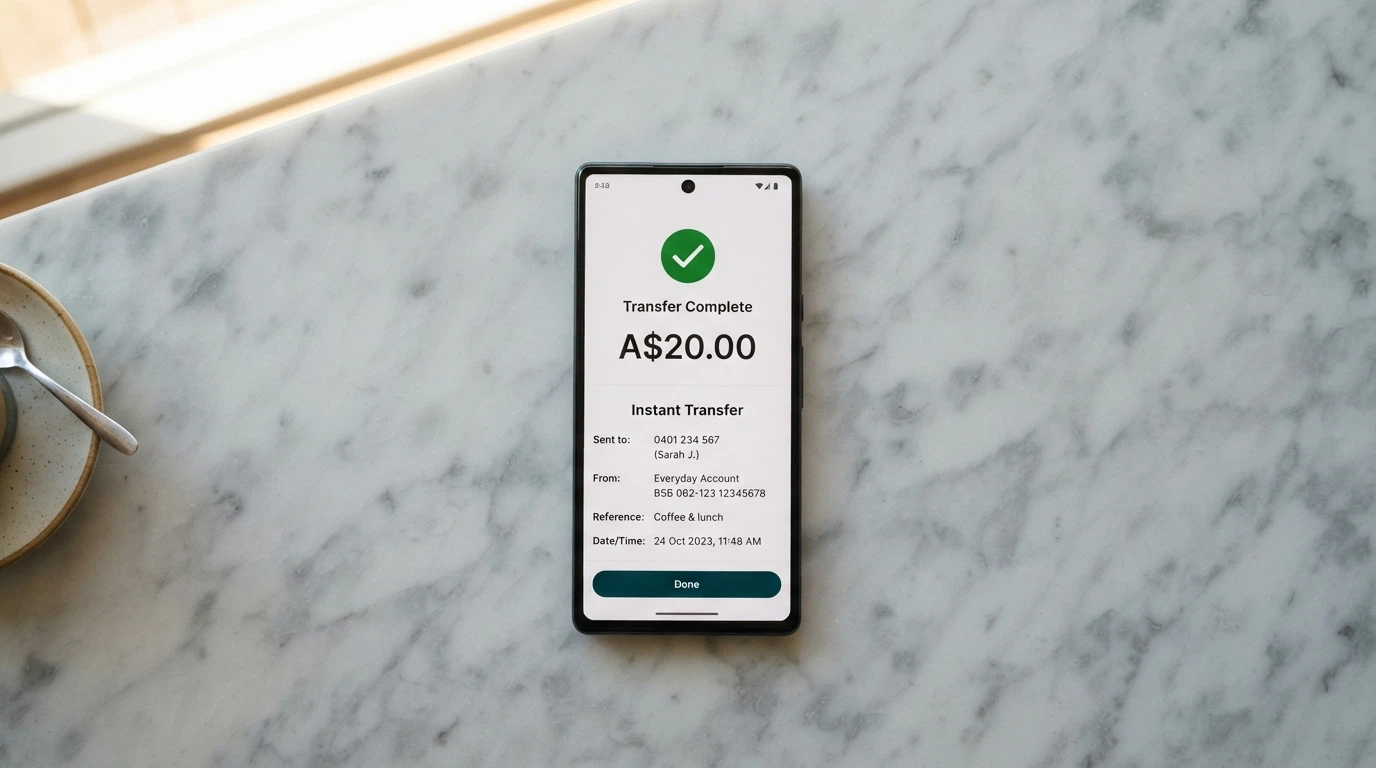
The deposit half of a $20 transaction is the easy half. Every method below clears in minutes, most of them instantly. The fee story is short: PayID is free, crypto carries network fees that bite on small amounts, cards draw a surcharge at a quarter of the operators tested, and POLi still works at fewer sites than it did two years ago. The withdrawal half is where the differences become real — and where the deposit method a player picked often no longer matters.
| Payment Method | Minimum Deposit | Deposit Speed | Fees | Withdrawals Supported |
|---|---|---|---|---|
| PayID | A$20 (A$10 at some sites) | Instant | None | Rarely (28–35 min tested at two operators) |
| Bitcoin, Ethereum, Litecoin | Varies by operator | Under 1 hour | A$2–A$5 network fee on A$20 | Yes (under 1 hour; USDT TRC-20 8–18 min) |
| Visa / Mastercard | A$20 | Instant | 2.5% at 4 of 12 sites (A$0.50 on A$20) | — |
| POLi | A$10–A$20 | Instant (occasional 10–15 min delays) | None | Limited |
| Neosurf | A$10–A$20 | Instant | None (face value) | No (deposit-only) |
| Paysafecard | A$10–A$20 | Instant | None | No (deposit-only) |
| Bank Transfer | A$20 | 1–3 business days | Varies | Yes (1–3 business days) |
PayID — The Instant, Fee-Free Deposit Method Australians Actually Use
PayID is the default AUD deposit method at AU-facing casinos in 2026. The mechanism is straightforward: a player opens their banking app, enters the casino’s PayID — usually an email or phone number, sometimes an ABN — sends the $20, and the balance appears in the casino account instantly. No card details to share, no third-party processor in the chain, no surcharge. PayID works with Commonwealth Bank, NAB, Westpac, ANZ and most Australian credit unions. The deposit floor sits at A$20 at most casinos in this set, with A$10 available at a minority of sites.
The asymmetry sits on the withdrawal side. PayID works for deposits at 11 of 12 AU-facing casinos tested, but rarely for withdrawals. A player who deposits $20 by PayID and then wants to cash out A$40 in winnings usually has to switch methods — most commonly to crypto or to bank transfer, depending on what the operator supports. The PayID withdrawal experience, where it exists, tested at 28 minutes at one operator and 35 minutes at another in the research pool; for most operators, the deposit half of PayID is the half a player gets to use.
Crypto Deposits at $20 — Bitcoin, Ethereum and the Network-Fee Trap
Bitcoin, Ethereum and Litecoin are accepted at every top-ranked AU-facing casino. Crypto is the fastest withdrawal route by a wide margin: USDT TRC-20 clears in 8–18 minutes, Bitcoin and Ethereum land in under an hour, and the deposit half is equally fast — usually confirmed within the same hour. For a player who values speed over familiarity, crypto is the cleanest path through the offshore system.
The network-fee trap on small amounts is the part that catches first-time crypto depositors. Bitcoin and Ethereum transaction fees sit at A$2 to A$5 on a $20 transfer, which is ten to twenty-five percent of the deposit gone before the player has spun once. USDT TRC-20 carries lower fees than Bitcoin’s mainnet, which is why the fastest crypto withdrawals in the research pool used that network. A $20 deposit by Ethereum might arrive as A$15 in playable balance after the network fee; a $20 deposit by USDT TRC-20 might arrive as A$19.
The broader regulatory context is worth holding in mind. Crypto is banned as a payment method for licensed Australian wagering under the Interactive Gambling Amendment (Credit and Other Measures) Act 2023, in force since 11 June 2024. An AU-facing casino that accepts Bitcoin or Ethereum from an Australian is operating outside the Australian rules. The offshore stamp in the operator table reflects the same fact from a different angle: the casino is outside the Australian regime because it cannot be inside it.
Card, Voucher and POLi Deposits at the $20 Mark
Visa and Mastercard deposits at $20 are instant at most operators but draw a 2.5% processing fee at four of twelve sites tested — A$0.50 on a $20 deposit, which is a real cost on a small bankroll. The bigger issue is the bank block. ANZ and Westpac showed the highest gambling-block rates of the Australian banks in the research pool, meaning a card deposit can be declined by the issuing bank before it ever reaches the casino. A player who funds with a card from one of those banks may need to fall back to PayID, POLi or crypto.
POLi remains an option but a smaller one than it used to be. The service clears bank transfers instantly in most cases, with occasional delays of ten to fifteen minutes, and charges no fees. POLi’s footprint has shrunk significantly since 2024 — fewer operators carry it than two years ago — but the operators that still do offer an instant AUD deposit path without card surcharges.
Neosurf and Paysafecard are voucher-based and deposit-only. Both are available at Australian newsagents — Neosurf from A$10 at face value, Paysafecard from A$10 — and both clear instantly in the casino balance. Neither supports withdrawals. A player who deposits with a voucher has to cash out via crypto, e-wallet or bank transfer, which makes vouchers a deposit-side convenience rather than a full payment solution. They suit a player who wants to fund an account without sharing bank details and is willing to use a separate method for cashout.
How Fast Your $20 Winnings Actually Land — Withdrawal Speed by Method
The honest range for withdrawals at AU-facing $20 deposit casinos runs from minutes to days. USDT TRC-20 clears in 8–18 minutes. Bitcoin and Ethereum land in under an hour at the top-ranked operators. PayID withdrawals tested at 28 minutes at one operator and 35 at another. E-wallets take up to 24 hours. Bank transfer takes one to three business days. The deposit method that felt instant on the way in often does not work on the way out — PayID in particular is rarely available for withdrawals, despite being the dominant deposit method.
The KYC delay is the variable nobody markets. Most operators require a verification pass before the first withdrawal — a photo ID, a proof of address, sometimes a screenshot of the payment method used to deposit. A player who skips KYC at signup will hit a delay at cashout, sometimes hours, sometimes days, depending on how manual the operator’s review process is. The cleanest path is to complete KYC at the same time as the first deposit, not at the same time as the first withdrawal request.
Why Your $20 Welcome Bonus Looks Bigger Than It Really Is
A “100% match up to A$XXX” sounds like the casino doubling the player’s money. The wagering requirement is where the doubling stops. At 35× on the bonus only — the fairest structure this review measured — a $20 bonus requires A$700 in real-money turnover before withdrawal. At 40× on deposit plus bonus — the heavier structure some operators use — the same $20 bonus requires A$1,600 in turnover, because the wagering applies to the deposit as well. The match percentage on the banner is the marketing; the multiplier on the terms page is the cost.
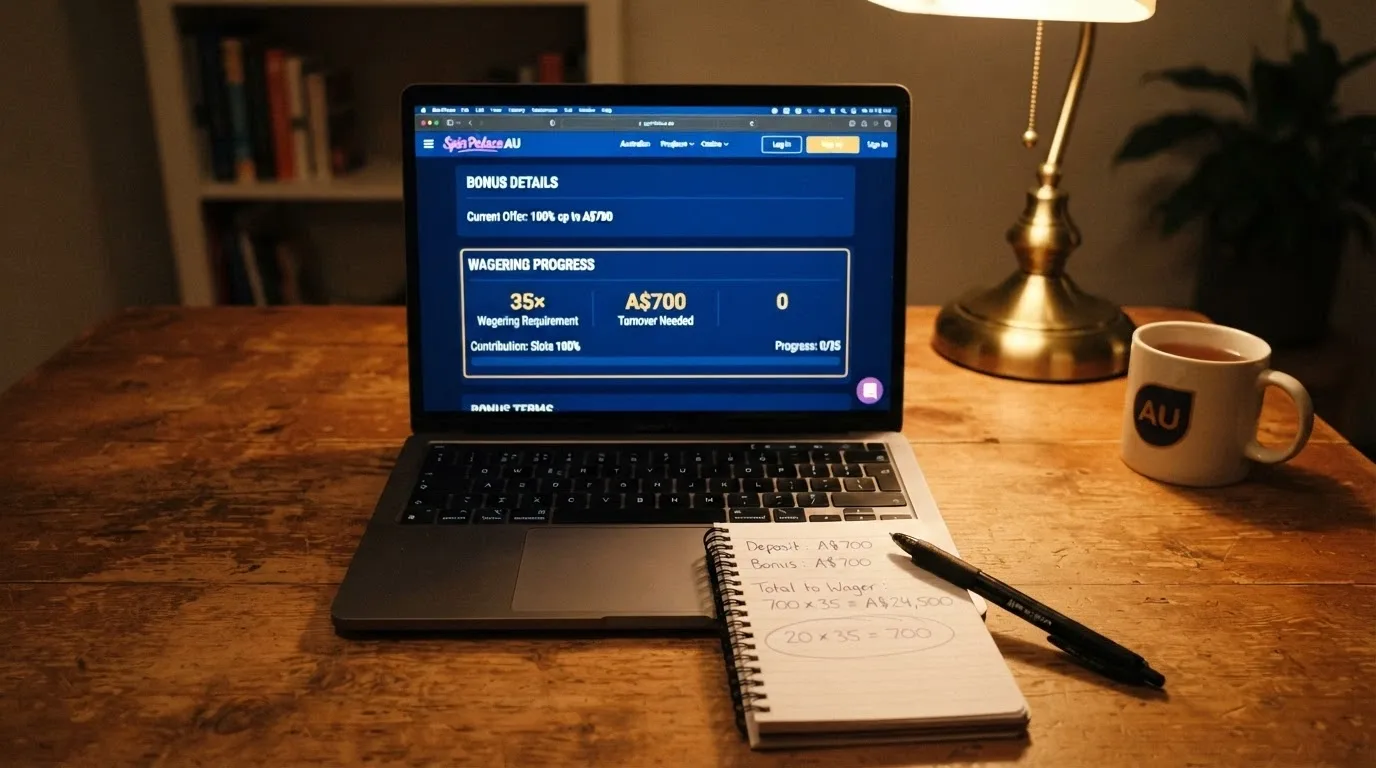
The mechanics behind a 100% match are worth understanding once. A player deposits $20, the casino credits another $20 as bonus funds, and the player has $40 in the balance — split into a cash portion ($20) and a bonus portion ($20). The cash portion can be withdrawn at any time, but doing so forfeits the bonus portion. The bonus portion can only be withdrawn after the wagering requirement is met, which means running the required turnover on pokies. Bonus funds cannot be withdrawn as cash during the wagering period; they exist to extend play, not to deliver a payout.
The benchmarks that follow — on the 100% match, free spins, and wagering multipliers — use terms from operators that illustrate a structure, not brands on this page’s ranked list. The featured set above is built around AU traffic share and confirmed terms; the benchmarks below are independent examples of what welcome packages look like at the $20 deposit tier across the wider offshore market.
The 100% Match at $20 — How Bonus Funds Actually Work
A 100% match on a $20 deposit gives a player A$40 to play with. The structure is consistent across the wider $20 deposit market — the match rate and the cap vary, but the mechanic is the same. Operators like Playzilla run a 100% match up to A$500 plus 200 free spins at a $20 deposit; VegasNow runs 100% up to A$3,000 across the first three deposits plus 200 free spins on Big Bass Splash with 35× wagering on the bonus only. The headline figures scale; the underlying mechanic does not.
The turnover arithmetic is where the bonus reveals its real cost. At 35× on the bonus only — the structure the fairest operators in this market use — clearing a $20 bonus means running $20 × 35 = A$700 in real-money wagers on eligible pokies. At A$0.20 per spin, that is 3,500 spins after the original 100, or about 35 sessions at 100 spins each. The bonus pays out only what survives those 3,500 spins, which is — at a 96% RTP — about A$19.20 on average, before any variance. The expected cost of clearing the bonus is therefore close to the bonus amount itself, which is what makes the bonus a longer session rather than a profitable one.
Free Spins on a $20 Deposit — What the Spin Count and Spin Value Really Mean
Free-spin bundles on $20 deposit welcome packages range from 50 to 200 spins in the wider market. Legit99 offers 50 free spins on Wolf Gold as part of its $20 first deposit package; Playzilla offers 200 free spins on Pragmatic Play titles including Big Bass Bonanza and Gates of Olympus; VegasNow offers 200 free spins on Big Bass Splash; Katsubet offers 100 free spins to $20 depositors. The spin count on the banner is the headline; the per-spin value, the eligible titles, and the wagering on free-spin winnings are the actual terms.
The eligible-title restriction is the detail most players miss. Free spins are usually locked to one or two specific pokies — Big Bass Bonanza, Gates of Olympus, Wolf Gold, Big Bass Splash — and the spin value is fixed by the operator, often at A$0.10 to A$0.20 per spin regardless of the pokie’s standard minimum bet. A player who claims 200 free spins on a Pragmatic Play title at A$0.20 per spin is running a A$40 bonus through the wagering requirement, not a A$200 one. The headline number is the spin count; the playable amount is the spin count times the per-spin value.
The RTP of the locked title determines what the spins return. Big Bass Bonanza sits at 96.71% RTP with medium-high volatility (4/5), which pays less often than a low-volatility title but with bigger hits. Gates of Olympus runs at 96.50% RTP with high volatility. Wolf Gold sits at 96.01% with medium volatility. None of those figures change the math — the house edge is still four percent at Big Bass Bonanza, three-point-three percent at Wolf Gold, three-point-five percent at Gates of Olympus — but the experience varies. A high-volatility title like Gates of Olympus delivers longer dry stretches and bigger bonus hits. A medium-volatility title like Wolf Gold pays more regularly at smaller amounts.
Wagering Requirements — The Multiplier That Decides Whether You Keep Anything
The wagering multiplier is the single number that decides whether a $20 bonus pays out. Two structures dominate the $20 deposit market. The first, fairer structure applies the multiplier to the bonus only: a $20 bonus at 35× requires A$700 in turnover. The second, heavier structure applies the multiplier to deposit plus bonus: a $20 deposit and a $20 bonus at 40× requires ($20 + $20) × 40 = A$1,600 in turnover. Same match rate, same bonus size, but the player runs more than double the wagering under the heavier structure. The 35× on bonus only is the fairest structure tested in this market.
The conditions that sit beside the multiplier are the second-order costs. A 40× wagering structure typically runs with a A$5 maximum stake while the bonus is live — any single spin above A$5 voids the bonus and any winnings attached to it. Some operators add a 14-day clock, after which an uncleared bonus expires with the winnings forfeited. Cashout caps are the heaviest condition: a bonus with a 10× cashout cap on the bonus amount limits a successful clear to A$200 in withdrawable winnings, regardless of how large the balance ran during play. A player who clears a bonus on a high-volatility title can hit a ceiling on the way out.
The AUS55 welcome package illustrates the structure’s lighter end: 150% match up to A$450, 100 free spins on Big Bass Bonanza, 25× to 35× wagering on the bonus funds, and a 3× wagering condition on a A$20 no-deposit credit specifically. The minimum deposit is A$20. The AUSpin168 package illustrates the heavier end: 100% up to A$1,000, 40× wagering on the bonus amount, a 14-day clock, and a A$5 cap on each bet while the bonus is live. The fairest and the heaviest structures sit in the same market, attached to the same deposit size, and a player who reads only the headline match rate will pick between them at random.
New $20 Deposit Casinos — Fresh Platforms Worth a Look in 2026
A new offshore casino launches every few weeks at the $20 deposit tier. The welcome packages tend to be aggressive, because new operators need player volume more than established ones do; the licence profile tends to be the same Curaçao or Anjouan baseline that applies to every other AU-facing site. A new domain and a generous welcome banner are not, on their own, evidence of a legitimate platform.
The verification work matters more on a new site than on an established one. Operators with a year or two of AU traffic have a track record visible in traffic-share data, in player forums, and in ACMA enforcement records — a new entrant has none of those. A player who arrives at a fresh $20 deposit platform through an affiliate link has, at the moment of signup, only the operator’s own page to rely on. That is enough — provided the operator’s claims survive a check against the regulator’s register and a read of the bonus terms before the deposit goes in.
How to Spot a Genuine New $20 Pokies Site
Three checks separate a legitimate new platform from a fresh domain built to skim deposits. The first is the licence: a new Curaçao or Anjouan licence should appear on the operator’s footer, with a licence number that resolves to a real entry on the regulator’s public register. A licence number that returns nothing on the regulator’s search is not a licence. The second check is the provider list: a new operator carrying 1,000+ pokies from Pragmatic Play, Hacksaw Gaming, Nolimit City, Play’n GO, BGaming, Betsoft, or Push Gaming is using real, licensed game studios whose own compliance teams have already vetted the operator. A new site with no named providers is a red flag. The third check is payment-method coverage: a new operator that supports PayID has built an Australian bank-account integration, which is a deliberate signal that the operator intends to serve Australian players long-term. POLi or crypto-only on a new site is normal; the absence of any AUD-native deposit method is not.
A player who runs those three checks before depositing is doing what the operator’s own regulator should have done but did not. The offshore licence framework does not enforce the same baseline of player protection that ACMA does — there is no ACMA enforcement on offshore operators at all, because ACMA’s jurisdiction stops at the Australian border. The check is the player’s responsibility.
Welcome Offers on Newly Launched $20 Deposit Platforms
New casinos front-load their welcome packages because they have to. A player who joins in the operator’s first six months is worth more than a player who joins in month twenty-four, because the early player provides the deposit volume, the game-play data, and the word-of-mouth referrals that determine whether the operator survives. Welcome packages on new platforms tend to be larger in headline match rate, longer in free-spin count, and looser on paper than the established operators’ offers.
The same wagering arithmetic applies regardless of how new the operator is. A 200% match up to A$1,000 at a new casino carries the same house edge as a 100% match at an established one — the multiplier, the eligible-game list, the max-bet cap, the cashout ceiling, and the time limit are the variables that determine whether the bonus pays out. A new operator is not exempt from these by being new; if anything, a new operator is more likely to attach aggressive cashout caps because its risk model is less mature than an established brand’s. The verification work before depositing $20 on a fresh platform is the same as on any other operator, with extra weight given to the licence check.
Mobile $20 Deposit Pokies — Play From Anywhere, No App Needed
AU-facing offshore casinos run in the mobile browser. No app store download, no native install, no iOS or Android-specific binary. The pokies titles are HTML5, the cashier is browser-based, and the same $20 deposit flow that works on a laptop works on a phone. A player who expects a downloadable casino app from the App Store or Google Play will not find one at any of the offshore operators in this set — and the absence is the better deal for the player, because no app means no storage cost, no OS-version compatibility issue, and no app-store geo-restriction blocking the install.

Why Mobile Browser Play Dominates at $20 Deposit Casinos
Browser-based play is the default at AU-facing offshore casinos because that is how the game studios deliver their content. Pragmatic Play, Hacksaw Gaming, Nolimit City, Play’n GO and the other providers that supply the pokies on these sites build their titles in HTML5 for the same reason every other modern web product does: one codebase, every device. The casino’s own platform wraps those games in a browser view; the player’s phone opens them through Safari, Chrome, or whatever default browser ships on the device. There is nothing to install.
The practical advantage of browser-only play is that nothing on the player’s phone identifies the casino to the phone manufacturer, the operating system, or the network. An app download creates a data trail — the install record, the push-notification permissions, the storage footprint — that browser play does not. For a player who values discretion about the operator they use, that is a feature rather than a limitation. The deposit flow, the bonus claim, the wagering progress, and the withdrawal request all run through the same browser session as the games themselves.
iOS, Android and the Mobile Deposit Experience at $20
The mobile deposit flow is identical on iPhone and Android. PayID works the same way: open the banking app, send $20 to the casino’s PayID, return to the casino browser tab, watch the balance update. Crypto works the same way: open the wallet app, scan the QR code or paste the address, send the $20 in Bitcoin, Ethereum or USDT, wait for the network confirmation. Card deposits work the same way, with the same 2.5% fee at the same four operators and the same ANZ/Westpac block risk. The mobile experience is not a different product; it is the same product rendered for a smaller screen.
The one practical difference is screen real estate. Pokies on a phone show fewer paylines, smaller symbol art, and tighter control layouts than the same title on a desktop browser. The RTP, the volatility, the bonus mechanics, and the wagering contribution are unchanged. A player who prefers the visual layout of a 27-inch monitor will find a phone adequate rather than generous; a player who wants to spin from the couch or the train will find the phone more than adequate. The $20 deposit works the same way either way.
Are $20 Deposit Pokies Legal in Australia? The Offshore Reality
Online casino games, online pokies, and in-play sports betting are prohibited under the Interactive Gambling Act 2001, strengthened by the Interactive Gambling Amendment Act 2017. There is no licence for online casino anywhere in Australia — not federally, not in any state, not in any territory. Every operator in the table above is therefore providing a service that is illegal to provide to a person in Australia, regardless of the offshore licence the operator holds. That is the legal reality behind every $20 deposit banner aimed at an Australian punter.
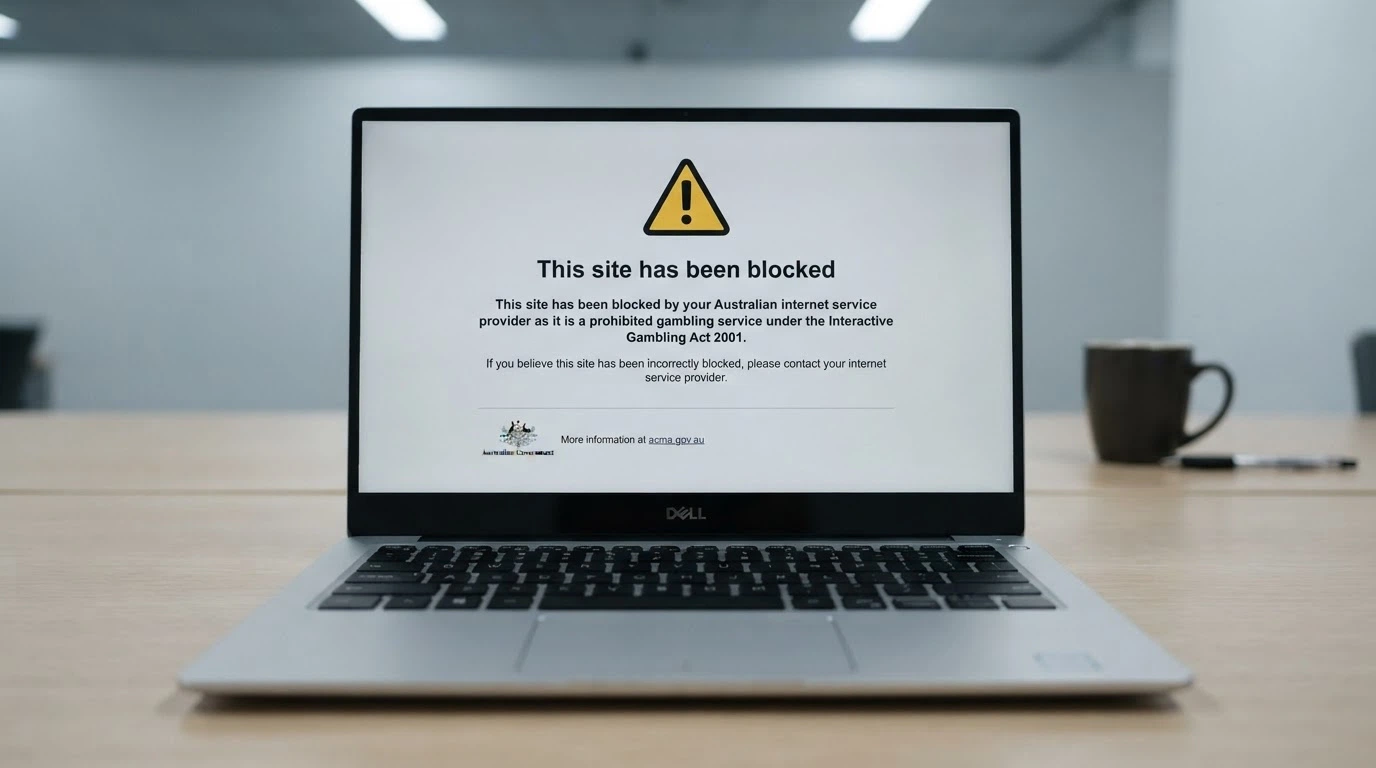
The individual player is not prosecuted under the Act. The IGA targets the provider, not the person placing the bet. That distinction does not, however, make the offshore route safe. Using an offshore casino means no Australian consumer protection, no ACMA complaint recovery, no BetStop coverage, no recourse if the operator refuses a withdrawal or voids a win, and the genuine possibility that the site gets blocked at the ISP level with a balance still on it.
The Interactive Gambling Act — What It Actually Prohibits and What It Does Not
The IGA, in its current form, prohibits the provision of online casino games, online pokies, and in-play sports betting to anyone in Australia. The 2017 amendment strengthened that prohibition and gave ACMA the enforcement tools that have shaped the current market — ISP-level blocking of prohibited services, civil penalty proceedings against operators, and the power to refer matters for criminal prosecution. The penalty for credit-card-related violations sits at up to A$247,500 per breach. The penalty for providing a prohibited interactive gambling service runs higher.
What is licensed in Australia is narrower than most players realise. Wagering on races and sport placed before the event begins, lotteries, and keno are all licensed — by state and territory regulators, with the Northern Territory Racing and Wagering Commission acting as the de facto national licensor for online wagering through brands like Sportsbet, bet365 and Ladbrokes. The Northern Territory licence permits pre-event wagering on sport and racing; it does not permit online casino games, online pokies, or in-play sports betting. The licensed wagering market and the offshore casino market are therefore two different products under two different regimes, and a player who moves between them is moving between a regulated environment and an unregulated one.
The player side of the Act is the part most readers search for. The IGA does not criminalise the person placing the bet. ACMA does not pursue individual players; its enforcement targets operators, ISPs, and affiliate sites that market prohibited services to Australians. That is the legal status quo as of 2026. The 2026 gambling reform — covered below — strengthens enforcement against operators without changing the player-side position.
Offshore Licences — Curaçao, Anjouan and What They Actually Mean for Your $20
A Curaçao or Anjouan licence is not an Australian regulatory stamp. It is a registration in a jurisdiction whose regulator has no Australian enforcement reach, no obligation to protect Australian consumers, and no relationship with ACMA. The Curaçao Gaming Control Board and the Anjouan Licensing Authority both license online casinos, both run public registers, and both impose operator-side obligations that are lighter than the requirements an Australian licence would impose. A Curaçao-licensed operator is therefore a registered business in Curaçao; it is not an Australian-regulated casino, because no Australian-regulated casino can exist for online pokies.
What these licences do not provide is the harder question. They do not provide ACMA complaint recovery — a player who has a dispute with a Curaçao-licensed operator cannot escalate to ACMA, because ACMA’s jurisdiction stops at the border. They do not provide BetStop coverage — a person who has self-excluded through BetStop can still deposit at any operator in this set, because BetStop binds Australian-licensed wagering services and offshore casinos are not on the register. They do not provide a withdrawal guarantee — an offshore operator can refuse a withdrawal, void a win, or close an account without Australian legal recourse. They do not protect a player’s balance if the site gets blocked — ACMA has had 1,751 illegal gambling and affiliate websites blocked by Australian ISPs since its first blocking request in November 2019, and more than 230 illegal services have withdrawn from the Australian market since 2017. A balance sitting on a blocked site is a balance the player may not be able to recover.
The credit card and crypto ban adds another signal. Since 11 June 2024, credit cards, credit-related products, and digital currency have been banned as payment for online wagering in Australia. A casino that accepts a credit card or crypto deposit from an Australian is doing so outside the Australian rules. The fact that an operator in this set accepts crypto is therefore not a feature to be evaluated on its merits — it is a marker that the operator sits outside the regime the Australian government has set for online wagering.
The 2026 Gambling Reform — Advertising Caps, Inducement Bans and What Changes on 1 January 2027
The Interactive Gambling Amendment (Gambling Reform) Bill 2026 passed Parliament on 19 August 2026. Its measures commence on 1 January 2027. Three changes matter for a $20 deposit pokies player.
The first is the advertising cap. From 1 January 2027, no more than three wagering advertisements may run per hour on any broadcast outlet between 6:00 am and 8:30 pm, and a live-sport blackout prohibits wagering advertising from fifteen minutes before a live sporting event until five minutes after it ends. The cap applies to licensed wagering operators; the offshore operators in this set are not licensed wagering operators, so the cap does not bind them in the same way. What changes for an Australian player is the volume of licensed-operator marketing, not the volume of offshore marketing that already runs through affiliate sites.
The second is the inducement ban. From 1 January 2027, direct marketing of inducements — bonuses, free bets, “join now and get A$200” offers — is prohibited for fourteen days after a customer signs up with a licensed operator, for three months after a person deregisters from BetStop, and indefinitely for customers identified as at risk of gambling-related harm. The inducement ban applies to licensed operators. The welcome packages on the offshore operators in this set are, by definition, inducements to sign up with an unlicensed service, and the ban does not extend to them.
The third is the bank authority. From 1 January 2027, banks and payment providers gain express statutory authority to block transactions to illegal gambling operators. The mechanism is targeted at transactions flowing to prohibited services — the offshore operators in this set, since no licensed alternative exists for online pokies. A bank may block a PayID transfer to an offshore casino, decline a card transaction at one, or flag a crypto on-ramp purchase that funds an offshore gambling wallet. The reform does not specify how aggressive the bank-level enforcement will be, and the rules are not yet operational at the date of writing. The direction of travel, however, is clear: the Australian government is building a payments-side fence around the offshore market.
A fourth measure is worth flagging even though it is not yet operational: AdStop, a national wagering-advertising opt-out register, will be administered by ACMA and funded by a cost-recovery levy on licensed interactive wagering providers. AdStop is not expected to be operational by 1 January 2027. The betting reform builds the structure first; the registers come online afterwards. The relevant date for a player evaluating the offshore market is 1 January 2027, not the date the bill passed.
Playing Safe with a $20 Budget — Responsible Gambling Tools That Actually Work
A $20 deposit is already a self-imposed limit — most Australian adults would consider it a low-cost entertainment spend rather than a serious bankroll. The tools that keep it that way are real, but only some of them reach the offshore casinos that accept the deposit. The BetStop register, the National Gambling Helpline, and Gambling Help Online are all available to an Australian regardless of where they play; the deposit limits, loss caps, and activity statements that licensed wagering operators offer do not extend to offshore services. A player who treats the offshore route as ordinary entertainment needs to know which tools still apply and which do not.
The numbers behind the responsible-gambling framework put the $20 deposit in context. Approximately 2.1% of Australian adults — roughly 430,000 people — experience problem gambling, per the Australian Institute of Health and Welfare. Risky gambling increased from 13.7% in 2024 to 19.4% in 2025, almost double since the COVID-19 lockdowns. Approximately 3.29 million Australians aged 5 and over are affected annually by their own or another person’s gambling, including approximately 1.38 million adult affected others. Around 5.9% of adults reported being harmed by another person’s gambling in the past 12 months. The offshore market is not the cause of those numbers, but it sits inside them.
BetStop — The Self-Exclusion Register That Reaches 150–190 Providers but Not the Offshore Set
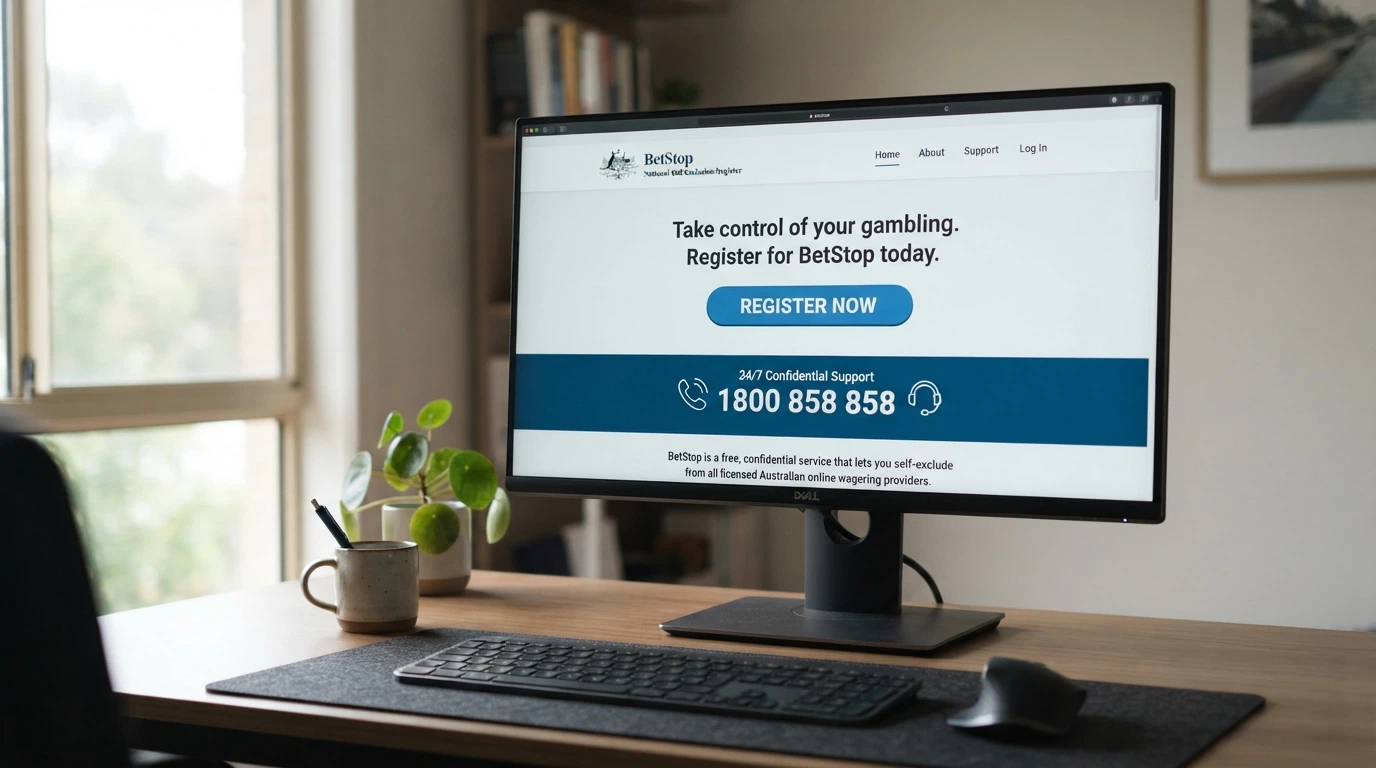
BetStop, the National Self-Exclusion Register, launched on 21 August 2023 and is administered by ACMA. By the end of Q3 FY 2025–2026 (31 March 2026), 59,830 Australians had registered to self-exclude, with 37,247 people holding active exclusions. Registration is a single step that excludes a person from all approximately 150–190 licensed online and phone wagering providers in Australia. Self-exclusion periods range from a minimum of three months to a lifetime, and a person cannot apply to be removed in the first three months.
The outcomes for those who register are concrete. By November 2025, ACMA reported that 77% of BetStop registrants experienced a better quality of life and 79% experienced improved mental health. Around four in five people who registered for self-exclusion reported the same — the figure is the one ACMA itself uses to characterise the register’s effect on the population that uses it.
The offshore gap is the part that matters for anyone reading this page. BetStop binds Australian-licensed wagering services only. An offshore casino is not licensed in Australia, is not connected to the register, and will continue accepting a self-excluded person’s money. The offshore operators in this set sit outside BetStop by design — none of them is an Australian licensee, so none of them is obliged to check the register. A player who has self-excluded through BetStop and then deposits at SkyCrown, Rocket Play, Royal Reels, Stake, Fair Go Casino, Bizzo Casino, WinSpirit, Scream Casino, Rainbet or Rocket Casino will not be stopped by the operator. The protection BetStop offers stops at the Australian border.
Deposit Limits, Loss Caps and Playing a $20 Budget Within Your Means
Licensed Australian wagering operators offer customer-set deposit limits under state and territory conditions that differ between jurisdictions. The mechanisms vary — daily, weekly, and monthly deposit caps; activity statements that summarise play; time-out periods separate from BetStop — but the obligation to offer them sits with the licensed operator. Offshore casinos carry no equivalent obligation. A $20 deposit at an offshore casino is a deposit a player sets without the operator’s deposit-limit framework being part of the equation. The limit a player sets is the limit the player enforces.
The trends in the prevalence data put the offshore market in perspective. Online gambling has increased substantially across the licensed and unlicensed markets combined, with 56.1% of individuals who gambled mainly participating online in the past 12 months. Risky gambling behaviour increased to 19.4% in 2025 from 13.7% in 2024 — almost double since the COVID-19 lockdowns of 2020–2021. The growth in risky gambling sits alongside the growth in online participation, not in opposition to it.
A $20 budget is a natural ceiling. A player who treats it as a fixed spend — money that is going to be lost before it is spent, the way a movie ticket is bought to be used — keeps the entertainment framing intact. The offshore route does not change that framing; it removes the operator-side guardrails that would otherwise sit around it. The self-discipline that the operator would have imposed falls to the player instead.
Where to Get Help — The Helpline, Chat and Support Services That Cost Nothing
The National Gambling Helpline (1800 858 858) is free, confidential, and staffed 24 hours a day, 7 days a week. Run by the Department of Social Services, it provides the most direct route to counselling for those worried about their own or someone else’s gambling. Gambling Help Online (gamblinghelponline.org.au) offers free, confidential online chat and email support, alongside self-assessment tools for players and affected others. BetStop, the National Self-Exclusion Register, excludes individuals from all licensed Australian wagering providers in a single step, with periods ranging from three months to a lifetime; while it does not reach offshore casinos, it covers every licensed operator an Australian might also use. Finally, a general practitioner can refer players to specialists in gambling-related harm under a Mental Health Treatment Plan, with the first ten sessions being Medicare-rebateable.
How We Picked and Ranked These $20 Deposit Pokies Sites
The framework behind this ranking has three inputs and one honest limit. The inputs are licence status, payment-method coverage, and bonus-fairness weighting. The limit is the set of AU-facing operators whose traffic data is publicly tracked — every brand on this list is on that set, and any brand not on it is not on this list by definition.
The licence check is the first filter. Every operator in the ranking holds an offshore licence — Curaçao or Anjouan, since no Australian casino licence exists. Three operators were confirmed at the Curaçao regulator’s public register; the remaining seven carry an offshore licence whose specific jurisdiction this review could not verify from the public record. The distinction is preserved in the table because it matters: a confirmed Curaçao registration has been checked against a regulator’s records; an unverified offshore registration has not.
The payment-method check is the second filter. PayID presence — at 11 of 12 AU-facing sites tested, instant and fee-free — was treated as a practical AU-relevance criterion, since PayID requires an Australian bank-account integration the offshore operators have to build deliberately. Withdrawal speed sat alongside: the operators that returned cash fastest ranked ahead of those whose payouts take longer. The payment-method coverage data is drawn from twelve-site testing in the research pool, not from a wider survey.
The bonus-fairness check is the third filter. The wagering multiplier — not the headline match rate — was the deciding figure. A 100% match at 35× wagering on the bonus only was treated as the fairest structure tested in this market; 40× on deposit plus bonus, with cashout caps and A$5 max-bet limits while the bonus is live, was treated as the heavier structure. Where the bonus terms were not confirmed — and that applies to seven of the ten operators in this ranking — the write-up flags the gap rather than naming a number.
The honest limit is that bonus terms change. A welcome package listed in an affiliate review two months ago may have shifted to a different match rate, a different free-spin count, or a different wagering multiple by the time a player reads the operator’s own page. The ranking is current as of the data behind it; the welcome packages, for any operator whose terms were not confirmed in this review, are not. A player who deposits $20 without re-reading the terms page is reading older information than the operator is currently publishing.
Your $20 Pokies Deposit — Is It Worth It and What Should You Actually Do?
The $20 deposit at an Australian pokies site is a $20 entry into a market that does not legally serve Australians. The math behind it is straightforward: 100 spins at the A$0.20 minimum, an expected loss of about A$0.80 under a 96% RTP, and a welcome bonus that doubles the bankroll on paper but requires A$700 in turnover at a 35× wagering requirement to clear. The regulatory math is also straightforward: every operator on this list is offshore, none holds an Australian licence because no such licence exists, ACMA has blocked 1,751 illegal gambling and affiliate websites since November 2019, and the 2026 reform gives banks the authority to block transactions to illegal operators from 1 January 2027. The responsible-gambling math is the one that sits under everything else: BetStop covers 150 to 190 licensed providers but does not reach the offshore set, the National Gambling Helpline is free and confidential at 1800 858 858, and roughly 2.1% of Australian adults experience problem gambling in a way the offshore market does nothing to alleviate.
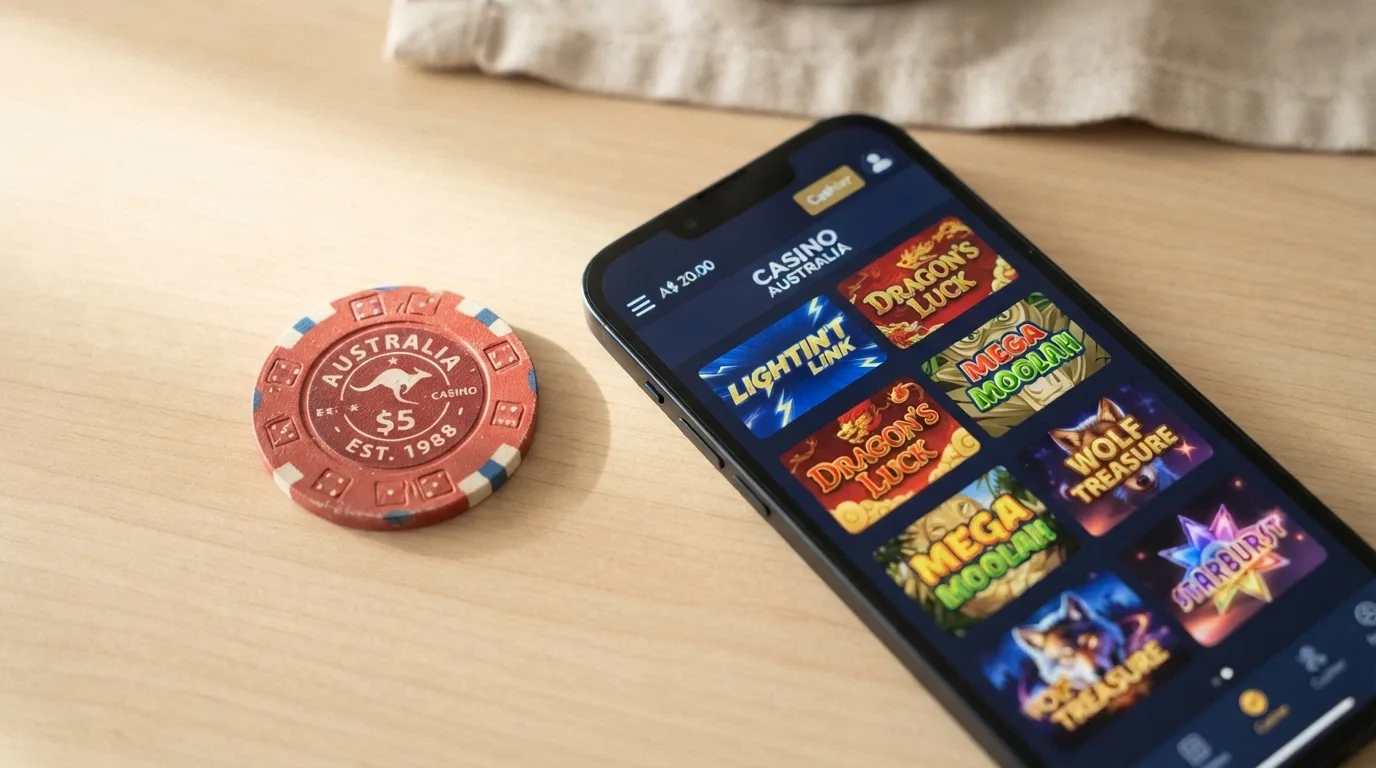
The verdict on whether to deposit depends on what the $20 is for. If it is a fixed entertainment spend — money the player is comfortable losing before it is spent, the way a concert ticket is bought to be used — the offshore route delivers what the marketing claims: 100 real-money spins, a welcome bonus that extends play, and a withdrawal path via crypto or PayID at the operators where those routes work. The cost is the house edge, the wagering requirement, and the absence of Australian consumer protection. The first two are the price of every pokie session anywhere; the third is the price of the offshore route specifically.
If the $20 is part of a budget a player cannot afford to lose — money earmarked for rent, for bills, for anything that matters outside the casino — the answer is the same answer that applies to every form of gambling: do not deposit it. The offshore route does not change that, and the responsible-gambling tools in the section above are the ones to use first. BetStop registration, a deposit limit at a licensed operator, a call to the National Gambling Helpline — these are the steps that exist before the $20 deposit, not after.
If the $20 is in between — entertainment money, but with a worry at the back of the player’s mind about whether the worry is the right size — the path runs through verification rather than deposit. Read the operator’s own terms page. Check the licence number against the Curaçao or Anjouan register. Confirm the minimum deposit, the bonus structure, and the wagering multiple on the operator’s own site rather than an affiliate review. Read the responsible-gambling section in this guide and the helpline number above it. Then make the call.
The one decision a player should make before depositing a dollar is the one the offshore market does not market: decide what the $20 is, and decide what happens if it goes to zero. The arithmetic of 100 spins is the easy part. The boundary a player sets for themselves is the part the offshore operator will not set for them.
Frequently Asked Questions
What can I play with a $20 minimum deposit at Australian online pokies sites?
At the A$0.20 minimum bet, $20 buys 100 real-money spins on most pokies. A 100% welcome match turns that into $40, with 50–200 free spins typically included. Libraries at AU-facing offshore casinos run from hundreds to thousands of titles, including high-RTP options like Blood Suckers at 98.00% and Mega Joker at 99.00%.
What is the best payment method for a $20 deposit at Australian pokies sites?
PayID is the default — instant, fee-free, accepted at 11 of 12 AU-facing casinos, and working with every major Australian bank. The trade-off is that withdrawals via PayID are rare; plan on crypto for cashouts. Cards draw a 2.5% fee at four of twelve sites, and ANZ and Westpac block gambling transactions at high rates.
How long do withdrawals take from $20 minimum deposit casinos in Australia?
USDT TRC-20 clears in 8–18 minutes; PayID withdrawals tested at 28–35 minutes at two operators; Bitcoin and Ethereum land in under an hour; e-wallets take up to 24 hours; bank transfer takes 1–3 business days. PayID works for withdrawals only at a minority of sites, despite being the dominant deposit method.
Are $20 deposit casinos safe for Australian players, and how does BetStop protect me?
Every $20 deposit casino accessible to Australians is offshore — Curaçao or Anjouan licensed, with no Australian regulatory oversight. BetStop covers the roughly 150–190 Australian-licensed wagering providers but does not reach offshore casinos. A self-excluded person can still deposit at any operator in this list. The free 24/7 helpline is 1800 858 858.
Can I use Bitcoin or cryptocurrency to deposit $20 at Australian online pokies?
Yes. Bitcoin, Ethereum and Litecoin are accepted at every top-ranked AU-facing casino, and crypto is the fastest withdrawal route — often clearing in under an hour. The cost is A$2 to A$5 in network fees on a $20 deposit. Since crypto is banned for licensed Australian wagering, a casino accepting it from an Australian is operating outside the Australian rules.
What are the wagering requirements for $20 deposit bonuses at Australian casinos?
At $20 minimum deposit offshore sites, the fairest structure tested is 35× on the bonus only — a $20 bonus requires A$700 in real-money turnover to clear. Steeper structures run 40× on deposit plus bonus, with cashout caps of 10× the bonus and A$5 max bet caps while the bonus is live. Read the terms page before claiming.