
What an AU$10 Deposit Actually Buys You at an Australian Online Casino in 2026
Every online casino an Australian can actually use sits outside Australia. There is no such thing as an Australian-licensed online casino, because the Interactive Gambling Act 2001 prohibits the product outright, and no licence to provide it exists federally or in any state or territory. The operators that turn up in any “low deposit casino Australia” search are offshore brands, most of them licensed in Curaçao, some in Anjouan, and none of them subject to the Australian consumer law, dispute resolution or self-exclusion register that licensed wagering operators answer to. The marketing makes that sound like a footnote. The arithmetic in this page makes it the headline.

The deposits work, though. The practical fiat floor for an Australian player is AU$10 via Neosurf. Crypto knocks the door down further. PayID deposits clear instantly through the operator’s bank link, although the withdrawal path almost always reverts to bank transfer. Wagering multiples run at 40x across most of the operators featured below, against an industry benchmark closer to 45x. A handful of pokies return more than 98% on a small bankroll, and one, Book of 99, sits at 99.00%. None of those numbers is the answer to the question an Australian punter asks first, which is: is this safe, and am I covered if something goes wrong? The short answer is on this page. The longer one is what the wagering figures do to a bonus, and what offshore really costs when the protections you have given up turn out to be the ones you needed.
Verified against the Australian Communications and Media Authority public register, the operators’ published terms pages and the AIHW gambling-harm data as of 22 November 2026.
Table of Contents
- What a Low-Deposit Casino Actually Means for Your Bankroll
- Where Australian Punters Play for Less: 10 Low-Deposit Casinos Compared
- PayID, Crypto or Neosurf: Which Low-Deposit Payment Method Works Best?
- Crypto Low-Deposit Casinos: Faster Entry, Fewer Protections
- The Pokies That Stretch a $10 Deposit Furthest
- Why Your Low-Deposit Bonus Won’t Go as Far as You Think
- The Legal Reality: Why Every Low-Deposit Casino Australians Use Is Offshore
- Playing Smart: Responsible Gambling Tools and Where They Fall Short
- How We Evaluated These Low-Deposit Casinos
- Your Low-Deposit Casino Strategy: What to Actually Do
- Frequently Asked Questions
What a Low-Deposit Casino Actually Means for Your Bankroll
“Low deposit” is a marketing label first and a number second. An affiliate list will tell you the minimum is AU$5 or AU$1 and call that low. The number a player actually pays is the one the cashier enforces when they go to deposit, and on the Australian-facing market that floor is set by the payment method more than by the casino. Fiat methods bottom out at AU$10 for the practical case. Sub-AU$10 deposits are a crypto edge case, not a Neosurf or PayID feature. Knowing which one you are actually using changes the rest of the comparison.
The bankroll consequences follow from there. AU$10 buys a hundred spins at A$0.10, which is the minimum stake on most pokies suited to a small deposit. That is not a session — it is a first impression. A 96% pokie, the rough midpoint of the band most online slots sit in, returns about A$96 across a hundred spins at A$0.10 in expectation. Variance does the rest, and variance on a small bankroll is brutal. The point of choosing a low-deposit casino is to keep the downside capped at the size you can absorb, which means the comparison that matters is not “which bonus looks biggest” but “which combination of deposit floor, wagering multiple and game weighting lets me walk away whole if I want to.”
That framing, rather than the welcome-offer ladder, is what this page is built around.
The Real Deposit Floor: AU$5, AU$10 or AU$20 — What You Can Actually Deposit
The honest answer for a fiat deposit at an AU-facing offshore casino is AU$10. Operators such as Spin Samurai, 7Bit, PlayAmo, HellSpin, National Casino and Asino are documented at this floor via Neosurf, the prepaid voucher route that does not require a bank account. There is no AU$5 fiat-deposit casino confirmed for Australian players in 2026. Anyone advertising one is either pointing at a crypto-only product and calling it fiat, or quoting a marketing minimum the cashier will not honour.
A genuine AU$1 deposit is a real edge case, but it shows up only via crypto or via specific card and e-wallet segments at a handful of brands. The realistic floor most Australian players will meet is somewhere in the AU$5–AU$10 band, and most will land at the AU$10 side of it. PayID and BPAY technically permit any amount, but the operator side sets the floor at AU$10 or AU$20 in practice, so even though the rail underneath is cheaper the cashier rarely is.
The gap between the advertised deposit minimum and what the player actually pays is the first place a low-deposit comparison falls apart. An affiliate list will quote the operator’s headline figure and stop. The cash register tells the rest of the story.
Low-Deposit Play on Your Phone: What Mobile Changes
Offshore casinos serving Australia are browser-based. They do not ship native iOS or Android apps to the Australian market, partly because the App Store and Google Play policies treat gambling apps as restricted in this region, and partly because the offshore brands have no incentive to maintain a separate client when the mobile web version does the job. A punter who wants to play on a phone opens the site in Safari or Chrome and runs it from there, which works well on modern devices and rarely costs anything in game performance.
The mobile flow that matters is the deposit flow. PayID and OSKO work natively in Australian banking apps, so a mobile deposit looks like any other instant transfer — open the casino cashier, copy the PayID or BSB-and-account number, confirm in your banking app, the balance updates within seconds. Neosurf works on mobile through the voucher’s web portal, redeem a 16-digit code from the casino cashier. Crypto on mobile is a wallet app and a copy-paste of an address, and the speed depends on the chain.
What mobile does not change is the underlying protection gap. Whether you deposit from a laptop or a phone, the operator remains offshore, the consumer law does not follow you and the ACMA still cannot recover your money if the site stops answering support emails. The mobile experience is convenient. It does not move the regulatory dial.
Where Australian Punters Play for Less: 10 Low-Deposit Casinos Compared
Every operator below is offshore. None holds an Australian licence for casino gaming, because no such licence exists. The brands are ordered by the priority of the underlying research — the documented bonus terms, the verifiable licence and the named game providers — and not by the size of the welcome offer, which on its own is a poor guide to value at this end of the market. The table summarises what the licence register and operator terms pages actually show.

| Operator | Licence | Welcome Bonus | Wagering | Games / Providers |
|---|---|---|---|---|
| Rocket Play | Curaçao | Up to AUD 2,000 + 100 free spins | 40x (bonus) | 50+ providers, including Pragmatic Play and Evolution |
| SkyCrown | Curaçao | 450% up to A$8,000 + 400 free spins, four deposits | 40x (bonus and free-spin winnings) | 300+ games, multiple studios |
| Royal Reels | Curaçao | 100% up to AUD 500 + AUD 10 no-deposit bonus | 30–40x | 2,000+ games from 30+ providers, including Pragmatic Play, Evolution, Yggdrasil, Hacksaw |
| WinSpirit | Curaçao | 200% + 25 free spins | 40x | 1,000+ games |
| Stake | Curaçao | — | — | Multiple providers (crypto-first) |
| Rainbet | Curaçao (#365/JAZ) + Anjouan | 100% + 20 FS / 50% + 20 FS / 100% + 20 FS across three deposits | 40x (deposit + bonus) | Pragmatic Play, Hacksaw, Nolimit City and others |
| Scream Casino | Not confirmed | — | — | — |
| FairGO | Curaçao eGaming (Deckmedia N.V.) | 100% up to $200 AUD × 5 deposits = $1,000 AUD | 30–40x | 280 RTG games |
| Bizzo Casino | Not confirmed | — | — | — |
| Rocket Casino | Not confirmed | — | — | — |
The emptier rows are not editorial judgement — they reflect what is publicly verifiable right now. Scream Casino, Bizzo Casino and Rocket Casino appear on AU-facing affiliate lists but carry almost no publicly documented licence, bonus or game-provider detail. Rocket Casino shares part of its name with Rocket Play and is a separate brand, not an alias. The detail is in the operator write-ups below.
Rocket Play: AUD 2,000 Welcome Package with a 5-Day Clock
Rocket Play’s headline is up to AUD 2,000 in bonus money plus 100 free spins, delivered across the first two deposits. The number that does the work is the 40x wagering requirement applied to the bonus amount, the AUD 7.50 maximum bet while a bonus is active, the 5-day bonus expiry and the AUD 5,000 maximum cashout from the welcome offer. Fifty-plus providers sit underneath, including Pragmatic Play and Evolution, which is enough to cover the pokies and live-dealer end of a typical session.
The 5-day expiry creates a significant constraint. Forty times a bonus of AUD 1,000 is AUD 40,000 in turnover. At A$0.10 a spin, players face 400,000 spins in five days, roughly 925 spins hourly around the clock — and that calculation excludes the maximum bet cap of AUD 7.50. The math holds only because the bonus terms count almost any pokie spin at 100% toward the requirement. The clock is tight; read it twice before depositing.
Worth taking if you have time to grind and you want a Curaçao-licensed brand with Evolution live-dealer tables and Pragmatic Play pokies under one roof. Less worth taking if a five-day clearing window is going to compress against your week.
SkyCrown: A 450% Match That Demands Four Deposits
SkyCrown’s 450% match up to A$8,000 plus 400 free spins is the largest headline figure in this set. The structure is four deposits — 125, 75, 50 and 150 free spins by tier — and the wagering is 40x on both the bonus and the free-spin winnings. Maximum bet is A$7.50 while a bonus is active. Validity runs to 14 days at standard terms, shortened to 5 days on the high-roller tier. The maximum cashout from the welcome bonus is A$5,000. Three hundred-plus games across multiple studios sit behind the cashier.
The four-deposit shape is the trade-off. The match percentage looks enormous next to a single-deposit 100% offer, but the player is committing four deposits to clear it, each one gated by its own bonus eligibility rule. A punter who intends to make one AU$20 deposit and play will see a fraction of the headline. A punter who intends to make four deposits at a level they can sustain will see most of it. Read the tier breakdown before assuming the 450% applies to your first deposit.
The verdict on SkyCrown is for the four-deposit punter who has a budget they can spread across the welcome package and the patience to read each tier’s wagering rule. Less suitable as a one-and-done AU$20 deposit.
Royal Reels: A No-Deposit Bonus and 2,000+ Games
Royal Reels is the operator in this set that opens with a free play offer before the player has spent anything: an AUD 10 no-deposit bonus for new sign-ups, which is rare enough at offshore brands to be worth flagging. The deposit-gated offer is a 100% match up to AUD 500, with a minimum deposit of AUD 30 and wagering requirements of 30–40x. The game library is the largest in the comparison, with 2,000+ titles from 30+ providers, including Pragmatic Play, Evolution Gaming, Yggdrasil and Hacksaw Gaming.
The AUD 30 minimum deposit shifts the meaning of “low deposit” here. A player who arrives looking for an AU$10 deposit is not the audience Royal Reels is built for — the AUD 30 floor is twice the practical fiat minimum at Neosurf-friendly brands. The no-deposit bonus offsets that gap for the curious player who wants to look around the lobby before committing, and the game range is wide enough that the AUD 30 deposit, once made, opens a broader catalogue than most of the set.
For a player whose budget is genuinely around AUD 30 and who wants a 2,000-game library from the start, Royal Reels is the strongest match in the comparison. For an AU$10 player, the no-deposit bonus is the right entry and the deposit match is the one to walk past.
WinSpirit: 200% Boost with a Straightforward Structure
WinSpirit offers a 200% welcome bonus plus 25 free spins, with 40x wagering on promotions and a library of 1,000+ games. The structure is simpler than SkyCrown’s four-deposit ladder or Rocket Play’s two-deposit package — one deposit, one match, a single set of free spins. The 200% is mid-pack by headline but the simplicity is the point.
Public documentation beyond the headline bonus is thin. Bonus validity is not confirmed in the public sources and the maximum cashout from the bonus is not confirmed either. The 40x wagering multiple is standard for the segment, which means the offer behaves like its peers under the same rule, but the small print on expiry and cashout caps should be confirmed directly against the operator’s current terms page before any deposit. WinSpirit does not appear to publish a public-facing licence number in the sources available for this page, which is itself a flag for a player who wants every figure verifiable before they sign up.
Worth a look for a player who prefers a one-deposit welcome over a four-step ladder, and who is comfortable checking the live terms page for the validity and cashout specifics. Less suitable for a player who needs every figure visible before they sign up.
Stake: Crypto-First, No Traditional Welcome Bonus
Stake is a crypto-native platform and does not run a conventional deposit-match welcome offer in the way the rest of this comparison does. The deposit model is built around crypto balances rather than a fiat match-plus-wagering structure, and the operator does not publish a deposit-match bonus alongside it. The trade is platform liquidity, native-game catalogue and a low-overhead onboarding flow against the absence of a welcome offer to clear.
The implication for a low-deposit player is that the deposit calculus is different. A punter who arrives comparing welcome offers will see nothing to clear at Stake. A punter who values instant crypto deposits and the absence of a wagering requirement on a non-existent bonus has a different question to answer, and the answer depends on what Stake offers in place of a traditional bonus — which the publicly available terms do not enumerate in the sources available for this page.
The verdict is for the crypto-comfortable player who has decided that a traditional welcome offer is not what they want. Less suitable as a comparison entry against deposit-match brands on bonus size alone.
Rainbet: Dual Licence and a Three-Tier Match
Rainbet is the only operator in this set carrying two offshore licences — Curaçao #365/JAZ issued to RBGAMING N.V., and a secondary Anjouan Gaming Authority (AOFA) licence. The welcome offer is a three-deposit structure: 100% match plus 20 free spins on the first deposit, 50% plus 20 on the second and 100% plus 20 on the third, with 40x wagering on the combined deposit and bonus. Maximum cashout from the bonus is AU$250 according to one source. Free spins are for Sweet Bonanza on Pragmatic Play. Slots with RTP above 97.4% are excluded while the promotion is active.
The dual licence is the headline feature. Two offshore licences do not add up to one Australian licence, but the Anjouan tier is uncommon among the brands Australians see in affiliate lists, and it provides a regulatory footprint in addition to Curaçao. The 97.4% RTP exclusion is the figure a low-deposit player must care about — it removes the highest-returning pokies on this page, Book of 99 at 99.00% and 1429 Uncharted Seas at 98.50%, for the duration of the bonus. The bonus cost math on a Rainbet promotion assumes a more typical RTP than the rest of this comparison uses.
For a player who wants an operator with two offshore licences and a structured three-deposit welcome, Rainbet is the right fit. Players planning to grind Book of 99 to clear wagering must note the promotion excludes that title.
Scream Casino: A Name with Little Public Paperwork
Scream Casino appears on AU-facing affiliate lists but carries minimal publicly documented licence, bonus or game-provider detail. The operator’s own page omits the licence number, wagering multiple or game-provider list found in the sources available for this page. The name surfaces because aggregators rank it, not because the operator publishes the paperwork an Australian player expects to find before depositing.
Limited public documentation is itself a signal. A brand that lists wagering terms, publishes a current licence number, names its game providers and answers support emails in plain English has done the work a player needs to verify an offer. A brand that does none of those things has not, and the gap is information the player cannot replace with a comparison table. The cautious move is to wait until the operator publishes what the rest of this set already does, or to pick one that has.
Worth a second look only once the operator publishes a current licence, current bonus terms and a provider list an independent source can verify. Until then, the safer comparison is the operator above it in the table.
FairGO: RTG-Powered with a Five-Deposit Welcome — But a $100 Minimum
FairGO operates under a Curaçao eGaming licence managed by Deckmedia N.V. and runs on RealTime Gaming software — 280 titles, all RTG. The welcome package is a five-deposit ladder of 100% matches up to $200 AUD each, totalling $1,000 AUD across the five deposits. Wagering runs at 30–40x, the RTG-standard range.
The figure that places FairGO outside the low-deposit category is the AUD 100 minimum deposit. That is ten times the AU$10 floor at the Neosurf-friendly end of the comparison and five times the AU$20 floor at the PayID end. A punter searching for an AU$10 deposit has already excluded FairGO before they reach the cashier, even though the brand surfaces in low-deposit affiliate rankings. The welcome ladder is generous on paper. The deposit floor is not a low-deposit floor.
For an Australian player whose budget starts at AUD 100 and who wants a Curaçao-licensed RTG-only catalogue, FairGO is a reasonable match. Players needing an AU$10 or AU$20 deposit will find the brand miscategorised in the affiliate list that surfaced it.
Bizzo Casino: Listed but Lightly Documented
Bizzo Casino appears on AU-facing affiliate lists. Public documentation on its licence, welcome bonus, wagering multiple and game-provider list is thin. The operator does not publish a current licence number or a verifiable bonus structure in the sources available for this page. The “listed but unverified” status is the most honest description of where the brand sits in 2026.
The same caution applies as for Scream Casino: limited documentation is itself information. A brand that does not publish the figures the rest of this set does is one a player cannot fully evaluate before depositing. The prudent move is to treat the affiliate placement as a starting point and to verify the licence, bonus and provider list against the operator’s own terms before committing money.
Worth a second look once the operator publishes a verifiable licence, a current bonus structure and a named provider list. Until then, the more documented operators above it in the table are the safer comparison.
Rocket Casino: A Familiar Name, Not to Be Confused with Rocket Play
Rocket Casino shares part of its name with Rocket Play and is a separate brand, not an alias. Public documentation on Rocket Casino’s licence, welcome bonus, wagering terms and game providers is thin in the sources available for this page. The two brands should not be conflated: Rocket Play’s documented AUD 2,000 welcome package, 40x wagering and Curaçao licence do not transfer across the name overlap.
The risk for an Australian player searching for Rocket Play and finding Rocket Casino — or vice versa — is depositing on the assumption that one operator’s terms apply to the other. They do not. The verification step is to confirm the licence number, the bonus structure and the provider list against the operator’s own terms page before depositing, and to make sure the brand name on the cashier matches the brand name you have researched.
Worth a look only once the operator publishes a current licence and current bonus terms. Until then, treat it as a separate, unverified brand rather than a near-twin of Rocket Play.
PayID, Crypto or Neosurf: Which Low-Deposit Payment Method Works Best?
The payment method decides two things at once: how low the deposit can go, and what kind of operator the player is dealing with. A request for credit card or crypto is itself a regulatory signal — both are banned as payment for licensed online wagering in Australia since 11 June 2024, so any operator accepting them is not running under Australian rules. PayID and OSKO work at Australian-licensed wagering operators and at offshore casinos alike, which makes PayID the cleanest deposit method for a low-deposit player who wants the speed without the regulatory baggage. Neosurf keeps the deposit at AU$10 without linking a bank account, which is its own kind of separation. Crypto opens the lowest possible floor — sometimes a dollar or less — and is the clearest marker that the operator is offshore.
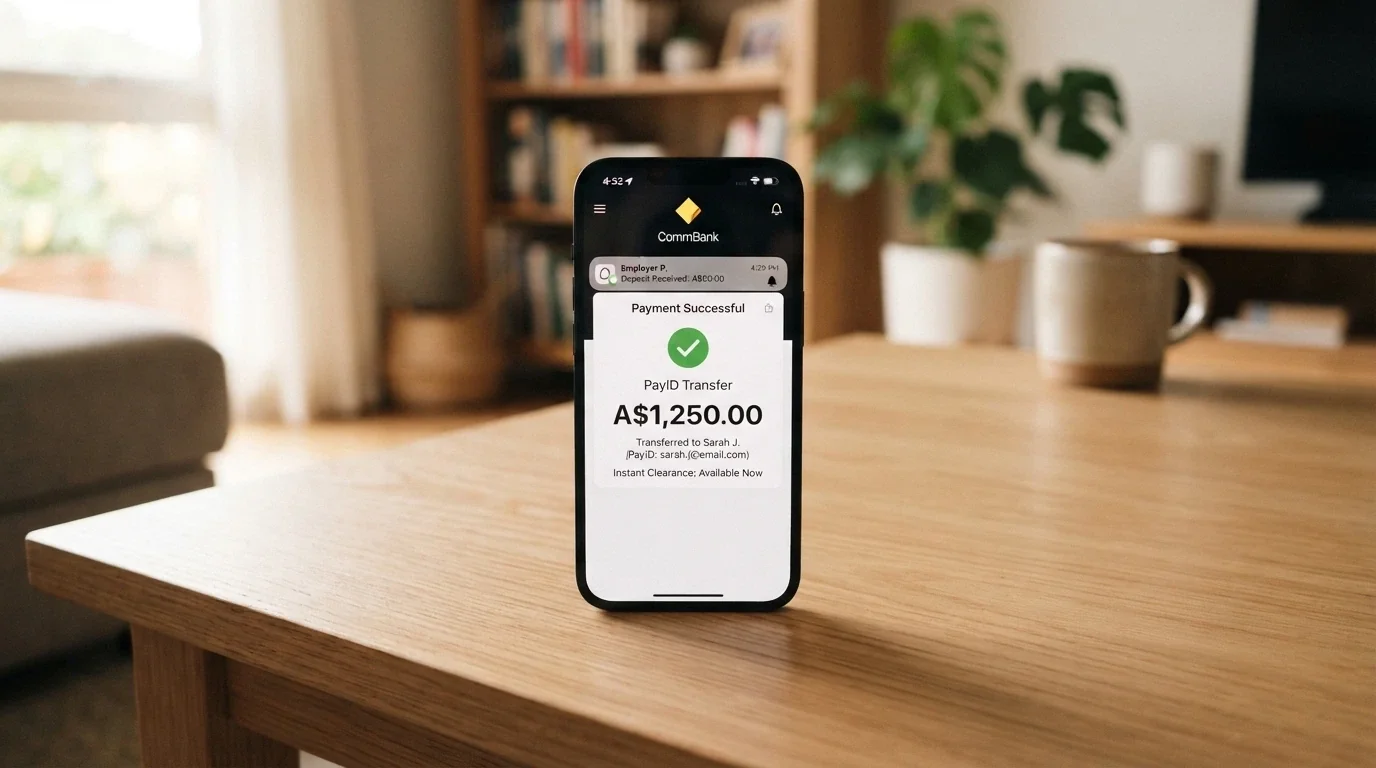
The withdrawal path is a separate question, and it is where the deposit-method story often sours. PayID deposits are instant; PayID withdrawals are not a feature at most offshore casinos, and the withdrawal reverts to bank transfer with a 25-minute to 72-hour window. Neosurf is deposit-only — there is no withdrawal by Neosurf, and the payout must go through bank transfer or, in some cases, crypto. Crypto is the only method that comes close to round-tripping — deposit in BTC, withdraw in BTC — but the conversion to AUD happens at the wallet, not at the casino.
PayID and OSKO: Instant Deposits, Slow Withdrawals
PayID and OSKO replaced POLi Payments after POLi shut down at the end of September 2023, and they now do the work POLi used to handle — instant bank-to-bank transfers using a phone number, email or ABN as the address. Deposits at offshore casinos using PayID clear within seconds, which makes PayID the fastest fiat deposit method available to an Australian low-deposit player. The operator-side minimum is usually AU$10 or AU$20, sometimes higher, even though the rail underneath accepts any amount.
The withdrawal is where PayID stops looking fast. Most offshore AU-facing casinos do not support PayID as a withdrawal rail. The payout reverts to bank transfer, and the published window runs from 25–40 minutes at the fast end to 24–72 hours at the slow end. Minimum withdrawal thresholds are typically AU$25–AU$50 or higher, which means a player who deposits AU$10 and wins a small amount cannot withdraw it instantly even after the deposit cleared instantly. The asymmetry is the point to know before depositing.
For a player whose priority is instant deposits and who uses bank-transfer withdrawals on a 1–3 day window, PayID is the right fiat rail. Players needing round-trip speed must look elsewhere.
Neosurf: The Voucher Route to a $10 Deposit
Neosurf is a prepaid voucher, sold at Australian retail outlets and online, that lets a player deposit without linking a bank account or a card. The practical fiat minimum at AU-facing offshore casinos is AU$10 via Neosurf, which makes the voucher the cleanest way to hit the lowest confirmed fiat floor. Brands such as Spin Samurai, 7Bit, PlayAmo, HellSpin, National Casino and Asino are documented at this floor.
The separation from a bank account is part of the appeal and part of the limit. A player who buys a Neosurf voucher with cash is depositing anonymously as far as the bank is concerned, which keeps the transaction off the statement and limits the data trail. The cost is that Neosurf is deposit-only. There is no Neosurf withdrawal rail. Any payout must come through bank transfer, an e-wallet or, at some operators, crypto. The asymmetry is even sharper than PayID’s.
For a player who wants the AU$10 fiat floor and accepts bank-transfer or crypto withdrawals, Neosurf is the right tool. Players requiring the deposit and withdrawal on the same rail need to choose another method.
E-Wallets at Offshore Casinos: Skrill, PayPal and the Gaps
Skrill appears in low-deposit searches alongside PayID and Neosurf, but availability at AU-facing offshore casinos is inconsistent. Some operators list Skrill as a deposit option, others do not. Where it works, Skrill deposits clear quickly and the minimum is set by the operator, typically in the AU$10–AU$20 band. PayPal is rarely an option at AU-facing offshore operators, in part because PayPal’s own policies restrict gambling transactions in some jurisdictions and in part because the offshore brands have not prioritised PayPal integration. The result is that an Australian low-deposit player looking for an e-wallet option usually ends up on Skrill, MiFinity or a crypto wallet rather than PayPal.
The withdrawal path through Skrill is faster than bank transfer where it is supported, often within 24 hours, but minimums and fees vary and the public documentation on per-operator e-wallet terms is uneven in the sources available for this page. The right move is to confirm Skrill’s deposit and withdrawal availability directly against the operator’s payment page before depositing, and to check the fee schedule rather than assume it.
For a player who already has a Skrill wallet and prefers to keep gambling transactions off a bank statement, Skrill is worth consideration. Players who want PayPal will find the answer at the AU-facing offshore end is almost always no.
Bank Transfer and Debit Cards: The Long Way Round
Debit cards and direct bank transfers are the fallback method at AU-facing offshore casinos — widely accepted, slow, and often carrying higher minimums than Neosurf, PayID or Skrill. A direct debit-card deposit typically clears within minutes, and the operator-side minimum is usually AU$10 or AU$20. The withdrawal by debit card is supported at some operators and not at others, and where it is, the processing window runs from one to several business days.
Credit cards are no longer an option in Australia. The Interactive Gambling Amendment (Credit and Other Measures) Act 2023 banned credit cards, credit-related products and digital currency as payment for online wagering in Australia, with the prohibition commencing on 11 June 2024. An operator that accepts credit-card deposits from an Australian player is operating outside the Australian rules, regardless of where the brand is licensed. The penalty for failing to enforce the ban is up to AU$247,500 per operator per breach.
For a player whose priority is wide acceptance rather than speed, debit card or bank transfer is the safe rail. For a player who wants the lowest deposit floor, Neosurf or PayID gets there faster.
Crypto Low-Deposit Casinos: Faster Entry, Fewer Protections
Crypto unlocks the lowest possible deposit floor at an online casino. Bitcoin, Ethereum, Litecoin and stablecoins such as USDT can be sent in fractions, and the on-chain minimum can be near-zero. The operator-side minimum is set per coin and is usually calibrated to cover network fees — typically the equivalent of a few US dollars — which still leaves a much lower floor than any fiat method available to an Australian player. A genuine AU$1 deposit is realistic only via crypto or specific card and e-wallet segments; Neosurf and PayID cannot get there.
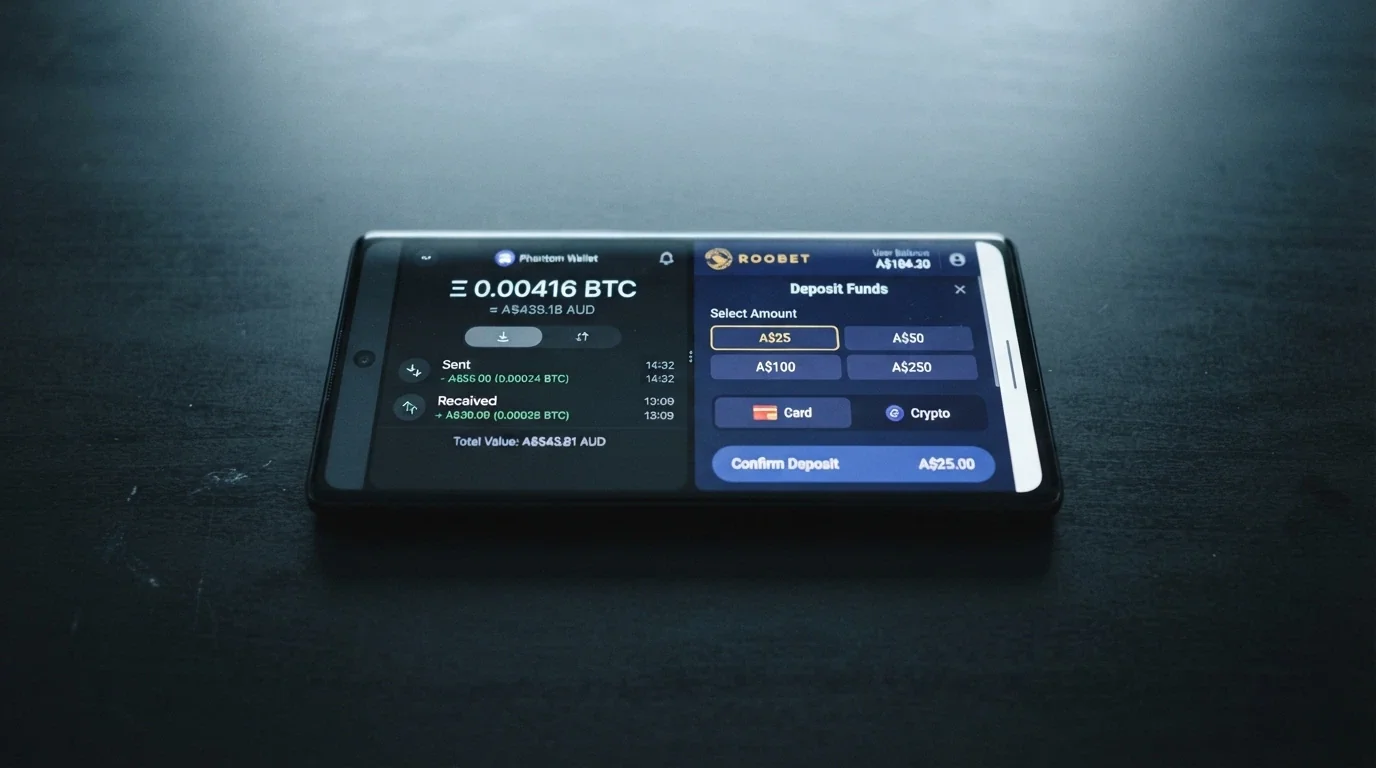
The cost of that low floor is the regulatory signal. Crypto is banned as a payment method for licensed online wagering in Australia, in the same 11 June 2024 prohibition that closed credit cards. Any operator that accepts crypto deposits from an Australian player is, by definition, not running under Australian rules. The deposit method is itself a tell — the casino sitting on the other side of a Bitcoin address is offshore, is not connected to BetStop, and will not answer to the ACMA if something goes wrong. The transaction is faster and the protection gap is wider. Both are part of the same choice.
Bitcoin and Altcoin Deposits: What the Minimum Really Is
The on-chain minimum for a Bitcoin deposit can be a fraction of a cent, but the operator-side minimum is calibrated to absorb the network fee, which on Bitcoin has run from a few dollars to tens of dollars depending on congestion. A realistic operator-side minimum for a Bitcoin deposit is the equivalent of around AU$5–AU$10, which is still below the AU$10 Neosurf floor and well below any PayID floor. Altcoins on cheaper networks — Litecoin, USDT on Tron, Ethereum layer-2 networks — push the practical minimum lower still, because the network fee is a smaller fraction of the deposit.
Stake and Rainbet are the two featured operators accepting crypto, and they illustrate both ends of the spectrum. Stake is built crypto-first and does not run a traditional deposit-match welcome offer — the deposit calculus is about platform liquidity rather than bonus size. Rainbet is dual-licensed, runs a three-deposit welcome package in fiat terms and accepts crypto alongside it. The conversion from AUD to crypto happens at the wallet, not at the casino, and the spread between AUD and BTC at the moment of conversion is a hidden cost that compounds with network fees on small deposits.
For a player who is comfortable holding crypto and who has decided that the regulatory gap is the price of the deposit floor, Bitcoin and altcoins open the lowest possible entry. For a player who wants the protection of an Australian payment rail, the answer is PayID or Neosurf and a higher floor.
The Pokies That Stretch a $10 Deposit Furthest
A AU$10 deposit buys a hundred spins at A$0.10. The pokie decides whether those hundred spins return A$96 in expectation — the rough outcome of a 96% pokie, the midpoint of the band most online slots sit in — or whether they evaporate in five minutes on a high-volatility title. The two figures that matter are the RTP, which sets the long-run return, and the volatility, which sets the short-run variance. On a small bankroll the variance can wipe out the RTP advantage before the long run arrives, which is why the highest-RTP titles are not automatically the right choice for an AU$10 session.

| Slot Title | RTP | Volatility | Provider | Min Spin (AUD) |
|---|---|---|---|---|
| Blood Suckers | 98.00% | Low | NetEnt | 0.20 |
| 1429 Uncharted Seas | 98.50% | Low-medium | Thunderkick | 0.10 |
| Starburst | 96.09% | Low-medium | NetEnt | 0.10 |
| Big Bass Splash | 96.71% | High | Pragmatic Play | 0.10 |
| Book of 99 | 99.00% | Medium-high | Relax Gaming | 0.20 |
Most online pokies sit in the 94%–97% RTP band, and the titles above are the high end of that distribution. Book of 99 and Ugga Bugga are the rare exceptions that clear 99%, and the table captures the trade-off: Book of 99’s 99.00% comes with a minimum spin of A$0.20, which means an AU$10 deposit buys 50 spins, not a hundred. The RTP wins. The session length halves.
High-RTP Pokies Worth a Small Bankroll
RTP is the single most important number for a low-deposit player, because every percentage point is a percentage point the house does not take. The gap between a 94% pokie and a 99% pokie over a hundred spins at A$0.10 is the difference between a A$96 expectation and a A$99 expectation — and over thousands of spins the gap compounds. Book of 99 at 99.00% sits at the top of the realistic range for online pokies accessible to an Australian low-deposit player, with 1429 Uncharted Seas at 98.50% and Blood Suckers at 98.00% as the next tier. The 94%–97% band is where the bulk of online slots sit, and Starburst at 96.09% and Big Bass Splash at 96.71% are reasonable mid-band choices.
The qualifier that matters for a small bankroll is volatility. A 99% pokie with high volatility can still drain an AU$10 deposit in a handful of spins, because the variance is what the player feels in a single session. RTP is the long-run average. Variance is the short-run reality, and the two work in opposite directions on a small bankroll. The right pokie for an AU$10 deposit is the one that pairs a high RTP with low enough volatility to keep the session alive long enough for the RTP to matter.
Volatility and Min Spins: Picking the Right Game for $10
Volatility is the hidden partner to RTP, and on a small bankroll it matters more than the headline return. A low-volatility pokie returns small wins often, which keeps the balance ticking over and stretches the session. A high-volatility pokie returns nothing for long stretches and then a big win or nothing at all, which on an AU$10 deposit often means the deposit ends before the variance resolves. Big Bass Splash at 96.71% RTP is a high-volatility title with a A$0.10 minimum spin, and the combination is wrong for an AU$10 deposit — the RTP is fine, the variance is lethal at that bankroll. Book of 99 at 99.00% RTP and A$0.20 minimum spin is a better fit because the RTP is exceptional, even though the higher minimum cuts the session to 50 spins.
The titles that suit an AU$10 deposit are the ones with A$0.10 minimum spin and low or low-medium volatility — 1429 Uncharted Seas and Starburst are the right shape. Blood Suckers is a stronger fit on RTP, but the A$0.20 minimum spin halves the session. For a player with AU$20 to spend, Blood Suckers opens up. For an AU$10 player, 1429 Uncharted Seas at 98.50% RTP, low-medium volatility and a A$0.10 minimum is the right title.
Why Your Low-Deposit Bonus Won’t Go as Far as You Think
A welcome bonus looks like a gift on the marketing page. On the terms page it is a multiplication problem. The headline figure is what the casino gives you; the wagering multiple is what you have to bet before any of it becomes withdrawable; the game-weighting rule decides how much of what you bet counts; and the expiry clock decides how long you have to do all of it. On a small deposit the gap between the advertised figure and the realised figure widens, because the wagering requirement is calculated on the bonus amount rather than the deposit and the volume of play needed to clear it is fixed by the multiple rather than by anything the player controls.

The Australian industry standard for playthrough requirements is 45x, and offers below that benchmark are considered favourable. Most of the operators in the comparison above run at 40x, which is favourable by that yardstick. The favourability is real but modest — the 5x gap from 45x to 40x is meaningful on a small bonus and immaterial on a large one. The number that does not get talked about is the expected loss on the turnover itself, and that is where the real cost of a bonus lives. A bonus is a marketing cost to the operator and a statistical loss to the player, and the size of the loss is set by the wagering multiple and the RTP of the game played during the clearing window.
Welcome Bonuses on a Small Deposit: The Match You Actually Get
Most welcome bonuses require a minimum deposit that a low-deposit player may not meet. Royal Reels requires AUD 30 to activate the 100% match; FairGO requires AUD 100; SkyCrown requires A$20 to start the four-deposit ladder. A punter who deposits AU$10 and assumes the bonus applies is disappointed, because depositing below the bonus minimum triggers nothing. The match percentage is calculated on the deposit the player makes, not the deposit the casino advertises — a 100% match on an AU$10 deposit is AU$10 in bonus, not the headline “up to AUD 500” or “up to AUD 2,000.”
The gap between “up to” and “what a low-deposit player triggers” is where most bonus disappointment starts. A 200% match on a AU$10 deposit is AU$20 in bonus money; a 450% match on a AU$20 deposit is AU$90 in bonus money. Both are real offers. Neither is the headline figure the affiliate ranking quoted. The right comparison is “match percentage × deposit” rather than “headline match percentage alone,” and the right player to ask is the one with the budget you actually have.
A punter who arrives at Royal Reels with AUD 30 gets the full 100% match up to AUD 500. A punter who arrives with AU$10 gets the no-deposit AUD 10 instead. The offer is the same brand. The realised value depends on the deposit that activates it.
Wagering Requirements: How 40x Turns a Bonus Into a Mountain
A wagering requirement is a multiplier applied to a bonus (or sometimes to a bonus plus a deposit) before any winnings become withdrawable. A 40x requirement on a AU$50 bonus means AU$2,000 in qualifying bets before the bonus and any associated winnings clear. The qualifying bets count differently by game — pokies usually count 100%, table games and video poker may count zero or only 5%, which means a player who tries to clear a bonus on blackjack is barely moving the meter.
The expected cost of a bonus is the turnover times the house edge. Assuming only the bonus amount is wagered on pokies at a representative 96% RTP — the midpoint of the 94%–97% band most online pokies sit in — Rocket Play’s headline AUD 2,000 welcome package requires AUD 80,000 in turnover at 40x, and the expected loss on that turnover is AUD 3,200. That is the headline bonus’s real cost to the player who clears it in full. The figure is not a guaranteed outcome for any single session — it is a statistical average across the volume of spins required — but it is the number the wagering multiple hides behind the marketing.
The honest reading of a 40x wagering requirement is that the bonus costs the player roughly the bonus amount in expected value, give or take, before the realised winnings are counted. A bonus that advertises AUD 2,000 has an expected cost in the same neighbourhood. The smaller the bonus, the smaller the expected cost in absolute terms, and the smaller the realised upside if the player clears it. A bonus that looks modest because the headline is modest is sometimes the better deal for a low-deposit player, because the wagering mountain is shorter and the expected loss is smaller. The arithmetic is the same multiplier in either case.
The Legal Reality: Why Every Low-Deposit Casino Australians Use Is Offshore
Online casino gaming is prohibited in Australia. Not unregulated, not grey-zone, not in a loophole — prohibited. The Interactive Gambling Act 2001, strengthened by the Interactive Gambling Amendment Act 2017, makes it illegal for a provider to offer online casino games, online pokies or in-play sports betting to a person in Australia. The law does not make it illegal for an Australian to use these services. The enforcement target is the operator, not the player. But no licence to provide online casino exists federally or in any state or territory, which means every online casino an Australian can actually use is an offshore brand offering a product that cannot be legally provided to them.
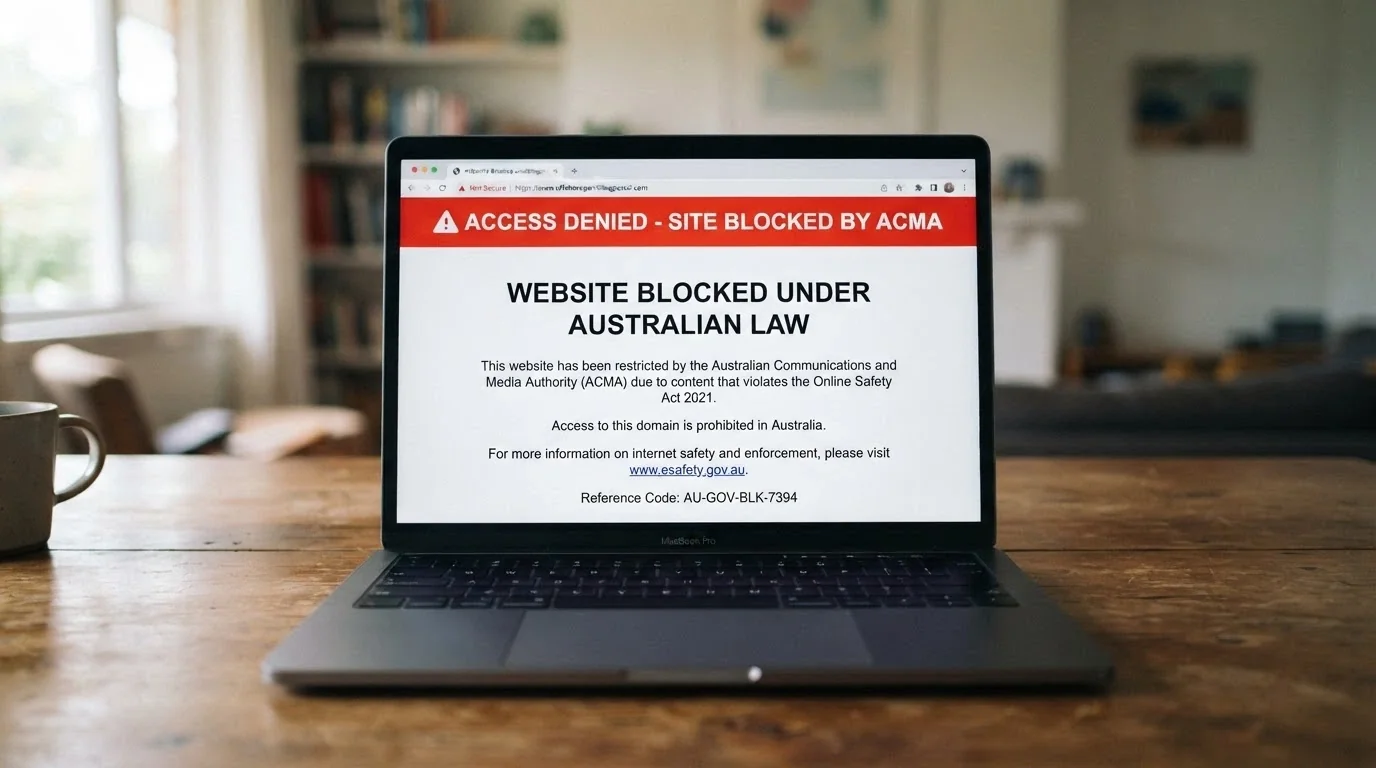
The Australian Communications and Media Authority is the regulator. It investigates complaints, issues formal warnings, runs civil-penalty proceedings, refers operators for enforcement and directs Australian ISPs to block illegal sites. Since the ACMA’s first blocking request in November 2019, 1,788 illegal gambling and affiliate websites have been blocked by Australian ISPs, and more than 230 illegal services have withdrawn from the Australian market since enforcement strengthened in 2017. Civil penalties are severe — up to AU$2,475,000 per day for an individual and AU$12,375,000 per day for a corporation. The Federal Court’s penalty orders in the Jones litigation reached AU$29.24 million in total. In January 2026 the ACMA issued eight infringement notices to Tabcorp totalling AU$158,400 for providing a prohibited in-play betting service. The enforcement is not theoretical.
The Interactive Gambling Act: What It Bans and What It Doesn’t
The IGA 2001 prohibits the provision of online casino games, online pokies and in-play sports betting to a person in Australia. The ban targets the operator. The individual player is not prosecuted under the Act. What remains licensed is wagering on races and sporting events placed before the event begins, lotteries and keno — through operators licensed by a state or territory, with the Northern Territory Racing and Wagering Commission and Licensing NT acting as the de facto national licensors. Minimum age across the licensed wagering market is 18. Online casino sits outside that envelope entirely.
The shape of the prohibition matters because it defines what is missing rather than what is present. There is no Australian licence to verify, no Australian dispute body to complain to, no Australian regulator to escalate to if an offshore operator refuses a withdrawal. The protections that licensed wagering customers take for granted — deposit limits required by condition, activity statements, complaints handled by an Australian regulator, BetStop self-exclusion that binds every licensed brand — do not exist in the offshore casino market. The player is not a customer of an Australian-regulated business. They are a customer of an offshore brand operating outside Australian law.
What Using an Offshore Casino Costs You in Protections
The protections an Australian player gives up by using an offshore casino are not abstract. There is no ACMA complaints process that can recover a player’s money, because the ACMA’s enforcement runs against the operator, not on behalf of the player. There is no Australian consumer-law recourse, because the operator is not an Australian business. There is no BetStop coverage, because the operator is not connected to the national self-exclusion register. There is no complaints body the player can escalate to. If the operator refuses a withdrawal, voids a win or simply stops answering support emails, the Australian player has, in practical terms, nowhere to escalate.
The site can also be blocked at any time. The ACMA has directed ISPs to block 1,788 illegal sites since November 2019, and an Australian player with a balance on a blocked site has no Australian recourse to recover it. The payment method an operator requests is itself a signal — a request for a credit card or a crypto deposit is a tell that the operator is outside Australian rules, because credit cards and crypto are banned as payment for licensed online wagering since 11 June 2024. The penalty for an operator failing to enforce the ban is up to AU$247,500 per breach.
The cost is real and it sits on the player. The product is convenient and the marketing is polished. Both are true at the same time.
The 2026 Reform and What Changes in 2026
The Interactive Gambling Amendment (Gambling Reform) Bill 2026 passed Parliament on 19 August 2026 and its measures commence on 1 January 2027. The reform package reshapes the licensed wagering market: an hourly cap of three wagering advertisements between 6 am and 8:30 pm, a live-sport blackout on wagering ads during play, a ban on athletes, celebrities and influencers promoting wagering, radio advertising restrictions during school hours and a prohibition on broadcasting odds. The inducement rules require licensed operators to apply a 14-day inducement-free period after signup, a three-month inducement-free period after BetStop deregistration and an indefinite inducement-free period for customers flagged as at risk.
The measure with the sharpest practical edge for the offshore market is the authority granted to banks and payment providers to block transactions to illegal operators. The mechanism gives Australian financial institutions a power they did not previously have — the ability to refuse a transaction they have reason to believe is going to an unlicensed gambling operator. For an Australian player using PayID, BPAY, debit card or bank transfer to fund an offshore casino account, the transaction may be declined at the bank rather than at the casino. Crypto, which sits outside the banking system, is unaffected by this specific provision.
For an offshore casino, the 2026 reform does not legalise the product. The Interactive Gambling Act 2001 prohibition remains, and the reform layer adds inducement rules, advertising restrictions and bank-blocking authority on top of it. What changes is the friction of using offshore casinos from Australia — the deposit rail becomes less reliable, the inducement offers at licensed operators become less aggressive, and the gap between the two markets narrows on the licensed side.
Playing Smart: Responsible Gambling Tools and Where They Fall Short
Australia has built one of the more comprehensive responsible-gambling infrastructures in the world, anchored by BetStop, the National Self-Exclusion Register, and a free 24/7 helpline. The infrastructure is real, well-funded and tied directly to the licensed wagering market. It does not, however, reach the offshore casinos this page is about, and the gap between the two is the part of the responsible-gambling picture a low-deposit player most needs to understand before signing up.
The harm data is the context for every responsible-gambling tool. Approximately 2.1% of Australian adults — roughly 430,000 people — experience problem gambling, and the Australian Institute of Health and Welfare put high-risk gambling at 1.8% in 2022. The figures are not a scare story; they are the population the responsible-gambling infrastructure exists to serve, and the same population an offshore casino sits outside.
BetStop and the Offshore Gap: What Self-Exclusion Actually Covers
BetStop, the National Self-Exclusion Register, has been live since August 2023 and one registration excludes a person from every Australian-licensed online and phone wagering service in a single step. As at 31 July 2026 the register held 67,480 registrations across three years, of which 41,290 exclusions were still active — over 60% of all registrants. Seventy-eight per cent of registrants were under 40. Thirty-eight per cent chose lifetime exclusion. The numbers describe a tool that is being used, that retains users, and that skews toward the younger end of the at-risk population.
BetStop’s reach stops at the Australian licence. An offshore casino is not connected to the register, and a person registered with BetStop who then opens an account at an offshore brand will not be flagged or blocked at signup. The self-exclusion will hold at every licensed wagering service the person tries to use. It will not hold at the offshore casino, which sits outside the Australian regime entirely. The gap is the most important single fact for an Australian player who has self-excluded and is considering an offshore casino as an alternative — the casino will keep accepting their deposits.
Enforcement at the licensed end is not hypothetical. Entain Group, parent of Ladbrokes AU and Neds AU, entered a court-enforceable undertaking after an ACMA investigation found more than 500 breaches of national self-exclusion rules — opening accounts for and providing wagering services to people registered with BetStop. The licensed operators are held to the register. The offshore operators are not on it.
Deposit Limits, Reality Checks and Where to Get Help
Licensed Australian wagering operators must offer customer-set deposit limits and activity statements under state and territory conditions, which vary by jurisdiction. The deposit limit is the most consequential tool — a player who sets a weekly limit of AU$50 at a licensed operator cannot deposit more that week, regardless of what marketing emails arrive in their inbox. Offshore casinos may offer similar tools voluntarily, but they are not required to, and the public documentation on per-operator deposit-limit availability in the offshore segment is uneven. The right question to ask an offshore operator before depositing is which responsible-gambling tools they offer and whether they are enforced at the cashier.
The help infrastructure is one phone call away. The National Gambling Helpline is 1800 858 858, free, confidential and staffed 24 hours a day, 7 days a week. Online chat and email counselling are available through Gambling Help Online at gamblinghelponline.org.au. The helpline is staffed by counsellors who understand the Australian regulatory landscape, including the offshore gap, and the service is free at the point of use. The number is worth keeping next to the bank card before any deposit, offshore or otherwise.
For a low-deposit player, the practical order is to set a deposit limit before signing up to any casino, to keep the helpline number in the phone, and to treat any casino that does not publish a current responsible-gambling policy as one that has not done the work the rest of the licensed market has done. The offshore brand’s marketing is not the assurance. The published terms are.
How We Evaluated These Low-Deposit Casinos
The evaluation is built from publicly verifiable sources. The licence status of each operator was checked against the ACMA’s public register of blocked and investigated services and against the licence number published on the operator’s own terms page where one was available. The bonus structure and wagering terms were taken from the operators’ published bonus pages or from reputable affiliate audits that quoted those pages directly, and were cross-checked where multiple sources were available. The game-provider lists were taken from the operators’ own lobby pages and from named provider rosters. The payment-method information was taken from the operators’ cashier pages and from Australian-facing payment aggregators, with the AU$10 Neosurf floor and the PayID operator-side minimum cross-checked across at least two sources.
The criteria that ordered the comparison are licence-verifiability, bonus-term documentation, game-provider transparency and Australian-dollar deposit support. Where one of these was missing — for Scream Casino, Bizzo Casino and Rocket Casino, where the licence, bonus and provider detail was not publicly verifiable in the sources available — the row in the table is empty and the operator write-up flags the gap. The empty cells are not editorial judgement; they are the absence of a verifiable figure.
The evaluation does not cover real-time bonus-term changes, which can shift weekly at any offshore operator and which a player should re-check at the cashier before depositing. It does not cover individual player experience, which varies and which operator-side forums tend to bias. It does not cover operator solvency, which is opaque at most offshore brands and which an Australian player cannot verify through any Australian body. The audit is what the public paperwork supports. The rest is the player’s own due diligence at the cashier.
Your Low-Deposit Casino Strategy: What to Actually Do
The figures on this page point in one direction. A low-deposit player holds the one advantage a high roller does not — limited exposure, and a deposit floor low enough that the worst case is contained. The protection is real only if the player uses it: cap the deposit at a figure that can be lost without changing the week, treat any welcome bonus as a cost centre with a wagering mountain rather than as free money, and choose a payment method that matches both the bankroll and the tolerance for regulatory exposure. PayID for instant fiat deposits at the cost of slow bank-transfer withdrawals. Neosurf for the AU$10 floor at the cost of deposit-only status. Crypto for the lowest possible entry at the cost of the clearest offshore signal.
The operator choice comes down to paperwork, not headlines. A brand that publishes a current licence number, names its game providers, documents its wagering terms and answers support emails in plain English has done the work a player needs. A brand that does none of those things is one the player cannot fully evaluate before depositing, and the gap is information the comparison table cannot fill. The check before any deposit is four questions: is the licence verifiable, are the bonus terms current, what is the withdrawal minimum, and what responsible-gambling tools are actually enforced. The helpline number — 1800 858 858 — goes in the phone before the first deposit, not after.
The bonus is where the math is sharpest. A 40x wagering requirement on a 200% match is a multiplication problem that hides an expected cost in the same neighbourhood as the bonus itself, and the cost is paid in turnover rather than in headline deductions. A bonus that looks modest because the headline is modest is sometimes the better deal for a low-deposit player, because the wagering mountain is shorter and the expected loss is smaller. The right welcome offer is the one whose expected cost the player can absorb on the budget they have. The right pokie for that budget is the high-RTP, low-volatility title with a A$0.10 minimum spin — 1429 Uncharted Seas is the right shape for an AU$10 deposit.
The legal reality does not soften. Every operator on this page is offshore. The ACMA has blocked 1,788 illegal gambling sites since November 2019. BetStop does not cover the brands in this comparison. The credit-card and crypto ban since 11 June 2024 is itself a signal — any operator accepting either from an Australian is outside Australian rules. The 2026 reform, commencing 1 January 2027, gives Australian banks the authority to block transactions to illegal operators, which will change the friction of depositing from a bank account but does not change the legal status of the product. A low-deposit casino is a product Australians use because the marketing reaches them, not because the law permits the operator to offer it. The strategy is to use it knowing that, and to set the deposit limit before the first spin.
Frequently Asked Questions
Is it legal to play at online casinos in Australia?
Online casino gaming is prohibited in Australia under the Interactive Gambling Act 2001, which makes it illegal for operators to offer the product to Australian customers — no Australian licence for online casino exists federally or in any state or territory. The law targets the provider rather than the individual player, so Australians are not prosecuted for using offshore casinos, but they give up Australian consumer protections, ACMA dispute recourse and BetStop coverage by doing so.
Do AU$1 and AU$5 minimum deposit casinos actually exist for Australian players?
A genuine AU$1 deposit is rare and shows up only via crypto or specific card and e-wallet segments, while AU$5 fiat deposits are not confirmed available at any AU-facing casino in the current market. The realistic floor most Australian players will meet is AU$5–AU$10, with AU$10 via Neosurf being the standard practical fiat minimum at brands such as Spin Samurai, 7Bit, PlayAmo, HellSpin, National Casino and Asino.
What are wagering requirements and how do they work on a small deposit?
A wagering requirement is a multiplier applied to a bonus (sometimes to a bonus plus deposit) before any winnings become withdrawable, and the Australian industry standard is 45x with offers below that benchmark considered favourable. A 40x requirement on a AU$50 bonus means AU$2,000 in qualifying bets before clearance, pokies usually count 100% toward the requirement while table games may count zero or only 5%, and expiry windows of 5 to 14 days are common.
Are offshore online casinos safe for Australian players?
Offshore casinos are not subject to Australian consumer law, ACMA dispute resolution or BetStop coverage, and the ACMA has blocked 1,788 illegal gambling sites since November 2019 — meaning an Australian player has limited recourse if an offshore operator refuses a withdrawal or voids a win. The safety check is the licence register, the published terms and the responsible-gambling tools, none of which an Australian regulator can enforce against an offshore brand.
What is BetStop and does it cover offshore casino sites?
BetStop is Australia’s National Self-Exclusion Register, live since August 2023, and one registration excludes a person from every Australian-licensed online and phone wagering service in a single step. The register does not cover offshore casinos, which are not connected to BetStop and will keep accepting deposits from a self-excluded person, and BetStop binds licensed wagering services only.
What happens if an offshore casino refuses to pay my winnings?
An Australian player with a disputed withdrawal at an offshore casino has limited practical recourse — the ACMA enforces against operators rather than recovering funds for individuals, Australian consumer law does not apply to an offshore business, and there is no Australian complaints body that can compel a payout. The realistic options are the operator’s own internal escalation, a complaint to the offshore licence holder (Curaçao or Anjouan, depending on the brand), and public complaint channels such as player forums, none of which guarantee a result.