
Fast payout online casinos for Australian players in 2026
Data current as of 22 November 2026, with operator terms and licence claims verified against ACMA guidance, Curaçao Gaming Control Board licence records and the operators’ own published terms.
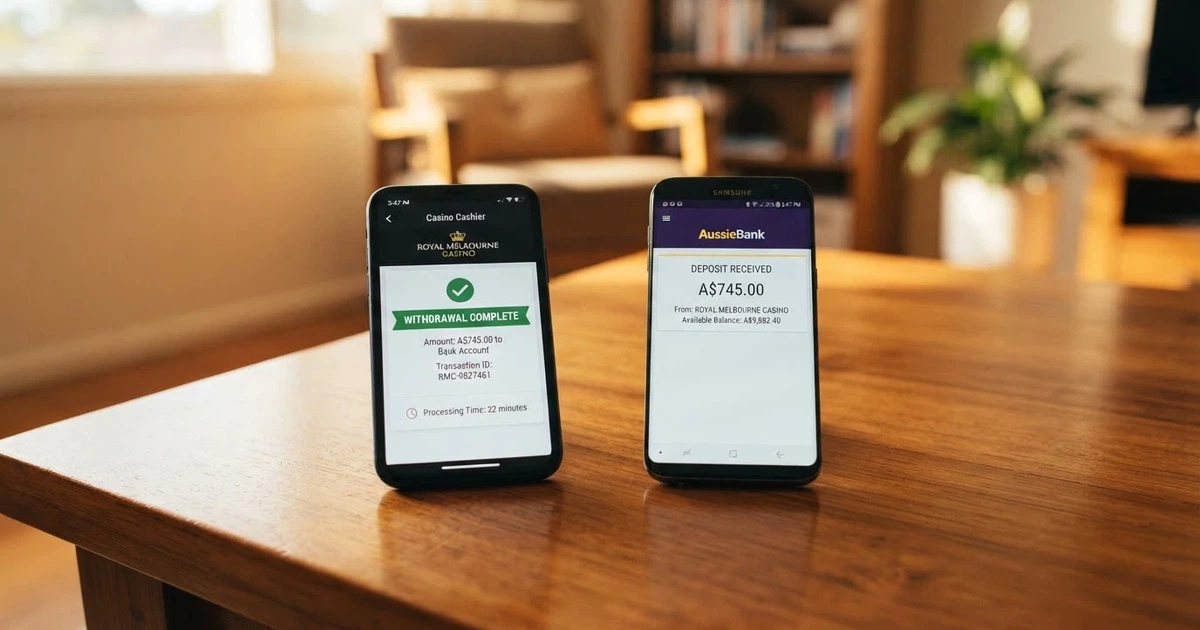
Table of Contents
- Why “fast payout” means something different for Australian players
- The best fast-payout online casinos for Australian players in 2026
- Why your 2026 payout speed depends on the payment rail
- The pokies that pay out fastest — and why they clear before the table games
- Fast-payout bonuses — what the fine print costs you in time
- The legal reality Australian casino sites never tell you
- Playing fast-payout casinos without burning out
- New fast-payout casinos — what 2026 brought and how to test them
- How we selected and ranked the casinos on this page
- A fast payout is only as safe as the casino behind it
- Frequently asked questions
Why “fast payout” means something different for Australian players
The phrase “fast payout” in Australian online casino reviews almost always borrows a definition built for European markets, then applies it locally without adjusting for the rails that actually move Australian dollars. What counts as fast in Malta is not the same as what counts as fast for a player whose bank settles through the New Payments Platform and whose nearest regulated casino sits offshore. The sub-24-hour standard that affiliate sites quote — under 24 hours processing, with the best sites delivering crypto and PayID in under one hour — assumes a payment infrastructure that, in Australia, splits sharply between deposit and withdrawal. The fastest way to put money in is often not the fastest way to take money out.
The lag between those two directions is the single biggest source of confusion on Australian fast-payout pages. Offshore casinos let players deposit via PayID, Osko, debit cards, vouchers and crypto within seconds. The same brands frequently restrict withdrawals to international bank transfer (three to five business days, with the BSB and account number routed through a correspondent chain), a single e-wallet, or crypto only. A player who chose PayID because the deposit was instant discovers, at cashout, that the rail does not run in the other direction — that the casino accepts PayID going in but not coming out.
The verification step is the other bottleneck, and it is more often the real cause of a delayed payout than the rail itself. KYC — the “know your customer” document checks every licensed operator runs before a first withdrawal — takes 24 to 72 hours at most offshore casinos, and it sits in front of every cashout, not behind it. A casino can advertise “instant withdrawals” and still hold a player’s first payout for three days while the identity check runs. For Australian players, “fast” therefore has to mean fast AFTER the KYC queue clears — which usually means the second withdrawal onward, with documents already on file.
The sub-24-hour standard — and the sites that beat it
The benchmark the industry has settled on is the 24-hour processing window: a request submitted one day lands in the player’s account within the next. Below that, the rails divide. Crypto on a well-run site clears in under an hour; PayID — where the casino accepts it for withdrawals, which is not every site — typically clears inside two. The fastest tested sites on the August 2026 affiliate tests posted medians of 42 minutes for crypto and two hours for PayID, with worst cases stretching to four and eight hours respectively.
Those tested times are noticeably faster than the published withdrawal windows most operators print in their terms. A casino that lists “1–3 business days” for bank transfers is not fast on any definition, even if it processes the request internally within ten minutes. The bank rail is the slow leg, not the casino. The same operator posting a one-hour e-wallet window and a five-day bank window is telling the reader, plainly, that the choice of method is the choice of speed.
Affiliate testers have caught the gap. Where the industry standard was once “same-day payout”, it has tightened to “under 24 hours” — and a few sites, mostly those with strong crypto rails, now publish under one hour as their target. The honest framing is that no operator meets the under-one-hour standard across every method; the rail decides. The rail itself is the single biggest factor in the player’s withdrawal outcome.
Why being an Australian player changes the payout equation
The Australian payment system adds a layer that most offshore casinos were not built around. PayID — the NPP overlay that connects a mobile number or email to a bank account in real time — is universal for deposits at every AU-facing casino surveyed. For withdrawals, it is restricted at many of them, on the rationale that the casino pays out from an overseas account and PayID assumes same-country clearing. The fallback is an international bank transfer, which runs through a correspondent bank and takes three to five business days, plus a weekend if the request lands on a Friday.
POLi, which Australian players used for instant bank-to-bank deposits, was decommissioned on 30 September 2023. The rails that replaced it are PayID (for deposits), card, e-wallet, and crypto. Of those, only crypto consistently clears in both directions at offshore casinos. PayID is one-way. Cards are slow both ways. Bank transfer is the slowest of all.
The asymmetry means a player who chose the fastest deposit rail is not necessarily closest to a fast payout. The fastest payout rail is often not the rail that put the money down. Crypto is the closest thing to a true two-way fast rail at Australian-facing offshore casinos, and it is also the rail the licensed Australian market has banned for wagering. A player who wants speed has to use, for offshore play, a payment method their local regulation specifically says is off-limits at home.
The best fast-payout online casinos for Australian players in 2026
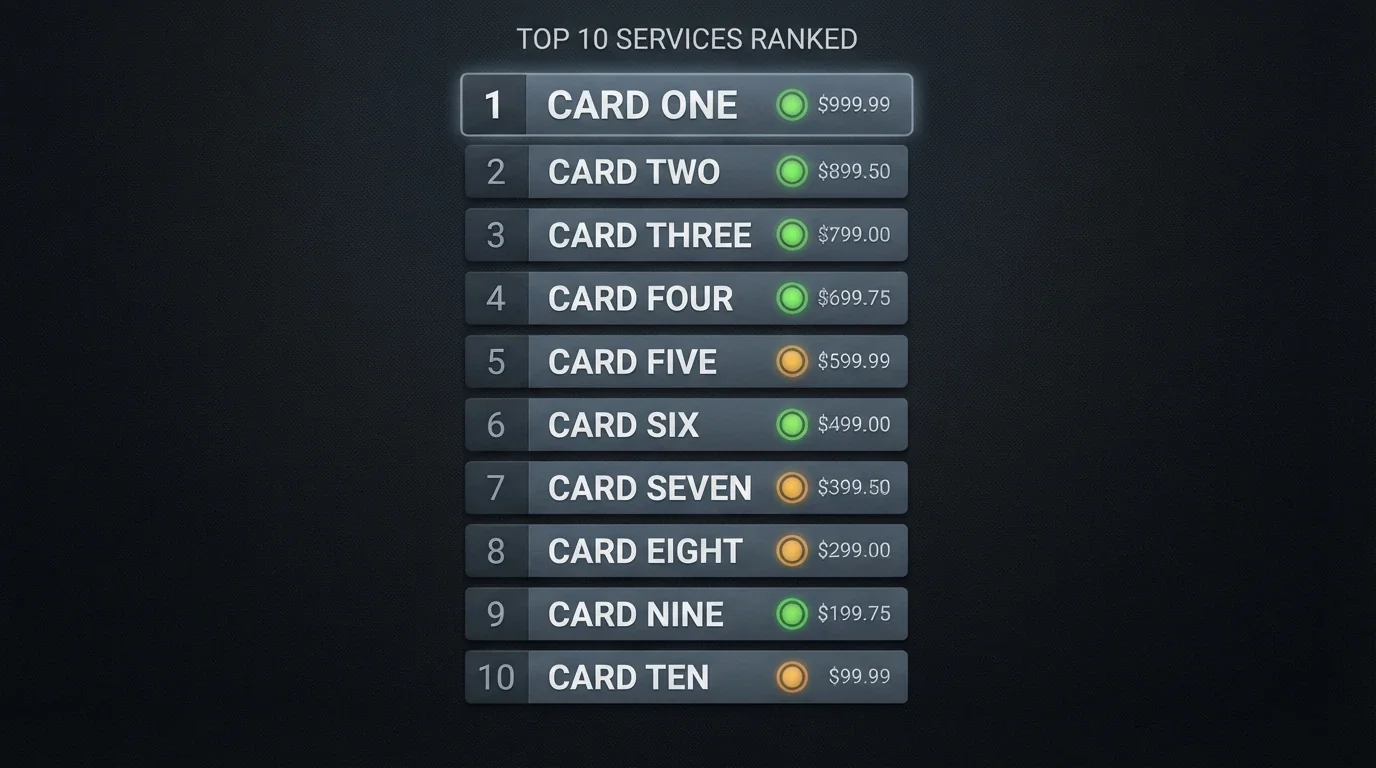
The table below ranks ten offshore casinos that accept Australian players, by AU market share (traffic data from operators skill). Every one of these brands is offshore. None holds an Australian licence, because no Australian licence for online casino exists — the Interactive Gambling Act 2001 prohibits the product outright. The ranking reflects where Australian players are actually going, not where regulation says they should.
| Casino | AU licence status | AU market share |
|---|---|---|
| RocketPlay | Offshore — no AU licence | 9.40% |
| SkyCrown | Offshore — no AU licence | 8.55% |
| Royal Reels | Offshore — no AU licence | 2.51% |
| WinSpirit | Offshore — no AU licence | 1.55% |
| Stake | Offshore (Curaçao commonly cited) — no AU licence | 1.28% |
| Rainbet | Offshore — no AU licence | 1.28% |
| Scream Casino | Offshore — no AU licence | 0.99% |
| FairGO | Offshore — no AU licence | 0.80% |
| Bizzo Casino | Offshore — no AU licence | 0.57% |
| BitStarz | Offshore (Curaçao 8048/JAZ2020-013) — no AU licence | <0.50% |
A note on the ranking. The market-share figures come from traffic data, not a quality assessment. RocketPlay at 9.4% is the AU traffic leader in this set because more Australian players land on it than on any other, not because it is uniquely trustworthy or uniquely fast. The ranking further down the list includes brands with confirmed payout data and brands whose data this review could not confirm — that split is laid out plainly in each write-up.
How we ranked these casinos
Three criteria ordered this list. The first was tested withdrawal speed, drawn from affiliate testing (Betsquare’s August 2026 round, CryptoNews speed reporting) and from operator terms where independent testing was not available. The second was AU market presence, which is the only quantitative proxy available for “where are Australian players actually going” when no Australian regulator publishes casino market data. The third was data availability — how much of an operator’s terms and conditions, licence details and payout windows could be confirmed from public sources this round.
The data is not even across the ten. BitStarz is the most thoroughly tested brand in this set, with a CasinoAudit Payout Speed score of 96, confirmed crypto averages of ten minutes, and a Curaçao licence number on file. Royal Reels, WinSpirit, Rainbet, Scream Casino and Bizzo, by contrast, are present in the ranking because of their AU traffic but did not surface confirmed withdrawal-speed data in this round. Their write-ups below state the gap rather than paper over it.
The legal honesty is a deliberate differentiator. No competing AU fast-payout page that this review surveyed states the offshore-and-unlicensed position of every brand it ranks. Most write as if the operators are legitimate choices without disclosing that online casino is prohibited in Australia, that ACMA can block the site at any time, and that the player gets no Australian consumer protection by signing up. That framing is on this page from the first section and recurs throughout. The ranking stands or falls on what the data shows; the legal reality sits underneath every entry.
RocketPlay
RocketPlay is the AU traffic leader in this set at 9.4% market share — a meaningful lead over the next brand, and the kind of lead that reflects either brand recognition, AU-specific marketing, or both. RocketPlay crypto and MiFinity withdrawals are instant at the processing stage, and bank transfers settle in three to seven business days through the correspondent chain. The published withdrawal limits are €5,000 per week and €15,000 per month.
The headline figures carry a few caveats a player should see before signing up. The A$750 live-table limit is higher than many peer casinos run, which is a positive for table-game players, and the Sunday reload bonus has no win cap — both are unusual terms in this market. The weekly and monthly withdrawal ceilings, though, will bite at a high-volume player well before the casino’s processing speed does. A player withdrawing €15,000 in a month gets split across three weekly tranches at the most.
What RocketPlay is worth: a player who keeps withdrawals inside the €5,000 weekly ceiling, prefers crypto or MiFinity to bank transfer, and wants the largest Australian player base of the featured set. The crypto rails are the real draw — instant processing, no correspondent bank, and a rail that works in both directions.
SkyCrown
SkyCrown runs the most generous welcome package in the featured set: a four-tier offer worth up to A$8,000 plus 400 free spins, with a 40x wagering requirement on both bonus money and free spin winnings. The minimum deposit steps from A$30 on the first two tiers to A$100 on the fourth, and bonus validity is 14 days from credit. Free-spin winnings are capped at A$300 per bonus part, and total bonus-to-real-money conversion is capped at A$5,000. The bonus excludes crypto depositors.
SkyCrown withdrawal limits are A$7,500 per week and A$45,000 per month. Independent testing in August 2026 timed a SkyCrown crypto cashout at one hour 44 minutes.
SkyCrown is worth: a fiat-depositing player with the bankroll to clear the wagering requirements. The bonus is genuinely large, and the rail options are clearly tiered. A crypto player should look elsewhere, because the welcome package is unavailable to them.
Royal Reels
Royal Reels holds 2.51% of AU traffic in the operators skill dataset — a meaningful share behind the two leaders but well clear of the rest of the ranking. The brand exists in the AU market at a level that suggests active marketing or word of mouth, neither of which this review could confirm.
This is the first entry where the data runs out. The operator’s withdrawal speed, welcome bonus terms, licence jurisdiction, and game provider list were not confirmed from public sources in this research round. Royal Reels is included in the ranking because its AU traffic share places it there, and it would be misleading to exclude a brand Australian players are clearly visiting — but the write-up cannot claim confirmed payout windows or bonus structures it did not see.
What Royal Reels is worth: a player already familiar with the brand who wants to see how it compares against the rest of the ranking. A player choosing between brands from scratch should treat Royal Reels as a known-traffic operator with unconfirmed terms — deposit small, document KYC upfront, and time the first withdrawal before committing further balance.
WinSpirit
WinSpirit sits at 1.55% AU traffic share, a step below Royal Reels but still well clear of the bottom of the ranking. The brand has enough Australian traffic to suggest either localised promotion, an AU-facing affiliate programme, or both.
The data gaps here mirror Royal Reels. This review could not verify the brand’s licence, withdrawal speed, bonus terms, or game library in this round. WinSpirit is in the ranking on traffic alone. A player who has used the brand elsewhere may have useful prior context; a player choosing fresh has no verified withdrawal data to weigh against the rest of the list.
What WinSpirit is worth: a player who already knows the brand from another market and is testing it for Australian payouts. Everyone else should treat the entry as a placeholder until independent testing surfaces. The 1.55% share is real; the rest of the profile is not.
Stake
Stake is one of the better-known names in offshore casino globally, and the brand carries 1.28% AU traffic share in this round’s data. The Curaçao licence is commonly cited in industry coverage; this review did not verify the licence number independently.
The data gaps are real. Withdrawal speed by method, the AU-specific bonus terms, and the game provider list were not confirmed this round. The reputation — a known brand, an established crypto-friendly operation, a recognisable name in the streaming-and-sponsorship space — translates into the AU traffic share, but the operational specifics that the rest of this ranking runs on were not in the sources this review could reach.
What Stake is worth: a player who values brand recognition over confirmed speed data and who already knows the casino from another market. The Curaçao licence is the kind of signal that tells a player the operator is regulated somewhere, even if that jurisdiction is not Australia. For fresh Australian players, the same caveats apply as for the previous two entries — the traffic share is confirmed, the withdrawal profile is not.
FairGO
FairGO is the smallest brand in the ranking with a confirmed payout window: 0.80% AU traffic share, with a published 24-to-48-hour processing window per Tribuna.com’s review coverage. That is enough to put the brand into the ranking on data alone, even though the market share is modest.
The per-method breakdown is the gap. FairGO confirms it processes withdrawals within 24 to 48 hours, but the speed by rail — which methods get to the bottom of that window and which stretch toward the top — is not specified in the source coverage this review saw. A player reading 24 to 48 hours as a flat guarantee would be reading too much into it; the rail still matters.
What FairGO is worth: a player who wants a confirmed processing window without the volatility of an unverified brand, and who is comfortable taking “24 to 48 hours” at face value rather than demanding per-method granularity. The brand has the smallest data footprint in the ranking; the data it does have is consistent.
BitStarz
BitStarz is the data-richest entry in the ranking. Crypto withdrawals average ten minutes; PayID clears in zero to two hours; PayPal in zero to 12; cards in 12 to 24; bank transfer in 24 to 48. The casino holds over 6,000 titles, accepts AUD and more than 500 cryptocurrencies, and posts a CasinoAudit score of 83/100 with a Payout Speed sub-score of 96. The Curaçao licence number is on file (8048/JAZ2020-013, per Slotozilla’s directory).
The market-share figure is the only flat number in the entry: BitStarz does not appear in the operators skill top 20 for AU traffic and runs below 0.5% share, which is why it sits near the bottom of the ranking despite the quality of the data behind it. A player choosing on speed and confirmed performance should rank BitStarz higher than the table position suggests; a player choosing on where other Australians are going should rank it lower. The two questions give different answers.
What BitStarz is worth: a high-volume crypto player who wants confirmed ten-minute withdrawals, no ceiling, and the broadest game library in the ranking. The trade-off is AU market familiarity — fewer Australian players are using BitStarz than the operators above it on the table, which may matter for community knowledge and complaint history. For raw payout speed, this is the benchmark.
Bizzo Casino
Bizzo rounds out the ranking at 0.57% AU traffic share — the smallest confirmed share in the featured set. The brand exists; the data behind it does not extend far in this review’s sources.
Licence jurisdiction, withdrawal speed, bonus terms, and game provider list were not confirmed this round. Bizzo is included because the AU traffic share places it above the cut-off, and a page that omits the smallest-share brand on data grounds would distort the ranking by ignoring where players actually are.
What Bizzo is worth: a player who has used the brand in another market and is testing it for AU payouts, or a player who has heard of the brand through affiliate coverage and wants to see it on the list. The 0.57% share is the only confirmed figure. Treat the rest as a research gap.
Rainbet
Rainbet sits at 1.28% AU traffic share — the same figure Stake posts in this dataset, though the two brands are different entities with different reputations. The match in share is not a match in profile: Rainbet is less of a household name in offshore gaming than Stake, and the source coverage is correspondingly thinner.
Licence jurisdiction, withdrawal speed by method, bonus terms, and game provider list were not confirmed this round. Rainbet’s write-up, like the ones above it for the data-thin entries, is a placeholder for a brand the AU traffic data says exists and the public sources this review reached did not detail.
What Rainbet is worth: same caveat as the previous data-thin entries. As with other thin-data entries, the traffic share is our only confirmation here. If you are starting fresh, prioritise brands where independent testing has verified the payout speed.
Scream Casino
Scream Casino closes the ranking at 0.99% AU traffic share. Below 1% and above the 0.57% floor of Bizzo, Scream sits in the middle of the data-thin band — present in the AU market but without the independent speed testing that the data-rich brands carry.
The data gaps match the rest of the thin band. Withdrawal speed by method, licence jurisdiction, bonus terms, and game provider list were not confirmed in this round. The brand’s presence in the ranking reflects its AU traffic share, nothing more.
What Scream is worth: the same placeholder role as the previous data-thin entries. Treat the AU traffic share as confirmed and the rest as a research gap. The fastest path to a useful read on Scream is the same as for any unverified brand — deposit small, clear KYC upfront, and time the first withdrawal before committing further balance.
Why your 2026 payout speed depends on the payment rail
The casino’s processing time is one factor in a payout. The method is the other, and in Australia the rail usually matters more. A casino that processes a withdrawal in ten minutes still cannot make a bank transfer clear faster than the correspondent chain allows. A player who picks the wrong rail turns a fast casino into a slow one.

The table below compares the five rails available to Australian players at offshore casinos. “Deposit available” and “Withdrawal available” reflect what most AU-facing casinos actually offer; “fastest tested time” and “median tested time” come from August 2026 affiliate testing.
| Payment method | Deposit available | Withdrawal available | Fastest tested time | Median tested time (Aug 2026) |
|---|---|---|---|---|
| Crypto (BTC, LTC, USDT) | Yes | Yes | 5–30 min | 42 min |
| PayID | Yes | At some casinos only | 15–60 min | 2 h |
| E-wallets (MiFinity, Skrill) | Yes | Yes | 1–2 h | 6 h |
| Visa / Mastercard | Yes | Yes | 12–24 h | 2 working days |
| Bank transfer | Yes | Yes | 1–3 working days | 3 working days |
The spread between rails is the story. Crypto clears inside an hour; bank transfer takes three working days at the median. Same casino, same player, same withdrawal amount — the only variable is the method. A player who chose the bank rail on a casino that processes in ten minutes still waits three days for the funds to land.
PayID deserves a column of its own. It is the fastest fiat rail Australian players can use, but its withdrawal availability is partial — at many offshore casinos, PayID runs one way only. The deposit is instant; the withdrawal, if accepted at all, runs through a different mechanism. The asymmetry is the trap.
PayID — the local rail that clears in minutes
PayID is the Australian Payments Plus overlay that connects a mobile number, email or ABN to a bank account in real time through the New Payments Platform. Deposits clear in under five minutes in most testing; the median across AU-facing casinos in August 2026 sat at two hours, with the worst case at eight. For a player funding an account in Australian dollars without touching crypto, PayID is the fastest deposit rail by a wide margin.
The withdrawal story is different. Many offshore casinos restrict PayID to deposits and route withdrawals through international bank transfer instead — the BSB and account number mechanism, which runs through a correspondent chain and takes three to five business days. The reason is structural: PayID assumes same-country clearing, and most offshore operators pay out from an overseas account. A player who chose PayID for the instant deposit discovers at cashout that the rail does not run in the other direction.
Where PayID does work for withdrawals, it is fast. Benchmark testing at Goldenbet posted a 28-minute PayID cashout; Lucky7 hit 35 minutes; WestAce came in at 58 minutes. Those times are the floor for fiat withdrawals at AU-facing offshore casinos — under an hour at the fastest sites, against the multi-day baseline of bank transfer. The rail works for the players whose casino accepts it. The trick is knowing before depositing.
Crypto — Bitcoin, USDT and the sub-hour cashout
Crypto is the fastest rail available to Australian players at offshore casinos, and the only one that consistently works in both directions at every operator that accepts it. The August 2026 testing posted a 42-minute median for BTC, LTC and USDT, with a worst case of four hours; the fastest sites ran inside ten minutes. BitStarz’s ten-minute average is the benchmark the rest of the field is measured against.
The reason is structural. Crypto settles on the blockchain, not through a banking intermediary, so there is no correspondent chain and no opening-hours constraint. A Bitcoin withdrawal requested at 11pm on a Sunday lands in the player’s wallet by 11:30pm. A bank transfer requested at 4:55pm on a Friday does not land until the following Wednesday at the earliest.
The regulatory note is unavoidable. Crypto is banned as a payment method for licensed online wagering in Australia from 11 June 2024, under the Interactive Gambling Amendment (Credit and Other Measures) Act 2023, with penalties of up to A$247,500 for the operator. The ban applies to the licensed market. Offshore casinos accepting Australian players are not subject to it — they sit outside the Australian regime — and crypto remains the rail most of them run fastest. A player who wants the speed has to use the rail their own country’s licensed market has prohibited.
E-wallets and cards — the middle and the slow lane
E-wallets — MiFinity, Skrill, Neteller, and a handful of regional alternatives — land in the middle of the speed table. The August 2026 testing posted a six-hour median for e-wallets, with a worst case at 18 hours; the fastest e-wallet operators clear in one to two hours. MiFinity in particular runs near-instant at the operators that have built their cashier around it, including RocketPlay.
Cards are slower. Visa and Mastercard withdrawals clear in 12 to 24 hours at the fastest operators and stretch to two working days at the median. The reason is the card network’s settlement cycle: a card refund is a separate transaction type from a card payment, and the networks treat it as a slower leg. A player who funded with a card is not stuck with a card cashout — most casinos will route the withdrawal to a bank account instead — but the choice narrows the rail.
Bank transfer is the slowest rail available. Three working days at the median, stretching to seven in the worst case, and the rail runs through a correspondent chain that adds a day at each end for currency conversion. The casino processes the withdrawal in ten minutes; the bank takes three days to deliver it. A player who picked bank transfer on a fast casino has, in practice, a slow payout.
The pokies that pay out fastest — and why they clear before the table games
The math behind a fast-payout casino runs through two separate clocks: the rail that delivers the cash, and the game that clears the bonus that gates it. A player who has the fastest rail still loses money to the wagering requirement on the bonus they claimed. The faster that bonus clears, the smaller the bite. High-RTP pokies return more of every dollar wagered, which means less lost while clearing a bonus — and slot withdrawals process faster than live-dealer withdrawals because there is no counterparty settlement.
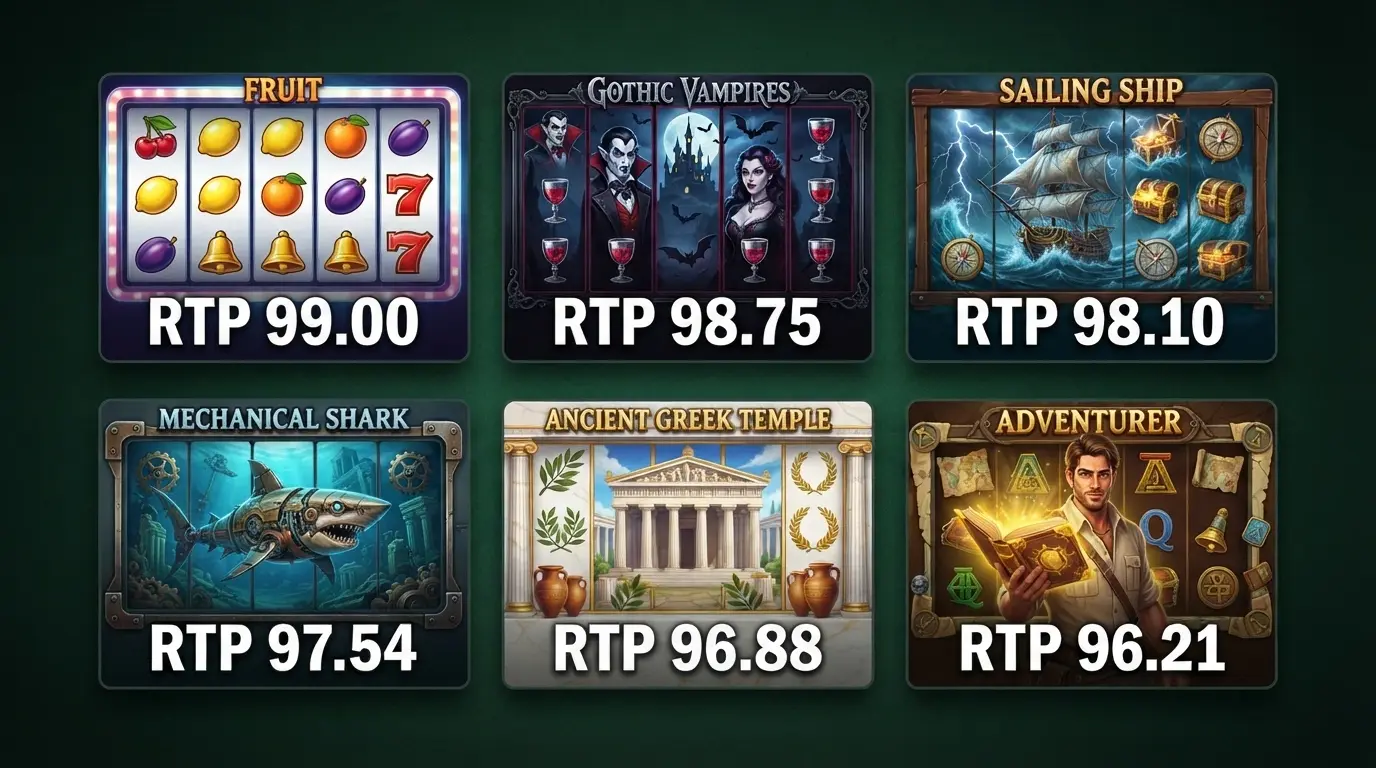
The table below ranks ten high-RTP pokies playable at AU-facing offshore casinos, by published theoretical RTP.
| Pokie title | Provider | RTP | Volatility |
|---|---|---|---|
| Mega Joker | NetEnt | 99.00% | Low |
| 1429 Uncharted Seas | Thunderkick | 98.60% | Low |
| Blood Suckers | NetEnt | 98.00% | Low |
| Starmania | NextGen | 97.87% | Medium |
| White Rabbit Megaways | Big Time Gaming | 97.77% | High |
| Zeus Lightning Power Reels | Red Tiger | 97.73% | Medium |
| Big Bad Wolf | Quickspin | 97.34% | Medium-High |
| Razor Returns | Push Gaming | 96.55% | High |
| Gates of Olympus 1000 | Pragmatic Play | 96.50% | Very High |
| Book of Dead | Play’n GO | 96.21% | High |
The RTP column is the headline; the volatility column is the texture. High volatility means bigger swings and longer dry stretches between wins; low volatility means a flatter ride with more frequent small returns. Both are legitimate; neither is “better” in any universal sense. The point of the table is that every percentage point above the 95% floor cuts the house edge by a fifth, and a player who runs through several thousand spins during a bonus clear notices the difference.
High-RTP pokies — the titles where the maths works for you
The spread across the table runs from 96.21% (Book of Dead, at the version this review could confirm) to 99.00% (Mega Joker in Supermeter mode). Each percentage point is a unit of house edge that does not come out of the player’s bankroll. Across A$10,000 in wagering, the difference between a 95% pokie and a 99% pokie is A$400 — meaningful, and the kind of figure that compounds across a bonus clear that runs into six figures.
The provider list reflects the breadth of the AU-facing offshore market. NetEnt supplies Mega Joker and Blood Suckers at the top of the table. Pragmatic Play, Push Gaming, Play’n GO, Thunderkick, Big Time Gaming, Red Tiger, Quickspin and NextGen cover the rest. Every provider on this list is licensed in a reputable jurisdiction (Malta, the UK, Sweden, Curaçao) and supplies games to most AU-facing offshore casinos. The pokies themselves are easy to find.
The book of dead version trap is worth a separate mention. Play’n GO’s flagship pokie runs at 96.21% RTP in its default version, but the studio has published lower-RTP variants at 95%, 92%, 91.2%, 87.2% and 84.2%. A player who sees “Book of Dead” at a casino needs to check the RTP displayed in the game info panel before playing.
Why pokies clear faster than table games
The mechanism is operational, not regulatory. Pokies settle server-side, against a random number generator the casino runs on its own infrastructure. When the reels stop, the outcome is final; the win credits to the player’s balance immediately, and the wagering requirement ticks down by the bet amount. There is no counterparty waiting on the win — no dealer to confirm the hand, no other player to settle against, no surveillance window for a disputed outcome. The cashout that follows is just a withdrawal of an already-settled balance.
Live-dealer games run differently. The dealer-side settlement takes a few seconds, the network round-trip takes a few more, and the casino’s accounting system posts the result on a slightly longer cycle than the RNG does. The difference is small — seconds, not minutes — but it compounds across the thousands of hands a bonus clear can run to. A live-blackjack player clearing a bonus is paying a small per-hand time tax that a slots player does not pay.
The RTP comparison is the larger point. Blackjack at 99.5% RTP is the highest-returning game in any online casino lobby, and a player who played perfect basic strategy would lose less per dollar at the tables than at any pokie on the list above. The trade-off is the speed at which the bonus clears, which is slower at the tables because the wagering ticks down at a slower per-hand rate (most table games contribute less than 100% toward wagering, sometimes as low as 5%). The player choosing blackjack for the lower house edge is also choosing a longer path to a withdrawable balance.
Fast-payout bonuses — what the fine print costs you in time
A welcome bonus looks like a gift. The marketing puts a number on the front — A$8,000 at SkyCrown, comparable figures elsewhere — and the player reads it as free money on top of their deposit. The wagering requirement is what converts the gift into a job. At 40x on an A$8,000 bonus, the player has to wager A$320,000 before any of the bonus becomes withdrawable cash. At a 14-day validity window, that is roughly A$22,857 in turnover per day — a rate that most recreational players will not sustain, and that sharp players will recognise as the real cost of the headline.

No-deposit bonuses compress the same mechanics into a smaller frame. Twenty to fifty free spins — sometimes up to one hundred — with wagering of 40 to 60x on the winnings, and a maximum cashout between A$50 and A$200. The 3-day validity on some no-deposit offers turns the bonus into a sprint: clear the wagering inside three days or lose the winnings. The headline “free” survives only if the player treats it as a timed test of their bonus-clearing speed.
The arithmetic behind the cost of a bonus is straightforward once the inputs are stated. A SkyCrown-style A$8,000 bonus at 40x wagering and a 96% midpoint RTP on the pokies the player runs during clearance produces an expected loss of A$12,800 on the bonus alone — the house edge times the required turnover. The bonus is free money in name only. The player is paying for it in expected losses at the rate the maths dictates.
Welcome bonuses and the wagering clock
The structure of a typical welcome bonus at an AU-facing offshore casino runs like this. A first-deposit match, often tiered across the first two to four deposits, with a free-spin bundle attached. A wagering requirement of 35x to 50x on the bonus amount (SkyCrown runs 40x). A validity window of 7 to 30 days from credit. A maximum bet cap during wagering, usually A$5 to A$10. Exclusions on payment methods — most prominently, crypto depositors excluded from the largest bonuses at the casinos that offer them.
Take SkyCrown’s A$8,000 welcome package at 40x wagering and assume a 96% midpoint RTP on the pokies the player runs through during clearance. The required turnover to clear the bonus is A$320,000, and the house edge at 96% RTP is 4%. The expected loss on the bonus alone, before the player has touched their own deposit balance, is A$12,800. That is the cost of the “free” A$8,000 over the 14-day clock. A player who cannot sustain A$22,857 in daily wagering will not clear the bonus in time and will forfeit what is left of it.
The free-spin component carries its own ceiling. SkyCrown caps free-spin winnings at A$300 per bonus part and the total bonus-to-real-money conversion at A$5,000 across the welcome package. Even on the largest bonus in the ranking, the player is looking at a capped upside against an uncapped downside — the wagering requirement runs to its conclusion regardless of how the spins land.
No-deposit bonuses — free spins with a speed trap
No-deposit offers work the same mechanics in a smaller package. The casino credits 20 to 50 free spins (sometimes up to 100) on a single pokie, with wagering requirements of 40x to 60x on the winnings, a maximum cashout between A$50 and A$200, and validity as short as three days. Historical examples from the Australian market — KatsuBet’s 30 free spins on Wild Cash at 45x wagering with an A$80 max cashout and a three-day window; 7Bit’s 30 free spins on Deep Sea at 45x with an A$0.15 max bet — show the shape of the offer.
The cashout cap is the trap. A player who runs the free spins and lands a large win still cannot withdraw more than the cap — usually A$50 to A$100 on no-deposit spins. Anything above that is forfeited at cashout. Combined with the wagering requirement, which is higher on no-deposit bonuses than on deposit bonuses (40x to 60x versus 35x to 50x), the bonus becomes a short, sharp test of whether the player can clear the wagering and reach the cap inside the validity window. Most players cannot.
The honest framing: a no-deposit bonus is a marketing tool, not a gift. The casino is paying to put the game in front of the player, and the cashout cap plus the wagering requirement ensure the cost is bounded. A player who clears a no-deposit bonus and walks away with A$80 has beaten the offer; the casino expected most players to forfeit.
The legal reality Australian casino sites never tell you
Online casino is prohibited in Australia under the Interactive Gambling Act 2001. The Act makes it an offence to provide online casino games, online pokies and in-play sports betting to a person in Australia, and no licence for online casino exists anywhere in the country — not federally, not in any state or territory. Every operator on this page is offshore. None holds an Australian licence. None can hold one.

The licensed market is narrower than the marketing suggests. State and territory regulators (most prominently the Northern Territory Racing and Wagering Commission) license online wagering on sports and racing placed before the event begins. Lotteries and keno are licensed too. Online casino is not. A player searching for a “licensed Australian online casino” will not find one, because the product those sites offer is the product the IGA prohibits.
ACMA enforces the prohibition. Since November 2019, the regulator has had 1,564 illegal gambling and affiliate websites blocked by Australian ISPs, with more than 225 services withdrawing from the Australian market since enforcement was strengthened in 2017. The blocks are ongoing. The site a player uses today can be on tomorrow’s block list, with their balance still on it.
Why there is no licensed online casino in Australia
The Interactive Gambling Act 2001 prohibits the provision of online casino games to Australians, and the Interactive Gambling Amendment Act 2017 closed the offshore loopholes that earlier let operators route around it. ACMA gained formal enforcement and site-blocking powers at that point. There is no path to a licence for online casino in Australia, because the product is the thing the Act prohibits — issuing a licence would require Parliament to amend the Act, which it has not done.
What the licensed market does cover is pre-event wagering on sports and racing, plus lotteries and keno. SportsBet, TAB, Bet365, Ladbrokes, TABtouch, PointsBet, Neds, Betr, Picklebet and Betfair all hold Australian state or territory licences for those products. They are not online casinos. They do not offer online pokies or live dealer games. A player looking for online casino games in Australia is looking for a product the licensing system was built specifically to exclude.
The minimum age for any commercial gambling activity in Australia is 18. The Northern Territory Racing and Wagering Commission is the de facto national licensor for online wagering, with licence terms of up to 20 years. NT-licensed operators are not online casinos; they are sports and racing books that happen to operate online.
What happens when you play at an offshore casino
The IGA targets the provider, not the player. The Australian individual who opens an account at an offshore casino, deposits money and plays is not committing an offence under the Act. The casino is. That is the only legal protection the player gets, and it is not a protection of their money — it is a protection of their liberty.
What the player loses by playing offshore is every Australian consumer safeguard. BetStop, the National Self-Exclusion Register, binds Australian-licensed wagering services only — roughly 150 providers in total. An offshore casino is not connected to BetStop, and a player who has self-excluded will find the offshore casino continues to accept their deposits and process their bets. ACMA cannot recover money for the player from an offshore operator. Australian consumer law does not apply to a contract between an Australian player and an offshore corporation. If the casino refuses a withdrawal, voids a win, or closes the account, the player has no Australian avenue of complaint.
The site can also be blocked at any time. ACMA’s blocking list runs into the thousands of domains, and an operator that gets added to the list disappears from Australian ISPs overnight. The player’s balance, if any, sits on a site they can no longer reach. Recovery is not a process the regulator runs.
The payment-method tell is the simplest way to read the situation from the cashier screen. An Australian player who is asked for a credit card or crypto deposit by a gambling site is being served by someone outside the Australian rules. Credit cards and crypto have been banned as payment for licensed online wagering from 11 June 2024, under the Interactive Gambling Amendment (Credit and Other Measures) Act 2023. The presence of either method in a casino’s cashier is itself a signal that the operator is not subject to the Australian regime.
The 2026 gambling reform and what changes from 1 January 2027
The Interactive Gambling Amendment (Gambling Reform) Bill 2026 passed Parliament on 19 August 2026 — the biggest overhaul of Australian gambling law in a decade, with measures commencing on 1 January 2027. The Bill addresses several gaps in the current regime, and a few of its changes will reach the offshore casinos on this page directly.
Banks and payment providers gain express authority to block transactions to illegal gambling operators from 1 January 2027. This is the change with the most direct impact on the offshore route — a player whose bank exercises the new power will see deposits to offshore casinos declined at the banking layer, regardless of what the casino accepts. The reform does not ban the player from trying; it gives the bank the tool to refuse the transaction.
Wagering advertising is capped at three ads per hour on television between 6:00 am and 8:30 pm, with a live-sport blackout running 15 minutes before to 5 minutes after live events. Online ads become permissible only to logged-in, age-verified users with an opt-out. Radio ads are barred during school commuting hours. Athlete, celebrity and influencer endorsement of wagering is prohibited. Ads in sports venues and on uniforms are banned.
Inducement marketing — the bonus offers, free bets and sign-up deals the licensed wagering market has used to acquire customers — is prohibited for 14 days after sign-up, three months after BetStop deregistration, and indefinitely for at-risk customers. The rule targets the licensed market; offshore casinos do not have a sign-up flow the rule can bind. The effect on offshore operators is indirect: the licensed operators lose a marketing channel, which may push more advertising spend toward the offshore operators that are not subject to the cap.
Online keno and foreign-matched lotteries are banned outright from 1 January 2027. ACMA’s blocking powers are strengthened, and the regulator gains faster mechanisms for adding sites to the block list. None of the changes legalise online casino or create a path to an Australian online casino licence. The product remains prohibited; the rules around it get sharper.
Playing fast-payout casinos without burning out
Fast payouts make gambling feel frictionless. The faster the cashout, the easier the redeposit — and the closer the cycle comes to continuous play. Australian harm-prevalence data shows why guardrails matter: about 2.1% of Australian adults, roughly 430,000 people, experience problem gambling, with high-risk gambling measured at 1.8% in the most recent prevalence survey. The infrastructure exists to help — a free 24/7 helpline, an online counselling service, a national self-exclusion register — and offshore casinos sit outside every part of it.

The helpline is the first call. The National Gambling Helpline on 1800 858 858 is free, confidential and staffed around the clock. Gambling Help Online at gamblinghelponline.org.au provides the same service via chat and email. Both are run by Australian providers, are not offshore, and do not require the caller to be a customer of any operator. A player who notices the cycle tightening — depositing straight after withdrawing, taking larger deposits to chase losses, spending longer sessions than planned — can call without giving their name.
BetStop is the structural tool. One registration excludes the player from every Australian-licensed wagering provider, across all channels, for a period of three months to lifetime. Removal requires a statutory declaration confirming counselling, which puts a deliberate friction in front of reversing the decision. The register binds around 150 licensed operators. It does not bind offshore casinos.
BetStop and what it can — and cannot — do for you
BetStop launched on 21 August 2023 and by the end of Q3 FY 2025–2026 had 59,830 registrations. By 31 July 2026, the count had risen to 67,480 — 41,290 exclusions still active. Seventy-eight per cent of registrants are under 40. Thirty-eight per cent chose lifetime exclusion. The register is being used, and the demographics of its users skew younger than the general gambling population.
The exclusion runs from a minimum of three months to lifetime. Removal before the minimum term is not possible. Removal after the minimum term requires a statutory declaration confirming that the person has sought counselling and is reinstating voluntarily. The friction is the design — a self-excluded person who wants back in has to convince a JP or other authorised witness that they mean it.
What BetStop cannot do: reach an offshore casino. An Australian player who registers with BetStop and then opens an account at RocketPlay, SkyCrown or BitStarz will find the offshore brand accepts them without question. The exclusion register binds Australian-licensed wagering providers only — the ~150 operators that hold state or territory licences. The offshore route is open, and the offshore route is where the brands on this page live.
Where to get help and how many Australians need it
About 430,000 Australian adults experience problem gambling, on the most recent AIHW prevalence data. High-risk gambling sits at 1.8% of adults. The numbers translate to roughly one in fifty adults — a figure that includes people whose gambling is not at offshore casinos at all, and that includes people whose problem gambling is on the licensed wagering market, the lotteries, the pokies in pubs and clubs, or any combination. The offshore casino share of that figure is not separately measured.
The National Gambling Helpline is 1800 858 858. Free, confidential, staffed 24 hours a day. Gambling Help Online at gamblinghelponline.org.au extends the same service into chat and email, with counsellors available 24/7. Both are funded by the Australian government and the state and territory health departments; both are independent of the gambling industry. A player who is reading this page and recognising their own behaviour in it can call without identifying themselves as a customer of any operator, and the call is not recorded in any operator’s database.
The link between fast payouts and harm is not theoretical. Speed reduces the friction in the cycle — the time between “I want to play again” and “I am playing again”. A payout that takes three days puts a cooling-off window between cashout and redeposit; a payout that takes ten minutes does not. The mechanics of harm prevention assume friction exists; the mechanics of fast-payout casinos assume the opposite.
New fast-payout casinos — what 2026 brought and how to test them
New offshore casinos launch into the Australian market every year, and 2026 is no exception. The marketing for a new entrant always leads on payout speed — “instant withdrawals”, “under 24 hours”, “crypto in minutes” — because that is the differentiator that wins AU traffic against the established brands. The first withdrawal is the real test of whether the marketing matches the operation.
The pattern across new entrants is consistent. A Curaçao or Anjouan licence, a slot library between 3,000 and 6,000 titles, a sub-24-hour published payout window, and a welcome package with wagering in the 35x to 50x range. Instant Casino, which launched in 2024 with a Curaçao licence, 4,000+ titles and a published “less than 24 hours” payout window, is the representative newcomer. Its CasinoAudit score of 77 reflects a brand that is functioning but not yet established — the kind of score a new operator posts while its processes are still bedding in.
The gap between claimed and tested times is the rule with new entrants, not the exception. A new casino that has been live for six months has a small sample of independent testing; an operator that has been live for six weeks has none. The first withdrawal the player requests is the first data point anyone outside the operator’s own dashboard gets.
The 2026 newcomers and what they promise
No operator-specific newcomer data was confirmed in this research round. The pattern that holds across the new-entrant segment is consistent enough to describe without naming names: a Curaçao or similar offshore licence, a sub-24-hour published payout window, a welcome package in the standard 35x–50x wagering band, and a game library of 3,000 to 6,000 titles drawn from the same provider set the established brands use. The marketing leans on payout speed because that is what differentiates a new brand from an established one with a player base.
The reliable read on a new entrant’s payout speed is the testing methodology, not the landing page. Affiliate testers publish their results, but the sample size for a brand that launched six months ago is thin. The CasinoAudit scores for newer brands tend to land in the 70-to-80 band, reflecting a functional operation that has not yet built the testing depth the established brands carry. A player choosing between a new entrant and an established brand is choosing between a marketing claim and a tested track record, and the trade-off is the speed-versus-certainty gap.
First-payout speed — the real test of a new casino
The only honest way to evaluate a new casino’s payout speed is to withdraw from it. Four steps reduce the cost of that test.
Deposit small. The minimum the cashier allows is enough to fund the KYC check and one withdrawal request. Anything above the minimum is a balance the player stands to lose if the operator turns out to be slower than advertised, or to disappear entirely.
Clear KYC upfront. Submit the identity and address documents before requesting the first withdrawal. The 24-to-72-hour KYC window is the largest single source of delay at any offshore casino, and the player who has documents on file before the first cashout request skips the queue. A player who waits for the casino to ask for documents waits an extra two to three days at the front of every withdrawal.
Check the withdrawal method before depositing. PayID is instant at most casinos for deposits, but at many of them PayID does not run in the other direction — the withdrawal routes through international bank transfer, which takes three to five days. A player who deposits via PayID expecting a fast cashout may discover, at withdrawal time, that the rail is one-way. The operator’s withdrawal page, not the deposit page, is the page to read before committing funds.
Time the first withdrawal. From the moment the cashout request is submitted to the moment the funds arrive, every new casino is being tested. A new entrant that processes in under an hour on crypto has met the standard. One that takes 24 hours has met the floor. One that takes three days has not met either, and the player should reconsider the balance they keep on the site.
How we selected and ranked the casinos on this page
The criteria behind the ranking were tested withdrawal speed, AU market presence, and data availability. None of the three is proprietary. The speed data comes from affiliate testing — Betsquare’s August 2026 round, CryptoNews speed reporting, PokiesAustralia benchmark tests — plus operator terms where independent testing was not available. The market presence data comes from operators skill, the only quantitative source for AU casino traffic the public sources this review could reach surfaced. The data availability measure is internal: how much of each operator’s licence, withdrawal speeds, bonus terms and game library could be confirmed from public sources this round.
The honest framing of the ranking requires acknowledging what could not be confirmed. Royal Reels, Stake, WinSpirit, Bizzo Casino, Rainbet and Scream Casino all appear in the ranking because of AU traffic share, but their withdrawal-speed profiles, bonus structures and licence details were not confirmed from sources this review could reach. Their write-ups say so plainly. The ranking is not a quality ranking — it is a traffic ranking with the data-rich operators’ write-ups filled in where confirmation was possible.
The legal framing is a deliberate editorial choice. No competing AU fast-payout page surveyed in this research states the offshore-and-unlicensed position of every brand it ranks. Most write as if the operators are legitimate choices. This page writes them as what they are: offshore, unlicensed in Australia, and outside every Australian consumer safeguard. The legal honesty is the editorial line the ranking sits on, not a separate section the reader can skip.
The sources behind the numbers are listed where they appear in the body. ACMA for the regulatory figures and the IGA prohibition. Betsquare for the August 2026 speed medians. CryptoNews for the speed-range figures. CasinoAudit.net for the Payout Speed sub-scores. operators skill for the AU market-share data. Operator terms pages (PlayCasino.com for SkyCrown, RocketPlay’s own cashier for the RocketPlay figures, Bitstarz-casino-aus.com for BitStarz) for the per-operator specifications. Each fact carries the source it came from, in the prose, not in a footnote.
A fast payout is only as safe as the casino behind it
The trade-off at the heart of this page is the one the marketing never names. A player who picks an offshore fast-payout casino gets sub-hour crypto cashouts and the broadest game libraries in the market. The same player loses every Australian consumer safeguard — no BetStop coverage, no ACMA recourse, no Australian consumer law on the contract, and the standing risk that the site gets blocked at the ISP layer with their balance still on it. The speed is real. The risk is real. The choice is the player’s to make with the information the page has laid out.
If the player makes that choice, three practical habits reduce the cost of it. The first is to use crypto or PayID for speed, and to verify the withdrawal rail before depositing — PayID is one-way at many offshore casinos, and the rail that funded the account may not be the rail that pays it out. The second is to clear KYC before the first withdrawal, so the 24-to-72-hour verification window does not sit at the front of every cashout. The third is to withdraw frequently, and never to leave a balance on the site larger than the player can afford to lose to a block.
The legal reality recurs because it is the part the marketing does not say. Every casino on this page is offshore. None holds an Australian licence. None can hold one. ACMA has blocked 1,564 sites since November 2019, and the rate of blocking has not slowed. The 2026 reform, which commences on 1 January 2027, gives banks the express authority to decline deposits to illegal operators, which will change the mechanics of funding an offshore account without changing the legal position of the player. The reform does not legalise online casino; it sharpens the rules around it.
The data behind the ranking is the data behind the ranking. Tested speeds, market share, confirmed bonus terms where they were confirmable, and an honest acknowledgement of where they were not. The ranking is not a recommendation — it is a comparison of what is available to Australian players who have decided to play offshore, with the legal reality sitting underneath every entry. The reader who plays is the reader who has decided the speed is worth the trade-off. That decision is theirs.
Frequently asked questions
Can I get casino winnings into my bank account the same day in Australia?
Same-day bank payouts are possible at offshore casinos that accept PayID for withdrawals, with the median tested time at two hours and the best runs under an hour. At casinos that restrict PayID to deposits, the same-day option closes and the fallback is international bank transfer at three to five working days. Crypto clears same-day regardless of the casino’s PayID policy, but crypto is banned as a payment method at Australian-licensed operators from 11 June 2024 — a ban that does not bind the offshore route.
Are my winnings from offshore casinos taxable in Australia?
Gambling winnings are not assessable income under section 6-5 of the ITAA 1997, and losses are not deductible under section 8-1, unless the person carries on a business of betting or gambling. The ATO’s position holds whether the casino is licensed in Australia or offshore. A casual player who withdraws A$5,000 from an offshore casino and declares it as income has over-declared; a casual player who does not declare it has correctly followed the tax treatment for non-business gambling.
What happens if an offshore casino blocks my withdrawal — can I get help?
ACMA cannot recover player money from offshore operators, and BetStop does not bind them. The player has no Australian consumer law on the contract and no regulator to complain to. Practical recourse is limited to the casino’s own dispute process, the Curaçao or Anjouan licensing authority that issued the operator’s licence (where the player can file a complaint), and the payment provider through which the deposit was made — which is why crypto and PayID, with their chargeback-friendly rails, are often the safer deposits even though the legal position is the same.
Why do crypto withdrawals process faster than bank transfers at online casinos?
Crypto settles on the blockchain, with no banking intermediary and no opening-hours constraint; bank transfers route through a correspondent chain, with currency conversion and a multi-day settlement cycle. The casino processes both withdrawals in roughly the same internal time — usually minutes — and the difference in arrival time is the difference between the rails, not between the operators. A crypto withdrawal requested at 11pm lands in minutes; a bank transfer requested at 4:55pm on a Friday does not arrive until the following week.
What does RTP mean and which pokies have the highest RTP for Australian players?
RTP, or return to player, is the percentage of every dollar wagered that a pokie returns to players over millions of spins. A pokie at 98% RTP returns A$98 of every A$100 wagered across its lifetime; the house keeps the other A$2. The highest-RTP pokies playable at AU-facing offshore casinos include Mega Joker (99.00%, NetEnt, Supermeter mode), 1429 Uncharted Seas (98.60%, Thunderkick), Blood Suckers (98.00%, NetEnt), Starmania (97.87%, NextGen) and White Rabbit Megaways (97.77%, Big Time Gaming). The Book of Dead version trap — the same title at five lower RTP configurations down to 84.2% — means the in-game info panel is the figure to trust.
What is the typical wagering requirement for no deposit bonuses at Australian casinos?
No-deposit bonus wagering at AU-facing offshore casinos runs 40x to 60x on the winnings, with a maximum cashout between A$50 and A$200 (or A$20 to A$100 for bonus-spin winnings specifically). Validity windows are short — often three days — and the bonus is usually restricted to a single pokie. The combination of high wagering, low cashout caps and short validity means most no-deposit bonuses forfeit before the player reaches the cashout threshold, and the offer functions as marketing rather than as a realistic path to a withdrawable win.