
Tether USDT Casinos for Australian Players: What Reachable Means Without a Licence
The term “Tether casino” covers a sprawling, mostly unmarked corner of the gambling internet. For an Australian looking for one, the question isn’t whether these sites exist — they do, and they pull in genuine traffic from this country. The question is what sits underneath that reach, because almost every USDT casino an Australian can find in 2026 sits on the wrong side of Australian law. This page works through what that means in practice: which operators Australian players actually reach, how USDT deposits and withdrawals behave, what the bonuses really cost once the wagering is done, and what protections a player gives up the moment they move offshore.

Current as of 28 October 2026 · Licence claims verified against the ACMA register, the Interactive Gambling Act 2001, and the Interactive Gambling Amendment (Gambling Reform) Bill 2026.
Table of Contents
- What a Tether Casino Actually Is (and Why Australians Use USDT)
- How USDT Deposits and Withdrawals Work at Offshore Casinos
- Australia’s Most-Reached USDT Casinos, Ranked for 2026
- Why Every USDT Casino an Australian Can Reach Is Offshore
- Responsible Gambling Tools That Do (and Don’t) Protect You
- USDT Casino Bonuses — What the Fine Print Actually Costs You
- Pokies, Blackjack and Live Dealer: The Games You Can Play With USDT
- No-KYC Play and Crypto Privacy at USDT Casinos
- Playing USDT Casinos on Mobile
- New USDT Casinos Worth Watching
- How We Chose and Ranked These USDT Casinos
- What Australia’s USDT Casino Reality Means for Your Next Move
- Frequently Asked Questions
What a Tether Casino Actually Is (and Why Australians Use USDT)
A Tether casino is an online casino that accepts Tether (USDT) as a deposit and withdrawal method, usually alongside Bitcoin, Ethereum and a handful of other coins. Tether is the most popular stablecoin at crypto casinos, and the appeal for an Australian player is mechanical: USDT is pegged to the US dollar, so a balance of 100 USDT sits at roughly 100 USDT worth regardless of which week you check. It removes the volatility that makes a Bitcoin balance feel like a slot machine before you have spun anything. For a player who already holds stablecoins, or who wants deposits that don’t bounce through a bank, that stability is the whole pitch.
The catch is structural. Online casino games, online pokies and in-play betting are prohibited to people in Australia under the Interactive Gambling Act 2001, and there is no licence for online casino anywhere in Australia — not federally, not in any state or territory. The Interactive Gambling Amendment (Credit and Other Measures) Act 2023 added a second prohibition on top: credit cards, credit-related products and digital currency, including crypto, have been banned as payment for online wagering since 11 June 2024, with penalties of up to $247,500 for an operator that fails to enforce it.
Put those two rules together and the picture sharpens. If a casino is offering USDT deposits to an Australian, it is necessarily an offshore operator sitting outside the Australian rules. The crypto payment method is itself a tell — a deposit request in Tether from a casino site means the operator is not licensed here. This is the core trade-off every Australian player makes when they use one: faster deposits, dollar-pegged balances, and a wide game catalogue, exchanged for the loss of every safeguard an Australian licence would normally bring.
The AU Player’s USDT Casino Landscape at a Glance
The site types an Australian player runs into while looking for a USDT casino follow a pattern. Affiliate review pages and offshore casino listicles dominate the search results, each one ranking ten or so operators by bonus size, game count and licence jurisdiction — almost always Curaçao. The brands at the top of those rankings overlap heavily with the operators pulling the most tracked Australian traffic. The recurring profile is an offshore crypto casino or a hybrid that takes both fiat and crypto, typically with a Curaçao licence, a Curacao-issued master licence rather than any Australian authorisation, and an Australian-facing front door that doesn’t quite tell the visitor what jurisdiction they are actually playing under.
A first-time visitor should expect three things immediately. A deposit page that lists Tether alongside Bitcoin and Ethereum rather than PayID or BPAY. A welcome bonus sized well above what Australian-licensed wagering operators can offer, because inducement rules are looser offshore. And a footer that names Curaçao, Anjouan or another small jurisdiction, not the Northern Territory Racing and Wagering Commission. None of those tells is unique to a particular brand, and none of them is hidden — they’re simply the standard offshore shape.
How Playing Casino Games With Tether Actually Works
The day-to-day experience at a USDT casino looks more like a fiat casino than a crypto exchange. A player sends USDT from their wallet to a casino deposit address, the balance arrives in their account credited either in USDT or in an AUD equivalent at roughly the market rate. Starda, for example, converts on-chain USDT into AUD at a strict 1:1 market rate upon arrival so that table limits and minimum stakes line up with what an Australian player expects to see. Other operators credit balances directly in USDT and let the player see their stake and win in the stablecoin itself.
From that point the experience is the same as any online casino. Pokies, live dealer tables, blackjack and roulette run identically whether the balance sits in USDT or AUD; the underlying games come from the same providers. The differences are entirely on the rails: how fast the deposit lands, how fast a withdrawal can be sent back to a wallet, and whether any Australian authority can step in if the operator decides to keep the money.
How USDT Deposits and Withdrawals Work at Offshore Casinos
USDT is built for this kind of transfer. All listed USDT casino platforms support both TRC-20 and ERC-20 deposits and withdrawals, and many now offer BEP-20 as a third option. For an Australian player, the practical choice comes down to which network costs less and confirms faster — TRC-20 is the cheaper, faster lane, ERC-20 is the universal lane supported by every wallet on the market.
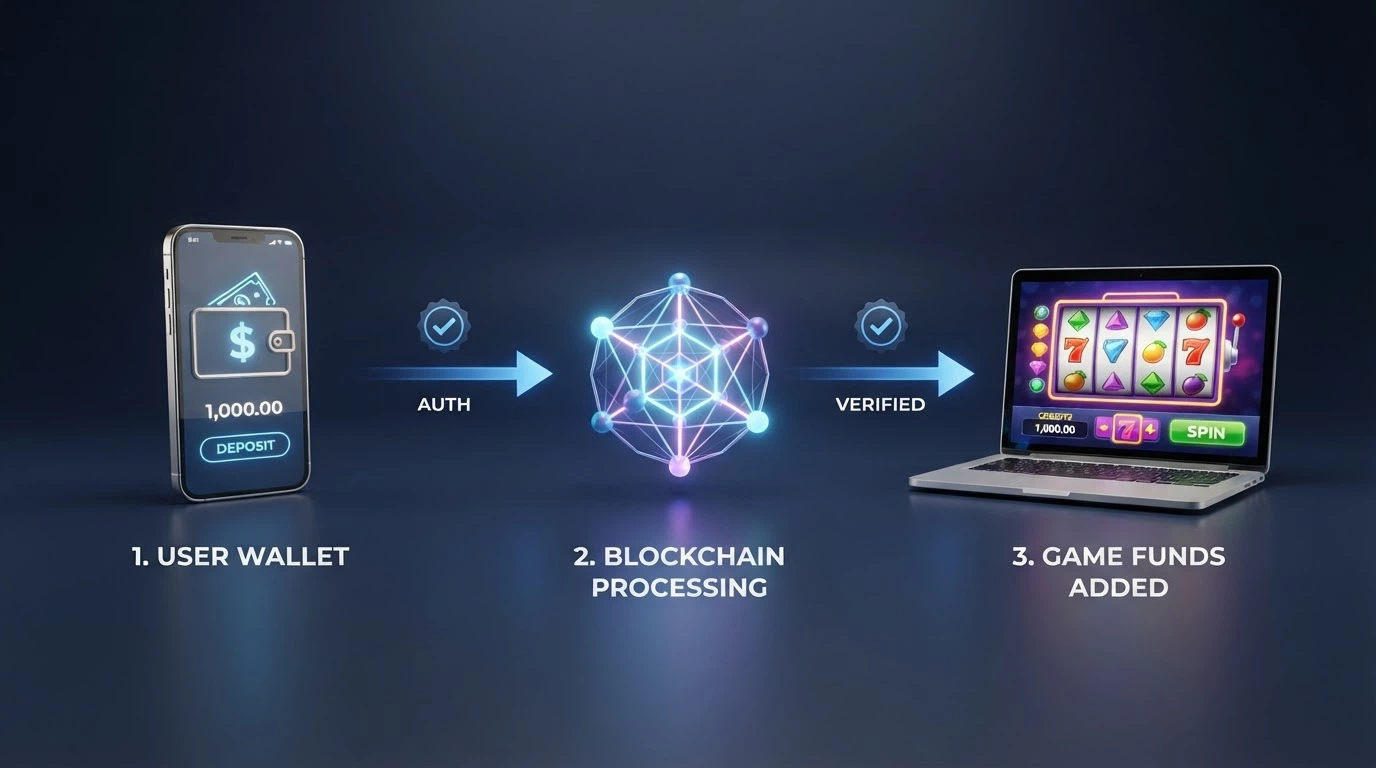
The speed of a USDT deposit sits well ahead of anything a bank rail can manage. USDT TRC-20 transactions are reported as clearing in under three minutes at crypto casinos, and most players see their balance update before they’ve closed the wallet app. Withdrawals reverse the flow. USDT withdrawals are processed within a few hours at most, with most players reporting same-session cashouts during off-peak hours. That speed isn’t a marketing claim layered on top of bank delays; it’s the structural advantage of a blockchain settlement running without a card network or a SWIFT message in the middle.
Depositing With USDT: TRC-20, ERC-20 and What Your Wallet Needs
The deposit step at a USDT casino runs in three stages. First, the player opens the casino cashier, picks Tether and selects a network — typically TRC-20 or ERC-20. Second, the casino generates a deposit address and shows it on screen, usually with a QR code for mobile wallets. Third, the player sends USDT from their wallet to that address and waits for the required number of network confirmations.
TRC-20 costs the player almost nothing to send. The Tron network charges fractions of a cent per transfer and confirms quickly, which is why most AU-facing crypto casinos offer it as the default. ERC-20 costs more — Ethereum gas fluctuates and can run several dollars per transfer during busy periods — but it is the most widely supported option across wallets and exchanges, which is why every casino keeps it on the menu. BEP-20 has emerged as a middle option on the Binance Smart Chain, with lower fees than ERC-20 and broader wallet support than TRC-20; newer casinos tend to add it alongside the other two.
Minimum deposits vary by operator. Each casino sets its own floor, and because per-operator minimums are not standardised, the practical advice is to check the cashier screen before sending — a deposit below the minimum either sits uncredited or is swept up by the casino as a handling fee. From competitor norms in the crypto casino space, typical minimums sit in the low single-digit USDT range, with a few operators pushing higher to discourage dust deposits.
Withdrawal Speed: Why USDT Payouts Outrun Fiat Cashouts
A USDT withdrawal is fast because it skips the part of the process that makes bank transfers slow. There is no card network to route through, no SWIFT message waiting for a correspondent bank, no fraud screening step built around the assumption that a credit card might be in play. Once the casino approves the withdrawal, the transaction is a blockchain transfer that confirms in minutes regardless of where the receiving wallet sits.
The variable is on the casino side, not the network. Offshore operators typically run an internal review before releasing funds, and the quality of that review varies. Same-session cashouts during off-peak hours are normal — an Australian cashing out at 2am Sydney time usually sees the funds in their wallet before they’ve closed the browser. A withdrawal during a busy period can sit in review for several hours. The casino can’t hold the transaction indefinitely, because the funds move on the blockchain once released, but the operator can take its time pressing the button.
What can stall a USDT payout: an operator review triggered by withdrawal size or activity pattern, network congestion on the chosen chain, and KYC checks that some casinos invoke at the cashout step. The last of those is the one that undoes the no-KYC pitch the casino used to win the deposit.
The Network Variant That Saves You Money (TRC-20 vs ERC-20 vs BEP-20)
For an Australian player holding a moderate balance, the network choice is a real-money decision. TRC-20 on Tron is the cheap lane — transfer fees run in fractions of a cent and the network confirms quickly, which is why almost every USDT casino defaults to it for the recommended option. ERC-20 on Ethereum is the universal lane — every wallet supports it, every exchange lists it, and the fee can climb during periods of high Ethereum activity but the transfer itself is reliable. BEP-20 on Binance Smart Chain has become a third option in newer crypto casinos, with lower fees than ERC-20 and broader wallet support than TRC-20, and is worth checking before sending if the casino supports it.
The practical rule: send via TRC-20 by default unless the wallet doesn’t support Tron. ERC-20 is the fallback. BEP-20 is worth using where it’s offered and the wallet supports it. The choice rarely changes the casino’s processing time, but it can change the player’s fee by a factor of ten or more on a busy Ethereum day.
Australia’s Most-Reached USDT Casinos, Ranked for 2026
The table below ranks the ten offshore operators Australian players reach most, measured by tracked Australian traffic. It is not a recommendation and not a licence check. Every operator named here is offshore and holds no Australian authorisation for online casino — that product is prohibited here, and no licence exists for it. The ranking measures reach, not endorsement.
| Operator | AU-Licensed? | Market Share (AU tracked traffic) |
|---|---|---|
| Rocket Play | No | 9.4% |
| Skycrown | No | 8.55% |
| Royal Reels | No | 2.51% |
| WinSpirit | No | 1.55% |
| Stake | No | 1.28% |
| Rainbet | No | 1.28% |
| Scream Casino | No | 0.99% |
| FairGO | No | 0.8% |
| Bizzo Casino | No | 0.57% |
| Rocket Casino | No | 0.57% |
Two things to take from the table. The top two — Rocket Play and Skycrown — together hold roughly 18% of the Australian tracked-traffic market for offshore casino, a concentration that reflects how aggressively these brands target AU-facing traffic. The long tail from WinSpirit downward is fragmented, with several operators clustered between 0.5% and 1.3% — the kind of distribution that comes from many small affiliates pushing many small brands rather than one dominant player.
Rocket Play
Rocket Play sits at the top of the Australian tracked-traffic set with roughly 9.4% share and reported AU-tracked revenue of $632.69M. It is an offshore operator with no Australian licence — the AU-tracked revenue figure reflects how many Australians reach the site, not any local authorisation. USDT acceptance is highly probable given its position as a leading offshore casino targeting AU traffic, though The operator’s licence, bonus terms, game providers and crypto acceptance should be verified on the operator’s own site before depositing. The takeaway is straightforward: the brand Australian players reach most is the brand that is least likely to be locally licensed, because the most-reached offshore casino by definition sits outside the Australian rules. The right comparison isn’t to an Australian-licensed bookmaker; the right comparison is to the next entry on this list.
Skycrown
Skycrown comes second at roughly 8.55% AU tracked-traffic share, with reported AU revenue of $436.07M. It is offshore, unlicensed in Australia, and likely accepts USDT as a leading offshore AU-facing casino. As with Rocket Play, the operator’s licence, bonus terms and game providers should be verified on the operator’s own site before depositing. What distinguishes Skycrown from the long tail is the AU-tracked revenue gap — between Skycrown and the third-ranked operator the share roughly halves, which suggests Skycrown has built a recognisable brand rather than riding on affiliate placement alone.
Royal Reels
Royal Reels holds 2.51% of AU tracked traffic, putting it comfortably ahead of the mid-tier but well behind the top two. The AU-facing name and the AU-tracked revenue are signs the brand has invested in the Australian market, but offshore status means none of that investment translates into Australian consumer protection. An Australian player should treat Royal Reels as an unverified offshore brand and check the licence, bonus terms and USDT acceptance on the operator’s own site before depositing.
WinSpirit
WinSpirit sits at 1.55% AU tracked traffic — a mid-tier offshore brand that Australian players reach but that doesn’t dominate the rankings. You should verify licence and bonus details directly on the brand’s own site. The honest characterisation is that WinSpirit occupies the crowded middle of the offshore AU-facing market: enough brand recognition to appear on affiliate lists, not enough to set the terms. For a player choosing between this tier and the top of the table, the practical differences tend to be in bonus size and game catalogue, not in regulatory standing, because none of these operators has any.
Stake
Stake is the most recognisable crypto-native brand in this set, with 1.28% AU tracked traffic and reported AU revenue of $115.67M. Its Curaçao licence — verify on the operator’s site, not confirmed this run — is the standard offshore credential. Stake built its reputation on crypto-native play: Bitcoin, Ethereum, Litecoin and stablecoins including USDT are part of its core product, not an afterthought. The crypto-native model suits a player who already holds coins and prefers to keep their gambling balance in crypto rather than converting to fiat on the way in. For an Australian, that means a familiar interface and a USDT deposit flow that won’t surprise them, paired with the same offshore status as every other entry on this list.
Rainbet
Rainbet holds 1.28% AU tracked traffic, identical to Stake’s share in this measurement. The brand is smaller and less established than Stake, and Specifics on licence, bonus terms and USDT acceptance should be verified on the operator’s site. A player considering Rainbet should approach it as they would any other mid-tier offshore casino: check the licence on the operator’s site, read the bonus terms before claiming, and look for a withdrawal track record that doesn’t depend on affiliate reviews.
Scream Casino
Scream Casino sits at 0.99% AU tracked traffic — a niche brand with measurable reach into Australia but no major share. Check the operator’s site for current licence and bonus information. The niche position is itself information: smaller offshore brands tend to compete on bonus generosity and game catalogue novelty rather than on track record, and the smaller the brand, the more a player depends on the operator’s own terms page and the casino’s responsiveness when something goes wrong.
FairGO
FairGO holds 0.8% AU tracked traffic. The name is Australian-facing — “Fair GO” reads like a local brand — but the operator is offshore and unlicensed in Australia. That gap between branding and regulatory standing is the kind of thing an AU-facing name is designed to soften, and a player should not mistake local-flavour branding for local authorisation. Specifics on licence, bonus terms and USDT acceptance should be verified on the operator’s site before depositing.
Bizzo Casino
Bizzo Casino sits at 0.57% AU tracked traffic, near the bottom of the ranked set. Always verify terms and licence status on the brand’s own page. The honest characterisation: a smaller player in the AU offshore casino market, with the same offshore status as every other entry here. A player considering Bizzo Casino should weigh the brand’s smaller reach against the fact that reach in this market doesn’t come with any Australian regulatory cover.
Rocket Casino
Rocket Casino also holds 0.57% AU tracked traffic, identical to Bizzo in this measurement. Verify licensing and bonus details on the operator’s platform before depositing. The two 0.57% brands at the bottom of the table are close enough in share that the choice between them comes down to catalogue, bonus terms and the operator’s own withdrawal track record — exactly the items the player has to verify directly because no Australian regulator is going to do it for them.
Why Every USDT Casino an Australian Can Reach Is Offshore
The legal position is blunt. Online casino games, online pokies and in-play betting are prohibited to people in Australia under the Interactive Gambling Act 2001, strengthened by the Interactive Gambling Amendment Act 2017. There is no licence for online casino anywhere in Australia — not federally, not in any state or territory. The Interactive Gambling Amendment (Credit and Other Measures) Act 2023 layered a payment-method ban on top, with credit cards, credit-related products and digital currency banned as payment for online wagering since 11 June 2024. Penalties for an operator that fails to enforce the payment ban run up to $247,500.

The regulator is the Australian Communications and Media Authority, the ACMA. The ACMA investigates complaints, issues formal warnings, refers operators for civil penalty proceedings, and directs internet service providers to block illegal gambling sites. The blocking power came in with the 2017 amendments; before then, offshore operators had room to operate from outside Australian jurisdiction. Since the ACMA’s first blocking request in November 2019, 1,564 illegal gambling and affiliate websites have been blocked by Australian ISPs as of March 2026, and more than 225 illegal services have withdrawn from the Australian market since enforcement was strengthened in 2017.
The ACMA, the IGA and What They Actually Enforce
The ACMA’s enforcement runs along three lines. First, it investigates complaints from Australian consumers and issues formal warnings or civil penalty proceedings against offshore operators. Second, it directs Australian ISPs to block illegal gambling and affiliate sites, which is the 1,564-block figure above. Third, it engages with international regulators to push illegal operators out of the Australian market altogether, which is the 225-withdrawal count. None of those enforcement lines requires prosecuting the individual player.
| Feature | Licensed Wagering | Offshore Casino |
|---|---|---|
| Regulator | ACMA / State | None (Foreign) |
| Licence Authority | State / Territory | Curaçao / Anjouan |
| Consumer Protection | Yes | None |
| BetStop Coverage | Yes | No |
The 2026 reform extends those powers. The Interactive Gambling Amendment (Gambling Reform) Bill 2026 passed Parliament on 19 August 2026, and its measures commence 1 January 2027. From that date, banks and payment providers gain express authority to block transactions to illegal gambling operators — a step that closes the deposit route through Australian bank rails even for players who use debit cards, BPAY or PayID at offshore sites. The same reform strengthens BetStop, restricts wagering advertising (including a cap of three wagering ads per hour between 6:00 am and 8:30 pm, a live-sport blackout from 15 minutes before to 5 minutes after the event, and a ban on athletes, celebrities and influencers promoting wagering products), and bans direct marketing of inducements for three months after a person deregisters from BetStop. None of those 2027 rules are yet binding, but they are law, and a player planning to use an offshore USDT casino through 2027 should expect the payment route to narrow.
What Playing Without an Australian Licence Actually Costs You
The cost of going offshore isn’t a fine — the individual player is not prosecuted under the IGA, and the Act targets the provider of the prohibited service. The cost is what the player loses along with the licence. There is no Australian consumer protection. A dispute over a refused withdrawal or a voided win can’t be escalated to the ACMA, because the ACMA’s role is to pursue the operator, not to recover money for individual players. There is no Australian dispute resolution body, no Australian ombudsman, and no Australian court that will treat the casino’s own terms as anything other than a contract between an offshore operator and an Australian player in a jurisdiction the operator doesn’t recognise.
The most concrete loss is BetStop coverage. BetStop binds Australian-licensed wagering services only — an offshore casino is not connected to the register and will keep taking a self-excluded person’s money. The register’s value is that one Australian-licensed sign-up excludes a player from every Australian-licensed operator in a single step. An offshore casino sits outside that system, and the self-exclusion that follows a player everywhere licensed in Australia stops at the border.
A separate risk is site blocking. An offshore USDT casino can be added to the ACMA’s blocking list at any time. A blocking request doesn’t refund the player’s balance — the casino continues to operate in other jurisdictions, but the Australian player loses access to their account through Australian ISPs, and recovering funds requires the casino to agree to a withdrawal. The crypto payment ban since June 2024 sharpens this: an Australian who is asked for a crypto deposit by a gambling site is being served by someone outside the Australian rules, and the payment method is itself a tell that no ACMA mechanism will change after the deposit is made.
Responsible Gambling Tools That Do (and Don’t) Protect You
The Australian responsible-gambling infrastructure is built around Australian-licensed operators. BetStop, the National Self-Exclusion Register, went live in August 2023. One registration excludes a person from every Australian-licensed online and phone wagering service in a single step. As at 31 July 2026, BetStop had 67,480 registrations in three years of operation, of which 41,290 exclusions were still active — more than 60% of everyone who ever registered. 78% of registrants were under 40, and 38% chose lifetime exclusion. Those numbers describe a system that holds its weight inside the licensed market. They say nothing about offshore.

The same is true of the National Gambling Helpline — 1800 858 858 — free, confidential, staffed 24 hours a day, 7 days a week, with online chat and counselling through Gambling Help Online at gamblinghelponline.org.au. The helpline follows the person, not the operator. An Australian who is gambling offshore and wants help will get the same response from the helpline as an Australian gambling with a licensed bookmaker. The difference is what happens after the call. Licensed operators can be required to act on a self-exclusion. Offshore operators can’t.
About 2.1% of Australian adults — roughly 430,000 people — experience problem gambling. The Australian Institute of Health and Welfare put high-risk gambling at 1.8% in 2022. Those numbers describe a population the helpline and BetStop were built to serve, and they apply whether the gambling happens through a licensed wagering operator or an offshore USDT casino.
Self-Exclusion and Deposit Limits: What Offshore Casinos Actually Offer
Offshore USDT casinos typically offer their own responsible-gambling tools — self-exclusion options in the account settings, deposit and session limits, cooling-off periods that lock a player out for a set window. The shape varies operator to operator, and Responsible-gambling tools exist at most offshore crypto casinos; their specific offerings vary operator by operator and are not enforceable under Australian law.
The trade-off is concrete. An Australian-licensed operator connected to BetStop offers one registration that excludes the player from every Australian-licensed service in a single step, and an Australian regulator can require the operator to honour it. An offshore casino offers self-exclusion within its own account, but the operator is under no Australian obligation to act on a request, no Australian obligation to share the exclusion with other brands, and no Australian obligation to follow up. The protection a player gets from an offshore self-exclusion is exactly as good as the offshore operator’s customer service on a bad day.
Where to Get Help in Australia Right Now
Three resources every Australian player should know. The National Gambling Helpline — 1800 858 858 — is free, confidential and available 24 hours a day, 7 days a week, with online chat and counselling. Gambling Help Online at gamblinghelponline.org.au offers online chat, self-assessment tools and access to state-based gambling counselling services. BetStop at betstop.gov.au is the National Self-Exclusion Register for Australian-licensed wagering — worth registering with even if the player also uses offshore casinos, because the Australian-licensed side will be covered. None of those resources replaces an Australian licence at an offshore casino, but they are the safeguards that do follow an Australian player, regardless of where they gamble.
USDT Casino Bonuses — What the Fine Print Actually Costs You
USDT casinos compete on bonus size in a way Australian-licensed wagering operators can’t. Inducement rules at the state level are tighter, and from 1 January 2027 federal rules will tighten further, banning direct marketing of inducements for 14 days after signup and three months after BetStop deregistration, and restricting the overall volume of wagering advertising. An offshore casino is not bound by any of those rules, and a USDT welcome offer can therefore dwarf what an Australian player sees at a licensed bookmaker. The headline number, though, is the smallest part of the offer. The wagering multiple is where the cost lives.

Two confirmed examples anchor the wagering landscape. LEX, launched in 2022, holds a Curaçao licence, has optional KYC, and offers 30x wagering on bonuses across 6,500+ games. GIZBO, launched in 2021, holds a Curaçao licence, has optional KYC, and offers 35x wagering on bonuses across 7,000+ games. Those two operators sit at the lower and middle of the typical range. A 30x wagering requirement means a $100 bonus must be turned over $3,000 in qualifying bets before any of it converts to withdrawable cash. A 35x requirement means the same bonus must be turned over $3,500. The headline number didn’t change; the real cost did.
Welcome Bonuses on USDT Deposits: What the Wagering Really Means
A welcome bonus matches a percentage of the player’s first deposit, often 100% or more, up to a cap. The wagering requirement is a multiplier that determines how much of the bonus and sometimes the deposit must be turned over in qualifying bets before winnings become withdrawable. At 30x, a $100 bonus requires $3,000 in turnover. At 35x, the same bonus requires $3,500. At higher multiples — 40x and above — the turnover climbs further, and the bonus becomes worth less than its headline number would suggest.
Game weighting is the second lever the casino pulls. Slots and pokies usually contribute 100% of each bet toward the wagering requirement. Table games, live dealer tables and certain high-RTP slots often contribute less — sometimes 10% or 20% of each bet — which means the same turnover figure takes longer to clear. A player who plans to clear a bonus on blackjack rather than pokies needs to multiply the required turnover by the inverse of the weighting, which can stretch the grind substantially.
A large bonus with a high wagering multiple can be worth less than a smaller bonus with a low multiple. The arithmetic is unflattering: a $200 bonus at 40x requires $8,000 in turnover, while a $100 bonus at 30x requires $3,000. The expected loss on the larger bonus, applying the same house edge, is more than double the expected loss on the smaller one. The marketing word “more” doesn’t survive that calculation.
No-Deposit Bonuses and Free Spins: The Catch AU Players Miss
A no-deposit bonus is a small credit or spin pack given at sign-up without requiring a deposit — the closest thing a USDT casino offers to “free” money. Free spins on registration are the same shape in a different wrapper. The wagering requirement still applies, and most no-deposit offers carry a cashout cap that limits how much of the bonus winnings can be withdrawn regardless of how the player runs the balance.
The honest characterisation of the no-deposit landscape for the operators reviewed here: No no-deposit USDT bonus is available from any featured operator on this list. The two wagering examples that surfaced — 30x at LEX and 35x at GIZBO — apply to the deposit-gated welcome offers at those operators, not to a no-deposit promotion. A player who is comparing no-deposit offers should treat the absence of a confirmed figure as an absence, not as an excuse to convert a deposit bonus into a no-deposit claim. The mechanics of the two bonus types are different, and conflating them reads as marketing.
Pokies, Blackjack and Live Dealer: The Games You Can Play With USDT
The game catalogue at a USDT casino looks like a fiat casino catalogue with crypto on the rails. Pokies dominate the lobby at every operator — Australians search “pokies” rather than “slots,” and the studios that supply the games know it. TrustDice lists 8,000+ casino games from 40+ providers, an indicative scale for the upper end of the market; LEX carries 6,500+ games; GIZBO lists 7,000+. Those three figures bracket the catalogue size an Australian player should expect at a serious USDT casino, with smaller offshore brands running lower and the largest running higher.

The studios that populate those lobbies are the major online casino suppliers — Pragmatic Play, BGaming, BetSoft and others with established reputations. The provider list varies operator to operator, and this run carried no per-operator provider list, but the names that show up in the broader USDT casino space overlap heavily with the names that show up at fiat online casinos outside Australia. Pokies dominate because they dominate everywhere.
Pokies: The Australian Favourite, on USDT
Pokies are the volume category at every USDT casino an Australian reaches. The titles run from classic three-reel games to modern video slots with bonus rounds, free-spin features and progressive jackpots, and the catalogue at a serious operator runs into the thousands. The question for a player isn’t whether the games are there — they are — but what return to player (RTP) the titles carry.
RTP is the long-run percentage of each bet a slot returns to players, expressed as a figure between roughly 94% and 98% on most modern online pokies. A 96% pokie returns $96 for every $100 wagered across millions of spins; a 94% pokie returns $94. Per-title RTP varies by game and operator, and this run carried no per-title confirmation for the featured operators. The practical advice is to check the game’s information panel before playing — most providers publish the RTP in the paytable or help section, and a pokies player who picks the higher-RTP titles over a long session is making a small but real difference to their expected loss.
Live Dealer USDT Games: Low Stakes, Real Dealers, 24/7
Live dealer tables are the prestige layer of a USDT casino catalogue. Real dealers stream from studios run by Evolution Gaming and other live-casino specialists, hosting blackjack, roulette, baccarat and game-show formats at stakes that start low and run high. The minimum live table limit at USDT casinos starts at just 1 USDT, which puts the live-dealer experience within reach of a small bankroll — a player who would never sit at a $25-a-hand blackjack table in a land-based casino can sit at a $1-a-hand table online.
The 24/7 availability claim needs a careful read. Live dealer tables run on a schedule — most providers offer continuous coverage across multiple studios, but specific tables and specific dealers rotate. Automated table games, by contrast, run continuously: TrustDice offers European Roulette by BGaming and Single Deck Blackjack by BetSoft available 24/7, and those are not live dealer tables in the streaming sense. A player who wants a live dealer at 4am will usually find one, but the table might be running with an empty seat rather than a full table.
Table Games and the Full Catalogue Beyond Pokies
Beyond pokies and live dealer, the USDT casino catalogue runs through blackjack variants, roulette, baccarat, craps and a range of poker-style games. BetOnline, for example, offers Craps, Roulette, 3 Card Poker, Let It Ride, Pai Gow Poker and Baccarat for USDT play, an indicative sample of the table-game coverage a serious USDT casino carries. Provably fair originals — crash, dice, mines, plinko — sit alongside the traditional catalogue at crypto-native operators, and offer a different shape of game with a different verification model.
The overall catalogue size at the operators confirmed in research runs from 6,500+ games at LEX to 7,000+ at GIZBO to 8,000+ at TrustDice. Smaller offshore brands carry fewer games; the largest carry more. For an Australian player, the catalogue question is whether the titles they actually want to play are present, not whether the operator can boast the highest headline count.
No-KYC Play and Crypto Privacy at USDT Casinos
“No-KYC” is one of the louder marketing pitches in the crypto casino space, and it deserves a careful read. Two of the operators reviewed in research — LEX and GIZBO — describe their KYC as “optional,” meaning a player can register and deposit without uploading identity documents. In practice, “optional” almost always means “optional until a large withdrawal or a flagged activity pattern triggers a check.” The same operators that let a player deposit anonymously will request ID before releasing a withdrawal above a threshold, and the threshold is set by the operator’s own compliance policy.
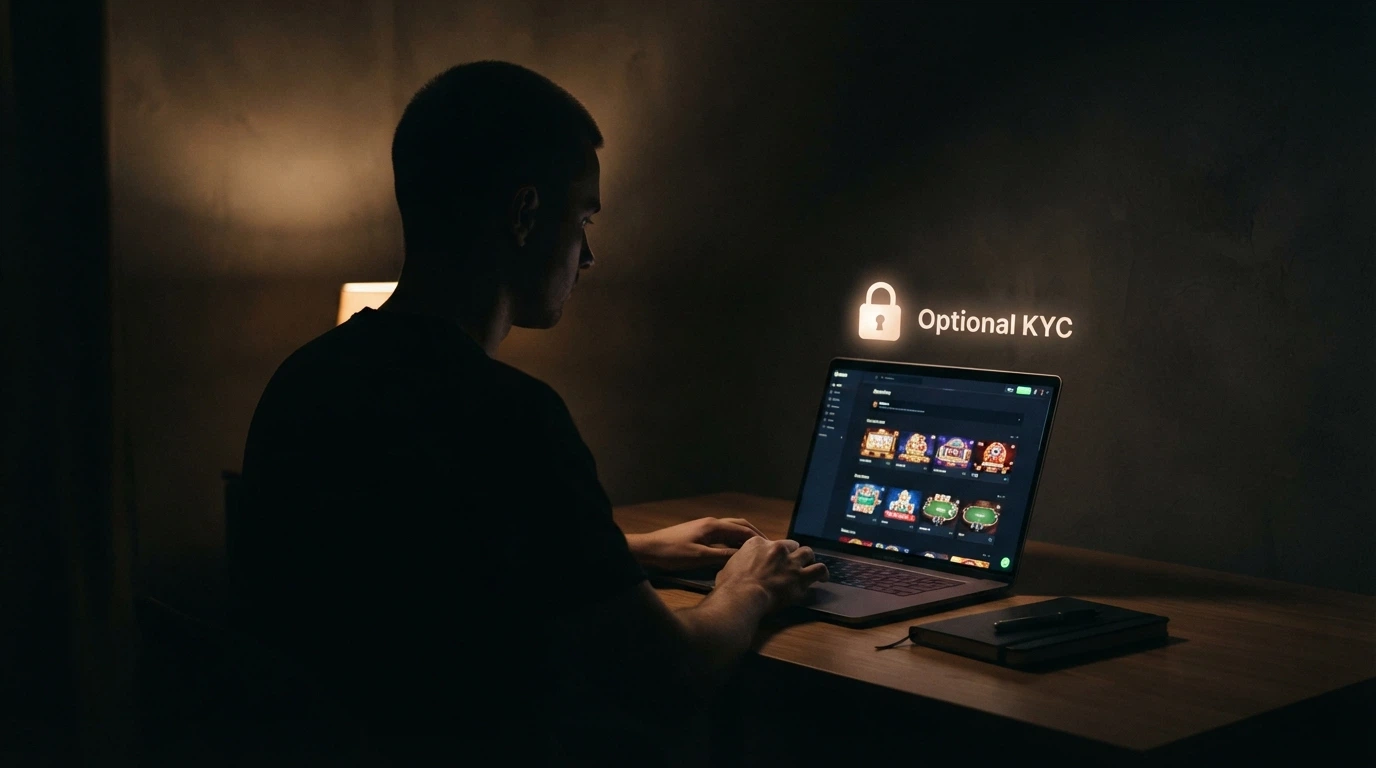
The privacy a player gets from an optional-KYC casino is therefore conditional, not absolute. The casino can deposit and play with no ID. The casino can withdraw small amounts without ID. The casino cannot guarantee that a large or unusual withdrawal won’t trigger a check. A player who values true anonymity needs to know that the check, if triggered, will happen at the worst possible moment — when the money is on the line and the player has the least leverage to walk away.
VPN use from Australia adds another layer. Some offshore casinos geo-restrict their sites, and a player in Australia may need a VPN to reach them. The casino’s terms of service typically reserve the right to void winnings if a VPN is detected, and the player has no Australian regulator to complain to if that happens. A VPN is a tool, not a guarantee.
Beyond Tether: Bitcoin, Ethereum and Multi-Coin USDT Casinos
Most USDT casinos are multi-coin by design. Bitcoin, Ethereum, Litecoin and a handful of other cryptocurrencies sit alongside USDT in the deposit menu, and a player who holds multiple coins can choose which to send. The practical value of a multi-coin casino is flexibility — a player who has Bitcoin on a day when Ethereum gas is high can route through BTC instead, or vice versa, and a casino that accepts both doesn’t force the player to convert before depositing.
Crypto-native operators take this further. Stake and similar platforms built their product around crypto from day one, with USDT, BTC, ETH and LTC all treated as first-class balance types and the same games playable across all of them. Hybrid operators take a different shape: fiat deposits through cards and e-wallets, crypto deposits through a parallel cashier, and the two balance types sometimes treated as separate wallets. The crypto-native model is cleaner for a player who already holds coins and wants to keep their gambling balance in crypto. The hybrid model suits a player who wants the option of fiat and crypto at the same casino.
Playing USDT Casinos on Mobile
The mobile experience at a USDT casino runs through the browser, not the app store. Dedicated iOS or Android apps are rare in the offshore crypto casino space — most operators don’t ship a native app at all, and the ones that do typically distribute through a download link rather than the App Store or Google Play. The default is instant-play mobile, where the casino’s website opens in Safari or Chrome and behaves like a desktop site adapted to a phone screen.
The trade-off is straightforward. A browser-based mobile casino works on every modern phone without a download, which is the right shape for a player who wants to deposit and play without installing anything. It sacrifices the smoother feel of a native app, and the live dealer video stream can be demanding on a phone network. For an Australian player on a hotel Wi-Fi or a home connection, the browser experience is usually fine. On a patchy mobile data connection in regional Australia, live dealer tables can struggle.
iOS and Android compatibility is universal at the browser level — every modern USDT casino site renders correctly on both. What varies is the polish of the mobile-specific layout. Some operators have invested in a mobile-first design that fits the screen cleanly. Others have wrapped a desktop site in a smaller window, which works but feels less considered.
New USDT Casinos Worth Watching
A new USDT casino can be the right choice or the wrong one, and the difference sits in the same checks that apply to any operator. What to look for in a new launch: a transparent licence (a Curaçao or Anjouan licence clearly displayed in the footer, not buried in the terms), clear bonus terms (a wagering multiple stated in plain numbers, not vague references to “standard requirements”), a stated withdrawal track record (how long withdrawals take, what triggers a review), and a game count that suggests the operator has integrated with enough providers to keep the catalogue populated.

Research this run carried no confirmed new-operator launches. The honest characterisation is qualitative: the offshore crypto casino market opens new brands regularly, and the same checks apply to every one of them. A new casino that is shinier than an established one isn’t necessarily better — it is necessarily less proven, and the player is the test case. The right comparison for a new USDT casino is an established one, not another new one.
How We Chose and Ranked These USDT Casinos
The ranking above is built from a single measurement: AU tracked-traffic market share. The data source is the operators skill’s AU market-share table, which tracks Australian player reach across offshore casino brands. The ranking is therefore a measure of where Australian players actually go, not a measure of quality, licence standing, bonus value or game catalogue. A high rank means many Australians reach the operator; it does not mean the operator is safe, licensed or endorsed.
What was checked: market share, offshore status, USDT/crypto acceptance probability, and — where research carried them — licence, bonus, game count and wagering. What was not confirmable this run: per-operator bonus amounts, exact game counts at the featured set, withdrawal speeds per brand, and per-operator responsible-gambling specifics. Where the data was missing, the write-up above states the missing piece honestly rather than filling the gap with a figure from competitor norms.
The selection logic is reach-based. The ten operators are the top ten by AU tracked traffic in the operators skill’s AU market-share table. Every operator in the table is offshore; none holds an Australian licence for online casino because no such licence exists.
What Australia’s USDT Casino Reality Means for Your Next Move
The central tension on this page is the gap between reach and protection. USDT casinos are reachable for Australian players in 2026 — the tracked-traffic figures above prove that. They are reachable because online casino is prohibited in Australia and therefore operated entirely from outside Australian jurisdiction, and every safeguard an Australian licence would normally provide stays on the other side of that line. The player is not prosecuted. The player is also not protected.
A cautious Australian player who chooses to use a USDT casino anyway runs through a checklist before depositing. Verify the licence on the operator’s own site — Curaçao, Anjouan or another jurisdiction, but a stated licence with a stated licence number. Read the withdrawal terms in full, including the review period, the maximum withdrawal per transaction and the conditions that trigger a KYC check at the cashout step. Test the cashier with a small deposit and a small withdrawal before committing a larger balance. Know the helpline number — 1800 858 858 — before the session starts, not after it goes wrong.
The bottom-line judgement is unflattering. USDT casinos are an available route for Australian players in 2026, not a safe one. There is no Australian-licensed alternative for online casino, which means the route is the route, and the choice a player faces is between using it carefully with eyes open or using it casually with eyes closed. The figures on this page — 1,564 blocked sites, 67,480 BetStop registrations, a market that is structurally offshore — describe that choice honestly. A player who reads them and decides to proceed at least knows the shape of what they are entering.
Frequently Asked Questions
Is It Legal to Play at a Tether Casino in Australia?
Online casino games, online pokies and in-play betting are prohibited to people in Australia under the Interactive Gambling Act 2001, and there is no licence for online casino anywhere in Australia. The individual player is not prosecuted under the Act. The Act targets the provider of the prohibited service. A USDT casino accepting Australian players is necessarily an offshore operator operating outside Australian rules, and crypto deposits at Australian-licensed wagering operators have been banned since 11 June 2024.
What Happens if an Offshore Tether Casino Refuses My Withdrawal?
The casino’s own terms govern. The ACMA does not recover money for individual players — its role is to pursue the operator, not to refund disputed balances. There is no Australian dispute resolution body, no Australian ombudsman and no Australian court that will treat the casino’s terms as anything other than a private contract with an offshore operator. A player whose withdrawal is refused is dependent on the operator’s customer service, and the leverage is whatever the casino’s reputation and any affiliate relationship suggest. This is the core cost of going offshore, and it is the reason the withdrawal terms page matters more than the bonus terms page.
Does BetStop Cover Offshore Tether Casinos?
No. BetStop binds Australian-licensed wagering services only. An offshore casino is not licensed in Australia, is not connected to the register, and will keep taking a self-excluded person’s money. The 67,480 BetStop registrations as at 31 July 2026 describe a system that holds its weight inside the licensed market; they say nothing about offshore. Registering with BetStop is still worth doing — it covers the Australian-licensed side — but it doesn’t reach an offshore USDT casino.
Are Tether Casino Winnings Taxable in Australia?
Betting and gambling winnings are not assessable income under section 6-5 of the ITAA 1997, and gambling losses are not deductible under section 8-1, unless the person is carrying on a business of betting or gambling. No Australian case has held the winnings of an ordinary punter assessable. A casual Australian player at a USDT casino pays no tax on winnings and gets no deduction for losses. The position is the same as for any other gambling activity in Australia.
What Is the Difference Between USDT TRC-20 and ERC-20 at Online Casinos?
TRC-20 runs on the Tron network and is the cheaper, faster lane — transfer fees run in fractions of a cent and confirmations are quick. ERC-20 runs on Ethereum and is the universal lane — every wallet and exchange supports it, but gas fees can climb during busy periods and can run several dollars per transfer. All listed USDT casino platforms support both TRC-20 and ERC-20. BEP-20 on Binance Smart Chain has emerged as a middle option at newer casinos. The practical rule: send via TRC-20 by default for cost, fall back to ERC-20 when the wallet doesn’t support Tron, use BEP-20 where it’s offered.
Provably Fair: Can You Actually Trust a USDT Casino’s Games?
Provably fair is the cryptographic verification system that lets a player confirm a casino game’s outcome was not manipulated after the bet. The mechanic relies on a server seed, a client seed and a nonce, hashed together in a way that lets the player verify after the fact that the outcome was generated before the bet was placed. The result is a game where the player can prove the casino didn’t change the result.
The limit of provably fair is the limit of the games it covers. Provably fair verification applies to crash, dice, mines and a handful of other crypto-native originals — not to traditional slots, not to live dealer tables, not to any game run on the casino’s standard RNG without an exposed verification chain. A player who treats provably fair as a casino-wide trust signal is reading past what it actually certifies. The right way to read it is as a verification tool for the specific game types that support it, useful because the operator is unlicensed, not a replacement for the licence that would verify the rest.