
What Offshore Casinos Actually Offer Australian Players in 2026 — And What They Take
 Available in AU
Every operator named on this page accepts Australian players. None holds an Australian licence. No such licence exists. The Interactive Gambling Act 2001 makes online casino a prohibited product in this country, the ACMA has blocked 1,564 illegal sites since November 2019, and the ten brands ranked below sit on the wrong side of that line — registered in Curaçao or Anjouan, governed by their own licensing jurisdiction, answerable to no Australian regulator. The games on offer are real. The protections an Australian account at a domestic bookmaker would carry are not.
Data is current as of 18 October 2026 and licence-claim verification was checked against the ACMA’s published register and the Interactive Gambling Act 2001 framework as administered by the regulator. Specific bonus terms are accurate at the time of review but operators change them; always check the cashier page before claiming anything.
Table of Contents
- These Aren’t Australian Casinos — Here’s What You’re Actually Joining
- 10 Offshore Casinos Australians Keep Returning To — Ranked and Compared
- The Pokies and Live Games That Make Offshore Play Worth It
- Why Your No-Deposit Bonus Is Smaller Than the Number on the Screen
- Is It Legal? The Offshore Rulebook Every Australian Should Read Before Playing
- Playing Offshore Means Playing Without Australia’s Safety Net
- How We Picked and Ranked These International Casinos
- Is It Worth the Risk? What This All Means for an Australian Player
- Frequently Asked Questions
These Aren’t Australian Casinos — Here’s What You’re Actually Joining
An “international casino” — or “offshore casino”, the two terms are used interchangeably in this market — is an online gambling site registered outside Australia, holding a remote-gaming licence from a foreign jurisdiction (most commonly Curaçao or Anjouan) and offering real-money play to anyone with an internet connection. Australian punters can sign up; what they cannot do is sign up at a site an Australian regulator has authorised to provide online casino games. No such authorisation exists. The federal statute is the Interactive Gambling Act 2001, the regulator is the Australian Communications and Media Authority, and the prohibited product list covers online casino games, online pokies and in-play sports betting.

The offence sits on the provider, not the player. The IGA targets the operator supplying the service, with civil penalties of up to AU$2,475,000 per day for an individual and AU$12,375,000 per day for a corporation. No Australian has been prosecuted for placing a bet at an offshore site. The legal structure is not a permission slip; it is a hole the statute has not closed. The product is banned. The player walks through a gap.
Why offshore, then? Because the domestic licensed market does not offer what most readers of a page like this one came looking for. A Sportsbet or TAB account lets you bet on a horse race or a cricket match before play begins. It does not let you spin a pokie, sit at a live-dealer blackjack table, or take a bonus in Australian dollars. International casinos do, and several million Australians use them. The rest of this page is about what that choice actually costs.
The Real-Money Online Format: What You See on the Screen
Open an account at an offshore casino and the screen looks much like any other online product — a registration form, an email address and a password, then a cashier page asking how the account is to be funded. Most international casinos that target Australia accept AUD-denominated balances, which means no conversion spread sits between the player’s deposit and the stake button. Some still run accounts in USD or EUR and force the conversion through the deposit processor; checking the cashier before signing up is the only way to know which model a given site uses.

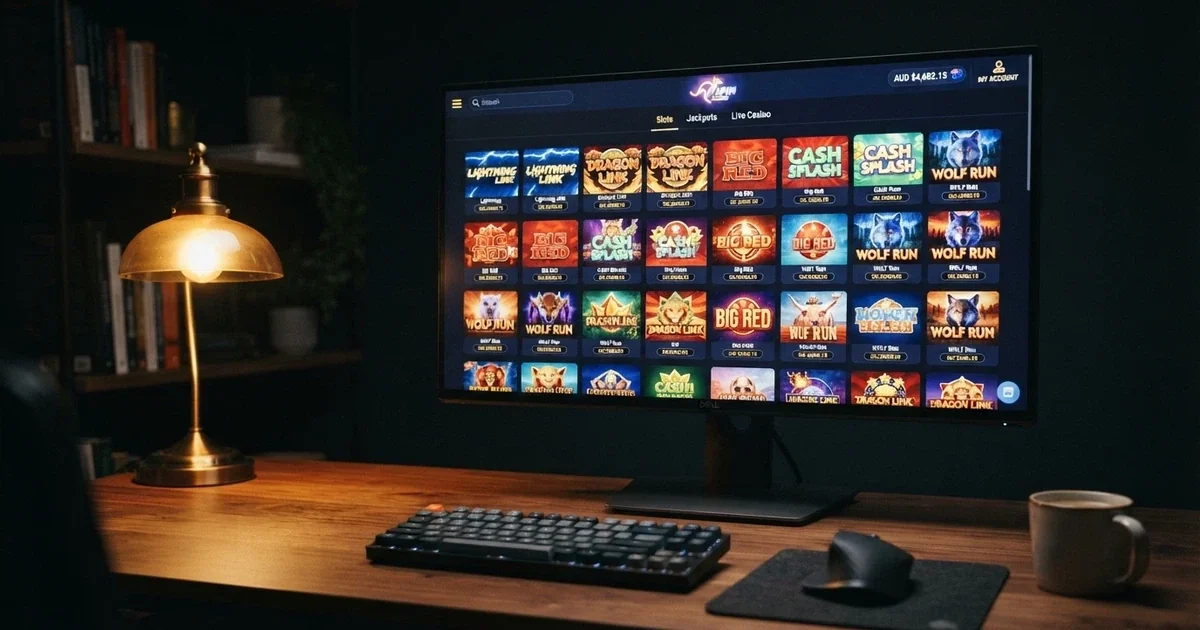
The game lobby is the draw. Pragmatic Play, NetEnt, Microgaming and Evolution power most of the catalogue. Pokies — the Australian name for slots — fill the front page, with table games, live dealer rooms and the occasional game-show format behind them. Stakes range from a few cents per spin to several hundred dollars on the high-roller tables. Withdrawals work in the opposite direction: a request in the cashier, an approval queue on the operator’s side, then funds back to whatever deposit rail the player used.
What is missing is what a domestic wagering account carries. No AU consumer-law protection sits behind the cashier page. No Australian complaints body can compel a payout. No Australian regulator is monitoring the bonus terms, the game RTPs, or the identity-verification process. The site answers to its own licensing jurisdiction, and that jurisdiction is almost never Australia.
How an Offshore Casino Differs from a Licensed Australian Bookmaker
The structural gap between a licensed wagering account and an offshore casino account is wide enough that treating them as substitutes is the first mistake a new player tends to make. A Sportsbet or TAB account is licensed by a state or territory (most commonly the Northern Territory), bound by Australian consumer law, covered by BetStop self-exclusion, monitored by the ACMA, and reachable through a stable Australian domain that will not be blocked mid-session. Payment rails are debit card, bank transfer, PayID/Osko or BPAY — credit cards and crypto have been banned for licensed wagering since 11 June 2024, and an operator that lets a customer fund an account with either is, by definition, not bound by the Australian rulebook.
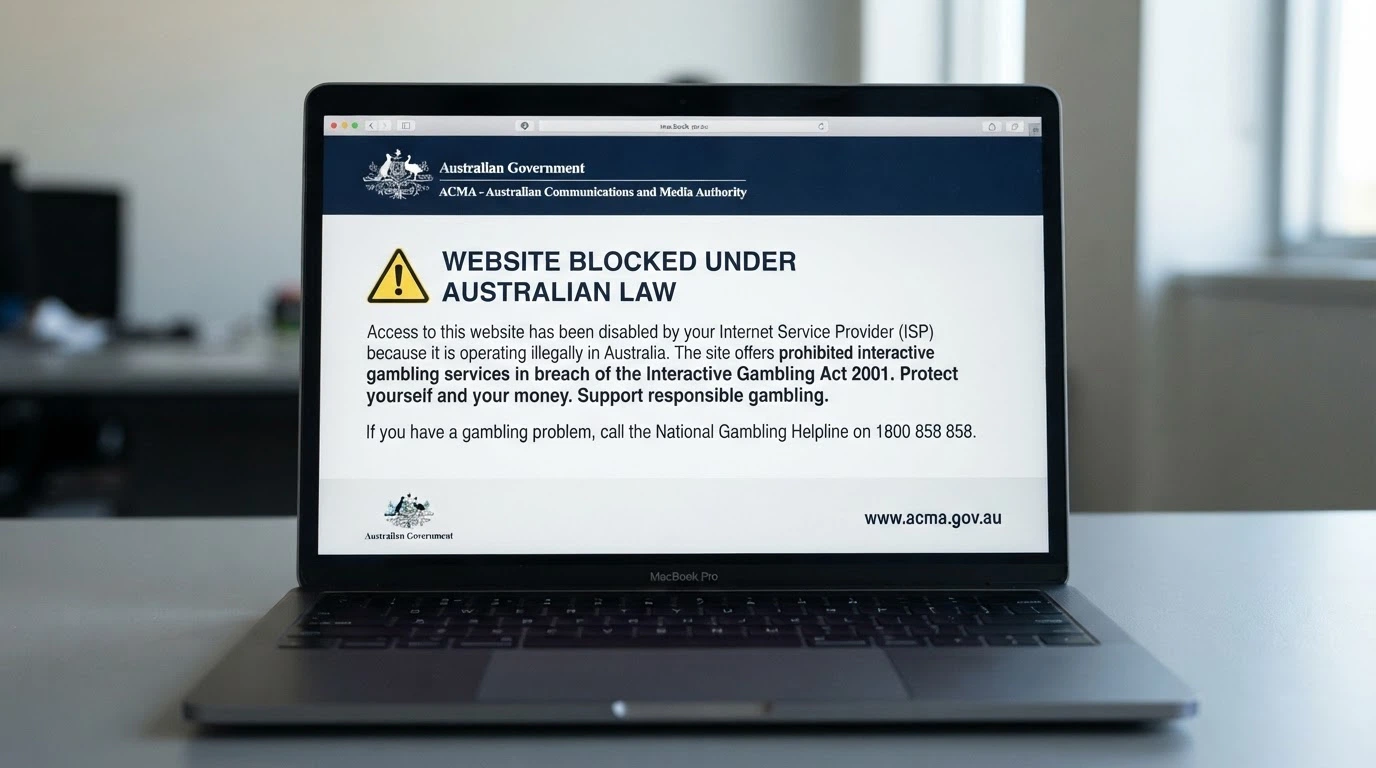
An offshore casino account is the opposite picture on most of those points. The site is licensed overseas, monitored by a foreign regulator, and the ACMA can — and regularly does — direct Australian ISPs to block the domain. The ACMA has blocked 1,564 illegal sites since its first request in November 2019, and blocking happens at the DNS level: the URL stops resolving for Australian customers while the site continues operating elsewhere. A player with a balance at the time of a block does not get a refund; they get a broken web address.
BetStop does not extend to an offshore casino. The National Self-Exclusion Register binds Australian-licensed wagering services — meaning Sportsbet, TAB, Ladbrokes and the rest of the licensed bookmakers — and the moment a self-excluded person navigates to an offshore site, the exclusion stops working. The site takes the deposit. The register cannot reach it.
The payment method, finally, is itself a tell. A licensed Australian operator cannot accept credit card or crypto. A gambling site that asks for either, in the Australian market, is operating outside the rules. The deposit option tells the player what the marketing page works hard not to.
10 Offshore Casinos Australians Keep Returning To — Ranked and Compared
The table below lists every operator on this page in the order the research supporting this guide ranked them. The order reflects what the research was able to confirm — licence status, no-deposit terms where available, payment rails, game-library scale — and nothing more. It is not an endorsement. Three of the ten carry confirmed no-deposit terms as of this review; seven did not surface published terms in the sources we consulted and are noted as such. All ten are offshore brands, none holds an Australian casino licence, and the products they offer are prohibited under Australian law to provide.
| Operator | No-deposit welcome offer |
|---|---|
| Rocket Play | — |
| Skycrown | — |
| Royal Reels | AU$10 cash bonus, 30x wagering |
| Stake | — |
| Rainbet | — |
| FairGO | — |
| Scream Casino | — |
| WinSpirit | — |
| Bizzo Casino | 10 free spins, 40x wagering |
| Rocket Casino | Up to 125 free spins, 45x wagering |
The write-ups below cover the operators in the order the rest of this guide refers to them — the three with confirmed bonus terms first, then the rest in ranking order. What the table cannot show is what the fine print does to the bonus number, and that is where the next several sections land.
Royal Reels — A No-Deposit Cash Bonus with PayID Withdrawals
Royal Reels is the only operator in the featured set offering a cash no-deposit bonus rather than free spins. The offer is AU$10 credited to a new account after phone verification, with 30x wagering on the welcome bonus. The cash form of the bonus, as distinct from the spins form, means the player can apply the AU$10 across the game lobby rather than being locked into a single title. The wagering multiple is the lowest of the three confirmed offers here.
The game library is 5,400+ pokies from 40+ providers — a catalogue at the larger end of what an offshore site typically fields, and broader than most. Withdrawals run through PayID and crypto rails; the PayID option is the Australian-friendly differentiator, given that licensed Australian wagering is the only place a player would otherwise see it. Royal Reels is the only cash no-deposit bonus in this set, and the PayID withdrawal rail is its practical advantage; the offshore structure is unchanged and the bonus terms are the rest of the story.
The trade-off sits where the rest of this guide will spend its time: 30x on AU$10 is AU$300 in required turnover, the operator’s own terms govern everything past that point, and the offshore status means the player has no Australian complaints body to take a dispute to. The phone-verification step at sign-up is the operator’s own age-gate; it is not the ACMA.
Bizzo Casino — Free Spins with No Deposit Required
Bizzo offers 10 free spins with no deposit, with 40x wagering applied to whatever the spins produce. The structure matters: the 40x is on winnings, not on the spin value, which is the standard treatment of free-spins bonuses across the offshore market. Ten spins at AU$0.20 to AU$0.50 each produces, at the lower end, AU$2 of bonus balance to wager through — at 40x, that is AU$80 of required turnover before any of it can be withdrawn. The cashout cap on most free-spins no-deposit offers in this market runs AU$50 to AU$150, which sets a ceiling the spins themselves almost never reach.
What Bizzo offers is the chance to test a casino lobby at no cost to the player, with the AU$10-to-AU$20 expected loss on a modest spin run sitting comfortably inside the category of entertainment money. The marketing language around no-deposit free spins tends to inflate what is on offer — “10 free spins” sounds like a gift until the 40x and the cashout cap sit beside it. Bizzo is a fair representative of that category: the offer is what it says, and what it says is small.
Rocket Casino — Up to 125 No-Deposit Free Spins
Rocket Casino runs the largest no-deposit free-spins count in the featured set — up to 125 spins with no deposit required, with 45x wagering on any winnings. The “up to” is the part the marketing copy glosses and the small print insists on. In practice the number of spins a new account receives depends on jurisdiction, deposit history and the operator’s current campaign; the cap of 125 is what the headline cites, not what every sign-up will see.
The wagering multiple is 45x, the highest of the three confirmed offers. With 125 spins at the lower end of the stake range, winnings of AU$25 to AU$60 are typical, and 45x of that is AU$1,125 to AU$2,700 in required turnover before any withdrawal is possible. The cashout cap is again the ceiling: AU$50 to AU$150 is the industry band, and the bonus is structured so the average player falls well short of clearing it within the expiry window.
Rocket Casino’s offer is the count, not the value. A punter choosing between this set on free spins alone will see the biggest number on Rocket’s page; a punter choosing on cost-to-clear will see the most expensive on Rocket’s page too.
Rocket Play — Our Top-Ranked International Casino for Australian Players
Rocket Play leads the ranking on what the supporting research was able to confirm about its operation: it accepts Australian players, runs an offshore licence, and offers a real-money casino product at a scale consistent with the top of this market. Its specific welcome bonus and wagering terms were not confirmed during the review that produced this guide, and what the public profile does not show should not be invented in this one.
What is known is the product category. Rocket Play operates as a casino-and-live-dealer platform rather than a sportsbook, holds an offshore licence, and is among the more established international brands accepting Australian traffic. Players signing up should expect an offshore product with offshore terms — no AU consumer protection, no BetStop coverage, payment rails outside the Australian credit-card/crypto ban. The marketing will not state those limits; the structure will enforce them.
For a player choosing between offshore casinos on the basis of confirmed information, Rocket Play is the highest-ranked option the research supports. That ranking is not a recommendation to play; it is a record of what the available sources showed.
Skycrown — A Close Second Among International Casino Picks
Skycrown sits second in the ranking for reasons that parallel Rocket Play’s: an established offshore operation, a casino product focus, scale consistent with the upper end of this market, and an Australian-facing sign-up flow. Specific bonus terms were not confirmed during this review; the public profile supports a position near the top of the table, not a recommendation to deposit.
The two top-ranked operators here are interchangeable on most of the dimensions a player sees at the cashier page. Where one runs an aggressive welcome offer, the other runs a loyalty programme; where one supports a particular crypto rail, the other supports another. The differences are at the level of brand and operator history rather than at the level of any figure the research confirmed.
Stake — A Global Name That Accepts Australian Players
Stake is the best-known international casino brand on this page by audience reach. It operates a casino-and-sportsbook product under an offshore licence, accepts Australian customers, and runs a reputation built on a combination of game variety and visible high-stakes play. Specific welcome bonus terms for Australian sign-ups were not confirmed during this review.
What the public profile does support is the brand’s scale and longevity, which carry weight in a market where operator disappearance is a real risk. The legality section covers that risk in detail. Stake is a known entity with a long public history — not a guarantee, but a data point that some offshore brands simply do not have.
Rainbet — An Emerging International Casino for Australian Players
Rainbet is a newer entrant in the offshore space. Its brand recognition is smaller than the operators ranked above it, its public history is shorter, and the research supporting this guide did not surface confirmed bonus terms for Australian sign-ups. The product is a real-money casino, the licence is offshore, and the target market is international.
Rainbet’s place in the table reflects brand and history, not confirmed terms — a shorter operator track record than the seven ranked above it. The legal and safety-net sections of this guide apply to Rainbet in full: no Australian protection, no BetStop coverage, no domestic complaints body to take disputes to.
FairGO — An Australian-Facing Offshore Casino
FairGO’s name signals its target market. The brand positions itself for Australian traffic, and the product is a real-money offshore casino. Bonus terms for new sign-ups were not confirmed during this review, and the operator’s profile supports inclusion on the strength of its AU-facing branding rather than on any confirmed specification. FairGO’s name signals intent; the licence sits overseas. For a player who reads marketing names as a guide to product, that distinction is the whole story.
The “Australian-facing” framing is marketing language; the legal structure is the same as every other operator on this page. FairGO is offshore, the licence is not Australian, and the protections an Australian bookmaker would carry do not extend to the casino side of the operation regardless of branding.
Scream Casino — A Newer Face in the International Casino Market
Scream Casino is among the newer operators in the offshore space. The research supporting this guide did not confirm bonus terms for Australian sign-ups. What the public profile shows is an offshore casino product accepting Australian traffic at a smaller scale than the operators ranked above.
Scream’s place in the table is at the level of inclusion rather than ranking. Players comparing operators on confirmed specifications will find less to work with here than at Royal Reels, Bizzo or Rocket Casino; players comparing on the basis of operator history will find a shorter track record than at Stake.
WinSpirit — Another Offshore Option for Australian Players
WinSpirit rounds out the featured set as another offshore operator accepting Australian players. Bonus terms were not confirmed during this review; the public profile supports inclusion rather than a high ranking. Players comparing these operators are doing so on reputation, game library and payment rails, not on confirmed bonus specifications.
The pattern across the operators without confirmed bonus terms — Rainbet, FairGO, Scream, WinSpirit, and to a lesser extent Stake — is the same. Each is an offshore brand. Each accepts Australian traffic. None holds an Australian licence. None is connected to BetStop. None can be taken to an Australian complaints body.
The Pokies and Live Games That Make Offshore Play Worth It
The reason Australians cross the border to an offshore casino is the catalogue. A licensed Australian bookmaker’s online product is a wagering site — race and sport, with a casino tab if it carries one at all and even then only the slots the regulator permits. An international casino runs a game library measured in thousands, not dozens. Pokies dominate; live dealer has become the second pillar; table games and game-show formats round out the back of the lobby. The scale of the offering is what the offshore route buys, and it is what the next four sub-sections cover.
The Pokies with the Highest RTP at International Casinos
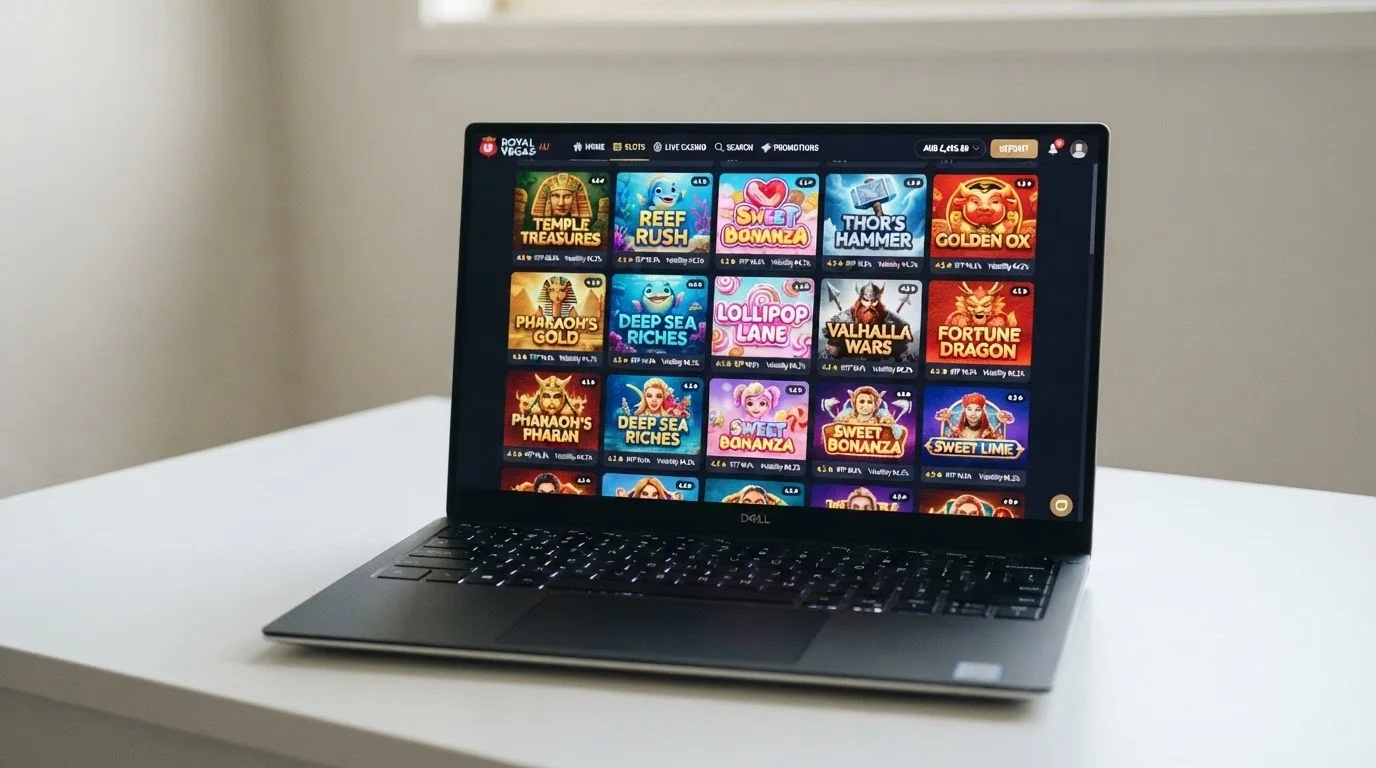
Return-to-player — the percentage of every dollar wagered that a pokie returns to players over the long run — is the single number a player can compare across titles. The table below lists the highest-RTP pokies available across international casinos, with the volatility band and the maximum-win multiplier where research confirms them. The headline number to read first is the RTP column; everything else is flavour on top of it.
| Pokie title | Provider | RTP | Volatility | Max win |
|---|---|---|---|---|
| Blood Suckers | NetEnt | 98.00% | Low | 900x |
| Big Bass Splash | Pragmatic Play | 96.71% | High | 5,000x |
| Thunderstruck II | Microgaming | 96.65% | Medium | 2,400x |
| Divine Fortune | NetEnt | 96.59% | Medium | Progressive Mega |
| Gates of Olympus | Pragmatic Play | 96.5% | Extreme | 5,000x |
| Sweet Bonanza | Pragmatic Play | 96.48% | High | 21,175x |
| Wolf Gold | Pragmatic Play | 96% | Medium-high | Minor progressive |
| Mega Moolah | Microgaming | 88.12% | — | Jackpot |
Blood Suckers leads the table at 98.00% — the only title above 97%. The NetEnt vampire-themed pokie is low volatility, which means smaller wins paid more often; the 900x maximum win is modest by modern standards. For a player whose metric is the percentage of every wagered dollar the machine gives back over time, Blood Suckers is the cleanest answer in this lobby.
The Pragmatic Play titles cluster between 96% and 96.71%. Gates of Olympus at 96.5% is the well-known extreme-volatility game with a 5,000x ceiling and the mechanic that pays anywhere on the grid. Sweet Bonanza runs at 96.48% with a maximum win of 21,175x — the highest fixed-max-win on this list, and a long-tail title where most sessions will return close to the RTP and a small number will pay outsized multiples. Big Bass Splash, at 96.71%, sits at the top of the Pragmatic cluster. Thunderstruck II (96.65%) and Divine Fortune (96.59%) are the Microgaming and NetEnt mid-volatility anchors. Wolf Gold at 96% rounds out the upper-RTP band.
Mega Moolah sits at the bottom for a reason. Its base RTP is 88.12% — almost ten percentage points below the cluster above — because the headline number on this game is the progressive jackpot rather than the per-spin return. The jackpot contribution eats into the base RTP, and a player spinning Mega Moolah is buying a ticket at the jackpot rather than a session at standard slot economics.
The catch with RTP is that a casino can serve lower-RTP versions of the same title. Gates of Olympus, for instance, is published at 96.5%, but some operators serve 95.51% or 94.5% versions of the same game. The one-and-a-half to two percentage point gap sounds small and compounds across a session. A player who wants the published RTP needs to confirm it in the game’s information panel after the lobby loads; otherwise the assumption that the title on the lobby equals the title in the table is unsafe.
Live Dealer Tables: Real Croupiers, Offshore Studios
Live dealer is the second pillar of any modern offshore lobby. Real croupiers sit at real wheels and deal real cards, with cameras streaming the action to the player’s screen and a betting interface overlaid. Roulette, blackjack and baccarat are the spine; game-show formats — Crazy Time, Monopoly Live and their successors — are the growth end. Studios run from Evolution’s main bases in Malta, Latvia and Georgia, with Pragmatic Play Live running a parallel network out of Bucharest and Belgrade.

The scale of the live-dealer category is the part the domestic market cannot match. A single offshore operator can carry 500+ live-dealer tables, and the variety runs from AU$0.50 roulette through AU$10,000 blackjack. The croupier is the show. The player bets behind the screen. The result is whatever the wheel produces.
The regulatory point is the one a sharp-eyed reader will catch. The croupier sits in a studio licensed by an offshore regulator — Curaçao or Malta, most commonly — and the streams are piped into an Australian player account that is not itself regulated by the ACMA. The operator answers to that offshore regulator, not to Australia. The game is fair on the studio side. There is no Australian consumer body to take a complaint to if it is not.
Table Games and the Full Game Library
Beyond pokies and live dealer, an offshore lobby typically carries a full table-game suite: multiple roulette variants (European, American, French, immersive), blackjack in enough rule-sets to keep a serious player interested, baccarat, pontoon, casino hold’em, three-card poker, and the occasional craps or sic bo. Most titles are RNG-based — software-driven games without a live croupier — and run at RTPs in the 97% to 99.5% range depending on the rule-set. American roulette at 94.74% is the floor; European roulette at 97.3% and blackjack at 99.5% are the ceiling.
Game-show formats — the live, presenter-led games that evolved out of Evolution’s Dream Catcher — are the category that has grown fastest in the last five years. The library is broad, the betting interfaces are designed for low-stakes entertainment, and the titles are designed to read well on a phone screen. The volatility is high; the entertainment value is real.
The breadth of a typical offshore library is what makes the comparison with a domestic wagering account unfair. A Sportsbet casino tab runs dozens of games; an offshore operator runs thousands. The price is the safety net.
Who Makes the Games: The Provider Landscape
The software studios behind the games are the names that recur across every offshore lobby. Pragmatic Play is the most prolific — Gates of Olympus, Sweet Bonanza, Big Bass Splash, Wolf Gold all carry its name, and the provider’s release schedule sets the rhythm of the lobby. NetEnt supplies the longer-running catalogue (Blood Suckers, Divine Fortune, Starburst). Microgaming’s heritage titles (Thunderstruck II, Mega Moolah) carry the progressive-jackpot segment. Evolution owns the live-dealer category by market share, with Pragmatic Play Live as the established challenger. Hacksaw Gaming and Relax Gaming are the newer names driving the high-volatility end — Hacksaw on mobile-first scratch mechanics and the multiplier-driven slots, Relax Gaming on Money Train 4, which carries the highest maximum win in the offshore market at 100,000x the stake.
The provider list is itself a quality signal. A casino that carries Pragmatic Play, NetEnt, Microgaming, Evolution, Hacksaw and Relax is a casino that is paying the licences those providers charge — which is to say, it is operating at a level where the catalogue is curated rather than scraped. A casino that carries only one or two providers is operating at a different scale. The player cannot always see the provider list before signing up; the lobby itself is the proof.
Why Your No-Deposit Bonus Is Smaller Than the Number on the Screen
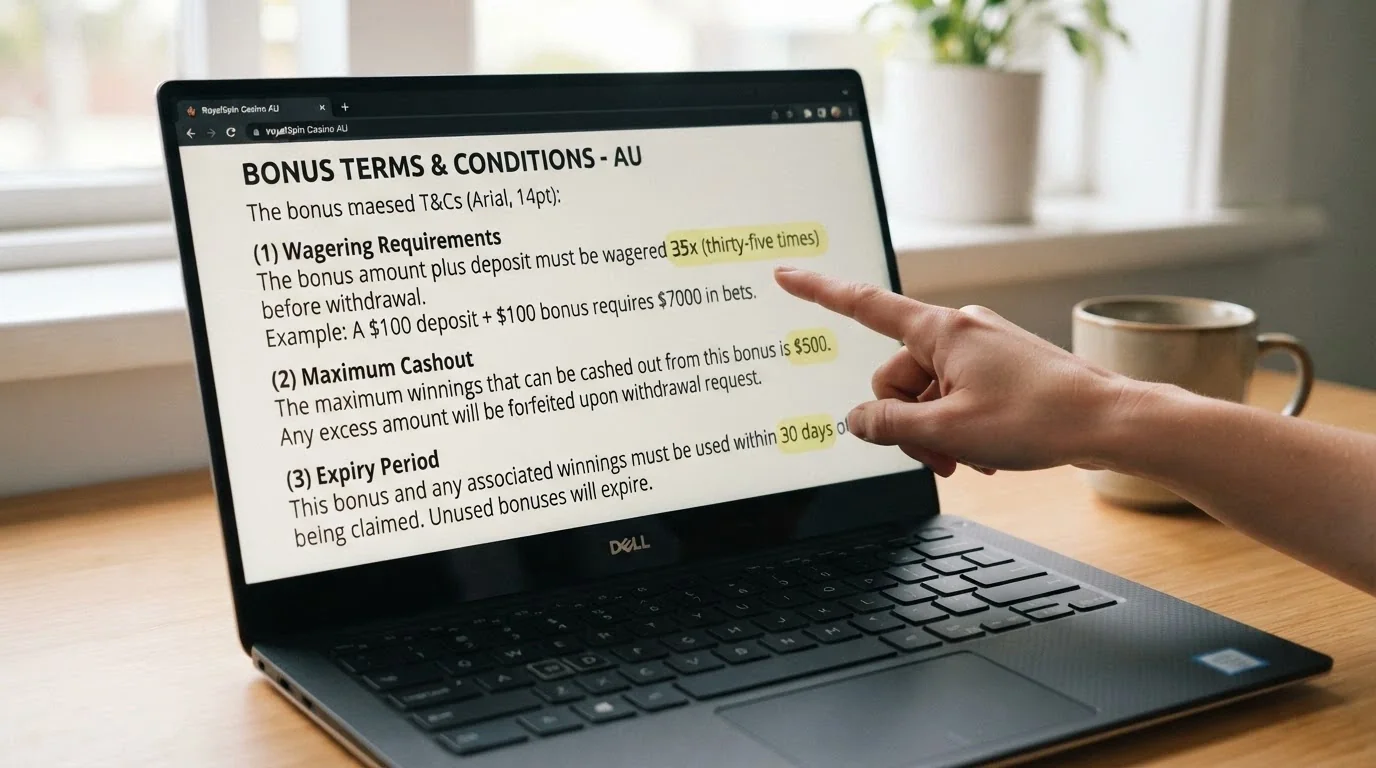
A AU$10 no-deposit bonus with 30x wagering requires AU$300 in turnover before a cent can be withdrawn. Run that turnover through a representative pokie at 96.5% RTP and the expected loss is AU$300 multiplied by 3.5% — the house edge — which is AU$10.50. Assuming only the bonus amount is wagered, the offer is, on average, worth less than its face value: half a dollar more to clear than the AU$10 the bonus credits. The figure is a statistical estimate over many spins under those assumptions; it promises no win, no payout and no return.
That is the no-deposit bonus as the arithmetic shows it. What follows is what the bonus terms add on top.
No-Deposit Bonus Offers: What the Featured Operators Actually Give You
Three of the ten operators in this set carry confirmed no-deposit terms. Royal Reels is the only one offering cash — AU$10 after phone verification at 30x wagering. Bizzo runs 10 free spins with 40x wagering on the winnings. Rocket Casino runs up to 125 free spins with 45x wagering on the winnings. The other seven operators — Rocket Play, Skycrown, Stake, Rainbet, FairGO, Scream Casino and WinSpirit — did not surface a confirmed no-deposit offer at the time this guide was reviewed.
What “did not surface a confirmed offer” means in practice is that the operator either does not run a no-deposit bonus for Australian sign-ups or runs one on terms the research supporting this guide was not able to verify. It does not mean no offer exists; it means this guide will not publish terms it cannot confirm. Players checking any of the seven should treat the absence of a confirmed offer as a reason to read the bonus terms page before claiming anything.
Wagering Requirements and Cashout Caps: The Fine Print That Eats Your Bonus
Three clauses turn a no-deposit bonus from a marketing number into a maths problem. The wagering multiple — 40x to 60x is typical across Australian-facing offshore casinos — turns an AU$10 cash bonus into AU$400 to AU$600 of required turnover. On free-spins winnings, the same multiple is applied to what the spins produced rather than to the spin value itself, which is why a free-spins bonus is structurally cheaper to claim than a cash bonus at the same face value.
The cashout cap is the second clause. Most Australian no-deposit offers cap the maximum withdrawal at AU$50 to AU$150, regardless of how much the wagering actually produces. The cap turns the upside of a lucky session into a fixed ceiling. A player who runs AU$300 of bonus balance to AU$1,000 of winnings will withdraw AU$150 — and forfeit the rest. The clause is non-negotiable.
The max-bet rule is the third clause. While wagering a no-deposit bonus, the maximum stake per spin is typically AU$5 to AU$7. Exceeding it can void the bonus and every winning it has produced. The clause exists to stop a player clearing the wagering requirement in a single high-stakes spin. The cost of breaking it is the entire bonus.
The expiry window runs alongside all three. Cash bonuses typically expire within 7 to 14 days; free-spins winnings expire within 3 to 7 days. The clock starts at the moment the bonus is credited. A player who takes a week to read the terms will lose the bonus before they place a single spin.
Is It Legal? The Offshore Rulebook Every Australian Should Read Before Playing
The legal picture for an Australian playing at an international casino is shaped by one statute and one regulator. The Interactive Gambling Act 2001 prohibits the provision of online casino games to a person physically in Australia. The ACMA enforces it. The 2026 reform has added a new layer that takes effect in January 2027. What follows is what each of those does, and what offshore play costs the player under them.
The Interactive Gambling Act and Why No Online Casino Is Licensed in Australia
The Interactive Gambling Act 2001 makes it an offence to provide online casino games, online pokies and in-play sports betting to a person in Australia. There is no licence for any of those products — not federally, not in any state or territory. The Northern Territory Racing and Wagering Commission licenses wagering on races and sport placed before the event begins, lotteries and keno; it does not, and cannot, license an online casino.
The offence sits on the provider. Civil penalties run up to AU$2,475,000 per day for an individual and AU$12,375,000 per day for a corporation that provides a prohibited interactive gambling service. No Australian has been prosecuted for being on the receiving end of that service. The IGA does not target the punter. What the IGA does not do is make the punter safe — and the difference between “not illegal for you” and “safe for you” is the substance of the next several sub-sections.
The licensable products and the prohibited products are not the same list. Wagering on races and sport before the event begins is permitted through a state or territory licensee. Lotteries and keno are permitted through the relevant state operator. Online casino games, online pokies, online poker and in-play betting online are prohibited. A page about “the best licensed online casinos in Australia” is describing something that does not exist, and writing one produces a factual lie on every screen.
The ACMA Enforcement Record: 1,564 Sites Blocked and Counting
The ACMA has enforced the IGA with increasing intensity since 2017. As of March 2026, the regulator has blocked 1,564 illegal gambling and affiliate websites since its first blocking request in November 2019. More than 225 illegal services have withdrawn from the Australian market in the same period — many after receiving a formal warning from the ACMA and choosing to exit rather than face blocking and civil penalty proceedings.
The Q4 2025 enforcement picture illustrates the scale. In October to December 2025 alone, the ACMA completed 23 investigations involving 45 gambling sites, finding 69 breaches across the three prohibited categories — 38 for providing a prohibited interactive gambling service, 26 for providing an unlicensed regulated service, and 5 for advertising. The pattern is that investigations run for months, the formal findings land in batches, and the blocking requests follow once a service has been found in breach. The cumulative count is what the ACMA publishes; the monthly flow is steady.
The blocking itself is DNS-level. Australian ISPs are directed to refuse to resolve the offending domain. The site continues to operate in every other jurisdiction. For an Australian player with a balance at the time of a block, the practical effect is a broken URL and no Australian complaints body to recover the funds.
The 2026 Gambling Reform Bill: What Changes on 1 January 2027
The Interactive Gambling Amendment (Gambling Reform) Bill 2026 passed Parliament on 19 August 2026 and the substantive measures commence on 1 January 2027. None of the new rules reach an offshore casino, because none of them bind a non-Australian-licensed operator. What they do is tighten the rules around licensed wagering and create new tools to suppress the offshore trade at its Australian edges.
The advertising changes run first. From 1 January 2027, wagering advertising is limited to no more than three ads per hour between 6:00 am and 8:30 pm, with a live-sport blackout from 15 minutes before to 5 minutes after a live event. Athletes, celebrities and influencers are barred from promoting wagering products. AdStop — a national wagering advertising opt-out register administered by the ACMA — gives individuals a single mechanism to opt out of wagering advertising across online platforms.
The inducement changes are the second tier. From 1 January 2027, direct marketing of inducements is prohibited for 14 days after a customer signs up with a licensed operator, for three months after a person deregisters from BetStop, and indefinitely for any customer the operator identifies as at-risk. The rule targets the bonus-blast the moment a new account is opened — the AU$200 sign-up credit, the “deposit AU$50 get AU$100 free” splash — and the follow-up promotions for the recently self-excluded.
The payment changes land last and cut deepest at the offshore route. From 1 January 2027, banks and payment providers gain express authority to block transactions to illegal gambling operators. The change does not ban credit card or crypto at an offshore site — those remain the operator’s house rule, not the bank’s — but it gives Australian banks a clear legal basis to refuse to process a transfer to a known illegal operator. The mechanism turns on the bank’s discretion and the regulator’s enforcement, and it has not yet been tested at scale.
What You Forfeit When You Play Offshore: No Australian Consumer Protection
Four protections change the moment an Australian player deposits at an offshore casino. Australian Consumer Law does not apply to a Curaçao- or Anjouan-licensed operator — the operator’s own terms govern the relationship, and the only complaints body sits in the operator’s home jurisdiction. BetStop does not cover the site: the National Self-Exclusion Register binds Australian-licensed wagering, and a person who has registered can still deposit at an offshore casino. The ACMA can — and regularly does — direct Australian ISPs to block the domain, and the block can land at any time. A player with a balance when it does does not get a refund. And no Australian court can compel an offshore operator to pay a disputed withdrawal; the operator’s licensing jurisdiction may offer a complaints process, but it is slow, under-resourced and rarely binding.
The four together are not theoretical. They are the difference between a Sportsbet account and a Stake account, and they are the difference a reader should weight before either choice.
Credit Cards, Crypto and the Payment-Method Tell
Since 11 June 2024, credit cards, credit-related products and digital currency (crypto) have been banned as payment methods for licensed Australian online wagering. The penalty for an operator that fails to enforce the ban is up to AU$247,500. The legal deposit routes for a licensed operator are debit card, bank transfer, PayID/Osko and BPAY.
A gambling site that asks an Australian customer for a credit card or a crypto deposit is, by that act, operating outside the Australian rules. The payment method itself is the tell. No licensed wagering operator can accept either; an offshore casino can. The deposit option on the cashier page is the single clearest signal a player has of which side of the line they are on.
From 1 January 2027, banks and payment providers gain express authority to block transactions to illegal gambling operators — a power that turns the payment-method signal from a tell into a possible block. The mechanism is not a ban on the customer’s account; it is a refusal to process the transaction. The bank’s discretion matters. The ACMA’s published list of illegal operators matters. The customer who tries to deposit at an offshore site from an Australian bank may find the transaction declined.
Playing Offshore Means Playing Without Australia’s Safety Net
Australian players have a set of consumer-protection and harm-minimisation tools that are not matched in any other jurisdiction. BetStop is the centrepiece. The National Gambling Helpline and Gambling Help Online are the safety net beneath it. The licensed operators carry responsible-play obligations by virtue of their licence. The offshore route strips all of it away. The remainder of this section is what gets stripped, and what is left standing if a player needs it.
BetStop: Australia’s Self-Exclusion Register — and Why It Cannot Reach an Offshore Casino
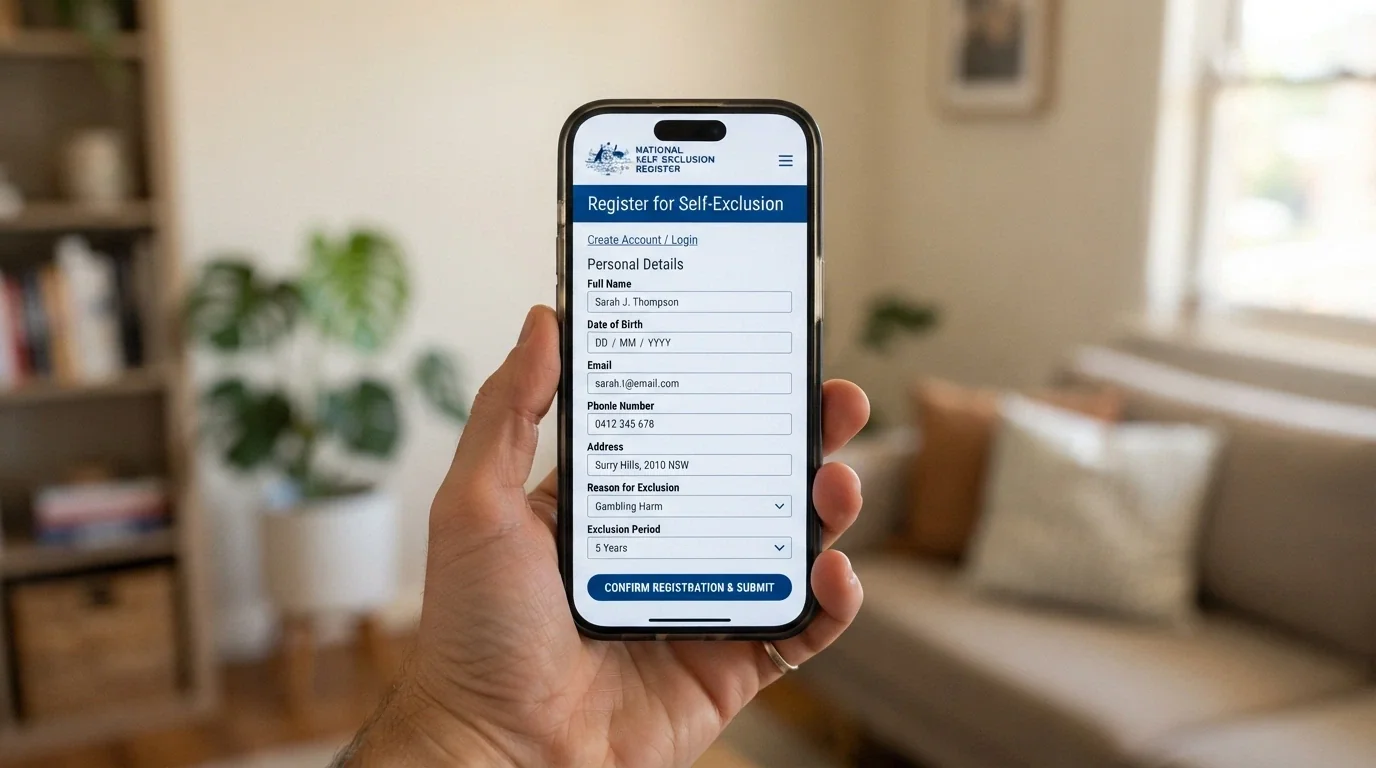
BetStop launched on 21 August 2023 as the National Self-Exclusion Register. The system is simple in design: a person registers, chooses a minimum exclusion period, and is barred from every Australian-licensed online and phone wagering service for the duration. As at 31 July 2026, BetStop has recorded 67,480 registrations, with 41,290 exclusions still active. Of the people who have registered, 78% were under 40 at the time of registration, and 38% selected lifetime exclusion rather than a fixed term.
The reported outcomes are the strongest evidence the register has produced. ACMA survey data from November 2025 found that 77% of BetStop registrants experienced a better quality of life, 79% reported improved mental health, and 69% experienced better personal relationships. The numbers are the regulator’s; they are also the closest thing to an outcome study the Australian self-exclusion system has.
The hard limit sits at the border. BetStop binds Australian-licensed wagering services only. An offshore casino is not connected to the register. A person who has registered with BetStop can still navigate to an offshore site, open an account, and deposit. The site does not check. The register cannot reach it. The exclusion works inside the licensed market and stops at the licensed market’s edge.
Where to Get Help: The National Gambling Helpline and Support Services
The free, confidential support infrastructure for Australians experiencing harm from gambling runs through two channels. The National Gambling Helpline — 1800 858 858 — is staffed 24 hours a day, free of charge, with counsellors trained in gambling-specific harm. Gambling Help Online, at gamblinghelponline.org.au, runs 24/7 live chat and email counselling with the same specialist brief. Both services are confidential and operate regardless of whether the person using them has registered with BetStop, is playing at a licensed operator or is playing offshore.
The scale of the underlying problem is the reason the services exist. Australian Institute of Health and Welfare data from 2022 estimated that about 2.1% of Australian adults — roughly 430,000 people — experience problem gambling, with a further 1.8% at high risk. The numbers are not the offshore route’s numbers specifically; they are the population-level prevalence that any harm-minimisation policy is built against.
Responsible-Play Tools and Age Verification at International Casinos
International casinos commonly offer deposit limits, session timers and reality-check pop-ups as built-in features. These are not the same as the obligations a licensed Australian wagering operator carries. There is no Australian regulation requiring an offshore casino to offer any of them; the tools exist because the operators have decided to offer them, and the operators can change the offering at any time.
The minimum age for any commercial gambling activity in Australia is 18. An offshore casino’s age verification is the operator’s own gate — usually a passport or driver’s-license check at registration — and the operator’s own licensing jurisdiction sets the standard the gate has to meet. The standard is not the ACMA’s; it is whatever the Curaçao or Anjouan regulator the operator answers to has published. The Australian minimum-age requirement does not bind the offshore operator; it binds the Australian player.
How We Picked and Ranked These International Casinos
The ranking supporting this page rests on the sources research was able to confirm during the review period. The framework checked licence status against the ACMA’s published register and the Interactive Gambling Act 2001 framework as administered by the regulator; checked each operator’s offshore licensing as stated by the operator or its reviewers; checked confirmed bonus terms where they were available from named sources; checked payment rails for credit-card and crypto acceptance (which doubles as the offshore-status tell described in the legality section); and checked game-library scale from each operator’s published catalogue.
The ranking reflects what the research confirmed. It is not an endorsement. Every operator on this page is offshore. No Australian online casino licence exists. The position in the table reflects the strength of the supporting evidence and the operator’s public profile; it does not reflect a recommendation to play.
The seven operators with no confirmed no-deposit offer were not penalised in the ranking for that absence. Their place in the table reflects their broader profile, not a comparison on a specification their public sources do not publish. Players comparing operators on specifications the research did not confirm should treat the absence as a reason to check the operator’s own bonus-terms page rather than as a reflection of the offer’s value.
Is It Worth the Risk? What This All Means for an Australian Player
The trade-off the rest of this page has built toward is straightforward. The international casino gives an Australian player access to pokies, live dealer and table games at a scale and a variety the domestic licensed market does not offer. It does so without an Australian licence, without BetStop coverage, without AU consumer-law protection, and without a guarantee the site will be reachable next week. The ACMA has blocked 1,564 illegal sites since November 2019; an offshore site can be added to that count at any time, with player balances still on it.
The arithmetic on the bonus side is unflattering. A AU$10 no-deposit bonus with 30x wagering requires AU$300 in turnover to clear; run that turnover through a representative pokie at 96.5% RTP and the expected loss is AU$10.50, half a dollar more than the bonus itself credits. The cashout cap on top of that — typically AU$50 to AU$150 — limits what the wagering can produce regardless of the outcome. The bonus is, on average, an entertainment purchase at a small negative expectation.
The decision turns on whether the games are worth the safety net the page has spent several thousand words documenting. The licensed Australian market offers race and sport wagering, lotteries, keno, and a narrow casino tab. An international casino offers thousands of pokies, hundreds of live-dealer tables, and the rest of a modern offshore lobby. The page does not pick an operator. It does not tell the reader to play. The evidence, however, points one way: the games are real, the bonus maths is what it is, and the protections an Australian bookmaker would carry do not extend across the border. The choice belongs to the reader. The reader is now equipped to make it.
Frequently Asked Questions
What payment methods can Australian players use at offshore casinos?
Crypto (Bitcoin, Ethereum, USDT), PayID or Osko where supported, debit card, Neosurf, and bank transfer. Credit cards and crypto are banned for licensed AU wagering since 11 June 2024, so an offshore site accepting either is operating outside Australian rules. Check the cashier before signing up — rails vary by operator and crypto remains the fastest withdrawal route.
Do international casinos accept Australian dollars?
Many AU-targeting international casinos offer AUD-denominated accounts with no conversion spread on the way in or out. Others run balances in USD or EUR and the conversion sits on the processor — typically a 1% to 3% spread each way. AUD support is common but not universal; the cashier page is the only reliable confirmation.
Are my winnings from an offshore casino taxable in Australia?
Gambling winnings are not assessable income for an ordinary punter under section 6-5 of the ITAA 1997, and losses are not deductible under section 8-1. The exception is carrying on a business of betting — Taxation Ruling IT 2655 — where the activity is systematic and organised. No Australian court has held an ordinary punter’s winnings assessable.
Which pokies have the highest RTP at international casinos?
Blood Suckers (NetEnt) leads at 98.00% RTP with low volatility and a 900x maximum win. The Pragmatic Play cluster — Big Bass Splash, Gates of Olympus, Sweet Bonanza — sits 96.48% to 96.71%. Mega Moolah’s base RTP is 88.12% because the jackpot contribution eats the per-spin return. Some casinos serve lower-RTP versions of the same title — Gates of Olympus appears at 95.51% and 94.5% in some lobbies — and the version on screen is the one that matters.
What happens if an offshore casino refuses to pay out my winnings?
No Australian consumer-protection body has jurisdiction over a Curaçao- or Anjouan-licensed operator; no Australian court can compel payment. The ACMA can block the site but not recover funds. The casino’s home jurisdiction may offer a slow, rarely binding complaints process. The best protection is not playing; the second is a long public payout history.
What did the 2026 gambling reform bill change for Australian players?
The Interactive Gambling Amendment (Gambling Reform) Bill 2026 passed Parliament on 19 August 2026 and the substantive measures commence on 1 January 2027. It introduces AdStop, caps wagering ads at three per hour between 6:00 am and 8:30 pm, imposes a live-sport blackout, bans athlete endorsements, restricts inducements, and gives banks express authority to block transactions to illegal operators. None of this binds an offshore casino.
Written by the editors at Min Deposit 5 Casinos AU.