
Best Casino Not on BetStop in Australia: The Offshore Market Mapped for 2026
 Available in AU
Every casino on this page accepts Australian players. None holds an Australian licence. That is not a paradox — it is the law. Online casino is prohibited in this country under the Interactive Gambling Act 2001, and there is no licence for it to hold. The “not on BetStop” part follows from the prohibition: BetStop, the National Self-Exclusion Register that launched on 21 August 2023, binds Australian-licensed wagering providers only. An offshore casino is licensed somewhere else — Curaçao, Anjouan, Costa Rica — and BetStop cannot reach it.

Current as of 18 October 2026 · verified against the ACMA register and the Interactive Gambling Act 2001
What follows is a ranking of ten offshore casinos accepting Australian players, ordered by estimated market share within the AU-facing offshore segment, plus the bonus maths, payment routes and legal context a player needs before depositing anywhere offshore.
Table of Contents
- Best Casinos Not on BetStop Australia in 2026
- What “Not on BetStop” Actually Means
- The Offshore Model: Why These Sites Operate Outside Australian Rules
- Rocket Play
- Skycrown
- Royal Reels
- WinSpirit
- Stake
- FairGO
- Rainbet
- Bizzo Casino
- Scream Casino
- Rocket Casino
- New Casinos Not on BetStop: What 2026 Has Brought
- Why Your 2026 Bonus Looks Bigger Than It Pays
- Getting Money In and Out Without a Local Licence
- The Legal Reality Every Australian Player Should Face
- Mobile Play When the App Store Won’t Help
- Pokies, Tables and Live Dealers: What Offshore Sites Actually Run
- Staying Safe When BetStop Can’t Help You
- How We Evaluated These Casinos
- What You Should Actually Do With This Information
- Frequently Asked Questions
Best Casinos Not on BetStop Australia in 2026
| Operator | Licence Jurisdiction | Welcome Bonus | Free Spins (Welcome) |
|---|---|---|---|
| Rocket Play | Not confirmed | 100% match up to A$1,000 | 100 |
| Skycrown | Not confirmed | Up to A$8,000 | 400 |
| Royal Reels | Not confirmed | — | — |
| WinSpirit | Not confirmed | — | — |
| Stake | Curaçao (reported) | — | — |
| FairGO | Curaçao (reported) | 300% match up to A$3,000 | 50 |
| Rainbet | Not confirmed | — | — |
| Bizzo Casino | Curaçao (TechSolutions Group) | Up to €400 | 150 |
| Scream Casino | Not confirmed | — | — |
| Rocket Casino | Not confirmed | 150% match up to €1,050 | 150 |
The table sorts by the same market-share order this article works through. Every row is an offshore casino — there is no licensed Australian casino to compare against, because the product is prohibited here. Welcome bonus figures vary widely, and that variation will repay attention in the bonus section, where the wagering multiplier does most of the work. Where a column reads “Not confirmed” or “—”, the figure was not sourced from a primary reference during research, and the operator section that follows flags what the player should verify themselves.
Three of the ten entries carry a Curaçao licence through reporting; the others leave jurisdiction unverified. Two entries sit at the top of the table and carry offers that deserve close reading — Rocket Play’s terms are tighter than they first read, and Skycrown’s bonus size is the largest in the featured set without an attached wagering figure. FairGO’s 300% match is the highest in percentage terms but the only one running on a single-provider RTG platform. The reader should treat the headline numbers as starting questions, not as answers.
What “Not on BetStop” Actually Means
BetStop is one exclusion form covering every Australian-licensed online and phone wagering service in a single step. As at 31 July 2026, the register had processed 67,480 registrations, with 41,290 exclusions still active — over 60% of everyone who has ever signed up. Seventy-eight per cent of registrants are under 40, and thirty-eight per cent chose lifetime exclusion. The register binds roughly 150 licensed wagering providers, and the exclusion runs from a three-month minimum to permanent.
The phrase “not on BetStop” describes an offshore casino that operates outside the licensing system the register monitors. The casino is not bound by it. A person registered with BetStop can open an account at an offshore casino on the same day; the offshore operator will keep accepting deposits as long as the player keeps sending them.
This is not a loophole. The Interactive Gambling Act 2001 prohibits online casino provision in Australia, so an offshore casino cannot obtain an Australian licence — none exists for the product. BetStop could not connect to one even if it wanted to; there is no licence to revoke. The register’s scope is what it was designed to cover: licensed wagering. Offshore casinos sit outside that frame by design.
What a BetStop-registered player gives up by stepping outside it is the coverage itself. They lose the national, one-step exclusion. They also lose the broader safety net that comes with an Australian-licensed operator — the activity statements, the customer-set deposit limits, the state-based complaints pathways, the recourse when something goes wrong. None of that travels offshore.
The Offshore Model: Why These Sites Operate Outside Australian Rules
An offshore casino operating for Australian customers carries a licence issued somewhere that is not Australia. The licence jurisdictions common in the market are Curaçao, Anjouan and Costa Rica. None is recognised in Australian law, and none connects to BetStop. The operator registers with one of those jurisdictions because the licence it would need does not exist here.
The Interactive Gambling Act 2001 prohibits an Australian-licensed operator from offering online casino games, online pokies, or in-play betting on a sporting event once it has started. The licensable products — pre-event sports and racing wagering, lotteries, keno — concentrate through the Northern Territory Racing and Wagering Commission, which acts as the de facto national wagering licensor through Licensing NT, with licence terms running up to twenty years.
The asymmetry is structural. A SportsBet or bet365 account delivers a BetStop-registered, AU-licensed, in-AUD product, with debit card and PayID deposits, customer-set deposit limits and an Australian complaints pathway. An offshore casino delivers an unlicensed product, accepts deposits through payment methods the licensed market is banned from accepting, and operates from outside the country’s regulatory perimeter. The two are different products, regulated differently, protected differently.
The cost of choosing the offshore route lands entirely on the player. There is no Australian consumer protection, no Australian complaints body, no recourse if the operator refuses a withdrawal or voids a win, and the site can be DNS-blocked by ACMA at any time with a balance still in the account. The product is prohibited, but the provider — not the player — is the target of the law.
Rocket Play
Rocket Play ranks third by market share among AU-facing offshore brands tracked, at 9.4% — the largest of the ten operators on this page. The welcome bonus is a 100% match up to A$1,000 plus 100 free spins, with a 40x wagering multiplier and a A$30 minimum deposit. The wagering figure is the central fact: A$1,000 at 40x means A$40,000 must be turned over before any withdrawal, and the maths of clearing the bonus is worked through in detail in the wagering section below.
The no-deposit offer is the more interesting one. Rocket Play carries 50 free spins on Gamzix’s “3×5 Hold The Spin”, at A$0.10 per spin, with 60x wagering on winnings, a maximum cashout of A$50, and a 24-hour activation window once claimed. The headline “50 free spins” reads generously until the four qualifiers sit beside it: the spin value is at the floor, the wagering is heavier than the deposit bonus, the cashout cap limits any real win, and the activation window is short enough to miss.
Payment methods are partially confirmed — deposits from A$30, with crypto and bank transfer supported. The licence jurisdiction was not confirmed from a primary source this run, though Curaçao is widely cited across affiliate listings. For the player who values a clear no-deposit route and a known deposit match, Rocket Play carries enough verified detail to evaluate. What it does not carry is a confirmed licence or a full payment-method list, both of which the player should verify on the operator’s own terms page before sending money.
Skycrown
Skycrown holds the fourth-largest share of AU-facing offshore traffic at 8.55%, behind only the very top of the segment. The welcome offer is the largest in the featured set: up to A$8,000 plus 400 free spins. That figure reads large and is the reason this brand sits high in affiliate rankings, but the wagering multiplier, game contribution rates, and any maximum cashout cap lack primary confirmation this run.
What is confirmed: the operator accepts Australian players and processes payments through PayID and crypto. The licence jurisdiction is unverified. The player who lands on a Skycrown promotional page sees a bonus number that puts every other operator on this list in the shade, but the fine print — wagering, eligible games, max bet while bonus is active, max cashout — is where the offer’s real cost lives. None of those qualifiers sit in the research record for this review. The reader should treat the headline figure as a starting question rather than an answer: what does the A$8,000 require to clear, what does it cap at withdrawal, and under which licence is it issued? The cashier page and the bonus T&Cs answer these in one read each.
Royal Reels
Royal Reels sits ninth in the AU-facing offshore market at 2.51% share. The brand is established and attracts real AU-facing traffic, but detailed specifics on bonuses, licence jurisdiction, and payment methods remain unavailable from primary sources. Readers should independently verify all operational details on the brand’s own site before depositing.
That does not mean the brand is empty — affiliate listings across the market carry the usual welcome-package figures — but the page does not transcribe figures it cannot source. Where Royal Reels’ bonus terms sit, what wagering multiplier applies, whether the licence is Curaçao or elsewhere, and which deposit methods actually clear for an Australian player: each of these needs to be checked on the operator’s own page before any deposit is made.
The due diligence a player should run on Royal Reels is the same check that applies to any offshore operator with thin public data. Verify the licence number on the issuing regulator’s website. Read the welcome bonus T&Cs in full before depositing — particularly the wagering multiple, the game contribution rates, and any max cashout clause. Search for unresolved player complaints. Test the withdrawal process with a small deposit before committing a larger balance. Royal Reels is a real, AU-facing brand, but the page does not vouch for what it does not know.
WinSpirit
WinSpirit sits eleventh in the AU-facing offshore market at 1.55% share — established enough to rank, not large enough for the operator’s own terms to surface in standard review searches. The brand accepts Australian players and operates offshore; the rest of the picture is what the player should check themselves.
Details regarding bonus terms, licence jurisdiction, game providers, and payment methods lack primary verification for this brand. The player should treat the brand’s homepage and terms page as the source of truth, not any affiliate listing. Verify the licence number — the regulator’s own register will tell you whether the licence exists and whether it is current. Read the welcome bonus T&Cs: wagering multiplier, game contribution percentages, max bet while bonus is active, and any maximum cashout cap. Look for unresolved complaints on player forums before depositing. Test the withdrawal with a small deposit first; offshore operators with thin public data have a habit of paying slowly on the first cashout.
A small share of a market that is itself unregulated says nothing definitive about the operator behind it. The player who lands here through an affiliate link and assumes the headline offer is the offer is the player most likely to lose money on the fine print.
Stake
Stake is the twelfth-largest AU-facing brand at 1.28% share and the most recognisable name in the crypto-native segment. The licence is widely reported as Curaçao, though that report was not confirmed from a primary source this run. The domain is Stake.com; the brand has been operating long enough that its model is publicly visible.
Stake’s offer is structurally different from the match-bonus operators above. Where Rocket Play or FairGO runs a 100% or 300% deposit match, Stake runs wagering-focused promotions — rakeback, race finishes, sportsbook reloads — and does not run a traditional welcome bonus the way the others do. The bonus code is a different kind of value, and the comparison to a deposit match is not apples-to-apples.
The crypto-first setup is the other point of difference. Stake accepts Bitcoin, Ethereum, Litecoin and others; AUD funding flows through crypto rather than PayID. Australian banks, which are banned from processing credit card or crypto payments to licensed wagering, do not gate this route — though from 1 January 2027, banks gain express authority to block transactions to illegal gambling operators, and the friction around this route may compress over time. The Stake write-up is qualitative by necessity: the bonus mechanics that drive most comparisons here are not the mechanics this brand runs.
FairGO
FairGO is the smallest of the operators with confirmed bonus data — 0.80% market share, sixteenth in the AU-facing segment — and the only RealTime Gaming house in the featured set. The single-provider setup means the game lobby is RTG titles across the board: Cash Bandits 2, the title the welcome spins run on, sits among them.
The welcome bonus is the most generous in percentage terms on this page: a 300% match up to A$3,000 plus 50 free spins on Cash Bandits 2, with a A$20 minimum deposit and no maximum cashout on the deposit bonus. That last point matters — most offshore deposit bonuses carry a cap, and FairGO’s terms explicitly do not. The wagering on the deposit bonus is 30x the deposit plus bonus, which is lighter than the 40x that runs elsewhere.
The no-deposit offer is a A$50 free chip with a A$180 cashout cap and 60x wagering. It is the largest free-chip amount in the featured set, but the cashout cap is the binding constraint: a player who wins A$200 from the chip walks away with A$180, and any further winnings evaporate. The redemption window runs 150 days from claiming the offer, which is unusually long for the offshore segment and gives a player who would otherwise miss a short activation deadline room to clear the bonus slowly.
Payments confirmed: Neosurf, crypto, bank transfer and credit/debit cards. The card route is the one to watch — Australian banks block credit card deposits under the Interactive Gambling Amendment Act, and FairGO is licensed offshore and not subject to that rule. A debit card deposit may or may not clear depending on the issuing bank’s policies. The Curaçao licence is widely reported.
For the player who values a high-percentage match with light wagering and a long runway, FairGO is the closest thing to a value proposition in the featured set. The single-provider library is the trade-off — variety is not what FairGO offers.
Rainbet
Rainbet sits thirteenth in the AU-facing offshore segment at 1.28% share — the same share as Stake, though the brands are nothing alike. Rainbet operates offshore, accepts Australian players, and that is what the research record carries. No primary source has verified the welcome bonus terms, licence jurisdiction, game providers, or accepted payment methods for Rainbet this run.
The checks that matter before depositing at a brand with this thin a public record are the same ones the Royal Reels and WinSpirit sections walk through. Verify the licence number on the regulator’s own register; the licence has to exist for the regulator’s site to confirm it. Read the welcome bonus T&Cs in full, with particular attention to wagering multiplier, game contribution rates, max bet while bonus is active, and any max cashout clause. Search player forums for unresolved complaints. Test the withdrawal process with a small deposit — a slow first withdrawal is the most reliable early signal of an operator that will not pay promptly.
Rainbet may be a perfectly reasonable operator behind the thin record. The page does not say otherwise. It also does not vouch for what it cannot confirm, and that is the position a player should bring to a brand that does not publish its own bonus terms prominently.
Bizzo Casino
Bizzo Casino is nineteenth by market share at 0.57%, but the operator’s profile is the most detailed in the featured set after Rocket Play and FairGO. The licence is Curaçao through TechSolutions Group, widely reported, and BGaming is confirmed as a provider — specifically for the no-deposit bonus spins.
The welcome package runs across two deposits rather than one. First deposit: 100% match up to €100 plus 100 free spins. Second deposit: 50% up to €300 plus 50 free spins. Total: up to €400 plus 150 free spins. The two-step structure is common in offshore packages and is worth noting for the player who plans to deposit twice rather than once — the second-deposit match is the better of the two in absolute euros, but at a lower percentage.
The no-deposit offer is 20 free spins on BGaming’s Grand Buffalo Hold and Win and Merge Up 2, with a €50 maximum cashout, three days to activate and seven days to wager. Compared to Rocket Play’s 50 free spins at 60x wagering, Bizzo’s 20 free spins carry a smaller upfront offer but a longer activation window and shorter wagering deadline. Each is a different trade-off.
The wagering multiplier on the welcome package was not confirmed from a primary source, but two contribution rules are explicit: slots count 100% toward wagering; table games and live casino count 0%. That zeroes out any player’s plan to clear the bonus at blackjack or roulette. The max bet while a bonus is active is €5 per spin. The winnings cap on the deposit bonus is €10,000. That is high enough to be irrelevant for most players, but it is the ceiling above which no further winnings are paid, and a player who hits a feature spin worth more than the cap walks away with €10,000.
Scream Casino
Scream Casino is fourteenth in the AU-facing offshore segment at 0.99% share. The brand exists, the AU-facing traffic is real, and that is the shape of the research record. Primary documentation for Scream Casino’s welcome bonus terms, licence jurisdiction, game providers, and payment methods remains unavailable this run.
Scream Casino is a brand with thin public data, and the player who arrives at it through an affiliate link should treat the affiliate’s headline figure as a starting question rather than an answer. What does the welcome bonus require to clear, what is the licence jurisdiction, what is the regulator’s site where the licence can be checked, what payment methods actually clear for an Australian player, what is the withdrawal speed on a small first deposit — each of these is a question the player needs to answer on the operator’s own page before sending money.
The audit process that applies to Royal Reels, WinSpirit and Rainbet applies to Scream Casino unchanged. The lack of confirmed data is not an accusation; it is a description of what the page can vouch for.
Rocket Casino
Rocket Casino is twentieth in the AU-facing offshore segment at 0.57% share, the same share as Bizzo but a different brand and a different offer. The name overlap with Rocket Play is a confusion to clear up immediately: Rocket Casino operates at Casinorocket.com and is not the same brand as Rocket Play, which sits at the top of this list. The two should not be merged in any comparison.
The welcome offer is a 150% match up to €1,050 plus 150 free spins on Big Bass Splash, with the wagering multiplier and game contribution rules not confirmed from a primary source this run. Big Bass Splash is a Pragmatic Play title that recurs across offshore welcome packages and is well-known enough that a player who has played offshore casinos before will recognise the name.
The licence jurisdiction was not confirmed. The casino is offshore, no AU licence exists for the product, and what the player should verify before depositing is the same checklist as elsewhere: licence number on the regulator’s own site, bonus T&Cs in full, withdrawal policy and player complaint record. Rocket Casino is the last of the ten operators on this page and the third to carry welcome free spins on a recognisable Pragmatic Play title.
New Casinos Not on BetStop: What 2026 Has Brought
Every new casino that launches and accepts Australian players does so outside the local regulatory perimeter, because the product it sells is prohibited in Australia. There is no licence to obtain, no regulator to notify, no Australian compliance path to walk. A new offshore brand registers in Curaçao, Anjouan or Costa Rica, opens for business, and the only gate on a player joining it is the player’s own checklist.
This is not a grey area. Online casino is prohibited in Australia under the Interactive Gambling Act 2001, the amendment passed in 2017 gave ACMA its blocking and enforcement powers, and the Interactive Gambling Amendment Bill 2026 — passed in August 2026, commencing 1 January 2027 — adds the bank-blocking authority and advertising tightening to the existing framework. None of this changes the legal status of a new offshore brand. It does change the friction around moving money to one.
Why a New Brand Launches Outside the Australian System
A new offshore casino registers in Curaçao, Anjouan, or Costa Rica because those are the licences available to it. An Australian licence is not available to any online casino, and that is the structural reason a brand launches outside the system rather than inside it. The casino is not exploiting a loophole; it is responding to the only licence market it has.
ACMA’s enforcement against offshore operators is real and ongoing. Since the first blocking request in November 2019, ACMA has had 1,564 illegal gambling and affiliate websites blocked by Australian ISPs, and 225 or more illegal services have withdrawn from the Australian market since 2017. A new brand is not exempt from this reach. It can be added to the block list as soon as ACMA identifies it, and a player who has deposited with a new entrant can find the domain unreachable through their Australian connection with money still sitting in the account.
What to Check Before You Join a New Offshore Casino
A new brand carries no track record. The player’s checklist is the only gate, and the checks that matter are four.
Verify the licence number on the regulator’s own website. Curaçao, Anjouan, Costa Rica — each runs a public register where the licence status can be confirmed. A licence number that does not resolve on the regulator’s site is a licence number that does not exist.
Read the welcome bonus terms in full before depositing. Wagering multiplier, game contribution percentages, max bet while bonus is active, max cashout cap, validity period — these are the qualifiers that turn a headline number into a real one. The bonus section that follows walks through each.
Search for unresolved player complaints. A slow first withdrawal, a voided win, an account closure with balance still on it — these are the patterns to look for, and player forums carry them in the open.
Test the withdrawal process with a small deposit. A first cashout that arrives within the operator’s stated window is the cleanest signal that the operator pays. Anything slower is data, not reassurance.
Why Your 2026 Bonus Looks Bigger Than It Pays
A A$11,000 welcome package reads like free money. A 300% match reads like the casino is paying you to play. Both read wrong. The wagering multiplier, the game contribution rates, the max cashout cap and the validity window are where the bonus’s real cost lives, and the operator has set all four.
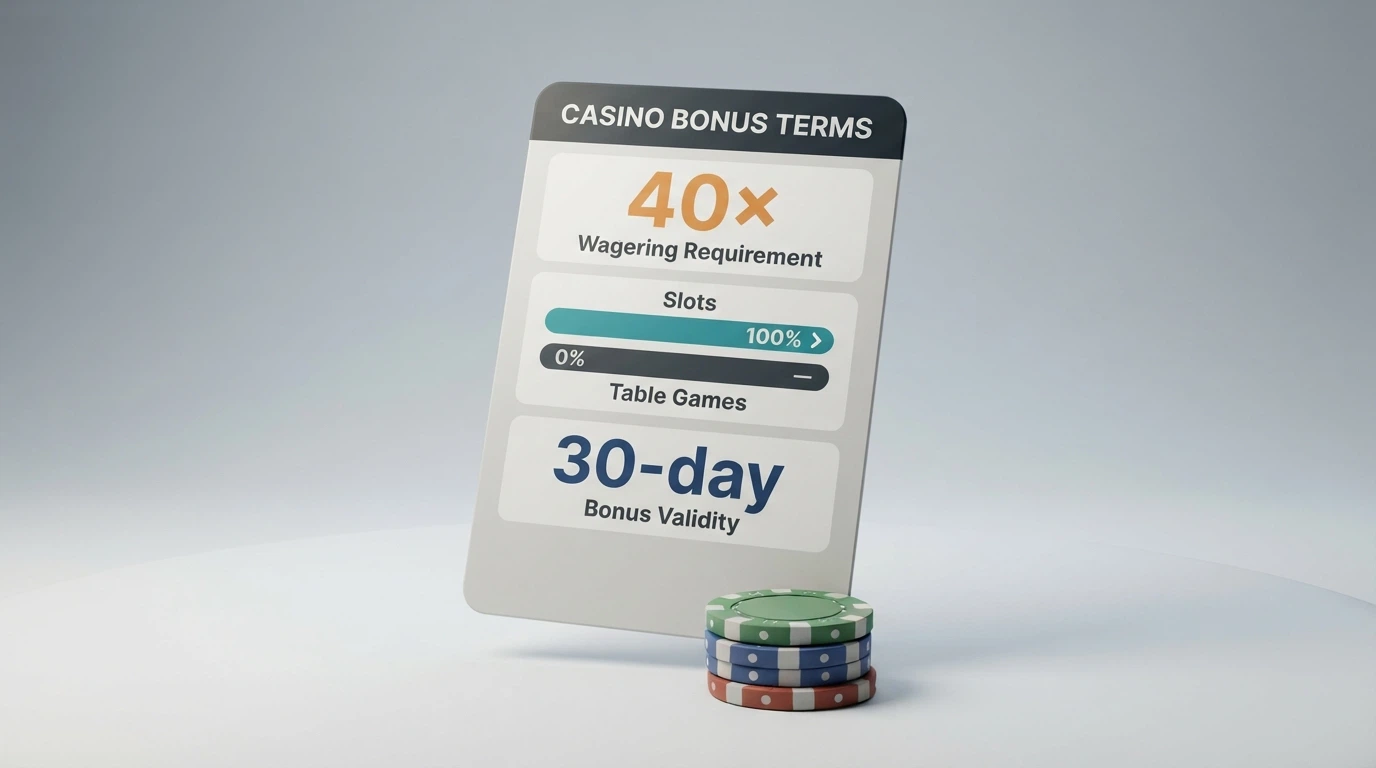
Rocket Play’s A$1,000 match at 40x wagering is the worked example below. FairGO’s 300% match to A$3,000 looks larger in percentage terms but lighter in turnover. Bizzo’s two-deposit €400 package carries a 100% / 50% split with the bonus-buy trap in the €5 max-bet rule. The marketing language — “boost”, “explosive”, “must-have” — is not arithmetic. The fine print is.
Free Spins: The Real Value Behind the Number
100 free spins reads generously until the four qualifiers sit beside it. Rocket Play’s welcome spins are part of the A$30-minimum-deposit package; the operator has not confirmed a per-spin value on the deposit free spins, but the deposit bonus’s wagering figure is what governs the eventual withdrawal. The no-deposit 50 free spins on Gamzix’s “3×5 Hold The Spin” carry their own rules: A$0.10 per spin, 60x wagering on winnings, A$50 maximum cashout, 24 hours to activate once claimed.
Bizzo’s 20 no-deposit spins on Grand Buffalo Hold and Win and Merge Up 2 trade a smaller count for a longer runway — three days to activate, seven days to wager — and a €50 cashout cap. The mechanics: a free spin at A$0.10 generates A$0.10 of nominal value, but the wagering requirement applies to winnings, not to the spin count. A 50-spin batch at A$0.10 with no win produces zero withdrawal. A 50-spin batch that lands a A$5 hit produces A$5 of bonus balance, which then needs to be turned over 60x — A$300 in total — before any of it converts to withdrawable cash. The headline figure is the count. The real figure is what survives the wagering.
No-Deposit Bonuses: The Fine Print on “Free” Offers
A no-deposit bonus costs the player nothing to claim. The operator still writes the rules on what can be won, how long the offer lasts, and how many times the bonus must be turned over before a cent leaves the account.
Rocket Play’s no-deposit 50 free spins carry 60x wagering on winnings, a A$50 maximum cashout, and a 24-hour activation window. FairGO’s no-deposit A$50 free chip carries 60x wagering and a A$180 maximum cashout. Bizzo’s 20 free spins no-deposit carry a €50 maximum cashout, with three days to activate and seven days to wager. The cashout caps across the no-deposit segment typically run A$10 to A$100, and the wagering multipliers are routinely higher than those on deposit bonuses — the operator is charging for the risk of paying out a free hit.
The activation windows are short on purpose. A 24-hour deadline on a 50-free-spin offer means a player who does not log in the day they register loses the spins. A three-day activation window with seven days to wager is generous by segment standards. Either way, the player who treats a no-deposit bonus as a permanent entitlement finds it has expired before they reach the cashier.
Low Deposit Casinos: Getting In for Less
A A$20 minimum deposit opens the door to FairGO’s 300% match; Rocket Play’s door opens at A$30. The low deposit lowers the barrier to entry, but it does not lower the wagering requirement, and that is the cost the player pays for the lower entry.
A A$20 deposit chasing FairGO’s 300% match claims a A$60 bonus (300% of A$20). The bonus is smaller in absolute terms than the A$3,000 cap, but the wagering still applies in full — 30x the deposit plus bonus, or A$2,400 of turnover before any withdrawal. The maths scales with the bonus, not the deposit. A player who deposits A$20 instead of A$200 claims a smaller bonus but faces the same proportional work to clear it.
The principle is unchanged across the segment: the lower entry does not change the wagering multiplier that turns the bonus into withdrawable cash. It does change the size of the bankroll at risk.
Wagering Requirements: The Multiplier That Eats Your Winnings
A wagering requirement is the multiplier that turns a bonus into withdrawable cash. Rocket Play’s A$1,000 match carries 40x wagering — meaning A$40,000 must be turned over before any winnings convert. FairGO’s deposit bonus carries 30x the deposit plus the bonus. No-deposit bonuses carry higher multipliers than deposit bonuses across the segment, with Rocket Play’s 60x and FairGO’s 60x both well above the deposit-bonus rate.
The worked example: Rocket Play’s A$1,000 bonus at 40x wagering. A$1,000 multiplied by 40 gives A$40,000 of required turnover. At a typical A$1 per spin on a pokie, that is 40,000 spins. At five seconds per spin, that is 200,000 seconds of play, or roughly 55.6 hours of continuous wagering — assuming only the bonus amount is wagered, with no further deposits and no payout along the way. The bonus is a A$1,000 number; the time it costs is the line underneath it.
Game contribution rules are the second lever. Bizzo’s welcome bonus assigns slots a 100% contribution rate and table games and live casino 0%. A player who clears the bonus at blackjack or roulette does not move the wagering counter at all. Slots are the only game class that does the work, and the player who prefers tables is paying the full bonus amount with no progress toward withdrawal.
The max bet while a bonus is active is the third lever. Bizzo caps it at €5 per spin and counts bonus-buy purchases toward that limit — a player who buys a feature at €50 spends €50 on a €5 cap and disqualifies the bonus. The smaller operators in the featured set carry their own caps; the player should check the T&Cs for the figure that applies.
Getting Money In and Out Without a Local Licence
Australian banks are gaining express authority to block transactions to illegal gambling operators from 1 January 2027, following the passage of the Interactive Gambling Amendment (Gambling Reform) Bill 2026. Even now, before that authority takes effect, the payment methods that work at an offshore casino are a narrower set than the cashier at a licensed Australian bookmaker — and deposit speed at the offshore casino says nothing about withdrawal reality.
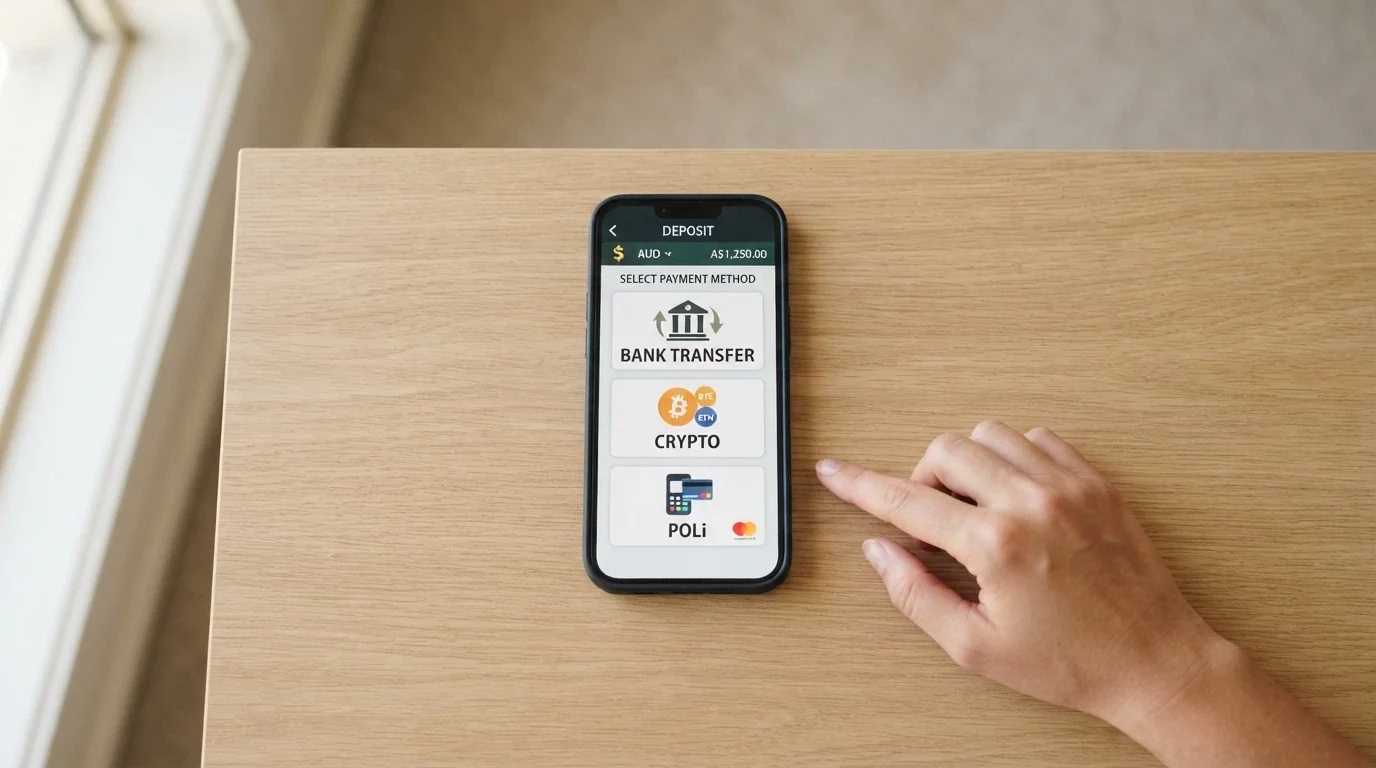
Licensed Australian wagering operators accept debit card, bank transfer, PayID/Osko and BPAY. Credit cards, credit-related products, and crypto are banned as payment for licensed wagering since 11 June 2024, with penalties up to A$247,500. An operator asking for a credit card deposit is operating outside Australian rules. That is a tell, not an option.
PayID, Crypto and Bank Transfer: What Actually Clears
PayID offers near-instant AUD deposits at some offshore casinos — Skycrown is confirmed to support it. The route is fast and familiar to an Australian player; the operational risk is the offshore side, which means the deposit clears on the casino’s terms rather than PayID’s.
Crypto bypasses the banking system entirely. Stake accepts Bitcoin, Ethereum, Litecoin and others. FairGO supports crypto. Rocket Play supports crypto. The route is the most reliable for an Australian player because there is no Australian bank in the middle to refuse the transaction — though that changes from 1 January 2027, when banks gain authority to block transactions to illegal operators, and the friction around crypto on/off-ramps in Australia may compress over time.
Bank transfer is the slowest route and the one with the most friction from Australian banks. FairGO supports bank transfer; Rocket Play supports bank transfer. The deposit can take one to three business days to clear, and the originating bank may decline the transaction if it identifies the recipient as an offshore gambling operator.
Any operator asking for a credit card is operating outside Australian rules. A debit card deposit may or may not clear depending on the issuing bank. Choosing a reliable method like PayID or crypto remains the safest route for maintaining a consistent transaction record.
Pay-by-Phone: Billing Your Mobile Account
Pay-by-phone casino deposits charge the deposit amount to your mobile bill or prepaid balance. The mechanic is simple: enter your mobile number, confirm the charge, the deposit appears in the casino account. The limit is low — typically A$30 to A$50 per day — and the route is deposit-only.
Withdrawals are not supported through pay-by-phone. A pay-by-phone deposit still requires a separate withdrawal method — bank transfer, crypto, or in some cases an e-wallet. The convenience is in the deposit side; the withdrawal side is unchanged.
Availability at the featured operators was not confirmed this run. The player who plans to use it should check the cashier page of the operator in question rather than assume availability.
Why Deposits Are Instant and Withdrawals Are Not
A deposit clears in seconds; a withdrawal can take days. The gap is not technical. It is procedural.
The KYC verification step gates the first withdrawal. An offshore casino that takes deposits without identity documents at registration — some accept a name, an email and a deposit method in under two minutes — runs the identity check at cashout rather than at signup. The player submits passport or driver’s licence, proof of address, and sometimes a payment-method verification, and the operator reviews them before releasing the first withdrawal. That review takes hours to days depending on the operator.
After the first withdrawal clears, subsequent withdrawals run faster — typically one to three business days at a well-run offshore operator, faster at the best. The slow first withdrawal is not a sign of trouble; it is the cost of accepting deposits without upfront verification.
The deeper problem is what happens if the operator stalls or refuses. There is no Australian complaints body for an offshore casino, no AU regulator to escalate to, no recourse if the operator voids a win or declines a withdrawal. The player carries the risk alone. ACMA can block the site, but blocking does not recover the money.
The Legal Reality Every Australian Player Should Face
Playing at an offshore casino is not a criminal offence for the individual. The Interactive Gambling Act 2001 targets the provider of a prohibited interactive gambling service, not the customer. “Not prosecuted” is not the same as “protected”, and the gap between the two is where every player risk lives.
| Feature | Licensed AU Wagering (BetStop-Registered) | Offshore Casino (Not on BetStop) |
|---|---|---|
| Legal status | Licensed by state/territory (concentrates at NTRWC) | Unlicensed in AU (prohibited product) |
| BetStop coverage | Yes — one-step national exclusion | No — operator not connected |
| Consumer protection | AU consumer law, state complaints pathways | None — no AU complaints body |
| Recourse if operator refuses withdrawal | AU regulator and legal system available | None — player carries the risk alone |
| Payment methods | Debit card, bank transfer, PayID/Osko, BPAY | PayID, crypto, bank transfer, e-wallets; no credit cards |
| Identity verification at registration | Required | Varies — sometimes delayed to first withdrawal |
| Activity statements / deposit limits | Required under state/territory conditions | Varies by operator |
| Site can be DNS-blocked | No | Yes — ACMA can block at any time, balance may remain |
The comparison is the framing for every section that follows. The licensed side has protections the offshore side does not; the offshore side has product features the licensed side cannot legally offer. Navigating this landscape requires balancing the trade-off between prohibited features and the loss of consumer protection.
What the Interactive Gambling Act Actually Prohibits
The Interactive Gambling Act 2001 prohibits the provision of online casino games, online pokies, and in-play betting on a sporting event once it has started. The licensable products — pre-event sports and racing wagering, lotteries, keno — concentrate at the Northern Territory Racing and Wagering Commission through Licensing NT, which acts as the de facto national wagering licensor with terms running up to twenty years.
The enforcement authority is the Australian Communications and Media Authority (ACMA). ACMA investigates complaints, issues formal warnings, brings civil penalty proceedings, refers operators for enforcement, and directs Australian ISPs to block illegal sites at the DNS level. The Interactive Gambling Amendment Act 2017 strengthened the original legislation and gave ACMA these powers; the Interactive Gambling Amendment (Gambling Reform) Bill 2026 layers further restrictions on top.
The player is not prosecuted. The Act targets the provider, and no Australian case has held an ordinary punter liable for using an offshore service. The minimum age for any commercial gambling is 18.
The 2026 Reform: What Changes on 1 January 2027
The Interactive Gambling Amendment (Gambling Reform) Bill 2026 passed Parliament on 19 August 2026 and its measures commence 1 January 2027. The reform targets licensed wagering advertising and inducement marketing; it does not change the legal status of offshore casinos, which were never subject to these rules.
From 1 January 2027, wagering advertising is restricted sharply. No more than three wagering ads per hour between 6:00 am and 8:30 pm. A live-sport blackout runs from fifteen minutes before a live event until five minutes after it ends. Athletes, celebrities and influencers are barred from promoting wagering products. Broadcasting sporting odds is banned outright. Online wagering ads may be shown only to logged-in users confirmed over 18 who have been offered an opt-out.
Direct marketing of inducements is prohibited for fourteen days after a customer signs up, for three months after a person deregisters from BetStop, and indefinitely for customers identified as at risk of gambling-related harm. The AdStop register — a national wagering advertising opt-out administered by ACMA and funded by a cost-recovery levy on licensed providers — goes live alongside the rest.
Banks and payment providers gain express authority to block transactions to illegal gambling operators. The provision targets offshore sites at the payment rail rather than at the domain, and it is the change that most directly affects the offshore casino player.
Offshore casinos were never subject to these rules and the reform does not change their legal status. The bank-blocking provision may shift the friction around moving money to an offshore site, and the broader tightening of the licensed market may shift player behaviour. The reform is the licensed market’s response to its own advertising excesses; it is not a reprieve or a tightening for the offshore side.
ACMA’s Blocking Powers and Your Money
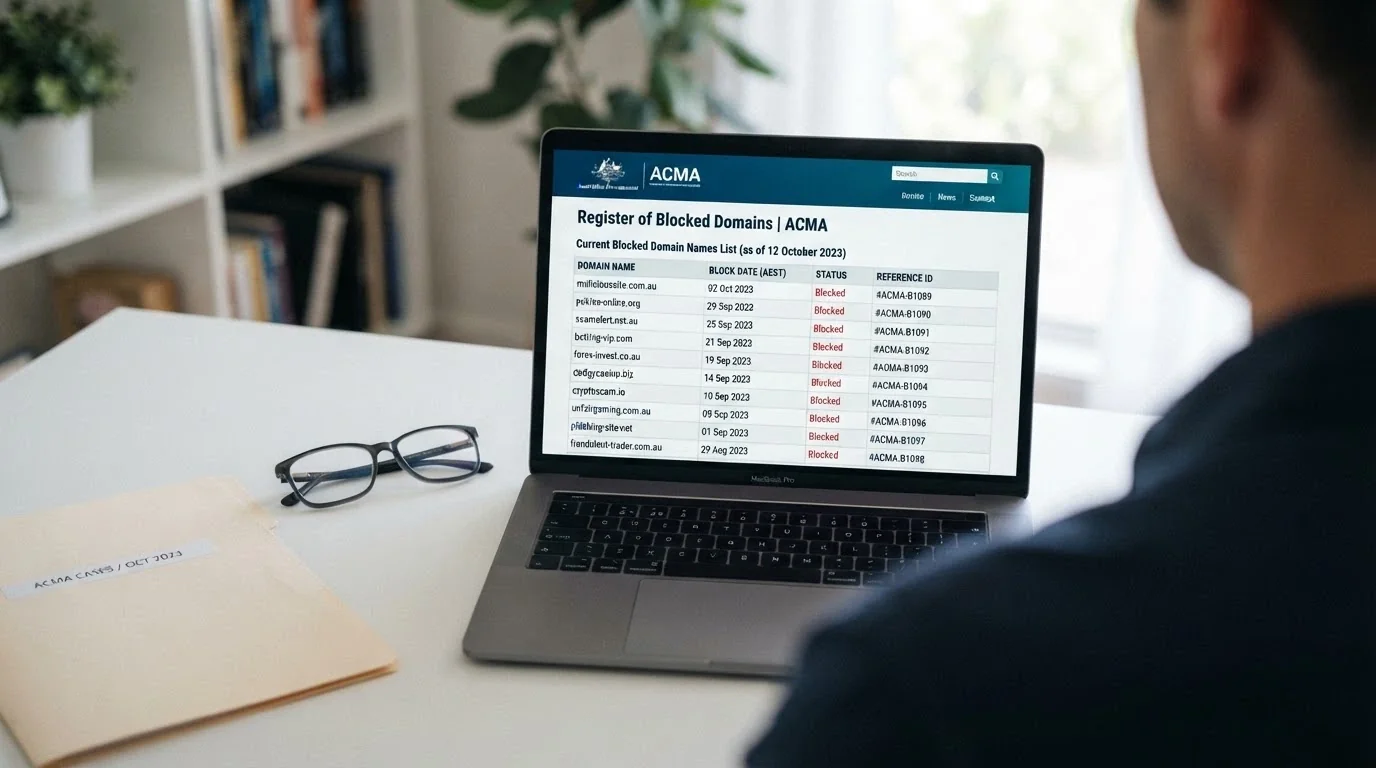
ACMA has had 1,564 illegal gambling and affiliate websites blocked by Australian ISPs since its first blocking request in November 2019. More than 225 illegal services have withdrawn from the Australian market since enforcement was strengthened in 2017. The blocking is DNS-level: the Australian ISP is directed to refuse to resolve the domain, and the player cannot reach the site through their Australian connection.
The blocking does not move player money. A site that is blocked on a Tuesday afternoon with A$500 in a player account stays blocked, the A$500 stays in the account, and ACMA has no power to recover it. The operator may continue to operate in other jurisdictions; the Australian connection is the only thing that breaks.
Blocked sites reappear under new domains. The pattern is consistent enough that ACMA’s enforcement operates on a treadmill rather than a finish line. A player who deposits with an offshore site that is later blocked finds the site unreachable, the money inaccessible from Australia, and the only path to recovery — if any path exists — is to contact the operator directly, in English, by email, with no Australian complaints body to escalate to.
Mobile Play When the App Store Won’t Help
Offshore casinos deliver their full game library through the mobile browser. There is no app store download, no Australian app store listing, and no app store consumer protection either. The experience is the same games, on the same lobby, in a smaller window.

Browser-Based Play: What Your Phone Actually Runs
The mobile browser loads the same game lobby a desktop sees. HTML5 pokies, live dealer streams, table games — all run directly through the browser without a download. The full library is available rather than a curated mobile selection, and the difference between mobile and desktop is screen size rather than catalogue.
The performance is comparable to a native app for most games. Modern offshore platforms built on frameworks like SoftSwiss deliver HTML5 titles that load in seconds on a current-generation phone. Live dealer streams require a stable connection — a 4G or stronger signal — and the data usage on a mobile plan is significant on a long live-dealer session.
The lack of an app is not a workaround. It is the only delivery channel available, because Apple and Google do not list real-money online casino apps in jurisdictions where the product is prohibited.
Why You Won’t Find These Casinos in the App Store
Apple’s App Store and Google Play restrict real-money gambling apps to jurisdictions where the product is licensed. Online casino is prohibited in Australia; no such app appears in the Australian store. An offshore casino app that did appear would be removed, and the browser route is the stable delivery channel.
The absence from official app stores means no Apple or Google consumer protection layer. A dispute with an App Store-listed operator can be escalated through Apple’s review process; a dispute with a browser-delivered offshore casino cannot. The protection that comes with the platform layer does not exist here.
Pokies, Tables and Live Dealers: What Offshore Sites Actually Run
An offshore casino’s game library is the product a licensed Australian wagering site cannot legally offer. Thousands of pokies, table games, and live dealer tables from dozens of providers, with no BetStop-tied restrictions on what the player can play.
Pokies: What the Reels Actually Return
The RTP of a pokie is the percentage the game returns over millions of spins. A 96% RTP means the house keeps A$4 of every A$100 wagered across the long run. The individual session can swing far from that average — a high-volatility title may pay nothing for fifty spins and return A$200 on the fifty-first — but the long-run average is the RTP figure.
Typical pokie RTPs run 95% to 97%. Offshore casinos sometimes carry higher-RTP titles than land-based venues, because the venue’s overhead does not price into the game’s return. The volatility dimension is the second axis: high-volatility titles return less often but in larger hits; low-volatility titles return more often but in smaller amounts. The offshore pokie lobby spans the full volatility spectrum from low-variance classics to high-variance Megaways titles.
Per-title RTP figures were not carried in this review’s research for the featured operators. A player who values RTP should check the game’s information panel before wagering; most providers publish the figure there.
Table Games and Live Dealer Action
Blackjack, roulette, and baccarat run in both RNG and live-dealer format at offshore casinos. RNG games load instantly, deal without delay, and run at a faster pace than live tables. Live dealer tables stream from specialist studios — Evolution, Pragmatic Play Live, Playtech — and the dealer is the same feed a European player sees.
The variants go beyond standard blackjack and roulette. Lightning Roulette adds random multipliers to straight-up bets. Infinite Blackjack seats an unlimited number of players at the same hand. Game-show formats — Monopoly Live, Crazy Time, Deal or No Deal — bridge casino and live entertainment. The live-dealer suite at a multi-provider offshore casino is the closest thing to a real-casino floor available online.
Live-dealer availability at the featured operators was not confirmed this run. A player who plans to play live should check the live casino tab before depositing; not every offshore brand runs a live-dealer suite.
Game Libraries: What the Provider List Tells You
An offshore casino carrying 40-plus providers is a different proposition from a single-provider RTG house. The provider count and the presence of tier-one studios — NetEnt, Pragmatic Play, Evolution, Play’n GO, Microgaming — are the quickest quality signals before depositing a dollar.
FairGO is the single-provider outlier in the featured set. RTG (RealTime Gaming) is a well-established studio, but the library is RTG titles rather than the broader catalogue a multi-provider platform carries. Bizzo has BGaming confirmed for the bonus spins; the wider library was not confirmed. For the operators with unverified game providers, the lobby is the answer — a casino carrying the tier-one studios is drawing from a deeper, more scrutinised catalogue than a single-provider house.
Staying Safe When BetStop Can’t Help You
BetStop covers roughly 150 licensed wagering providers. Step outside that system and the national safety net is gone, but offshore casinos do offer their own self-exclusion and limit-setting tools, and Australian help services remain free and reachable regardless of where the player gambles.
Self-Exclusion and Limit Tools at Offshore Casinos
Offshore casinos are not connected to BetStop. What most offer in-house is a suite of responsible-gambling tools — deposit limits, loss limits, session limits, time-outs, self-exclusion — that the player must set manually, site by site.
The contrast with BetStop is structural. BetStop exclusion is national, one-step, and binds every AU-licensed operator at once. A player who self-excludes via BetStop cannot open a new account at any of the 150-or-so licensed wagering providers during the exclusion period, and a self-exclusion can run from a three-month minimum to permanent. Removal is not possible in the first three months; after that, removal occurs seven days after a valid application.
Offshore RG tools are per-operator. A self-excluded player at one offshore casino can open an account at another the same day, because there is no cross-operator exclusion register outside BetStop. The player who wants the offshore equivalent of BetStop’s coverage has to set the limits at each site, and accept that the limits stop at the site’s wall.
Licensed Australian wagering operators offer customer-set deposit limits and activity statements under state and territory conditions. Offshore operators vary; a player who values the activity-statement layer should ask the operator before depositing.
The Numbers Every Australian Player Should Save
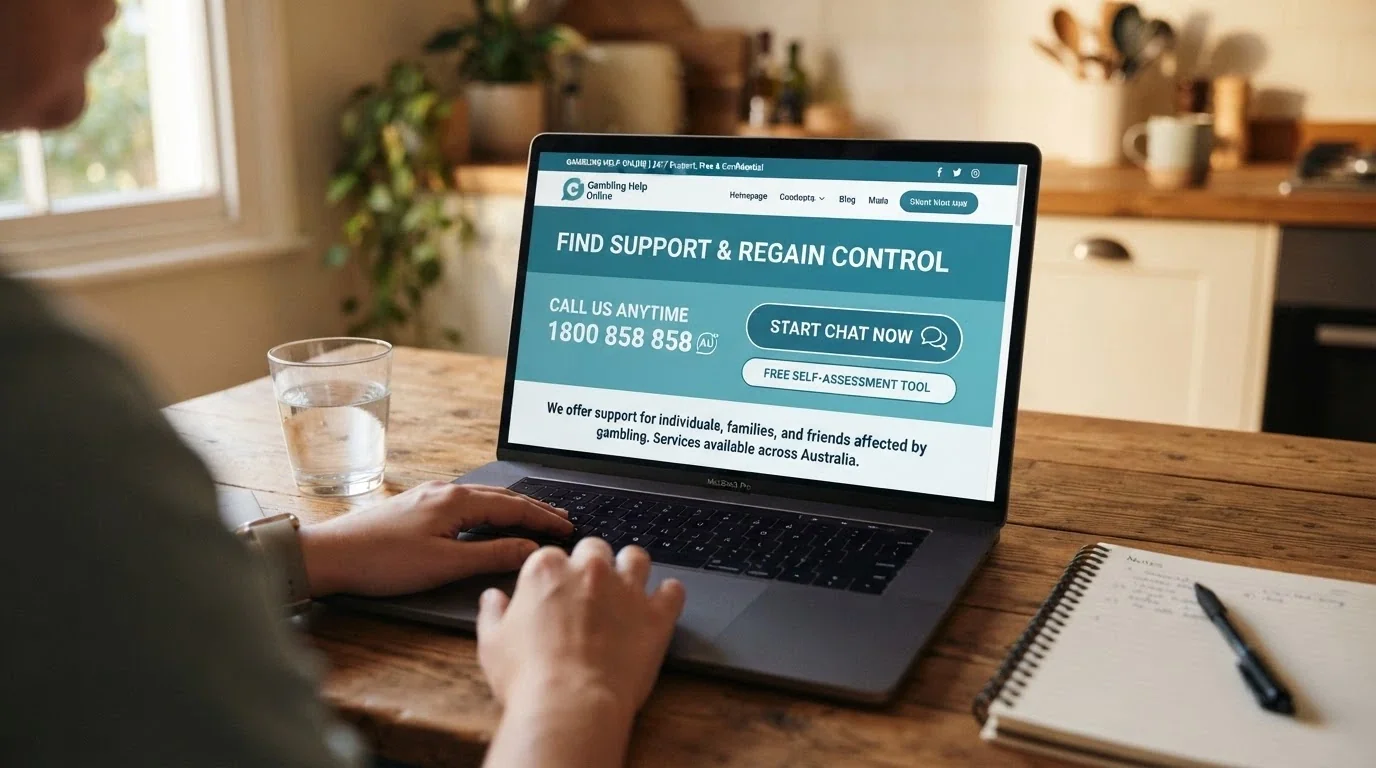
The National Gambling Helpline is 1800 858 858. It is free, confidential, and staffed 24 hours a day, every day. Online chat and counselling are available through Gambling Help Online at gamblinghelponline.org.au. The helpline is the single most important number on this page, and it operates regardless of where or how the player gambles.
The prevalence data behind the helpline comes from the Australian Institute of Health and Welfare: about 2.1% of Australian adults — roughly 430,000 people — experience problem gambling, with a further 1.8% at high-risk gambling levels (2022 figures). BetStop’s 67,480 registrations and 41,290 active exclusions as at 31 July 2026 reflect a similar pattern of harm concentrated in working-age adults, with 78% of registrants under 40 and 38% choosing lifetime exclusion.
Face-to-face counselling is available in every state and territory through Gambling Help Online’s referral network. A self-assessment tool on the site helps a player gauge their own risk level. The first call is free; the first chat is free; the first appointment is free. There is no cost barrier between a player and the help that is available.
How We Evaluated These Casinos
The ten operators on this page were drawn from a tracked set of AU-facing offshore casino brands and ranked by estimated market share within that segment. The criteria were four: licence jurisdiction, bonus terms transparency, payment methods available to Australian players, and public complaint record.
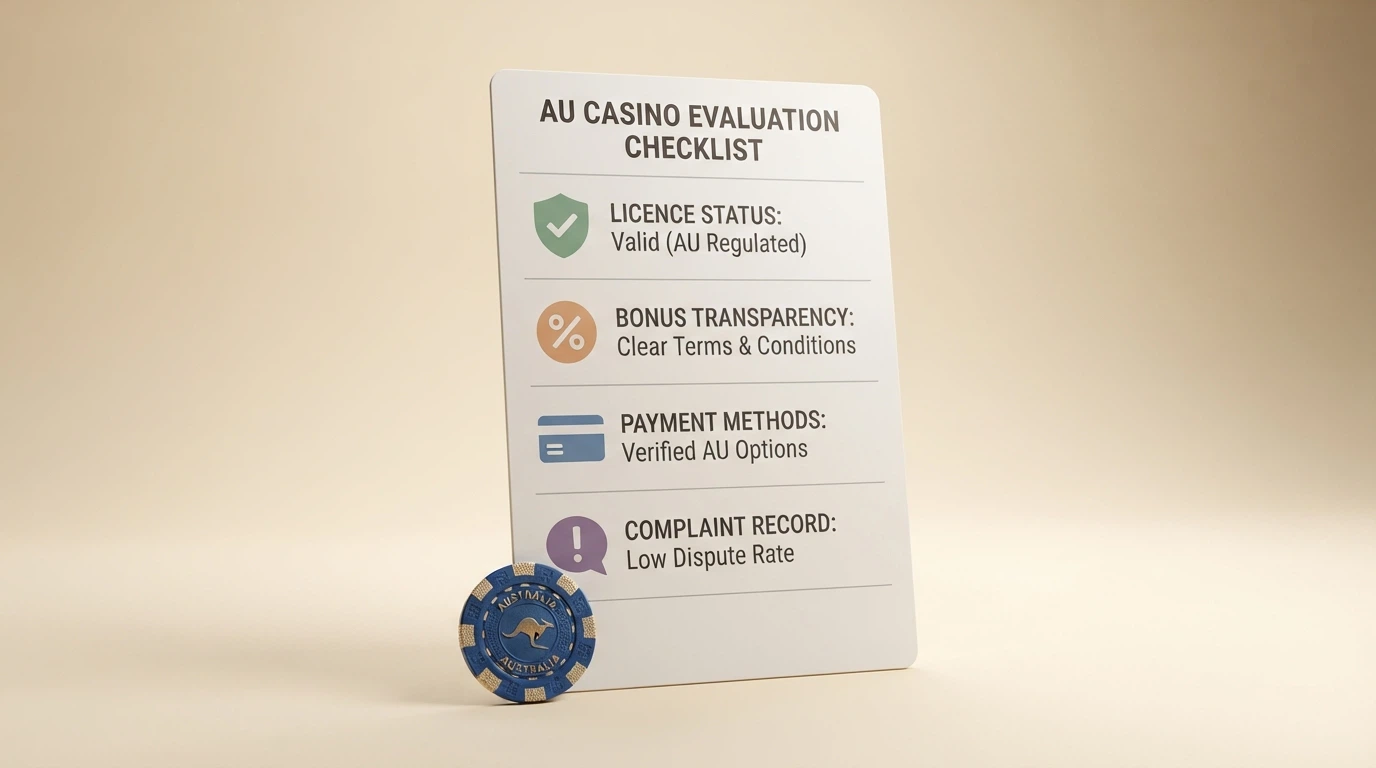
Licence status was checked against the issuing regulator’s own register where the licence jurisdiction was identified. Three operators in the featured set carry a widely reported Curaçao licence — Stake, FairGO, Bizzo — and that report was not re-verified from a primary source for this review. The remaining seven operators carry an unverified licence status; the player should verify on the operator’s own page before depositing.
Bonus terms transparency was assessed by the presence of wagering multipliers, game contribution rates, max bet rules, max cashout caps and validity windows in publicly available T&Cs. Operators with confirmed bonus data — Rocket Play, FairGO, Bizzo — have those qualifiers specified. Operators with unconfirmed bonus data — Royal Reels, WinSpirit, Rainbet, Scream Casino — do not have those qualifiers in this review’s record, and the player should read the T&Cs in full before depositing.
Payment methods were assessed for AUD deposit viability — PayID, crypto, bank transfer, Neosurf, e-wallets — and for credit card acceptance, which is a tell that an operator is outside Australian rules. Operators with unconfirmed payment methods should be checked at the cashier page before any deposit.
The ranking is market share within the AU-facing offshore segment. No numerical weighting, score or composite rating was applied across the criteria. Where a field is unconfirmed, the operator section that follows flags it as such.
What You Should Actually Do With This Information
This page has shown which offshore casinos accept Australian players, what their bonuses actually cost, how the law treats the activity, and what protections the player gives up. The decision is yours. The facts are not negotiable.
The headline figures in the bonus section are the place to start. Rocket Play’s A$1,000 match at 40x wagering is roughly 55 hours of continuous pokie play before any withdrawal; FairGO’s 300% match is lighter in percentage terms but bigger in absolute dollars; Bizzo’s two-deposit package carries the bonus-buy trap in the €5 max-bet rule. The marketing language is arithmetic the operator has written. The fine print is where the maths lives.
The legal status is not ambiguous. Online casino is prohibited in Australia. The player is not prosecuted, but is not protected either. There is no Australian consumer protection at an offshore casino, no complaints body, no BetStop coverage, no recourse if the operator refuses a withdrawal or voids a win, and the site can be DNS-blocked at any time with a balance still on it. The 1 January 2027 reform adds bank-blocking authority to the existing framework; offshore casinos were never subject to the reform’s advertising rules, and the reform does not change their legal status.
The help infrastructure is free and reachable. The National Gambling Helpline is 1800 858 858 — free, confidential, 24/7, with online chat through Gambling Help Online. A player who feels they are losing control can call before they deposit again, and the call is the first step regardless of where the gambling happens.
The single most important next step is verifying the licence and reading the bonus terms yourself before depositing a dollar. The licence number on the regulator’s own website tells you whether the licence exists. The T&Cs tell you what the bonus costs. A small test deposit tells you whether the operator pays.
The page’s value is the honest map: what is on offer, what it costs, what the law allows, what the player gives up. The decision is yours to make with it.
Frequently Asked Questions
What is BetStop and how does the National Self-Exclusion Register work in Australia?
BetStop is the National Self-Exclusion Register, run by ACMA since 21 August 2023. One registration excludes a person from every Australian-licensed online and phone wagering service — about 150 providers. The exclusion runs from three months to lifetime; revocation is blocked for the first three months. Offshore casinos are not connected to the register.
Why are some online casinos not connected to BetStop?
Online casino is prohibited in Australia under the Interactive Gambling Act 2001, so no Australian casino licence exists. BetStop binds Australian-licensed wagering providers only — about 150 brands. An offshore casino licensed in Curaçao or Anjouan is not licensed in Australia and cannot be connected to the register. The exclusion is structural, not a loophole.
What protections do I lose when playing at a casino that is not on BetStop?
An offshore casino carries no Australian consumer protection, no complaints body, no BetStop coverage, and no recourse if the operator refuses a withdrawal or voids a win. The site can be DNS-blocked by ACMA at any time with a balance still in the account. ACMA cannot recover that money. The player carries every risk alone.
Can I use PayID or crypto to deposit at non-BetStop casinos?
PayID and crypto are the most reliable deposit routes at offshore casinos for Australian players. Skycrown, FairGO and Rocket Play support crypto; PayID availability varies. Credit cards are banned for licensed wagering, and a tell that an operator is outside Australian rules. Bank transfer is slower and may be declined by the issuing bank.
Are winnings from offshore casinos taxable in Australia?
No. Betting and gambling winnings are not assessable income for an ordinary Australian punter under section 6-5 of the Income Tax Assessment Act 1997, and losses are not deductible under section 8-1. The position changes only if the ATO establishes the person is running a betting business — which has not applied to ordinary players.
How does the 2026 gambling reform affect casinos not on BetStop?
The Interactive Gambling Amendment (Gambling Reform) Bill 2026 passed Parliament on 19 August 2026 and commences 1 January 2027. It tightens wagering advertising, restricts inducement marketing, and gives banks authority to block transactions to illegal gambling operators. Offshore casinos were never subject to these rules; the bank-blocking provision is the change that most affects offshore players.
What responsible gambling tools are available at casinos not on BetStop?
Offshore casinos are not connected to BetStop, but most offer deposit limits, loss limits, session timers and self-exclusion. These tools are per-site, not national — a player self-excluded at one offshore casino can open an account at another the same day. The National Gambling Helpline (1800 858 858) works regardless of where the gambling happens.
Created by the ”Min Deposit 5 Casinos AU” editorial team.